

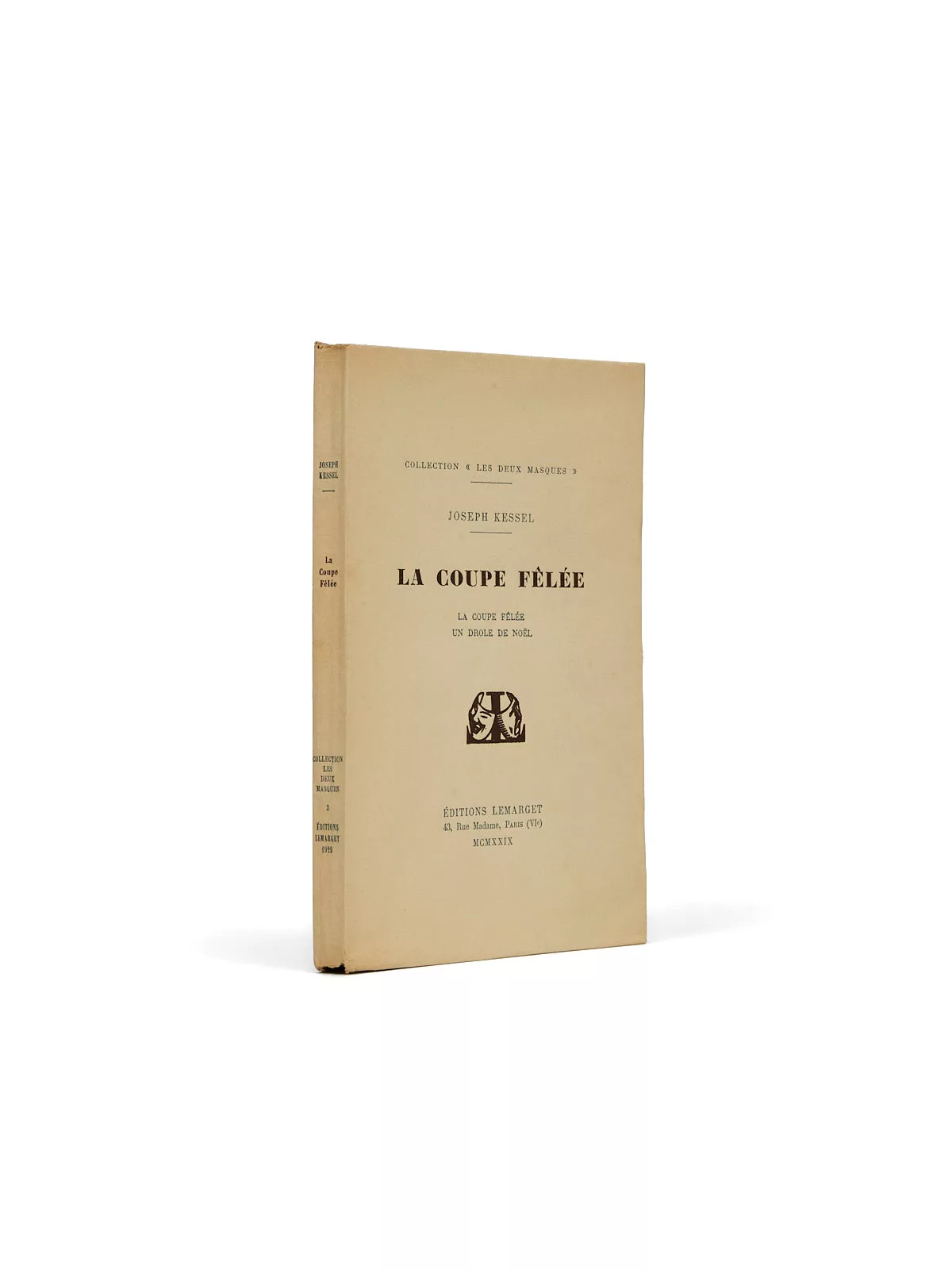
La Coupe fêlée
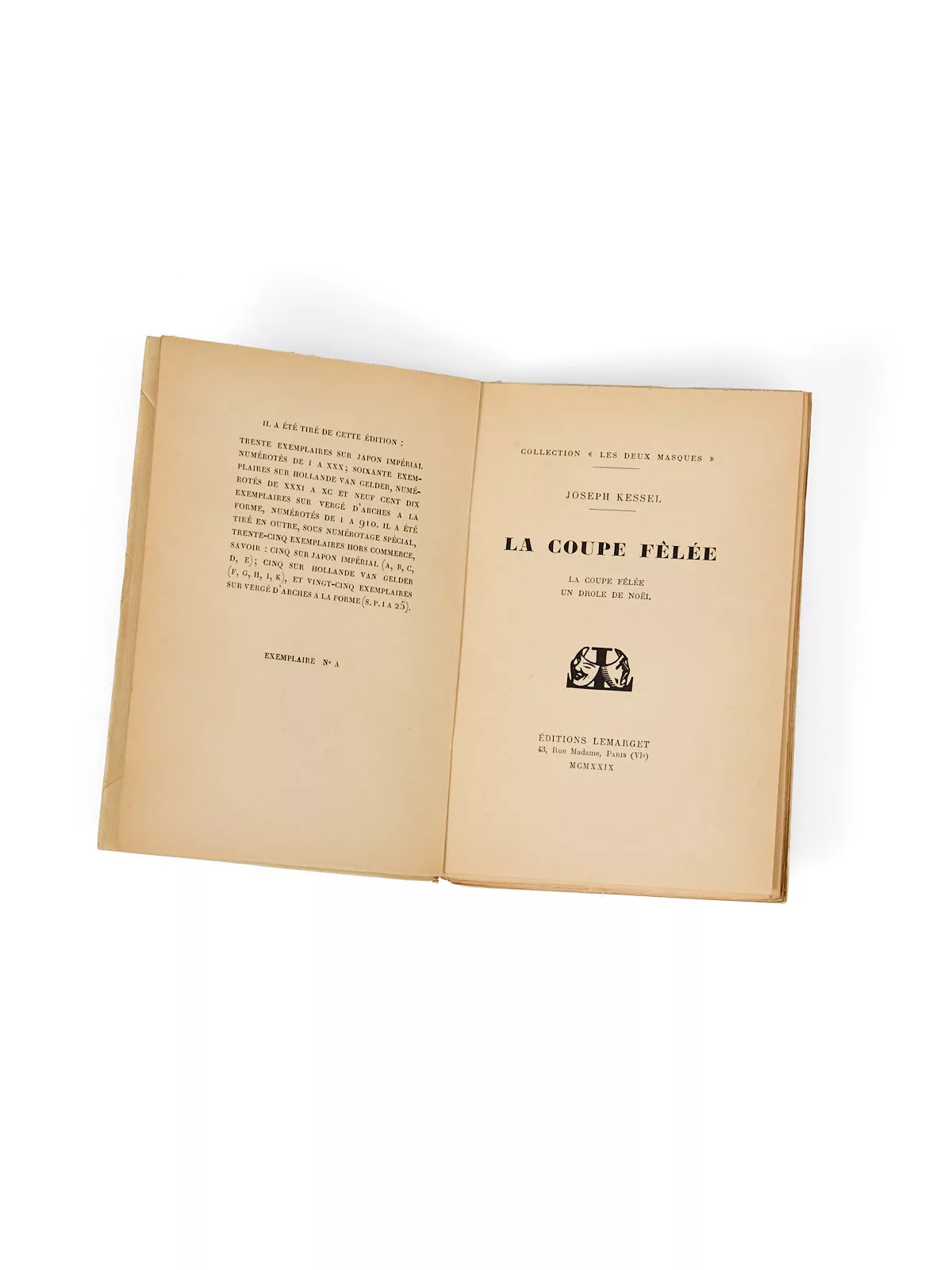
One of 65 copies from the deluxe issue on Japanese paper, this copy hors commerce, marked A.
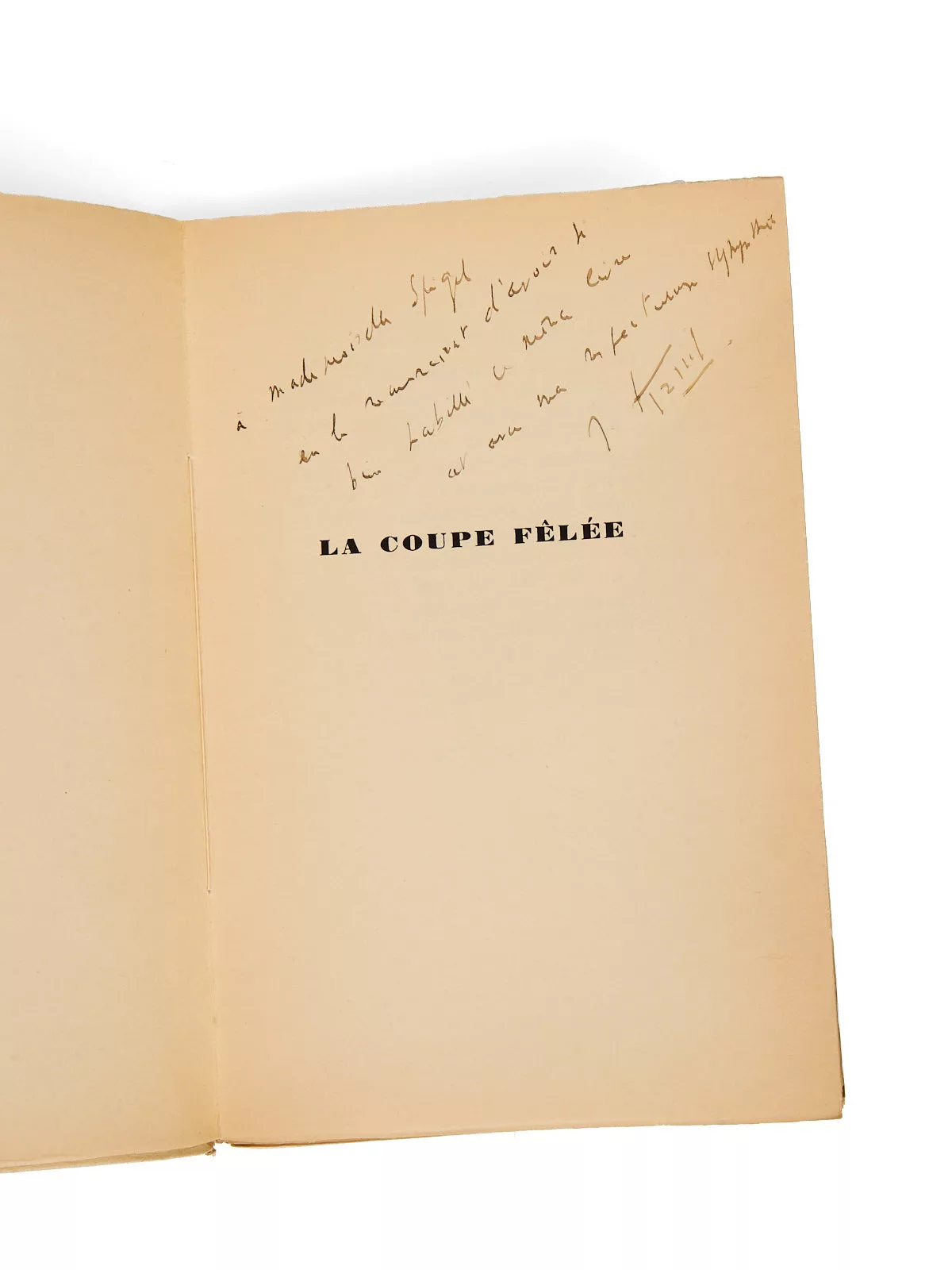
Inscribed and signed by Kessel: “à mademoiselle Spigel (sic), en la remerciant d'avoir si bien habillé ce même livre, et avec ma respectueuse sympathie, J. Kessel.”
When he was not off on his travels, Joseph Kessel still had an unquenchable thirst for adventure. He satisfied it in Pigalle, where he spent his nights — rowdy but literarily fruitful — between “le Caveau caucasien,” his favorite Gypsy cabaret, run by and frequented by Russian émigrés in Paris, and “Chez Nine,” a restaurant where crooks, lawyers and politicians rubbed shoulders. In both places he counted only friends among them, fallen heroes who told him their tragic or dramatic stories. For La Coupe fêlée, he drew on the extraordinary career of la Davidova — Véra Pétrovna — a voice of brass and bronze, whose path led from glory in Moscow to obscurity in Paris. Kessel, a passionate lover of music, was the companion of Germaine Sablon, who evidently inspired much of the character of Vera. As for Drôle de Noël, it recounts the moving and tormented confidences of a big-hearted crook, Gros Albert, alias Albert Aflalo.
Before being published in book form, these stories fed Kessel’s latest editorial venture: Détective, a crime weekly, the first of its kind, which he had just founded with the help of Maître Maurice Garçon and financing from Gaston Gallimard.
A very fine deluxe copy, the very first, copy A, presented to Doris Spiegel: this illustrator began drawing in the New York subway, then enrolled at the Art Students League of New York. In 1928 she received a Guggenheim fellowship, which she used to travel to France to capture street scenes and produce illustrations for various publishing houses. One of her first commissions was the vignette for the newly created “Les Deux masques” series, of which this Kessel title was among the first volumes. She remained in France for nearly two years; her illustrations were later reused in 1933 in the book Paris to the Life: A Sketch-book, with text by Paul Morand.