

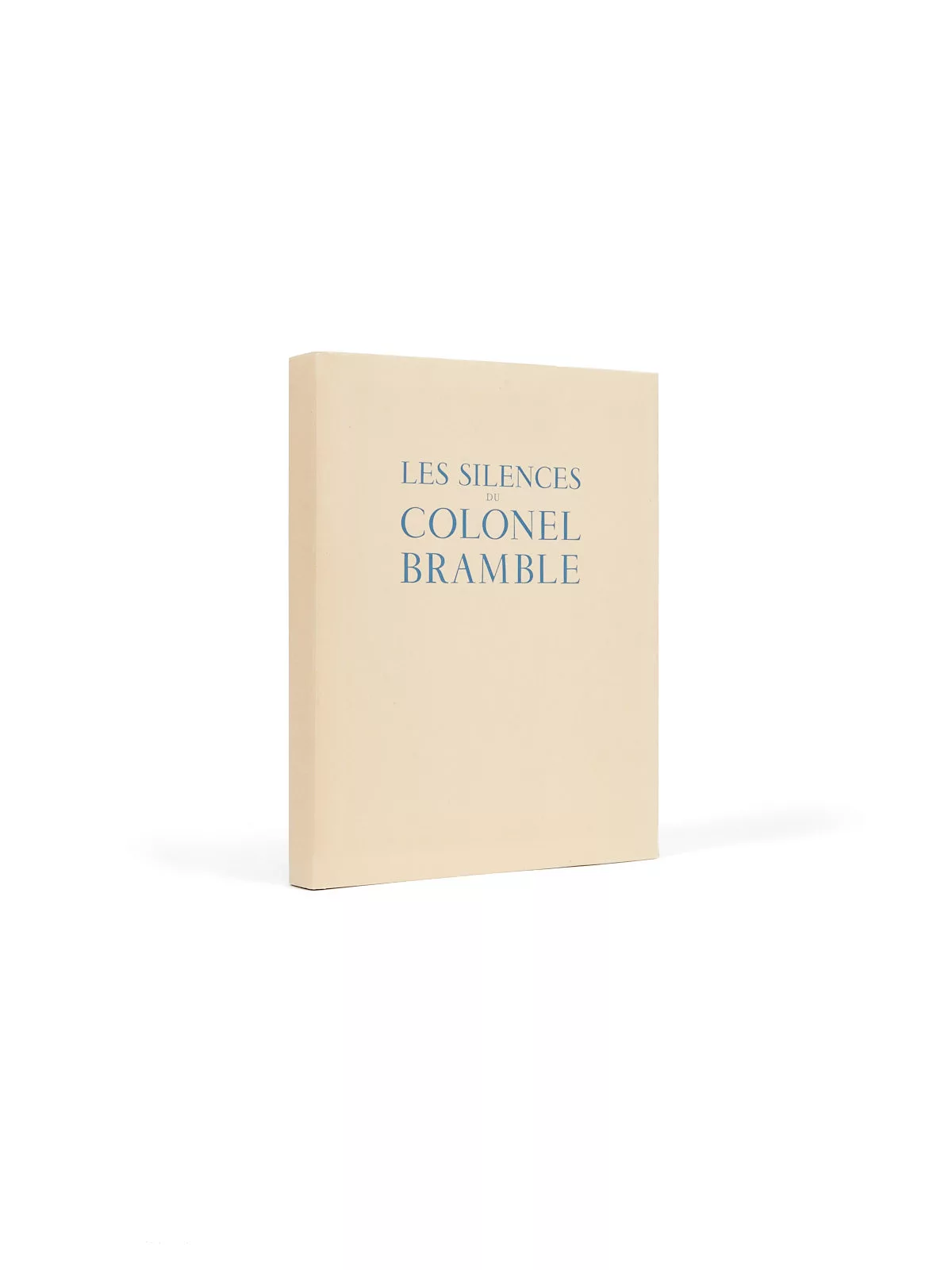
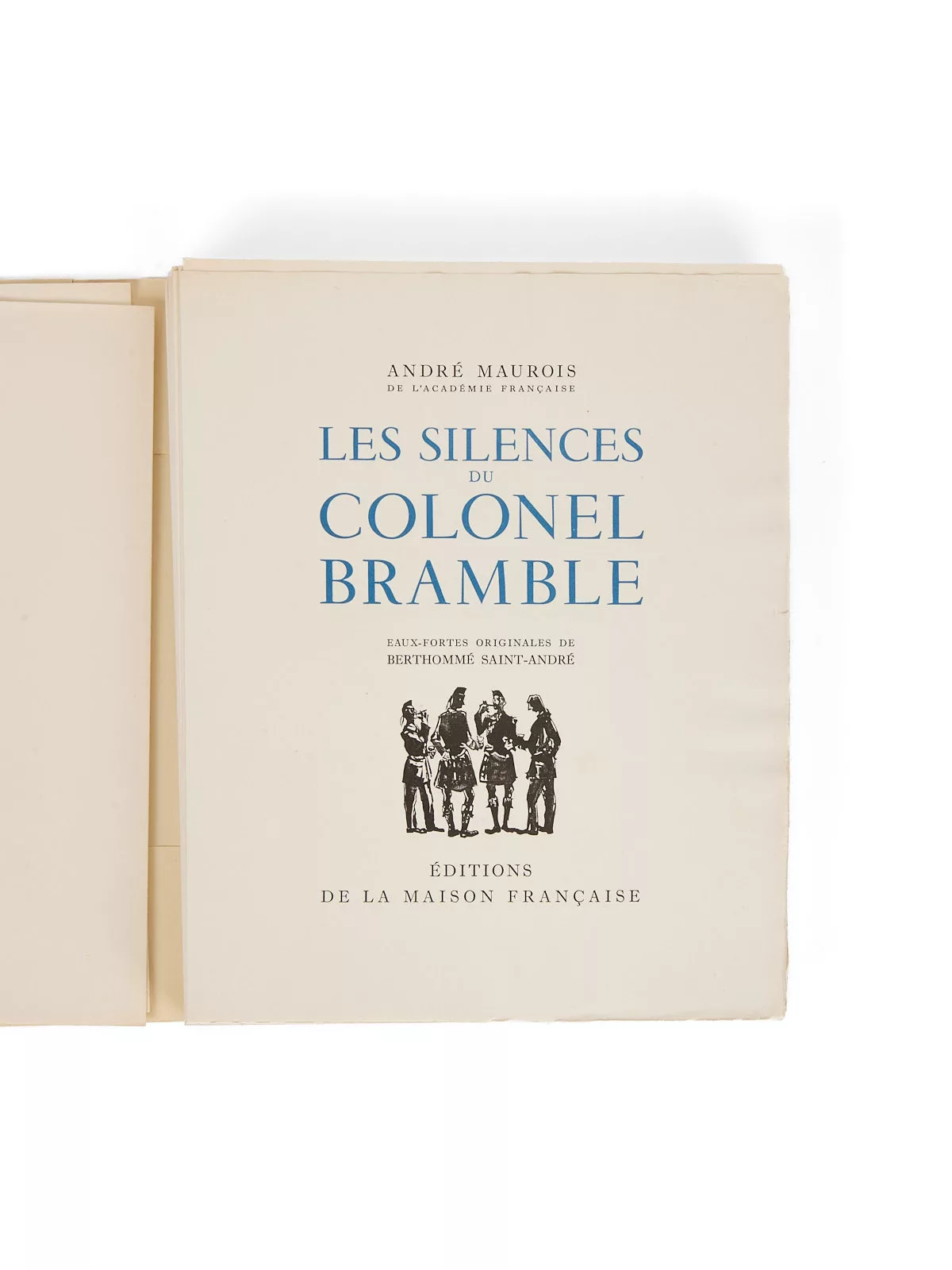
Les Silences du Colonel Bramble
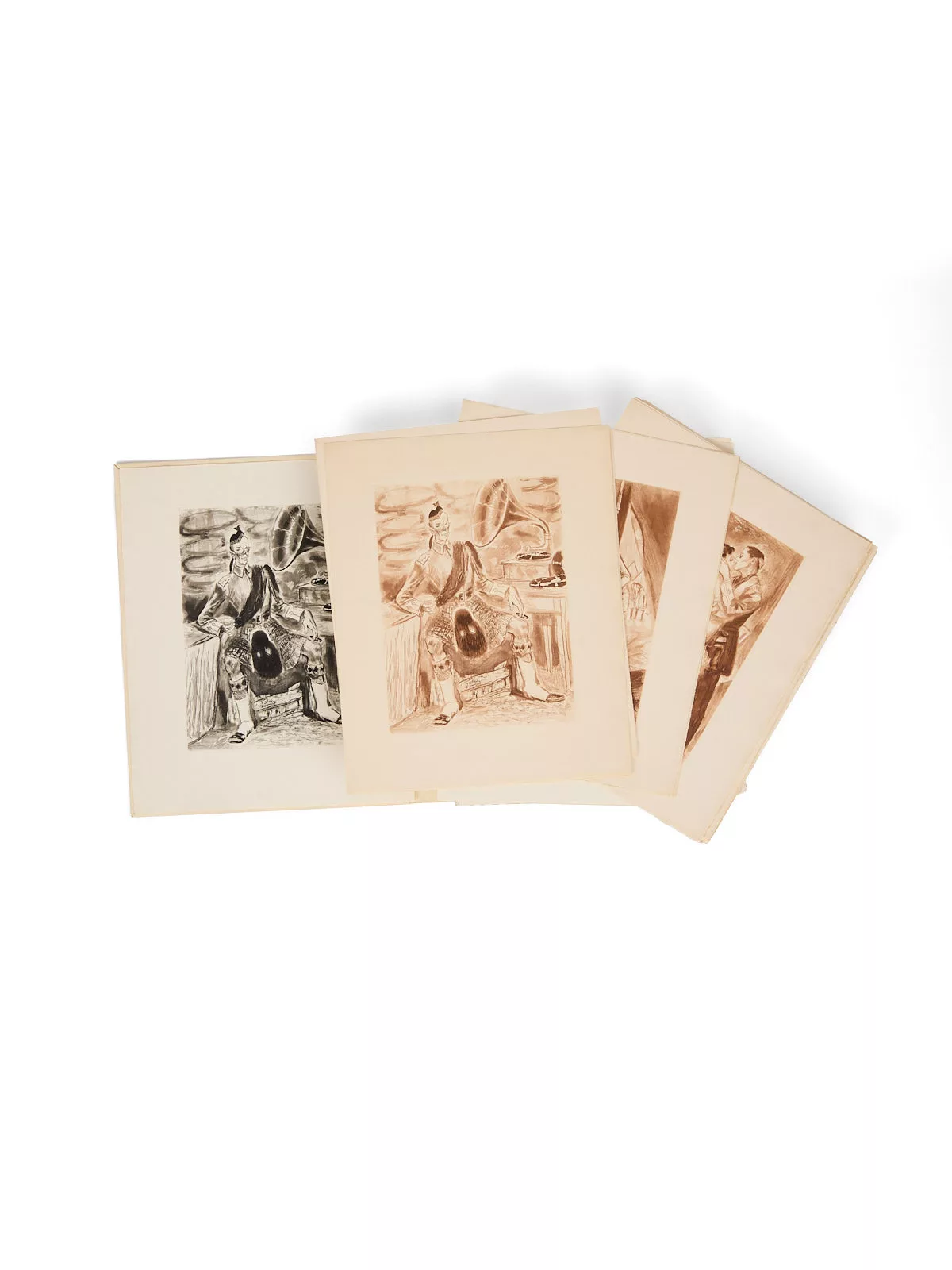
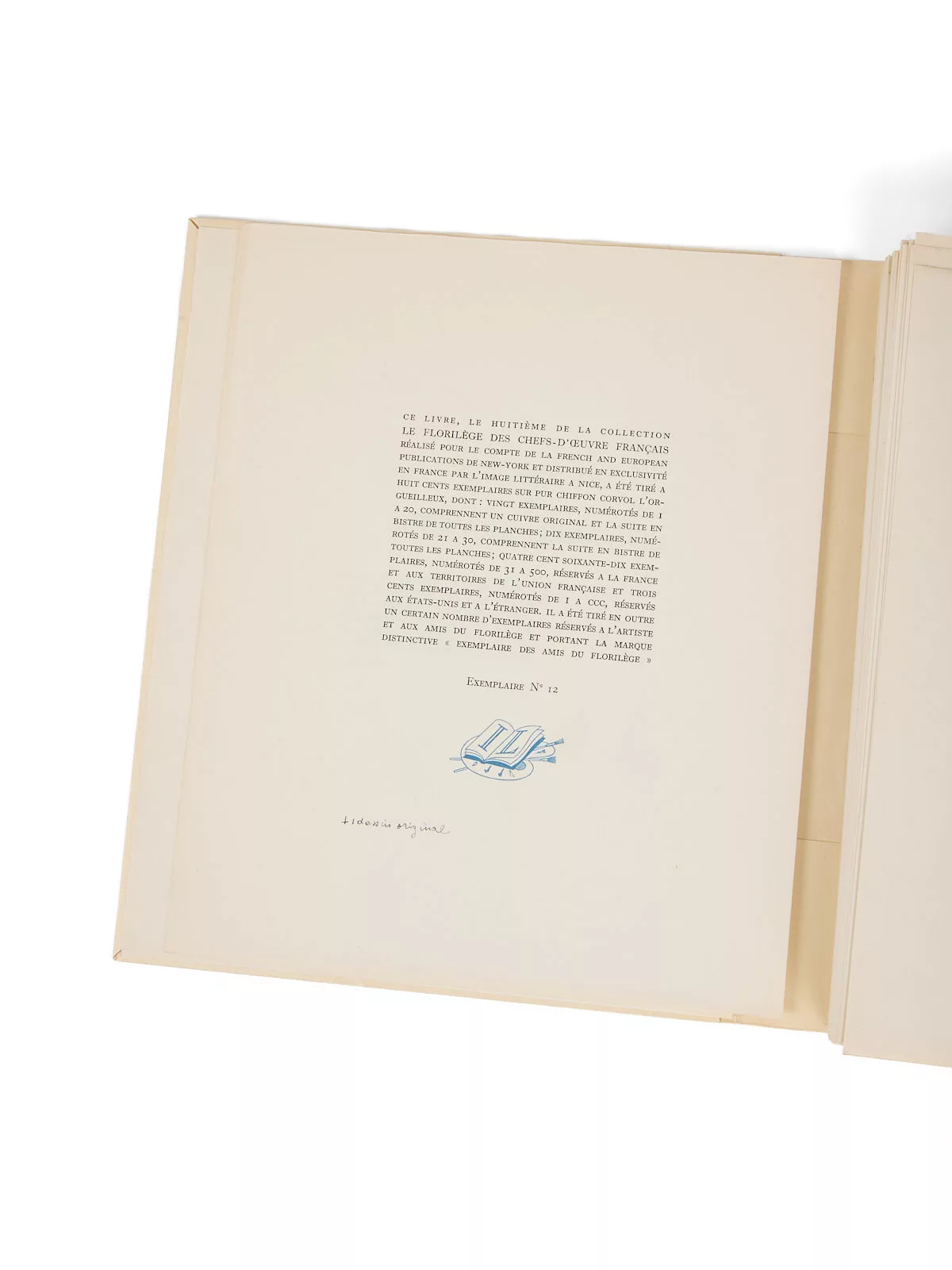
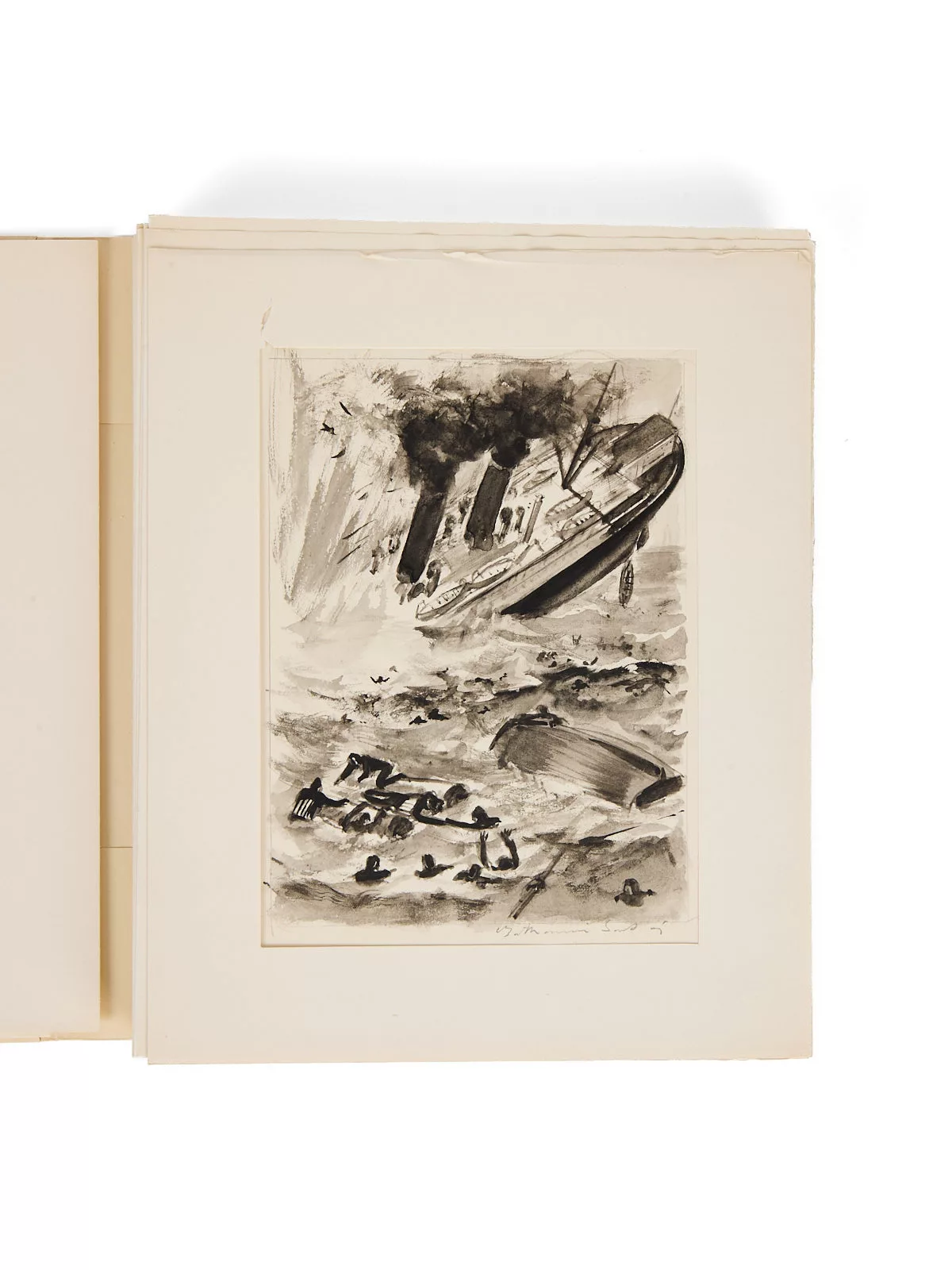
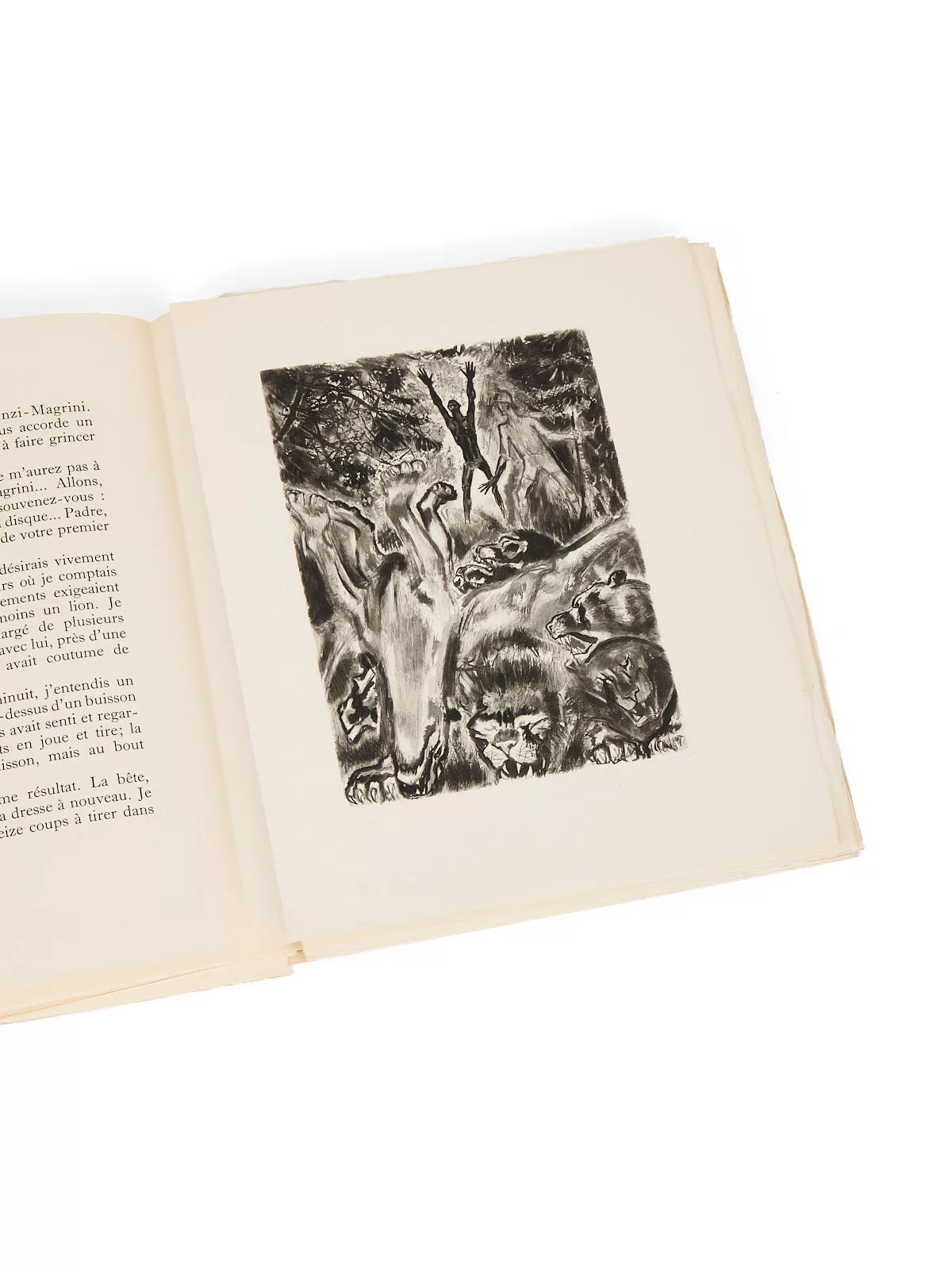
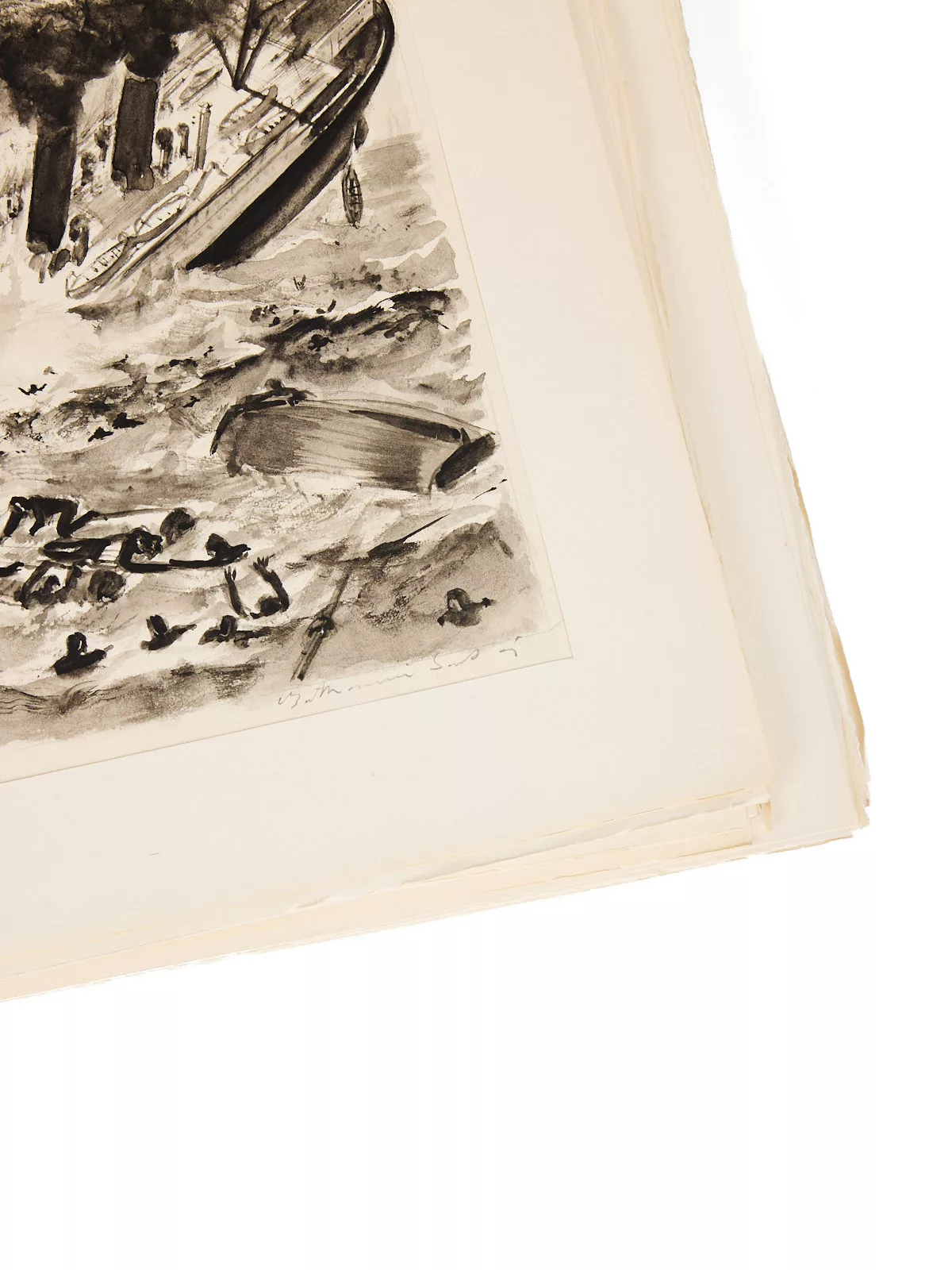
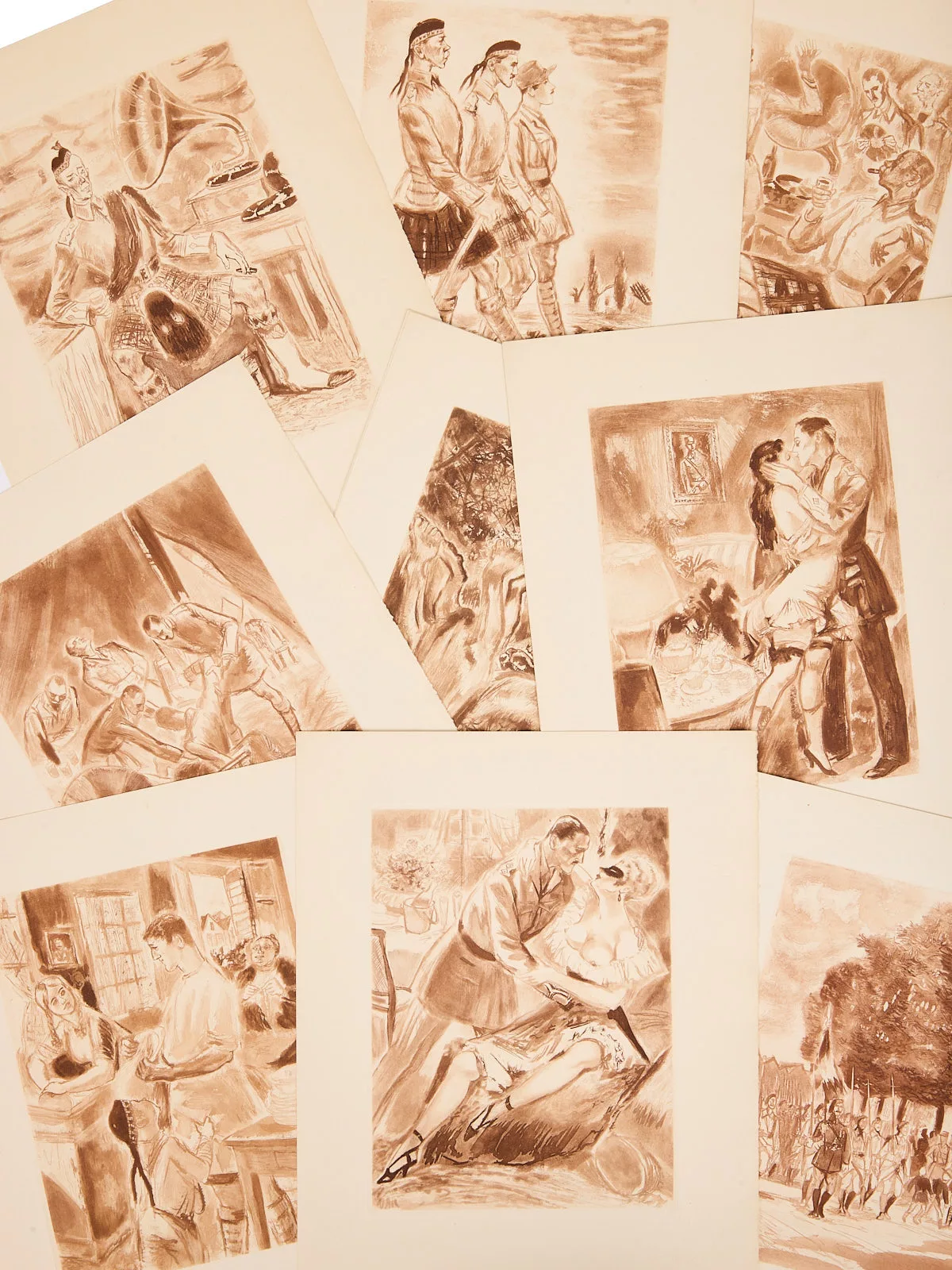
One of the first 20 copies on Rives paper with the suite in bistre (no. 12), without the announced copper plate but enriched with the original gouache for one of the illustrations, signed by the artist [graphite, ink and gouache]; this is noted in ink on the justification page: “+ dessin original.” The gouache, executed on a sheet of Japanese paper (200 x 250 mm), is mounted on a backing sized to match the format of the copy.
A liaison officer during the First World War, André Maurois — not yet known by that name — “drew on his firsthand observations to give shape to his desire to write. Trench warfare, seen through the eyes of the phlegmatic Anglo-Saxons, who regarded humor as a duty, inspired notes that he wrote in an already highly personal style. The young interpreter was utterly charmed by his fellow soldiers and portrayed himself in this chronicle under the name Aurelle. Amid the worst situations brought on by battle are interwoven conversations, quasi-‘ethnological’ reflections, and charming poems in the form of correspondence. With this book Maurois achieved an immediate and resounding success: the name Bramble would remain, for later generations, emblematic of the typical Englishman” (Laffont-Bompiani).
Winner of the Prix Abd-el-Tif in 1925, Louis Berthommé Saint-André was then the youngest resident of the famous Algiers villa devoted to the Arts, and from 1931 contributed to numerous illustrated publications, including several erotic editions of works by Boccaccio, Verlaine, Apollinaire and Baudelaire: “Although he painted many landscapes, he is best known as a painter of figures, and more particularly of women…” (Connaissance des arts, no. 80, October 1958). This title by André Maurois is the only one Berthommé Saint-André ever illustrated.
From the library of Maurice Genevoix, at “Les Vernelles,” with bookplate.