

Published in the spring of 1917, Nuits de guerre continues, over a fifteen-day narrative (5 to 19 October 1914), the meticulous chronicle of the hell experienced by the author at the front. Each day is recounted without omission, as in Sous Verdun, published a year earlier.
This publication also marks a decisive turning point in Maurice Genevoix’s literary career, coming at the moment when the 1916 Prix Goncourt was being decided. On 16 December, the jury awarded the prize to Barbusse’s Le Feu, published by Flammarion barely a month earlier. This hard-won prize had been strategically prepared by the Fischer brothers, directors of Flammarion: having read Le Feu as a serial over the summer, they had convinced Henri Barbusse to sign with them, promising the support of their network for the Goncourt — which duly materialized.
But the Fischers did not stop there. From the autumn of 1916, as negotiations intensified, they approached Genevoix, the other favorite for the prize, offering to take over the continuation of his war narratives, under terms far more advantageous than those at Hachette, where Sous Verdun had appeared. For Genevoix, a young writer still uncertain of his future after a serious wound, this was a decisive offer. It initiated a decade of loyalty to Flammarion, lasting until the publication of Raboliot by Grasset in 1925. The contract binding him to Flammarion was signed in December, and it was to the Fischers that Genevoix entrusted his Nuits de guerre at the start of 1917.
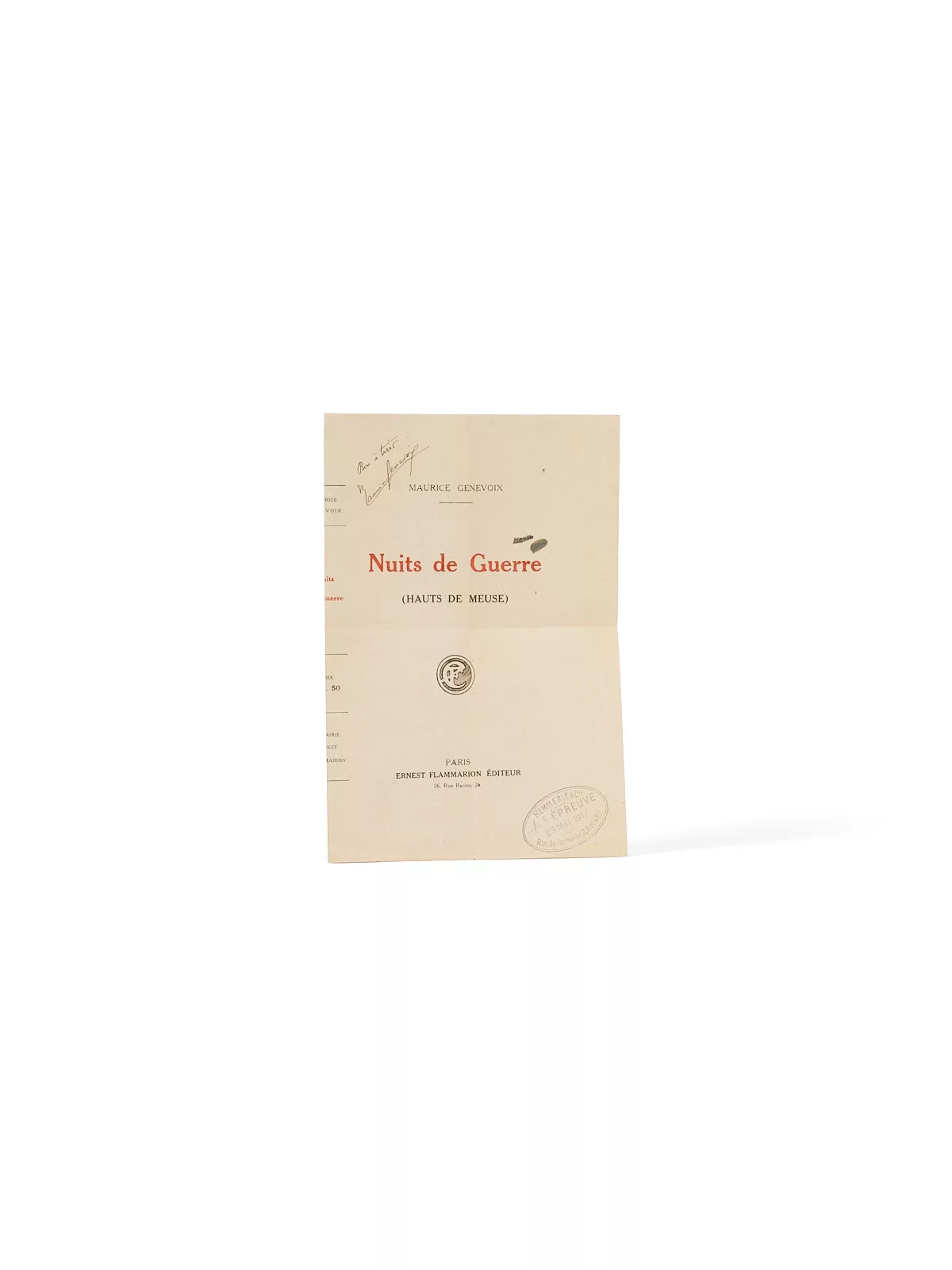
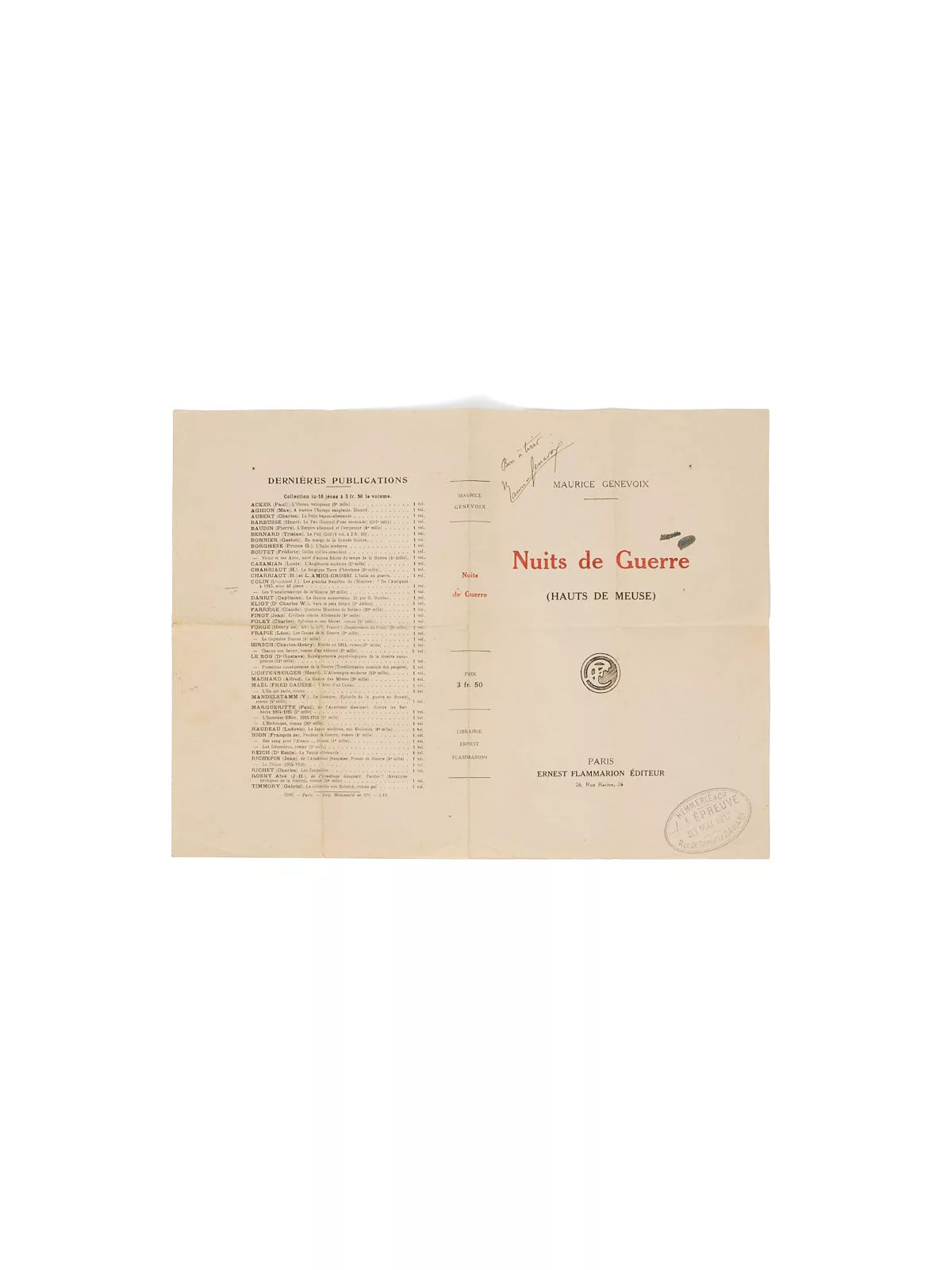
A precious bon à tirer of the validated design for the book’s cover, with the autograph inscription “Bon à tirer – Maurice Genevoix” and the “Épreuves” stamp of the Hemmerlé printing house, dated 3 May 1917. The book, published shortly afterward, met with the same success as its predecessor and confirms the importance of the reception given to the text and its author.
A fine and historic document.