

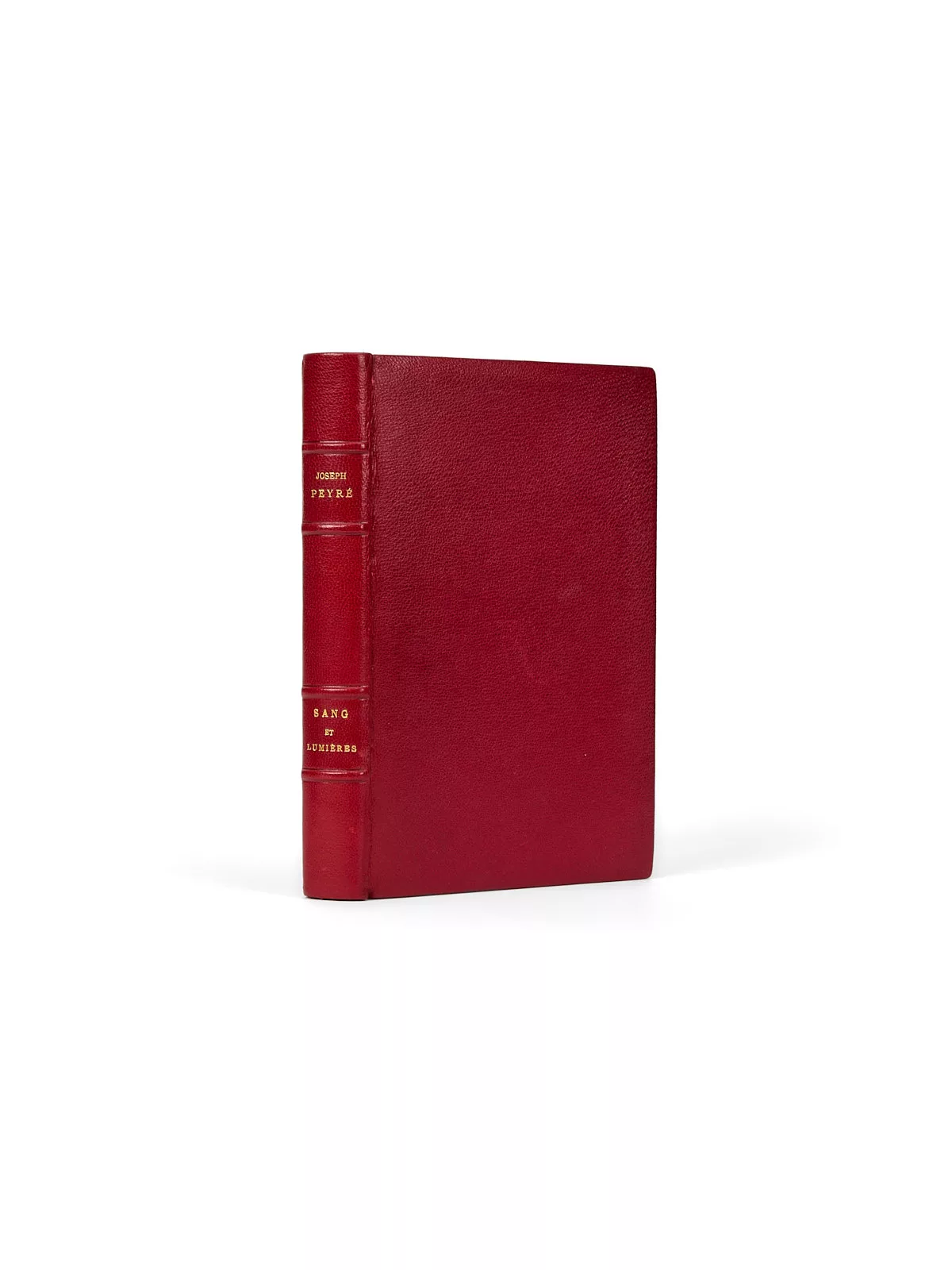
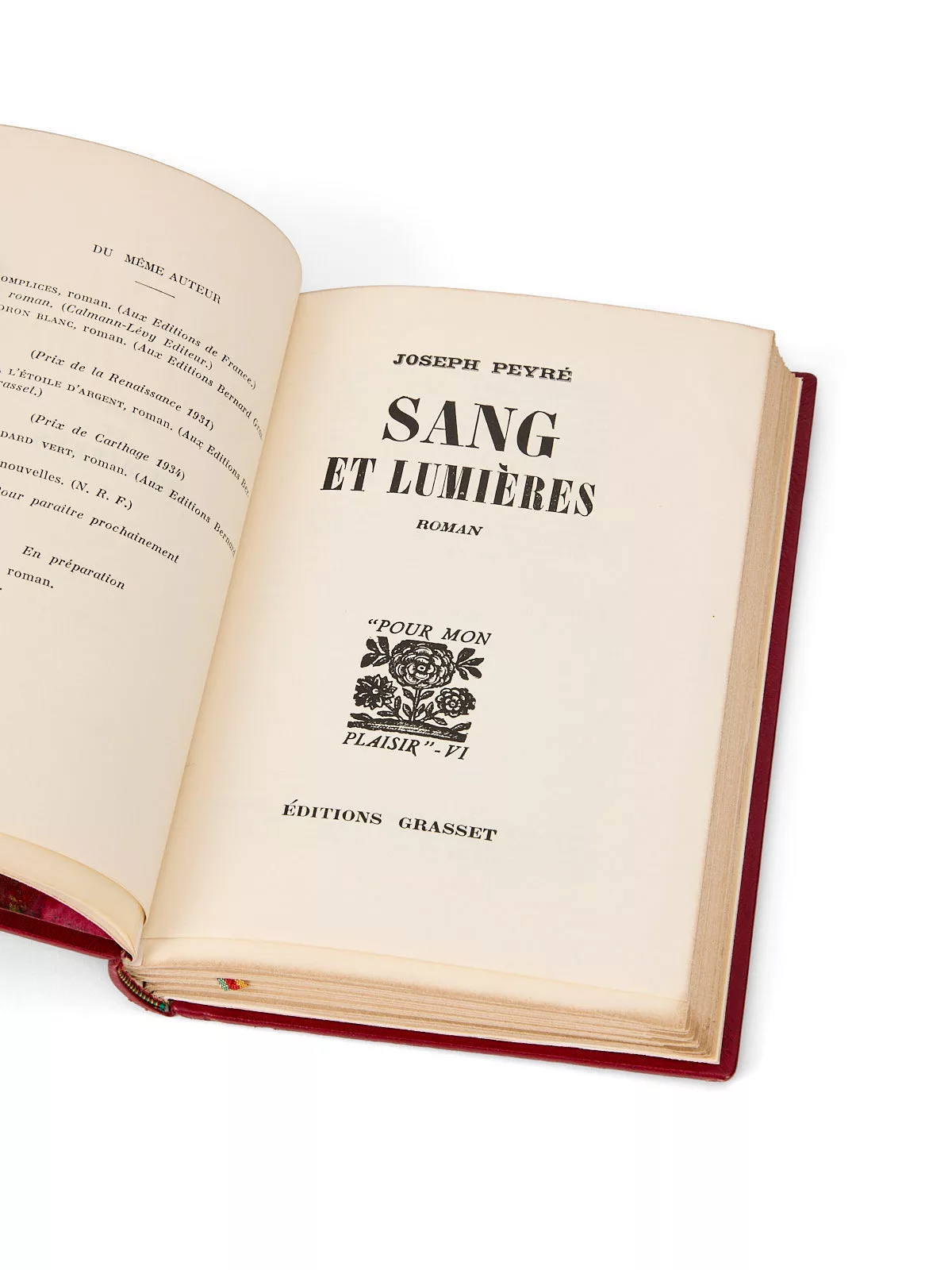
Sang et lumières
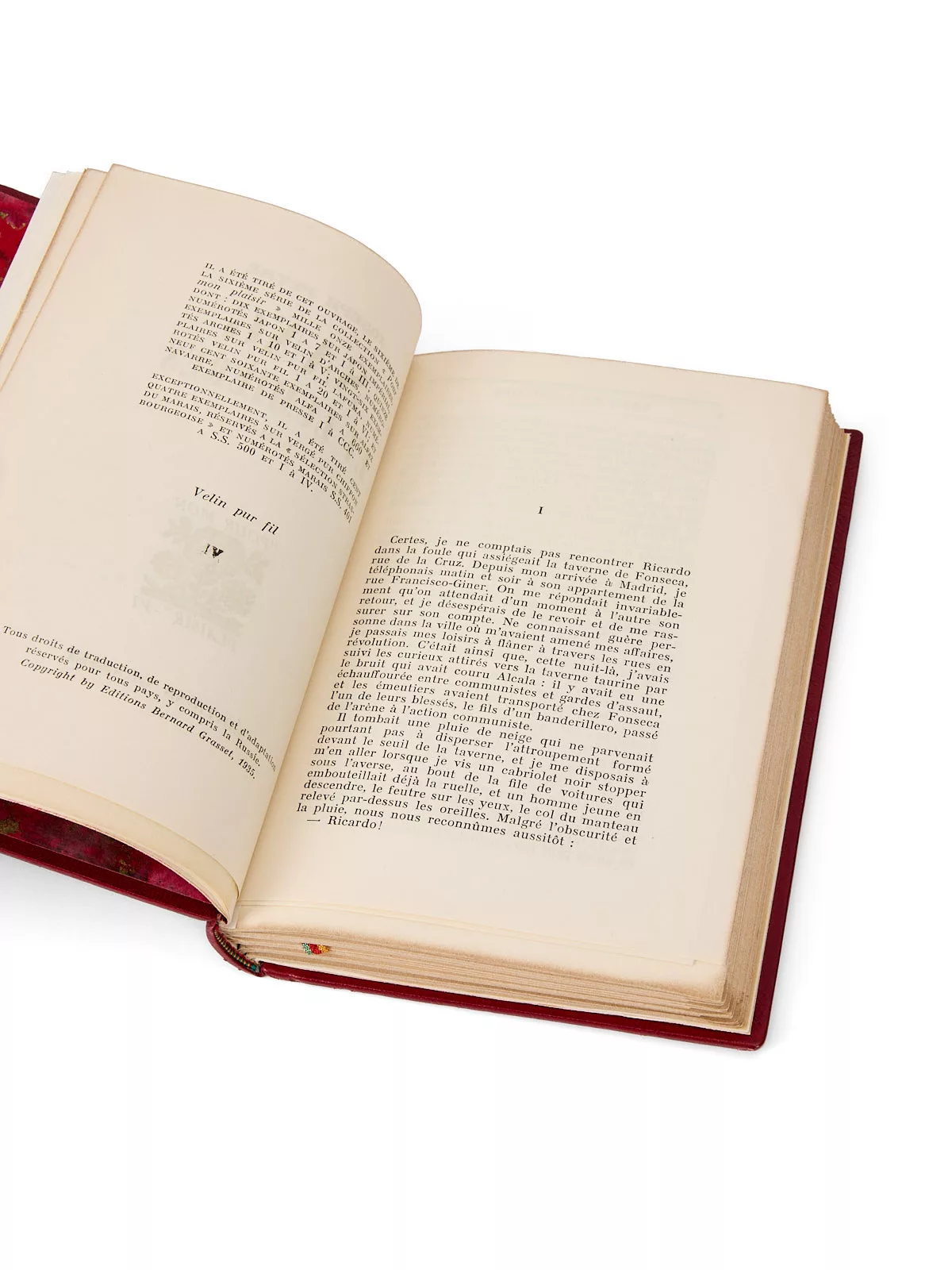
One of 26 copies on vélin pur fil (no. IV).
A journalist and novelist from the Pyrenees, Joseph Peyré (1892–1968) had already achieved great success with his desert novel L’Escadron blanc (1931) when he turned, in Sang et lumières, to the world of bullfighting. The book captures the life of the Spanish arenas, with their rites and dramas, while celebrating a sunlit, tragic Spain.
On 4 December 1935, the prize was awarded to Peyré by six votes to four over Aragon, whose Les Cloches de Bâle was runner-up. The contest became famous: it illustrates the Goncourt jury’s refusal to honor a committed communist writer, favoring instead a novel of picturesque exoticism.
For Grasset, it was another prestigious victory, following Châteaubriant (1911), Savignon (1912) and Genevoix (1925), confirming the publisher as a pillar of the prize’s history.
From the “Prix Goncourt” library of Gérard Pouguet, with bookplate.