

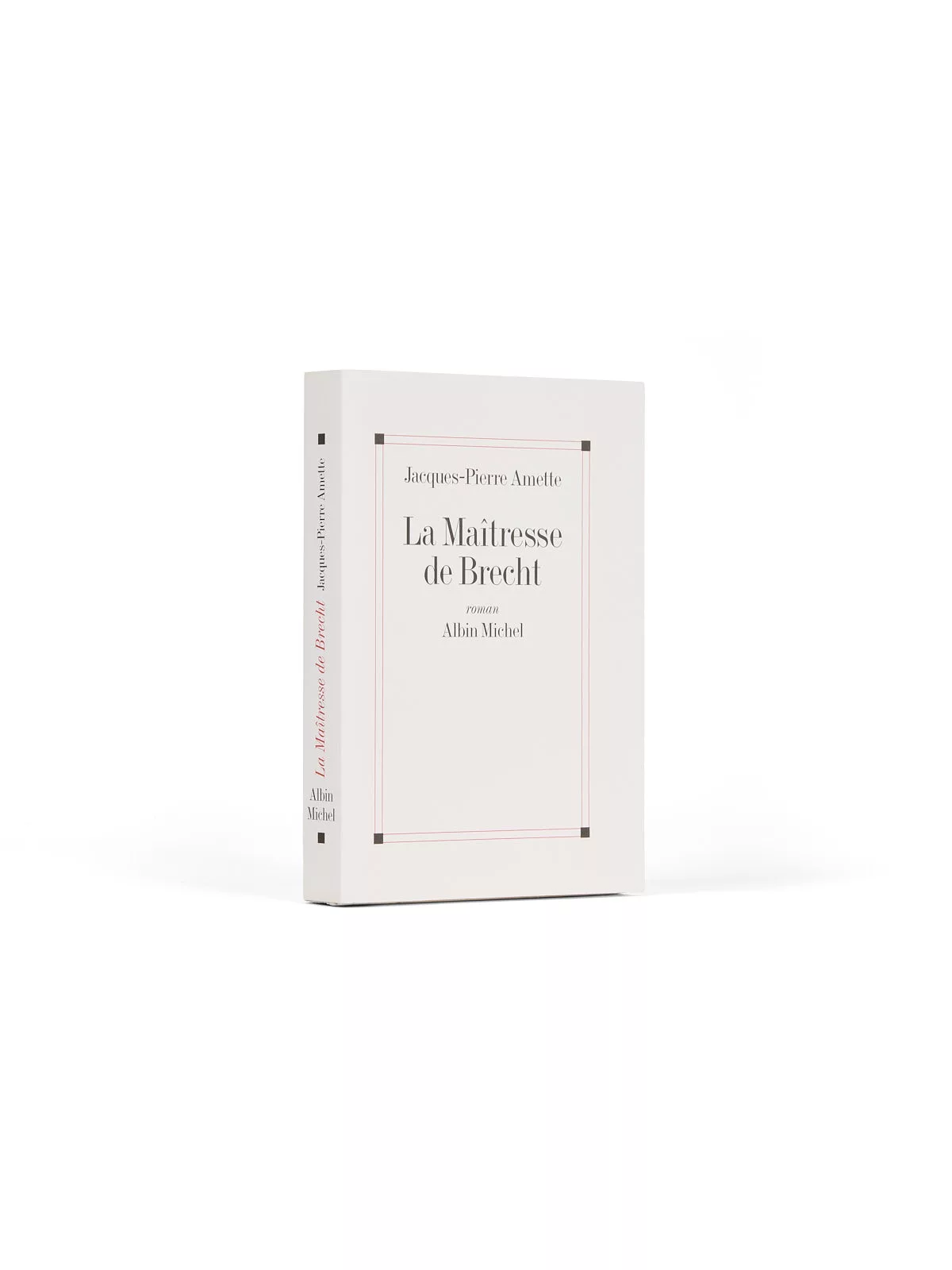
La Maîtresse de Brecht
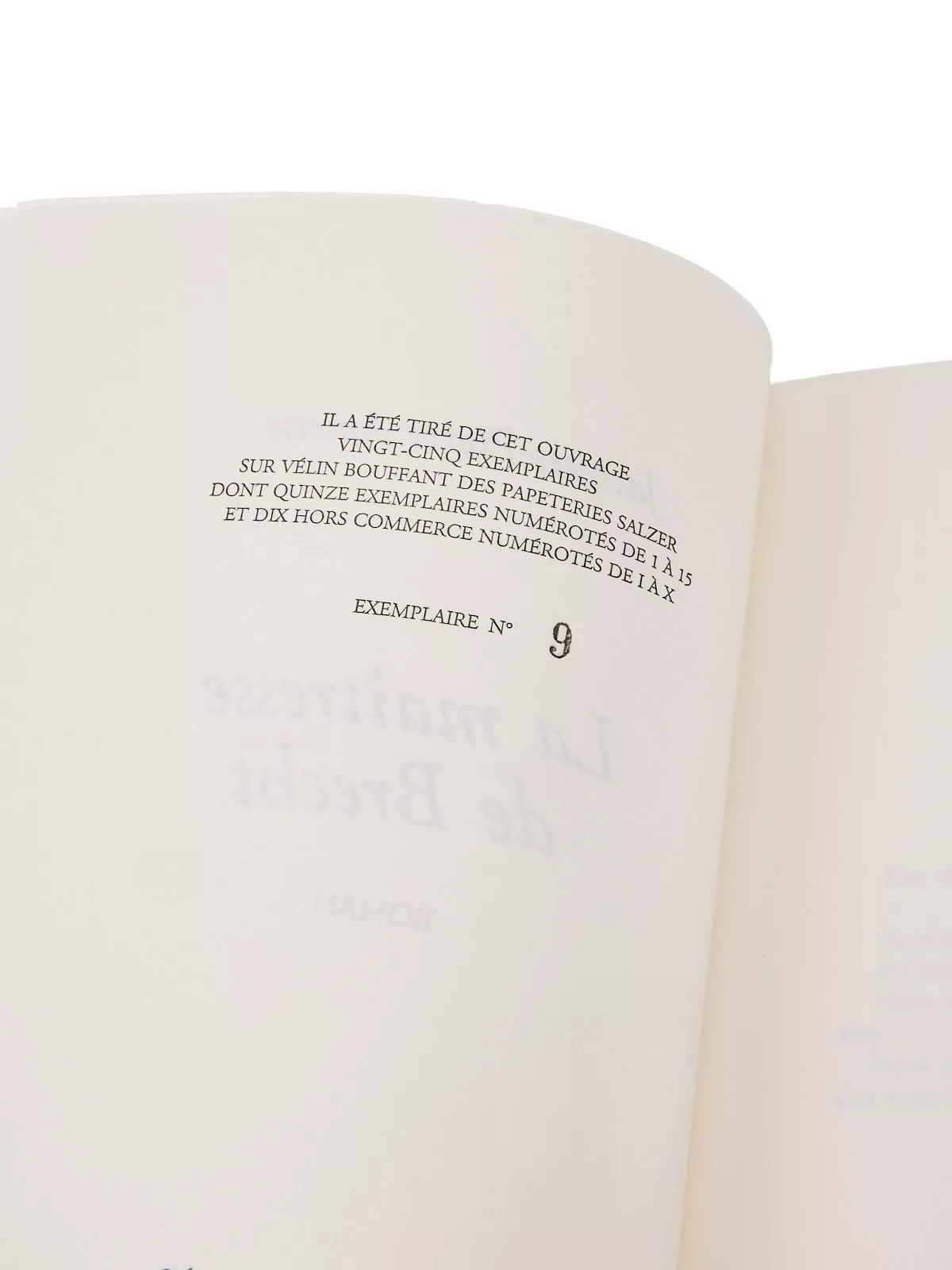
One of 25 deluxe copies on vélin bouffant de Salzer, this copy no. 9.
In the autumn of 1948, Brecht returned to East Berlin: the poet of exile found a theater once more, but also discovered a police state. La Maîtresse de Brecht portrays Maria Eich, a young actress recruited by the Stasi to approach the playwright — an occasional muse and reluctant agent, caught between desire, a role to play and reports to file. Jacques-Pierre Amette crafts a backstage novel of sharp restraint: the Berliner Ensemble becomes a theater of shadows where love and surveillance blur, a tightly controlled biographical fiction that questions what the “committed writer” owes — or does not owe — to power.
Awarded on the fifth ballot (7 votes against 2 for Frédéric Beigbeder and 1 for Alice Ferney), the prize was announced two weeks ahead of the usual schedule, a gesture of independence that sparked a clash with the Femina jury. Speaking for the Femina jury, Régine Deforges called the move “distressing,” claiming that the Goncourt jury had met “on the sly,” with no regard for “what is done and what is not done.”