

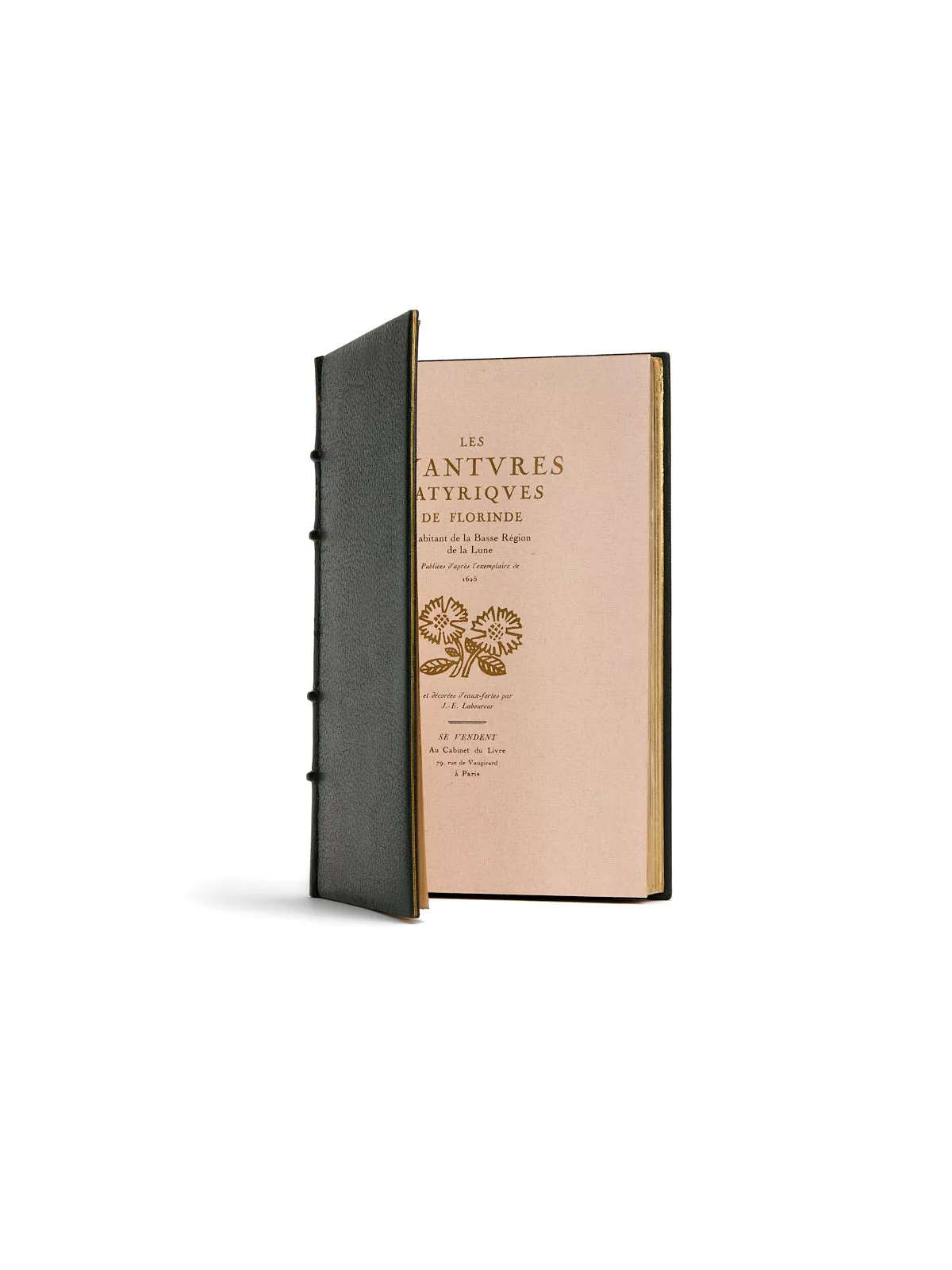
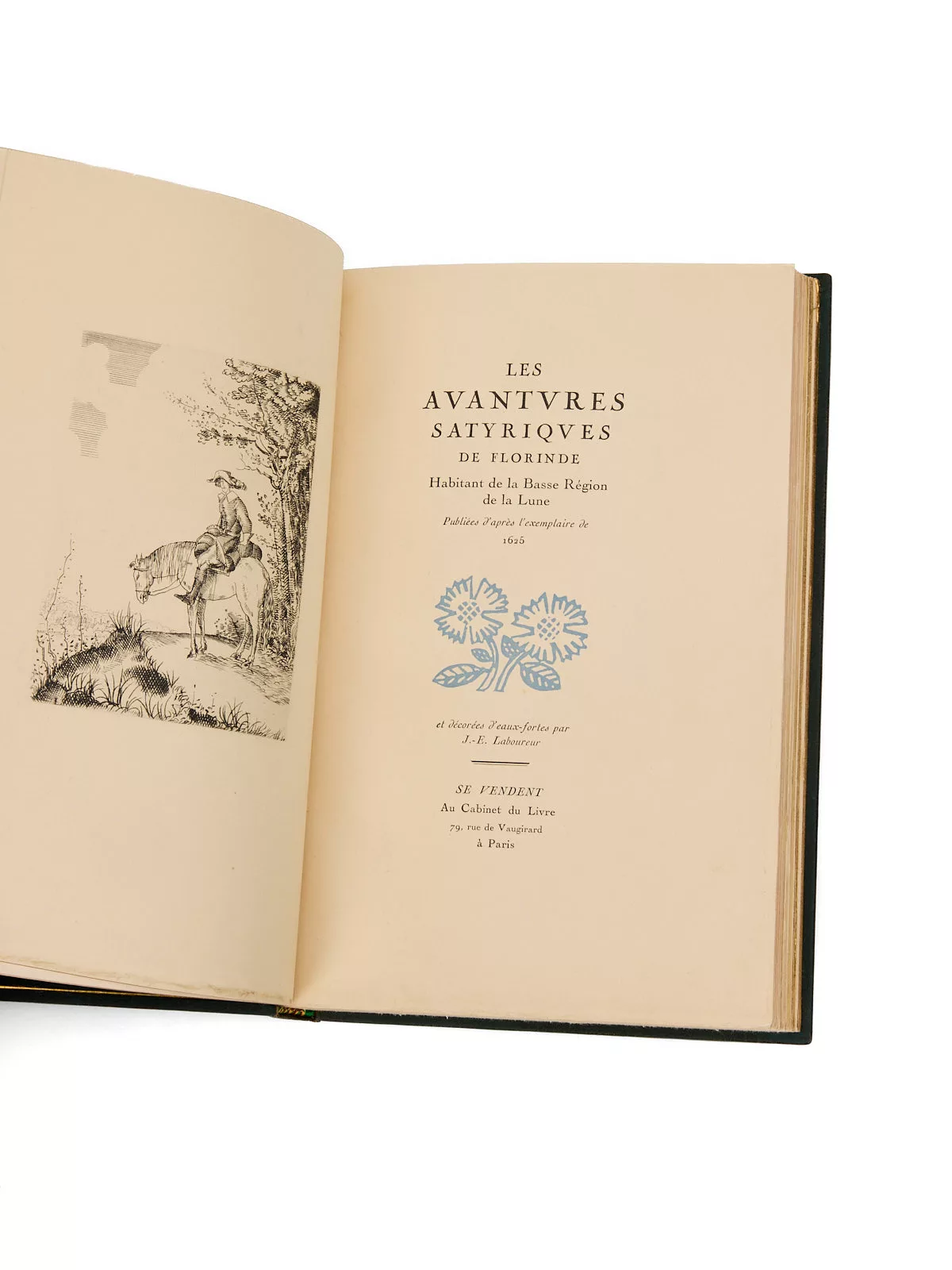
Text attributed to Henri de Codony, edition established by Bertrand Guégan.
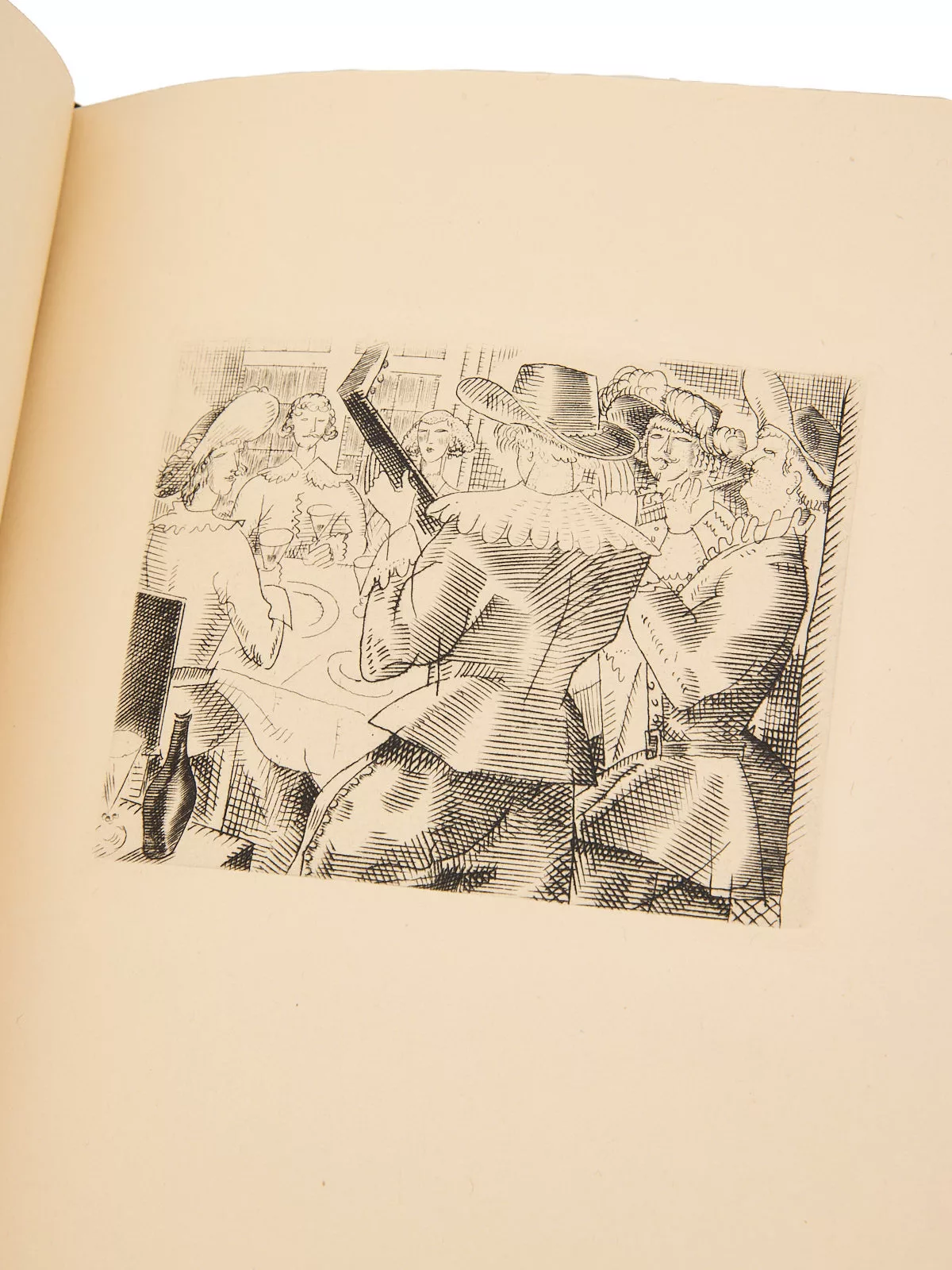
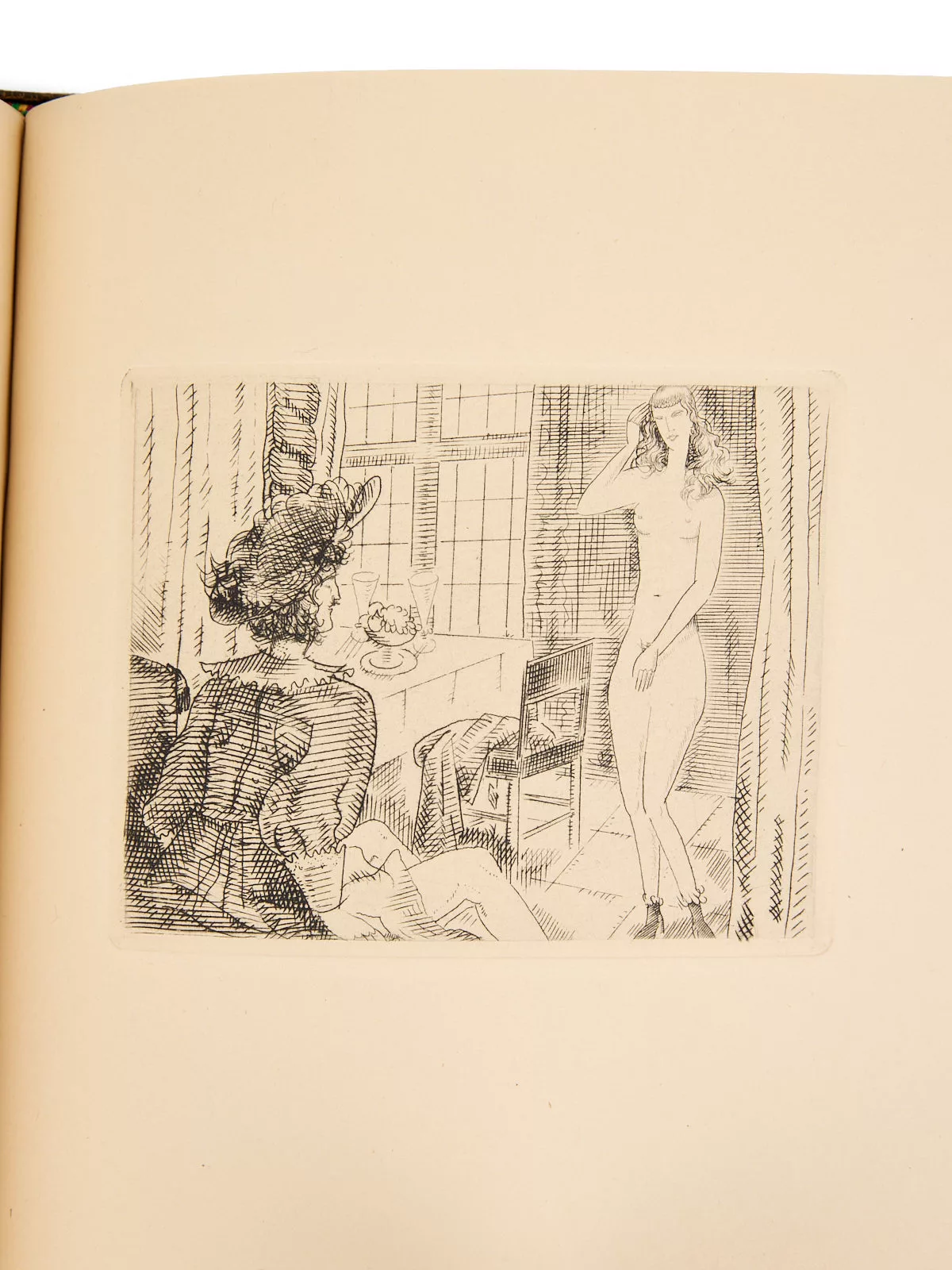
Illustrated edition with 6 original etchings by Jean-Émile Laboureur.
One of the first 5 copies on Japanese paper (no. 2), with suites.
Paris, 1625. The trial of Théophile de Viau for his alleged role in the publication of the Parnasse satyrique was still under way, amid damning testimonies, interrogations and pamphleteering violence. The man his contemporaries had called the “king of wits” or the “first prince of poets” would ultimately be sentenced to banishment, after a long imprisonment that had exhausted his strength. Weakened and ill, he died exactly one year later.
It was in this climate of religious and moral persecution that a slim clandestine novel appeared, without author’s name, place or bookseller: Les Avantures satyriques de Florinde, habitant de la Basse Région de la Lune. It deals precisely with the persecution suffered by a libertine poet at the hands of his country’s religious authorities for having written satirical verse, confronting the criticism of his time under the guise of an imaginary voyage, satire and baroque romance.
Rare from its very origin, the book long remained almost impossible to find.
“Very rare, unknown to Brunet,” the cataloguer of the Guilbert de Pixérécourt library had already written of the Avantures satyriques de Florinde, a sale that helped bring the book back to light in the early nineteenth century. That copy, then the only one known, later passed into the collection of Pierre Louÿs, and was used by Bertrand Guégan for this 1928 edition; another, held at the Bibliothèque Mazarine, more recently allowed a new critical edition to be established in the Classiques Garnier series.
Through its first-person narration, this small book occupies a very singular place in the history of the French novel; here it is admirably illustrated by Laboureur for the celebrated Au Cabinet du Livre, which specialized in limited-edition works for bibliophiles.
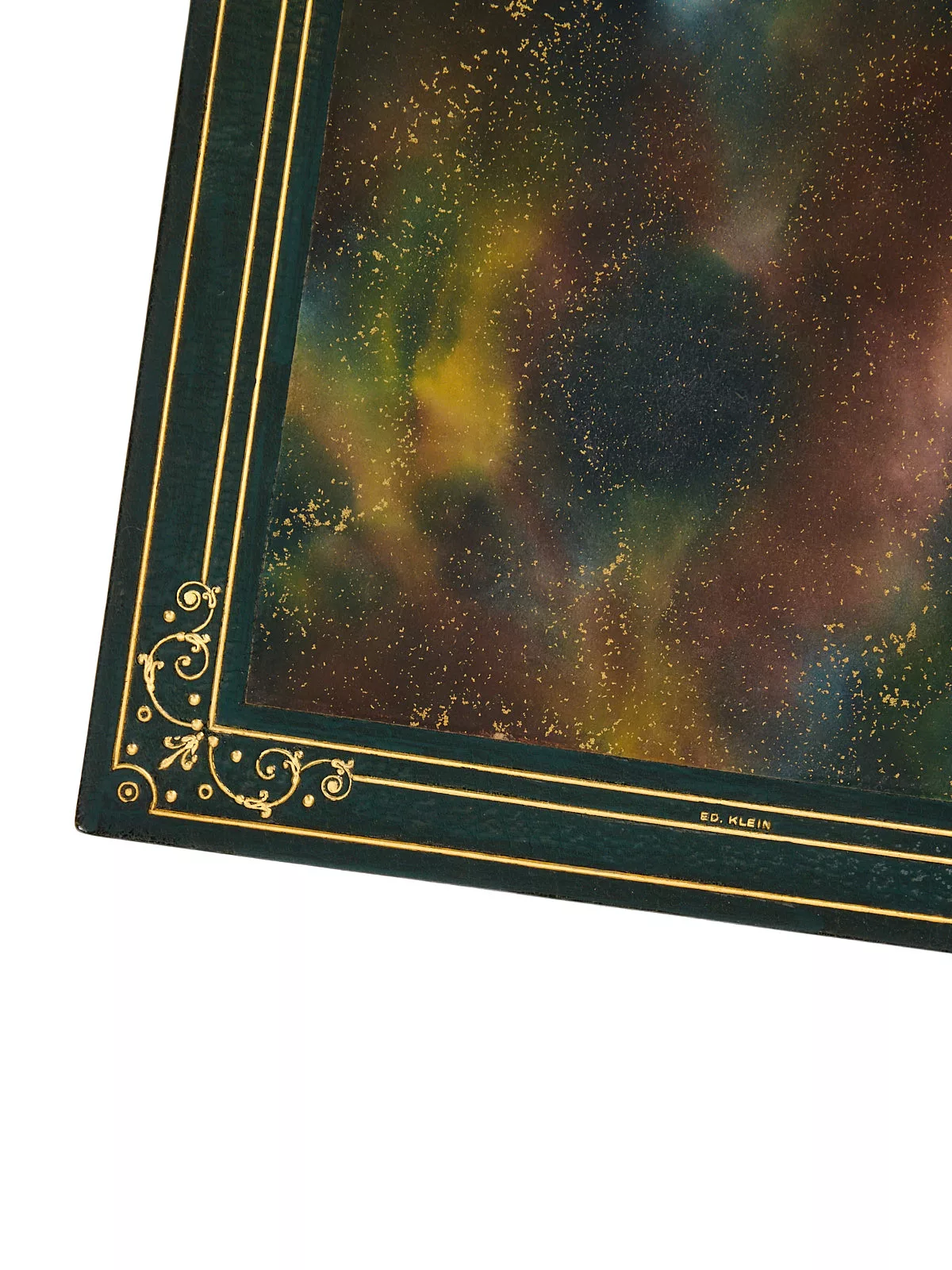
A fine copy; some rubbing to the binding.
Mahé, Bibliographie des livres de luxe de 1900 à 1928, I, p. 88; Carteret, Le Trésor du bibliophile. Livres illustrés modernes, IV, p. 49; Monod, Manuel de l’amateur de livres illustrés modernes, I, p. 116, no. 654.