

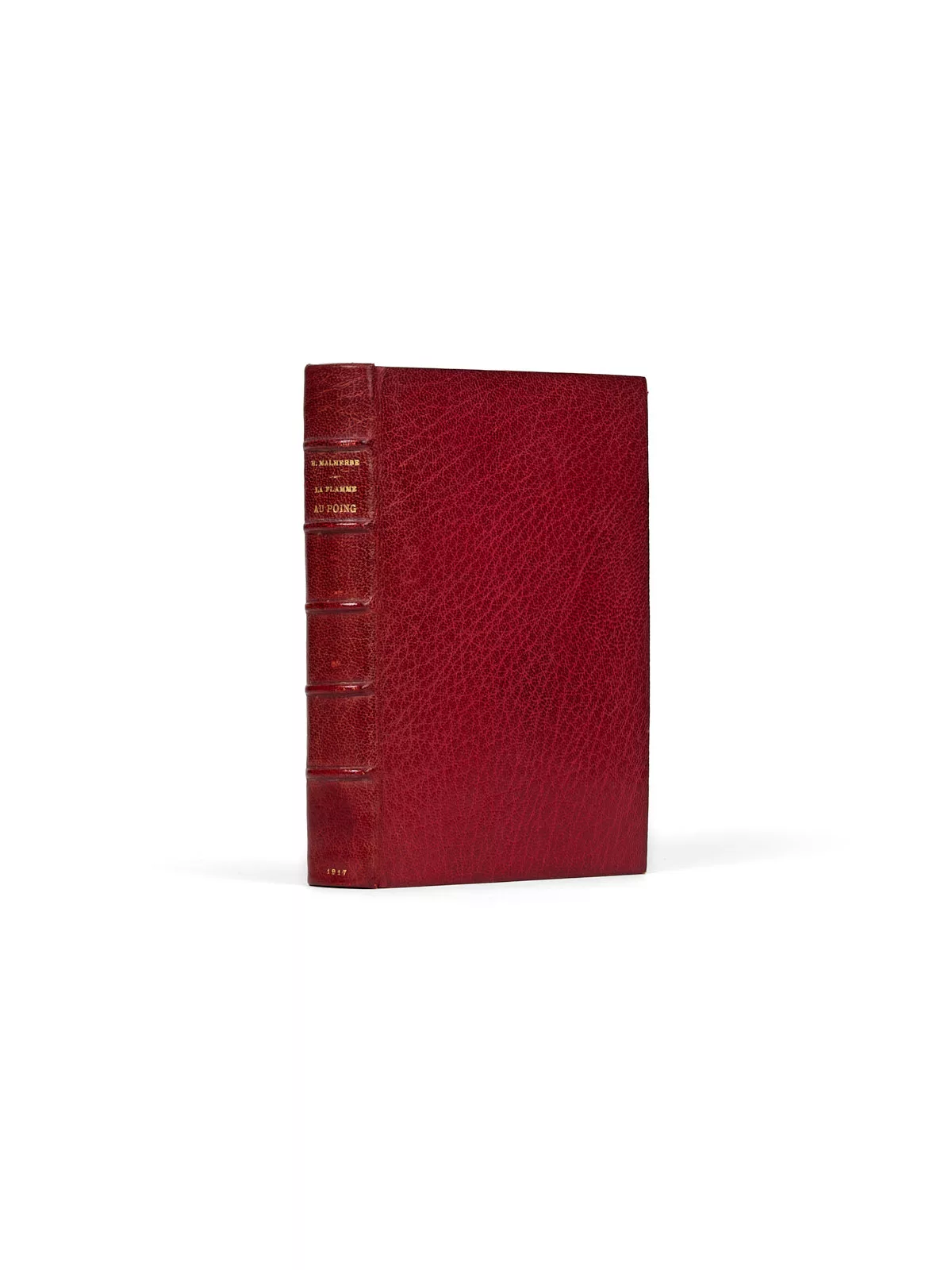
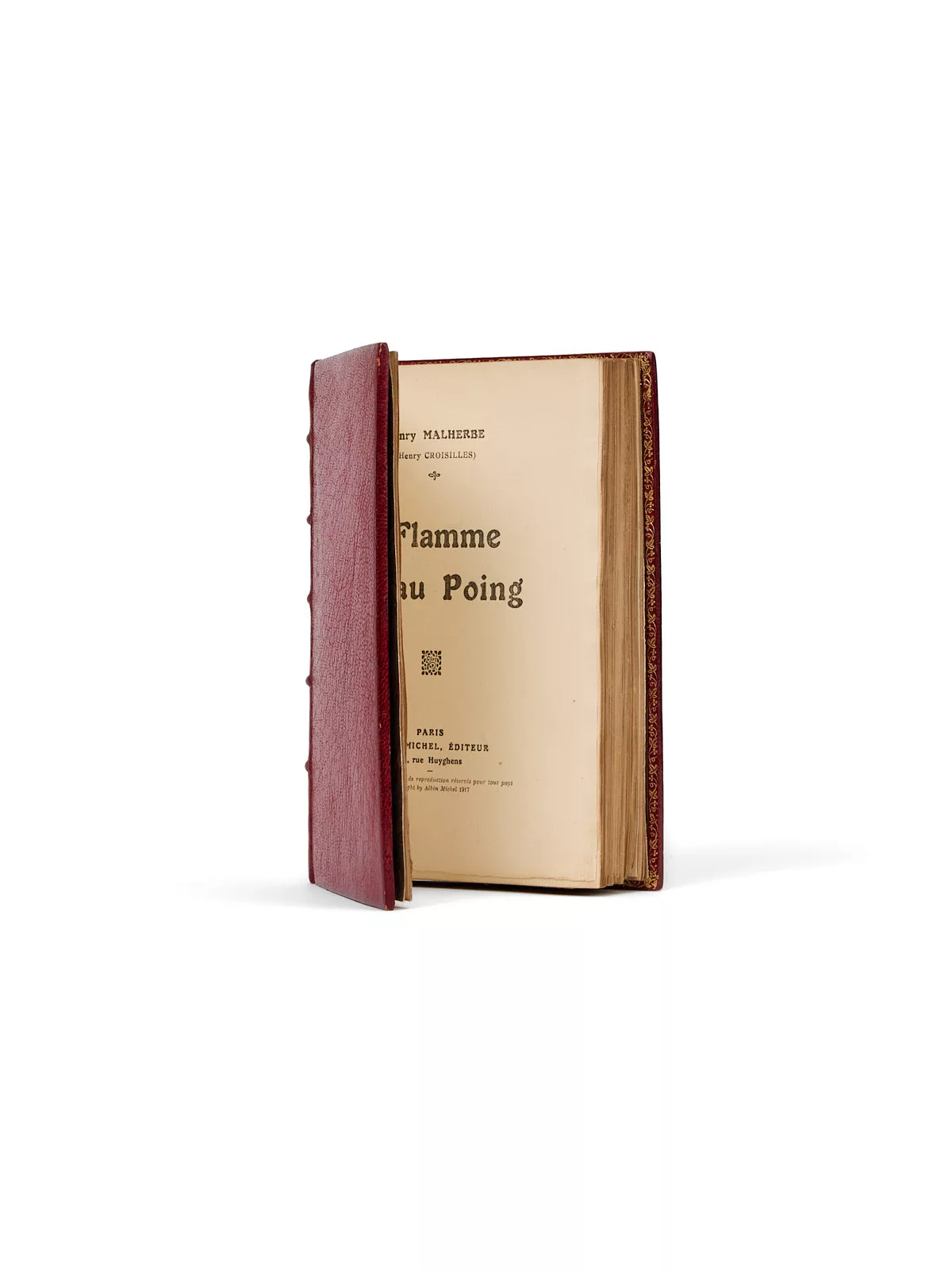
La Flamme au poing
Five war narratives, published during or just after the conflict, were awarded the Prix Goncourt: Adrien Bertrand’s L’Appel du sol in 1914 (awarded in 1916), René Benjamin’s Gaspard in 1915, Henri Barbusse’s Le Feu in 1916, Henry Malherbe’s La Flamme au poing in 1917, and finally Georges Duhamel’s Civilisation in 1918. All were considerable commercial successes, although the truth of events experienced on the battlefield was not always faithfully respected in some of them.
Malherbe’s book, built from the testimony of fellow soldiers and from memories of which he kept no notes — “it is enough for me to have travelled through that abyss” — won on the fourth ballot, ahead of Jean Giraudoux’s Lectures pour une ombre. The novel enjoyed great public success, although it belongs to a tradition of war writing since called into question: Genevoix, from Sous Verdun onward, and Barbusse himself in Le Feu, would push this stance toward a starker realism, at the risk of unsettling conventional heroism.
Henry Malherbe became the first president of the Association des écrivains combattants. Founded in July 1919, it published the celebrated Anthologie des écrivains morts à la guerre, in five volumes, for which Malherbe wrote the preface and several entries. This Anthologie records the military and literary careers of the 562 writers who died for France, on the field of honor or under arms during the First World War. Among these 562 names, engraved in 1927 on plaques at the Panthéon — and listed without distinction, out of the respect owed to them — are those literary history would remember: among their brothers in arms, Alain-Fournier, Charles Péguy, Louis Pergaud, Victor Segalen and Guillaume Apollinaire.
The Prix Henri-Malherbe, established in 1953 on the initiative of the Association des écrivains combattants, is awarded each year at its general assembly to a work of historical essay writing.
A rare copy from the deluxe issue, shared between 10 copies on Japanese paper and 10 on Holland paper. Note that there also exists an issue for “Les XX,” signed by the author, on vergé d’Arches paper.