

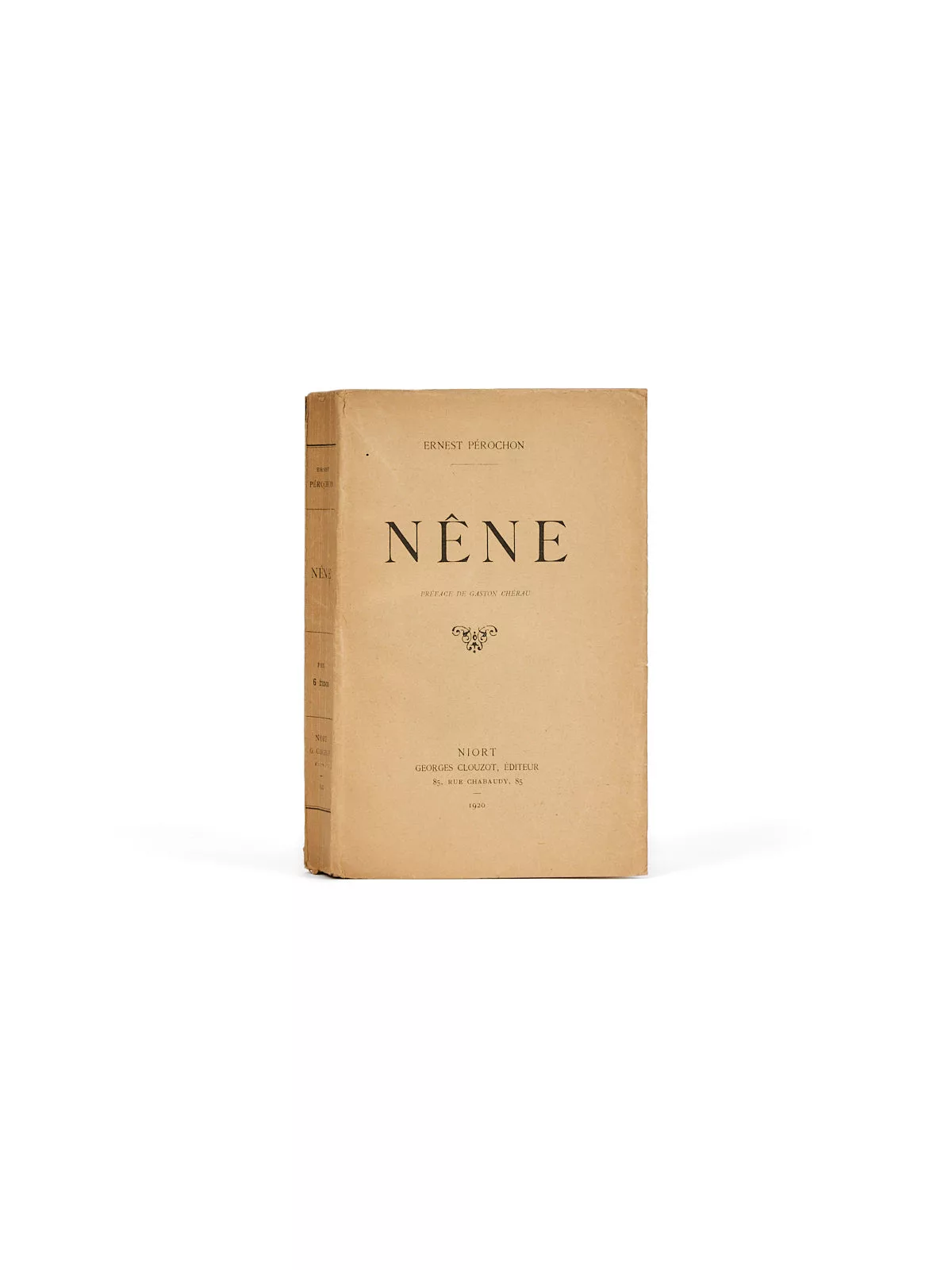
Nêne
Preface by Gaston Chéreau.
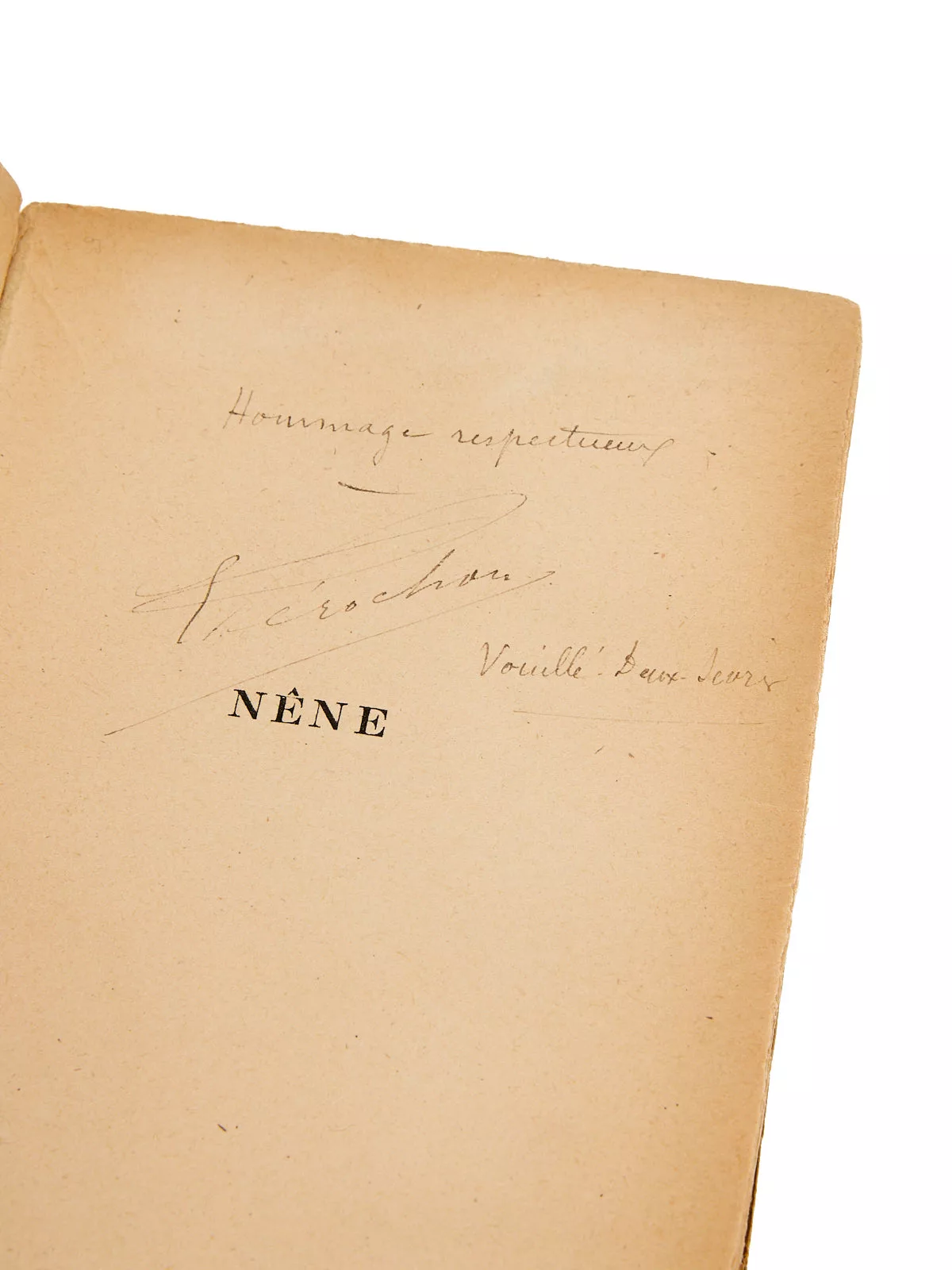
Signed presentation inscription: “Hommage respectueux. E. Pérochon, Vouillé, Deux-Sèvres.”
A schoolteacher from the Deux-Sèvres, Ernest Pérochon (1885–1942) broke with the dominant Naturalist and regionalist tradition to produce, with Nêne, a deeply humane rural chronicle. The novel portrays a young servant girl of simple, devoted heart, embodying the harshness and grandeur of peasant life in postwar Poitou.
The book was first published at the author’s expense in Niort, by the bookseller Georges Clouzot — brother of Henri-Georges, the future filmmaker. When the firm went bankrupt, the contract passed to Plon, only a few weeks before the Prix Goncourt crowned this unexpected laureate.
Sidelined during the Occupation for refusing any compromise with the authorities, Pérochon saw his works suppressed and his name placed on a blacklist. He died prematurely in 1942, at the age of 56.
This copy contains a preface by Gaston Chéreau, a fellow novelist from Poitou, who had won the Prix Vie heureuse (the future Prix Femina) in 1903 for Durandal.
From the “Prix Goncourt” library of Gérard Pouguet, with bookplate.
Rare with an inscription.