

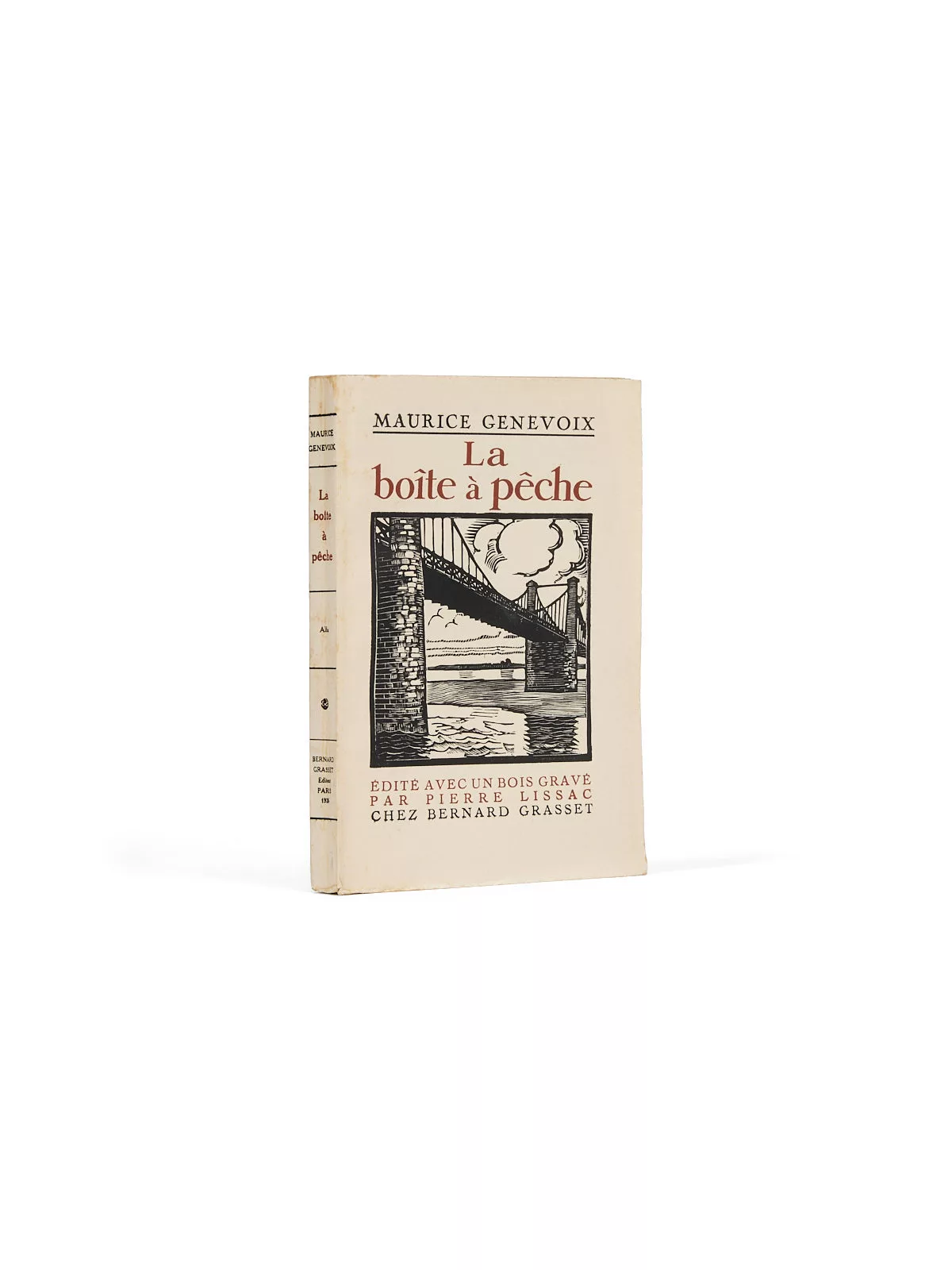
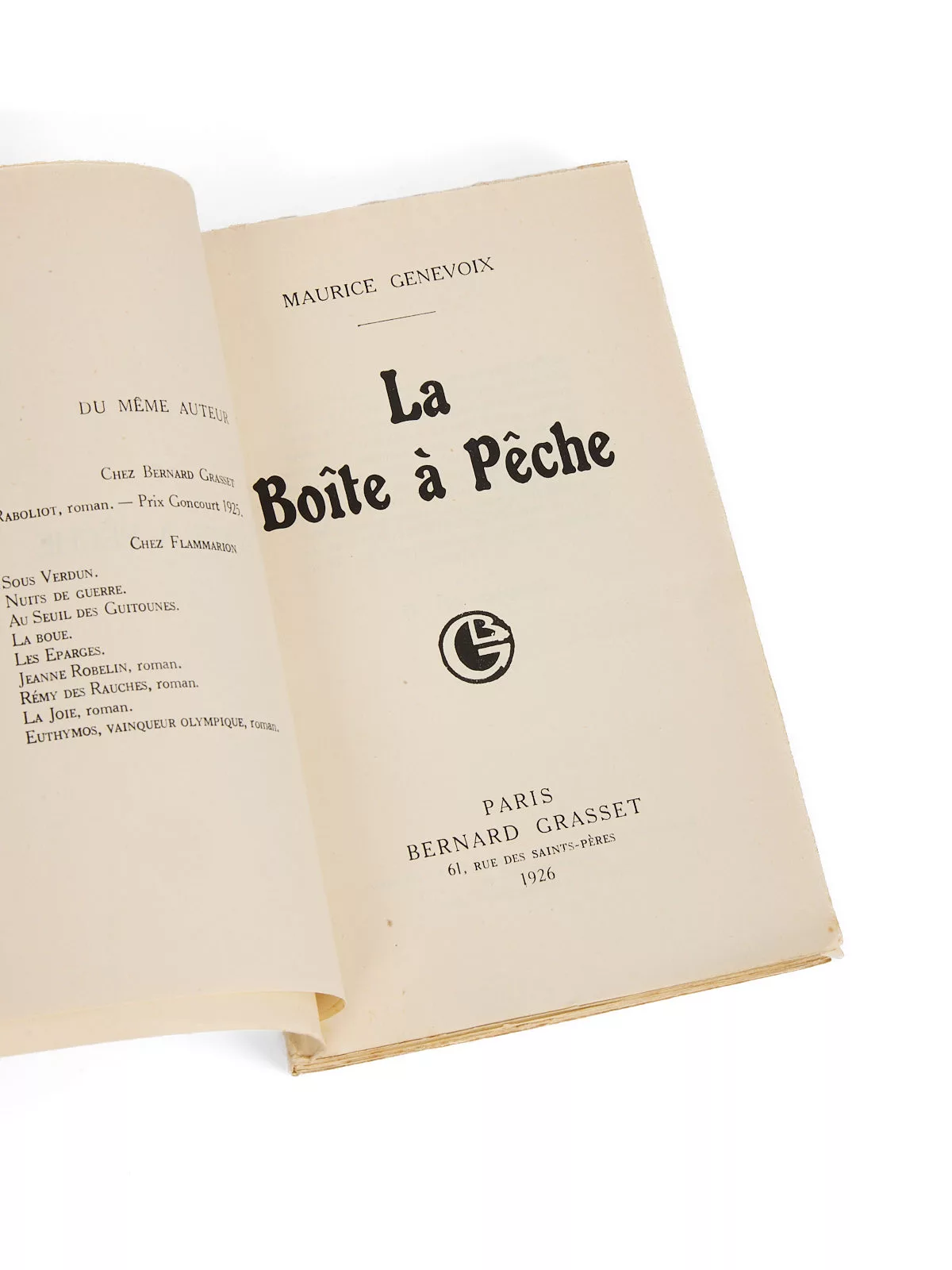
La Boîte à pêche
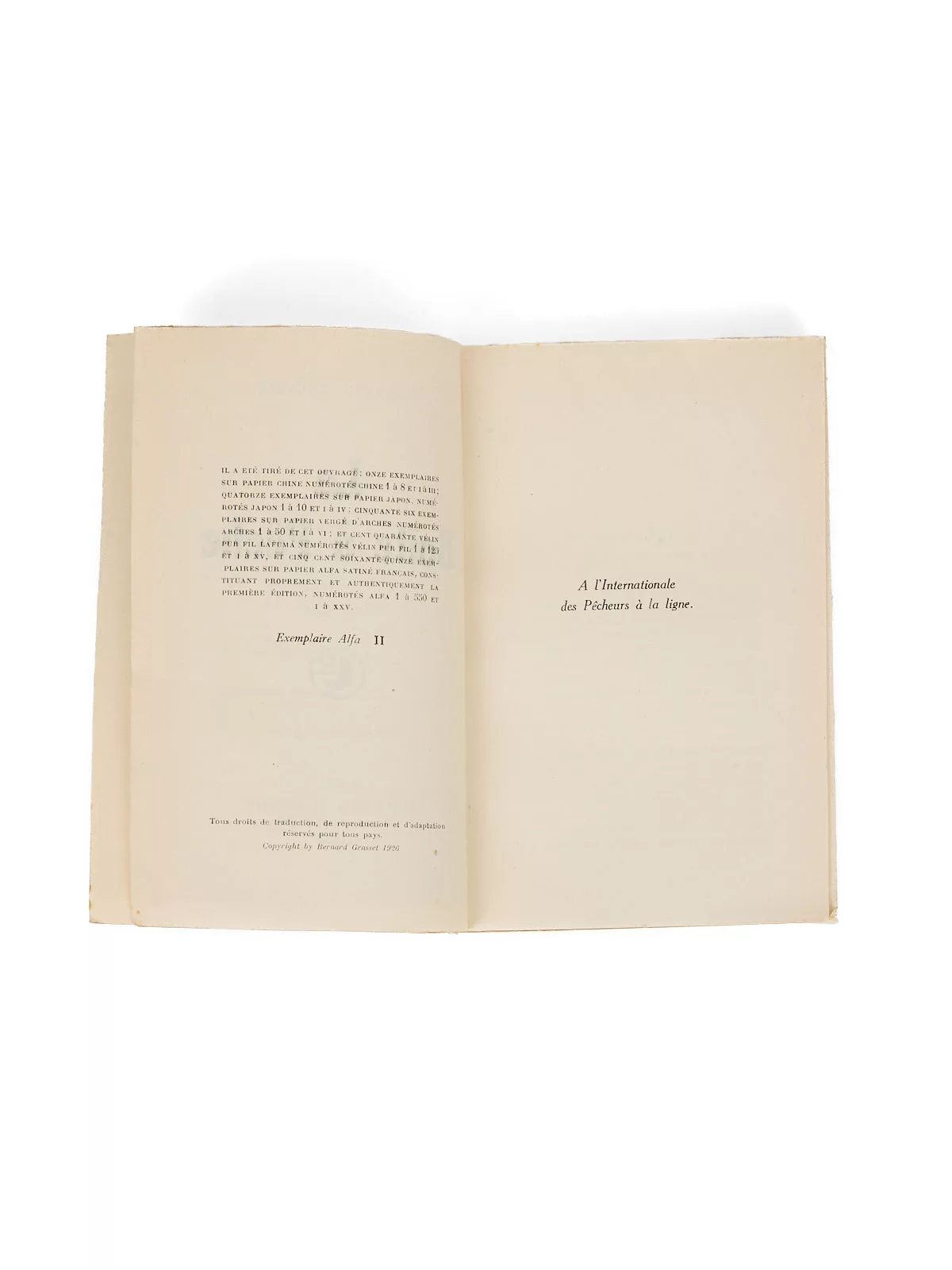
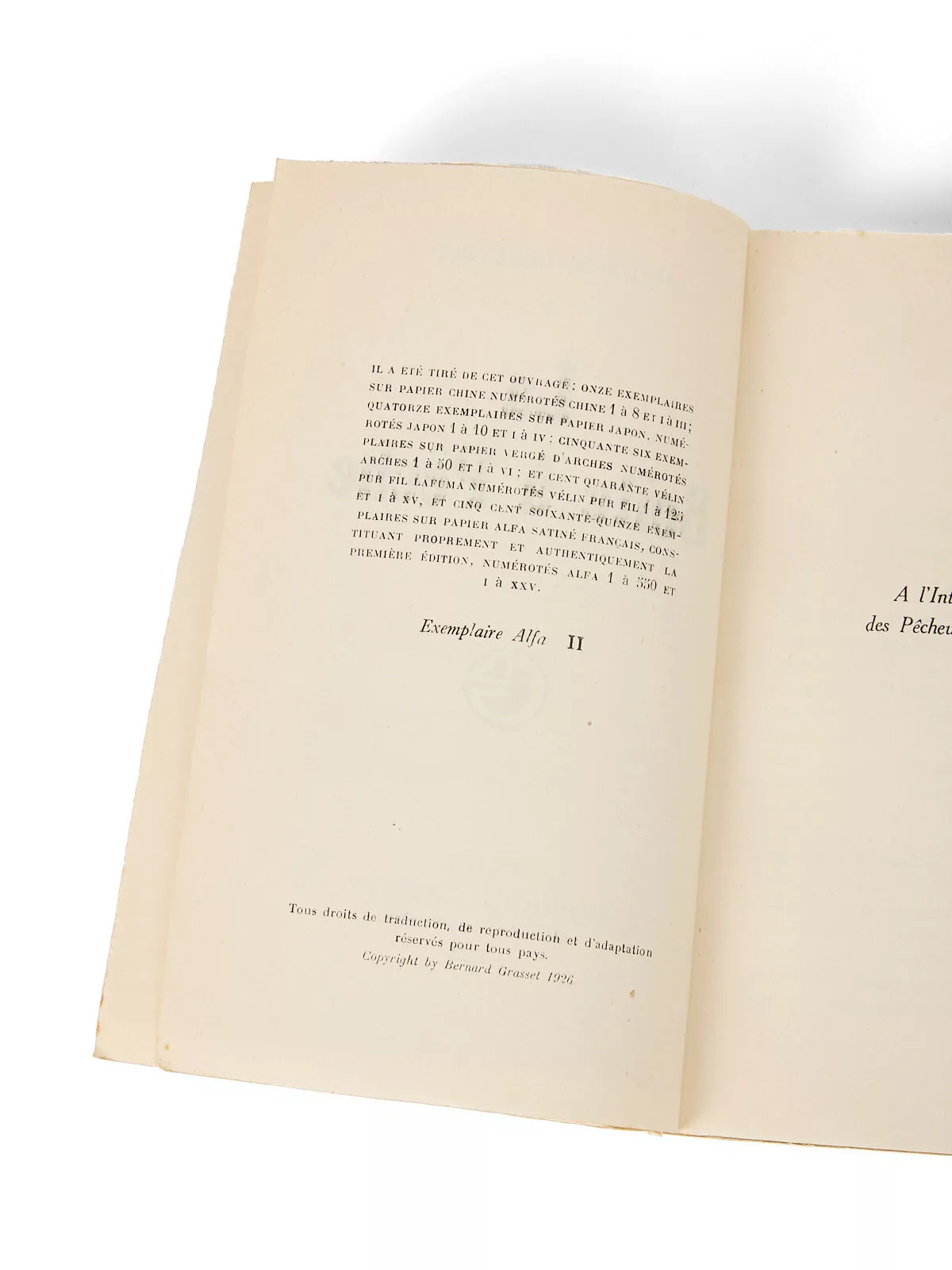
One of 575 copies on alfa paper, this one hors commerce (no. II).
A year after Raboliot (Prix Goncourt 1925), settled in his father’s house in Châteauneuf-sur-Loire, where he had returned to live after the war, Maurice Genevoix turned to the river of his childhood. Four years earlier he had already given readers the wonderful Rémi des Rauches, which gave pride of place to the Loire, through the figure of a visionary cooper and an evocative style. The river was already omnipresent there, to the point of becoming the novel’s dedicatee.
La Boîte à pêche is, at first sight, an almost ethnographic evocation of the various forms of fishing on the Loire, and of the deep pleasure they bring: a novel of the “terroir,” which Parisian intellectual circles quickly filed away among “regionalist” writings, with their customary blinkers. Genevoix, however, claims this vein forcefully — and tenderly: for him it is a response to barbarity, an antidote to war, as he writes in his foreword, paying tribute to three guiding figures: Najard, his fishing mentor; Bailleul and Jeanneret, his childhood, school and fishing companions.
It was thanks to the success of Raboliot, Rémi des Rauches and La Boîte à pêche — three texts steeped in a vocabulary of exceptional sensory richness — that Genevoix was able, in 1928, to acquire the house at Les Vernelles, in Saint-Denis-de-l’Hôtel. There he set up a study facing the Loire, and there he wrote much of his future work.
From the library of Maurice Genevoix (bookplate).