

L’Oblat
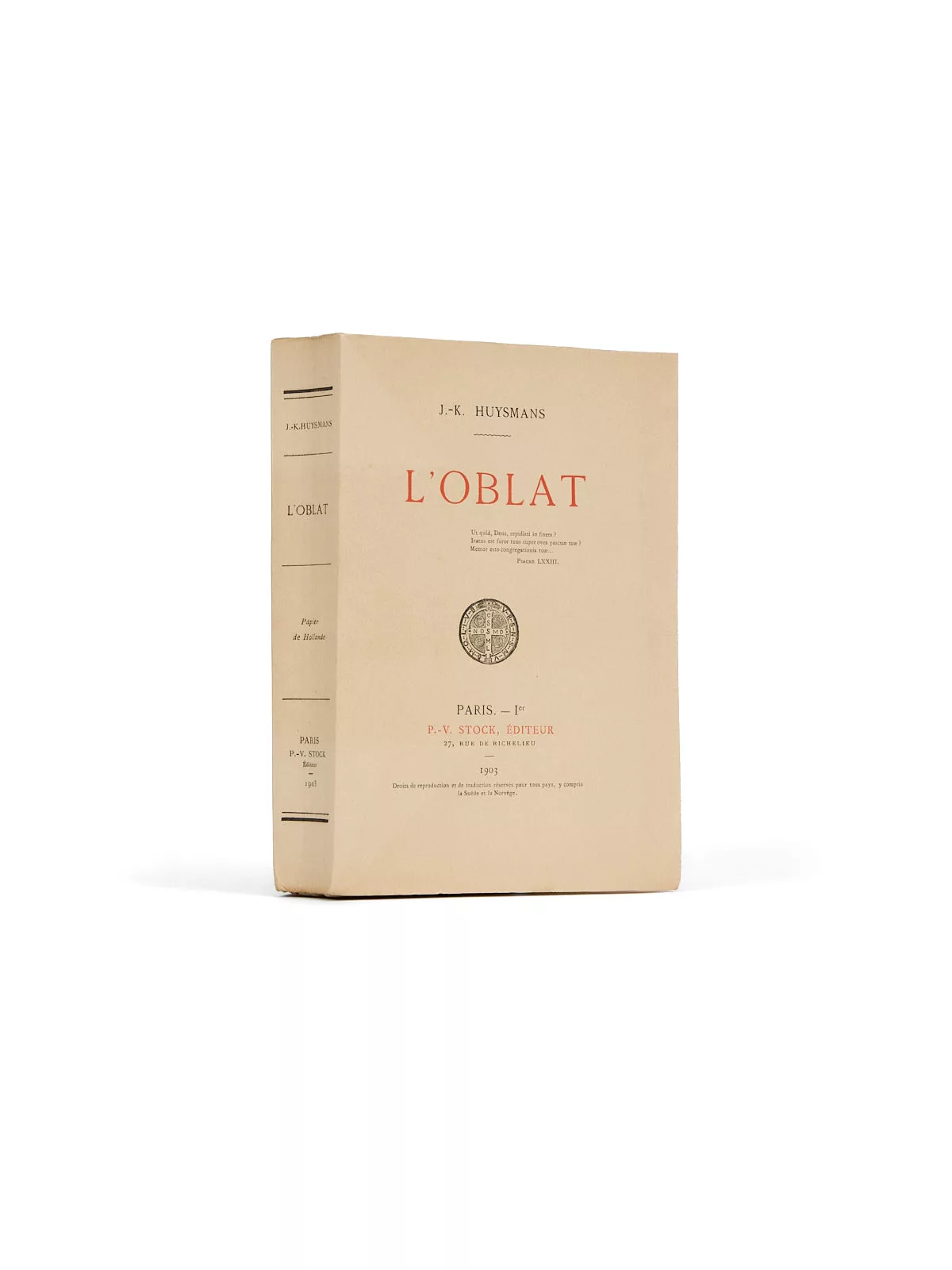
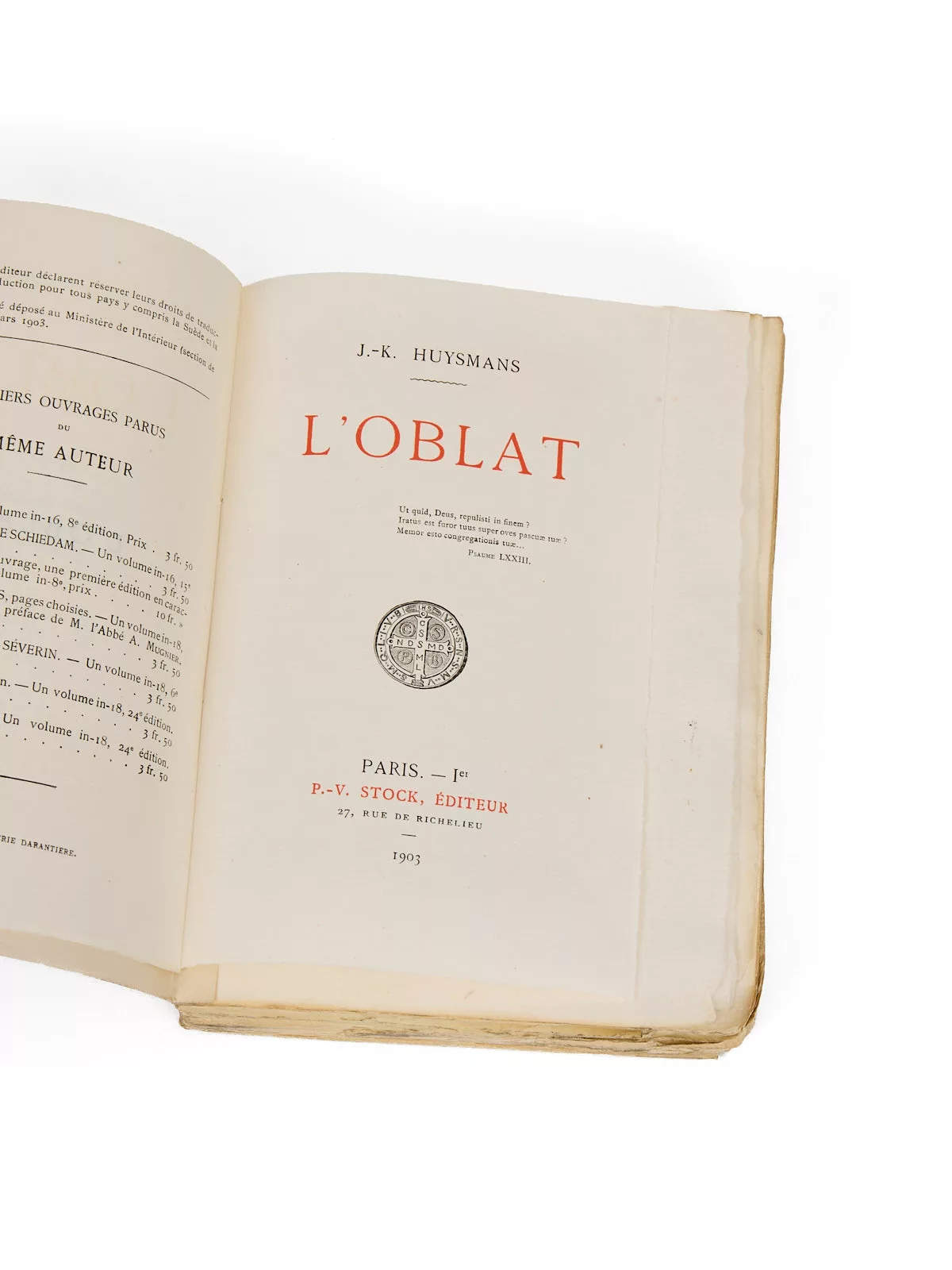
One of 80 copies on Hollande paper (no. 31), this one printed for M. J. Brivois.
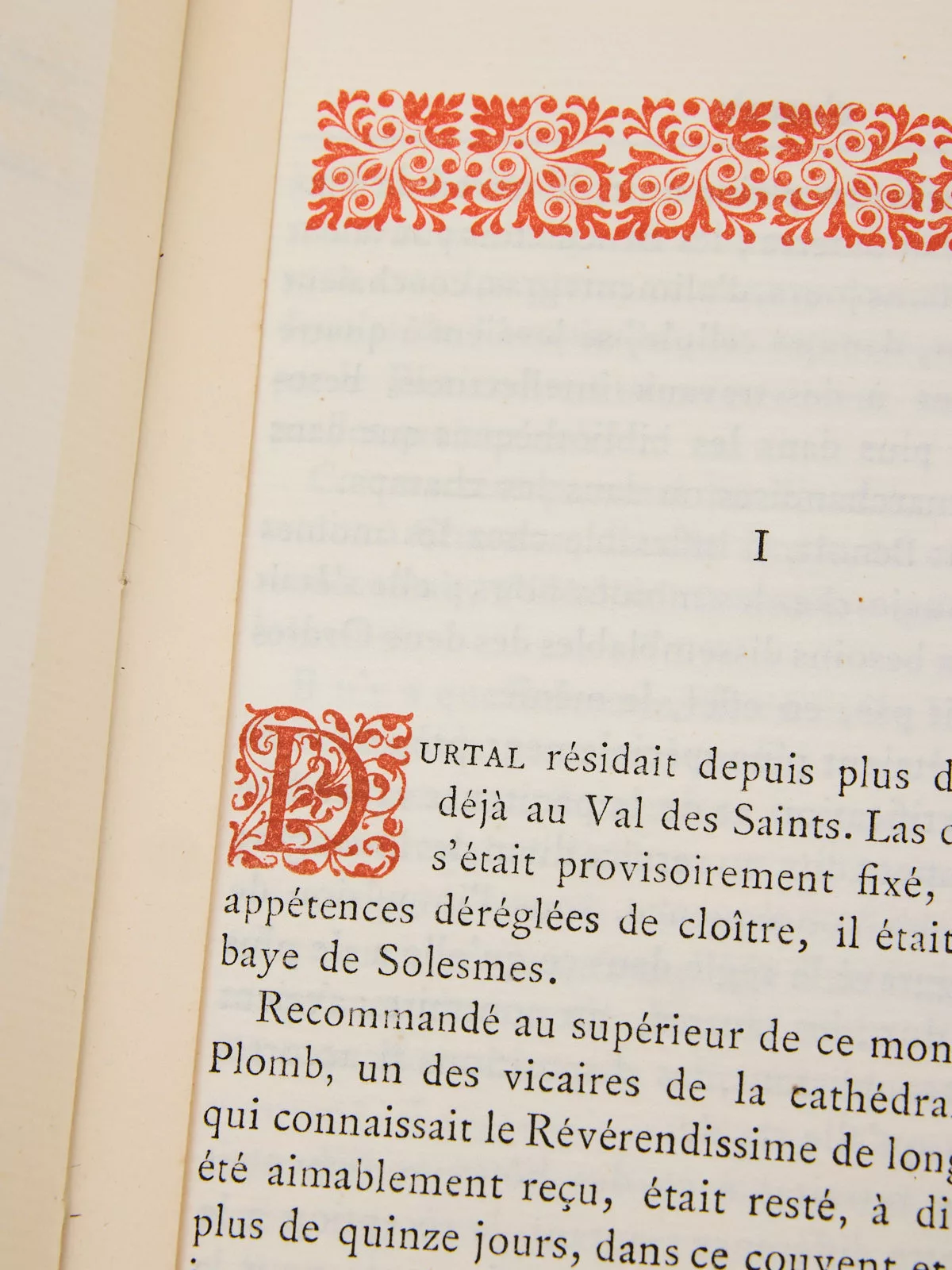
After Là-bas, En route and La Cathédrale, Durtal — the author’s barely disguised self-portrait — appears one last time in L’Oblat, reflecting Huysmans’s own experience at the community of Ligugé, where in 1901 he became that “layman living in a monastery to which he had given his possessions.”
Gardens, light, candles, rites, relics and religious paintings all play a part in the plot, seeming to fade or express the drama of the monks’ abandonment of the monastery, forced into exile in Belgium at the end of the book — a striking parallel with the community of Solesmes, which Huysmans frequented at the same time. The writer’s sincere conversion belongs, of course, to the context of the period, marked by the expulsion of religious congregations from France.
A fine copy on wide margins, printed for the bibliographer and bibliophile Jules Brivois, author notably of a Bibliographie des ouvrages illustrés du XIXe siècle principalement des livres à gravures sur bois.