

Trois jours chez ma mère
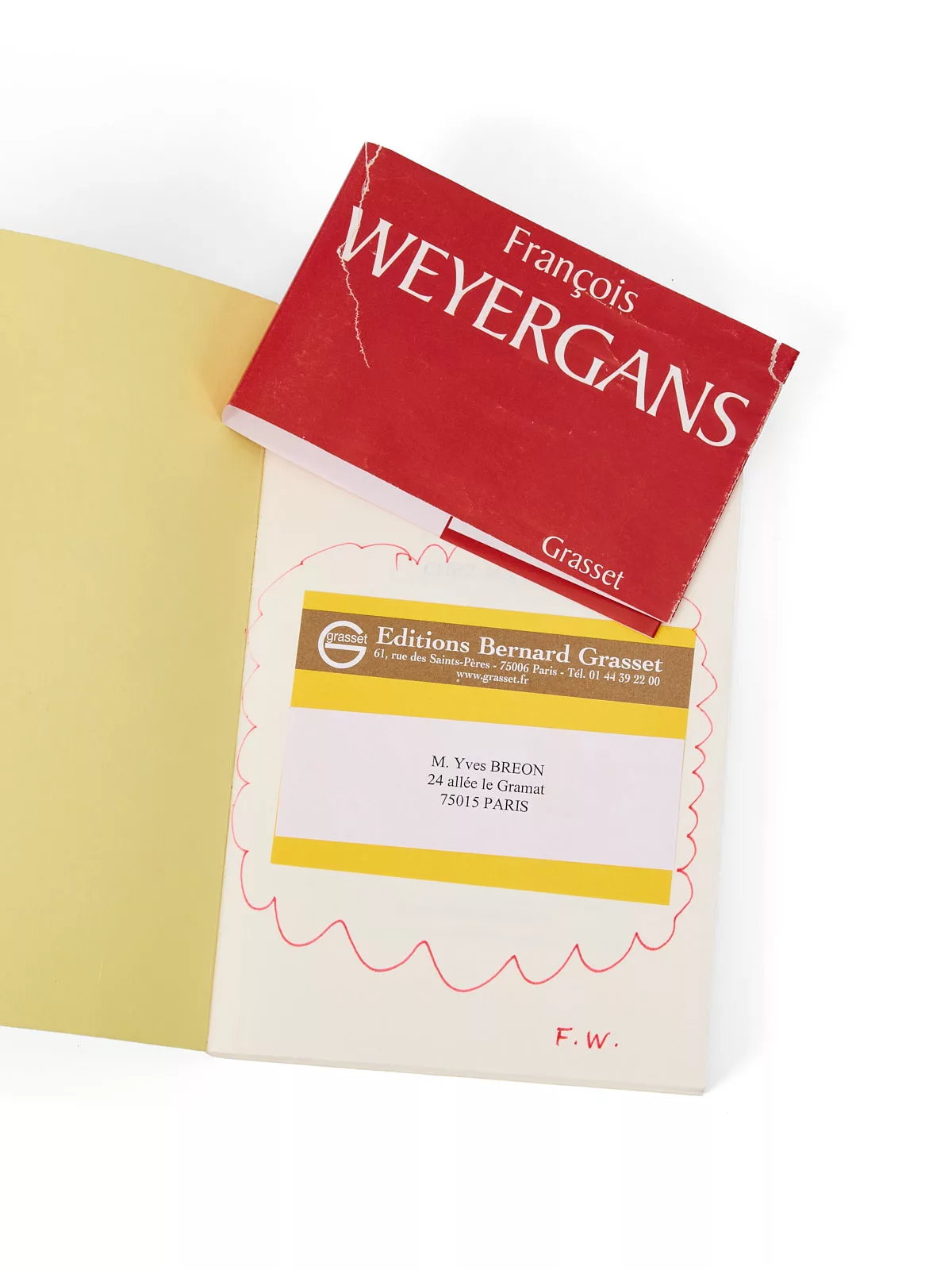
Press copy (with slip).
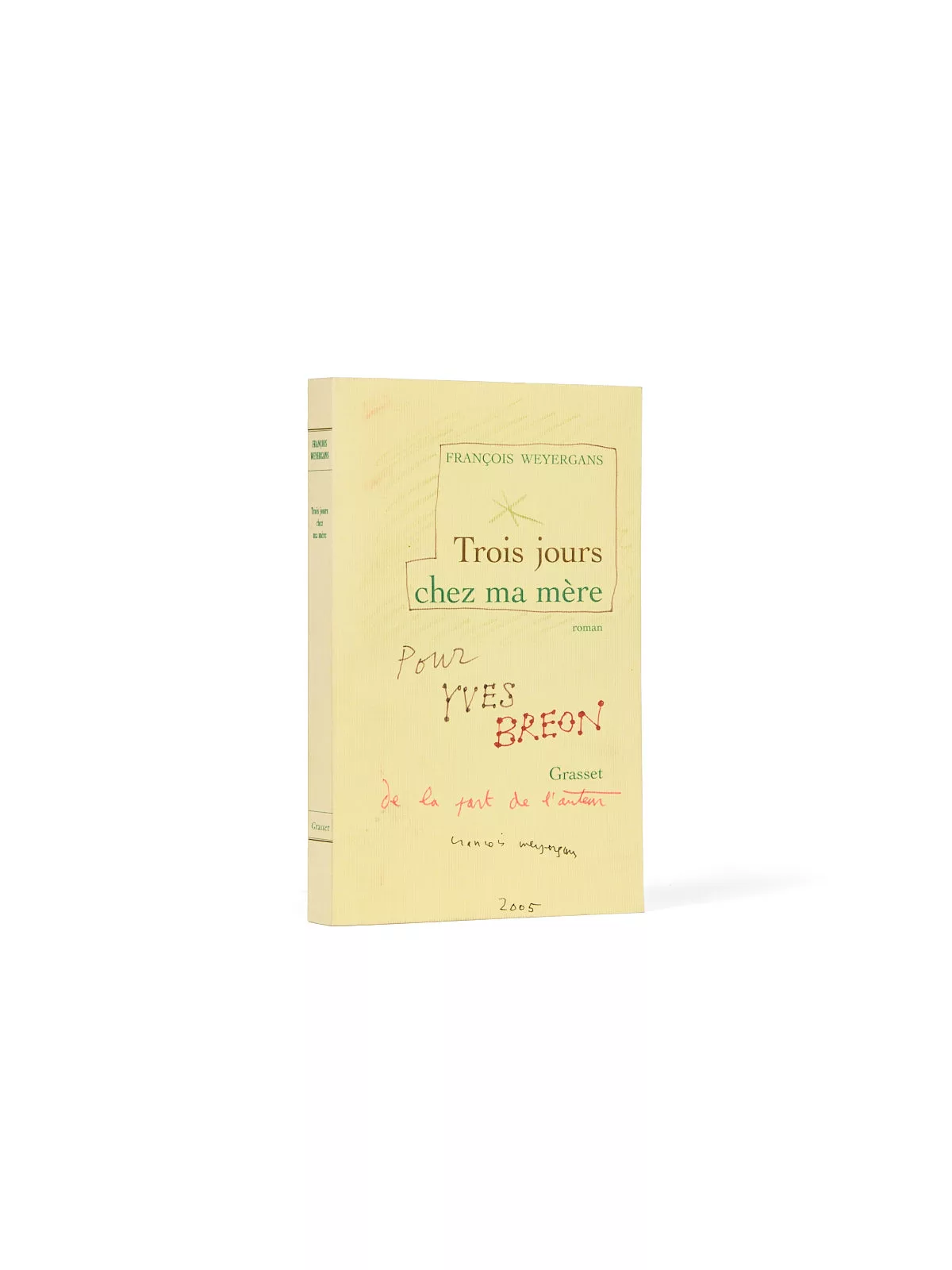
Signed presentation inscription on the cover and on the first blank leaf: “Pour Yves Bréon, de la part de l'auteur, François Weyergans, 2005.”
On 3 November 2005, the jury chose Weyergans by six votes to four over Michel Houellebecq (for La Possibilité d’une île). François Nourissier, an ardent supporter of Houellebecq’s book, expressed his reservations: “I will have no reaction whatsoever. I abide by the majority’s choice. Houellebecq did not win the prize simply because he did not have the majority,” he said laconically, adding that the jury’s deliberations had been “sincere and close.” Despite Nourissier’s recurring support, Houellebecq failed for the third time — a gesture of independence claimed by the Goncourt jury against the “rigged game” of media hype. The Académie thus crowned only the third Belgian laureate of the prize (after Plisnier and Walder), and the second author, after Philippe Hériat, to hold both the Renaudot (1992, La Démence du boxeur) and the Goncourt, with this novel of procrastination, at once funny and melancholic.
Trois jours chez ma mère features a writer named… François Weyergans, who cannot manage to write the book he has promised. Delays, avoidance trips, lists, far-fetched projects, variations on filiation and filial love: the text proceeds in loops, digressions and comic relaunches, circling around its tender core — the mother. It is a mise en abyme of thwarted writing, a self-portrait as an inspired procrastinator, in which the former Franco-Belgian filmmaker (trained at IDHEC) paces his chapters like film shots: sharp, elliptical, with a luminous irony that barely conceals its fragility.
Publisher’s wraparound band preserved.