

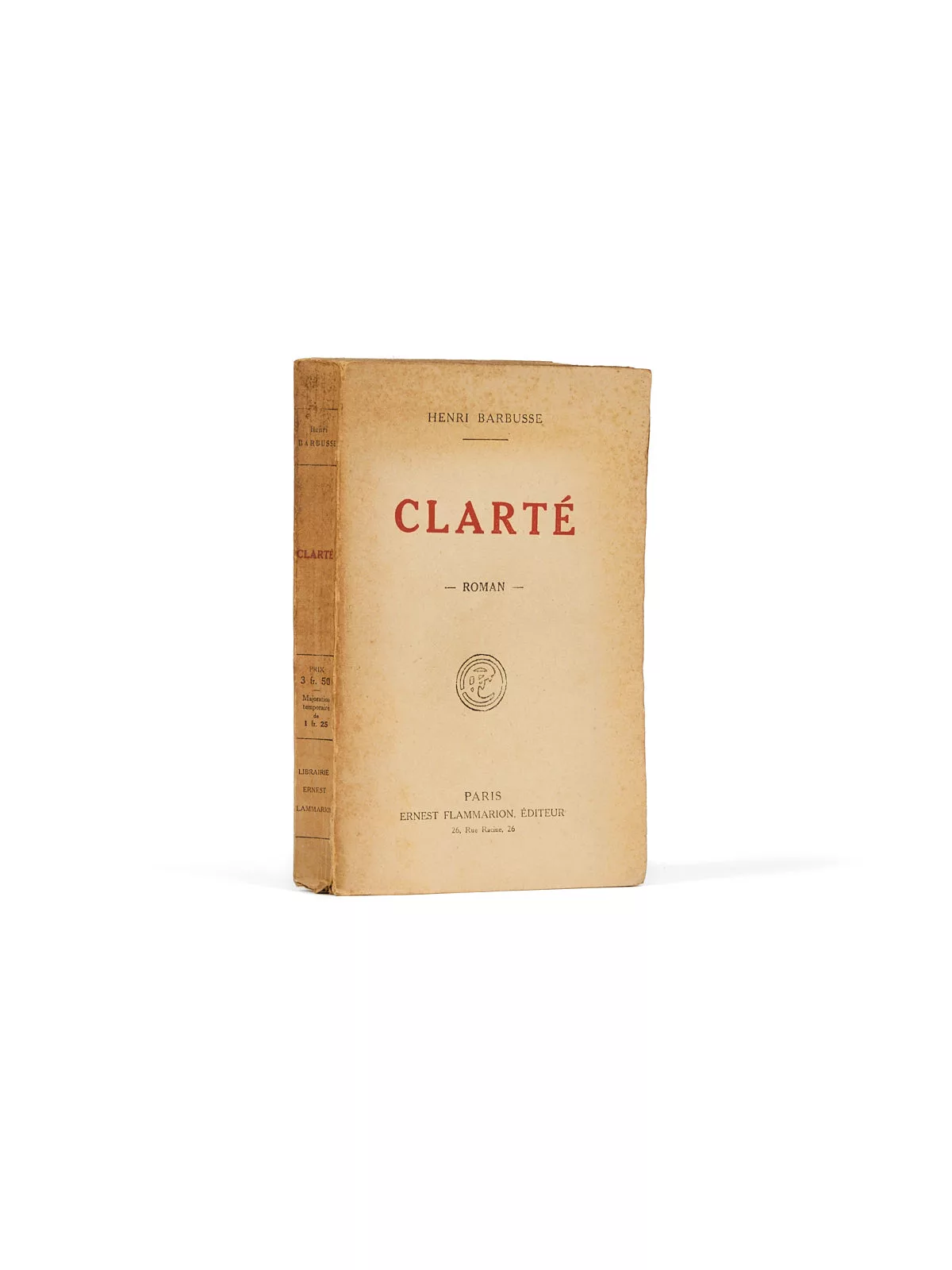
Clarté
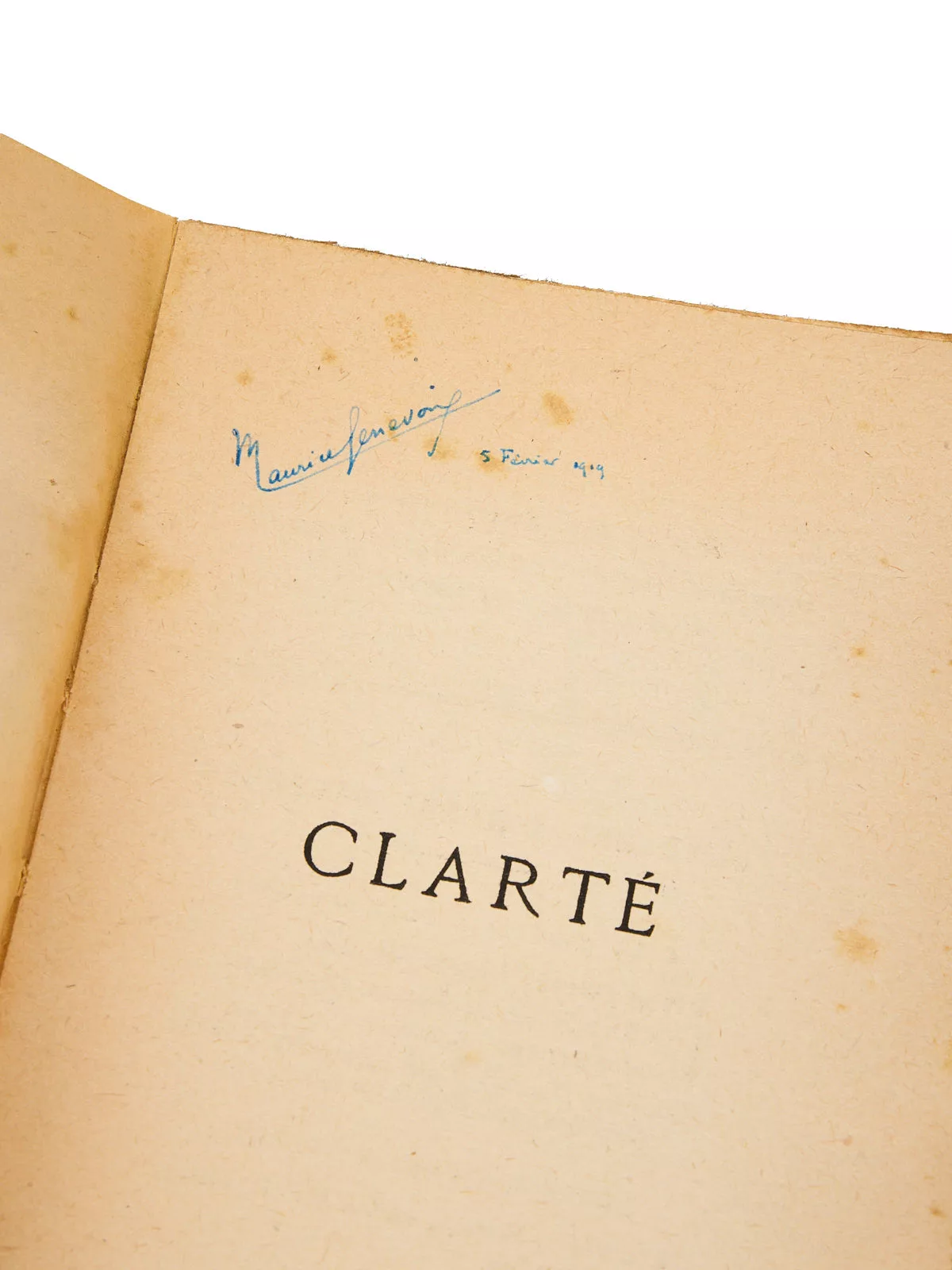
Manuscript ownership inscription of Maurice Genevoix on the half-title, dated 5 February 1919.
Three years after Le Feu, crowned with the Prix Goncourt and still marked by the physical and moral wounds of the war, Henri Barbusse published this second major militant novel. Clarté is conceived as a cry: that of Simon Paulin, a young villager returned from the front changed and awakened, ready to protest no longer for France but against the very structures that made the war possible.
This story of transformation — from a timid man into a revolutionary tribune — goes beyond literature to carry a political message. Barbusse delivers a violent indictment of capitalism, militarism, financial power and the hypocrisies of nation-states. Rejecting simple pacifism, he calls for a new revolutionary internationalism.
The novel gave its name to a movement and a weekly journal, Clarté, officially founded in May 1919 by Barbusse, Paul Vaillant-Couturier and Raymond Lefebvre. Printed in 40,000 copies, it aimed to be the voice of “citizens of the world,” uniting veteran intellectuals determined to put their pens at the service of a new order.
Genevoix, still absorbed in his cycle of war narratives, acquired this book within the first weeks of its publication. The confrontation between his measured humanism and Barbusse’s revolutionary messianism highlights the ideological tensions of the postwar period.