

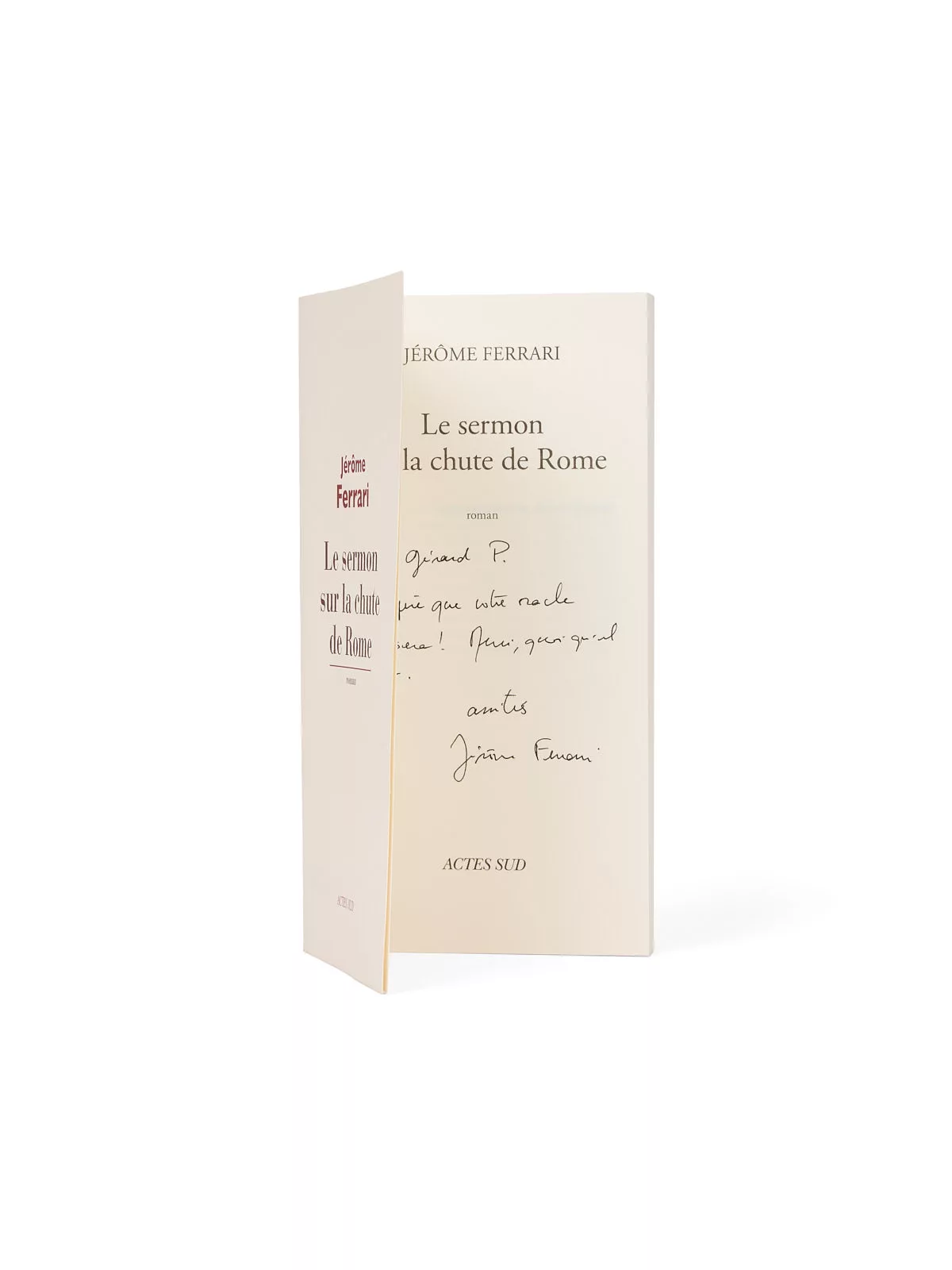
Le sermon sur la chute de Rome
First printing (no deluxe-paper copies).
Signed presentation inscription: “Pour Gérard P[ouguet]. J'espère que votre oracle se réalisera ! Merci, quoi qu'il en soit. Amitiés, Jérôme Ferrari.”
A Corsican bar, small lives, a metaphysics of ruins: Jérôme Ferrari’s fifth novel, Le Sermon sur la chute de Rome, turns a village bistro into a theater of the world. Two friends, philosophy students Matthieu Antonetti and Libero Pintus, leave university to take over a bar “back home.” Between rounds of pastis, card games and clashing egos, their small kingdom flourishes, then falls apart — just as empires do. The title alludes to Saint Augustine and his sermons following the sack of Rome in 410: the vanity of earthly Cities, cycles of rise and collapse.
Ferrari himself thought his novel was “headed for a flop,” and the opposite happened: awarded the Prix Goncourt by 5 votes and already carried by strong word of mouth (nearly 85,000 copies sold before the prize), the novel gave Actes Sud its second Goncourt, after Laurent Gaudé in 2004.