

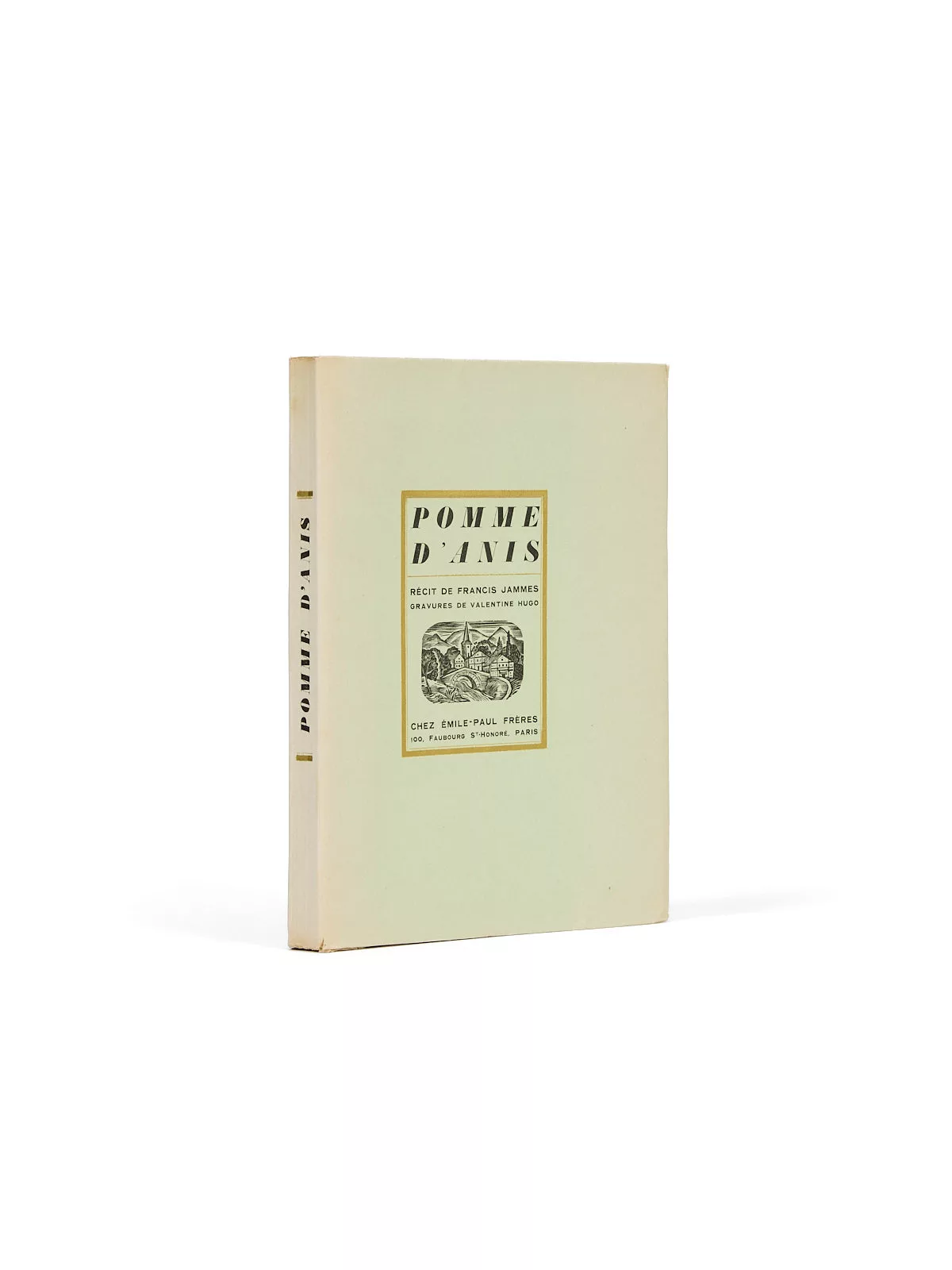
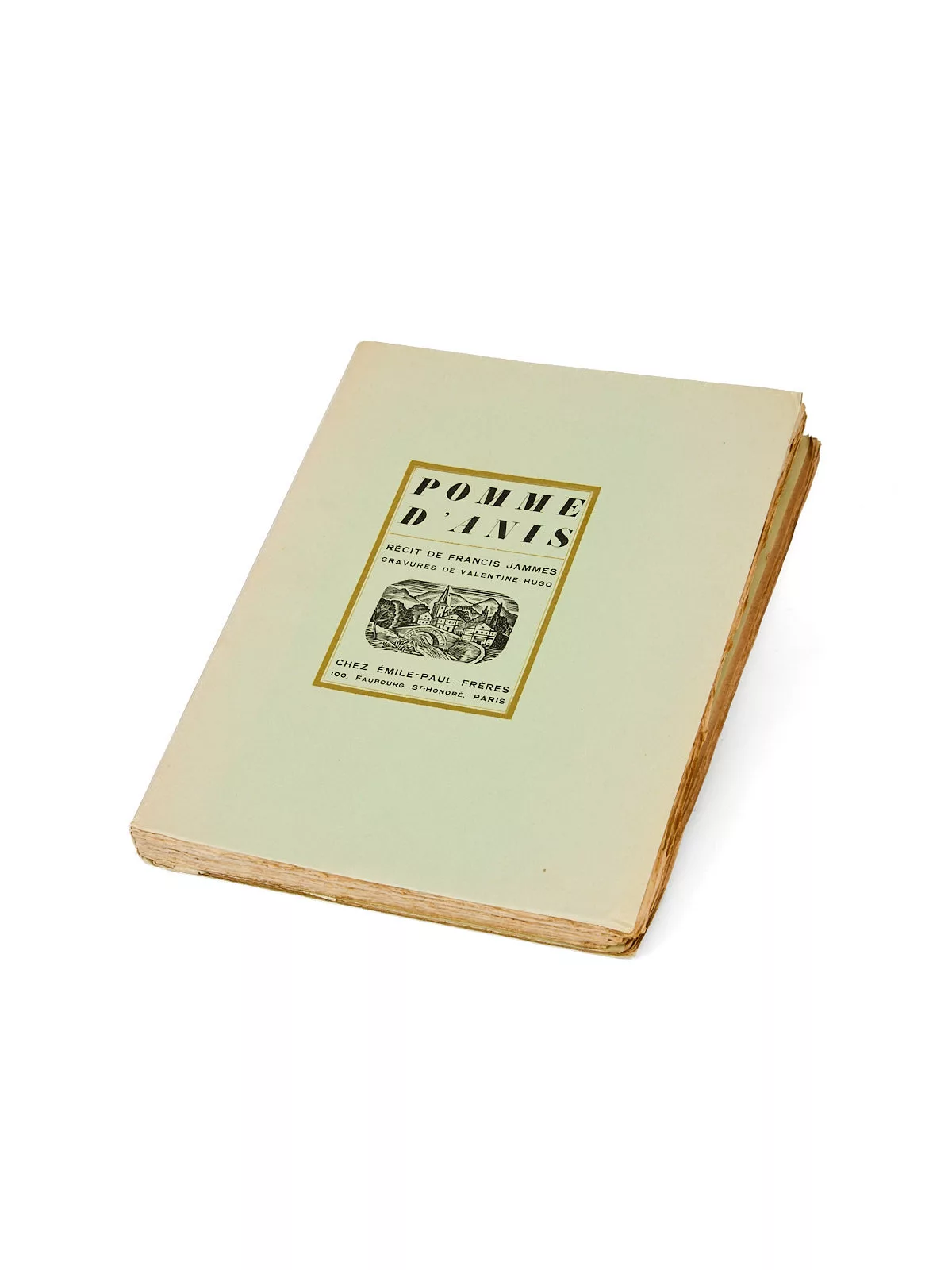
Pomme d’anis
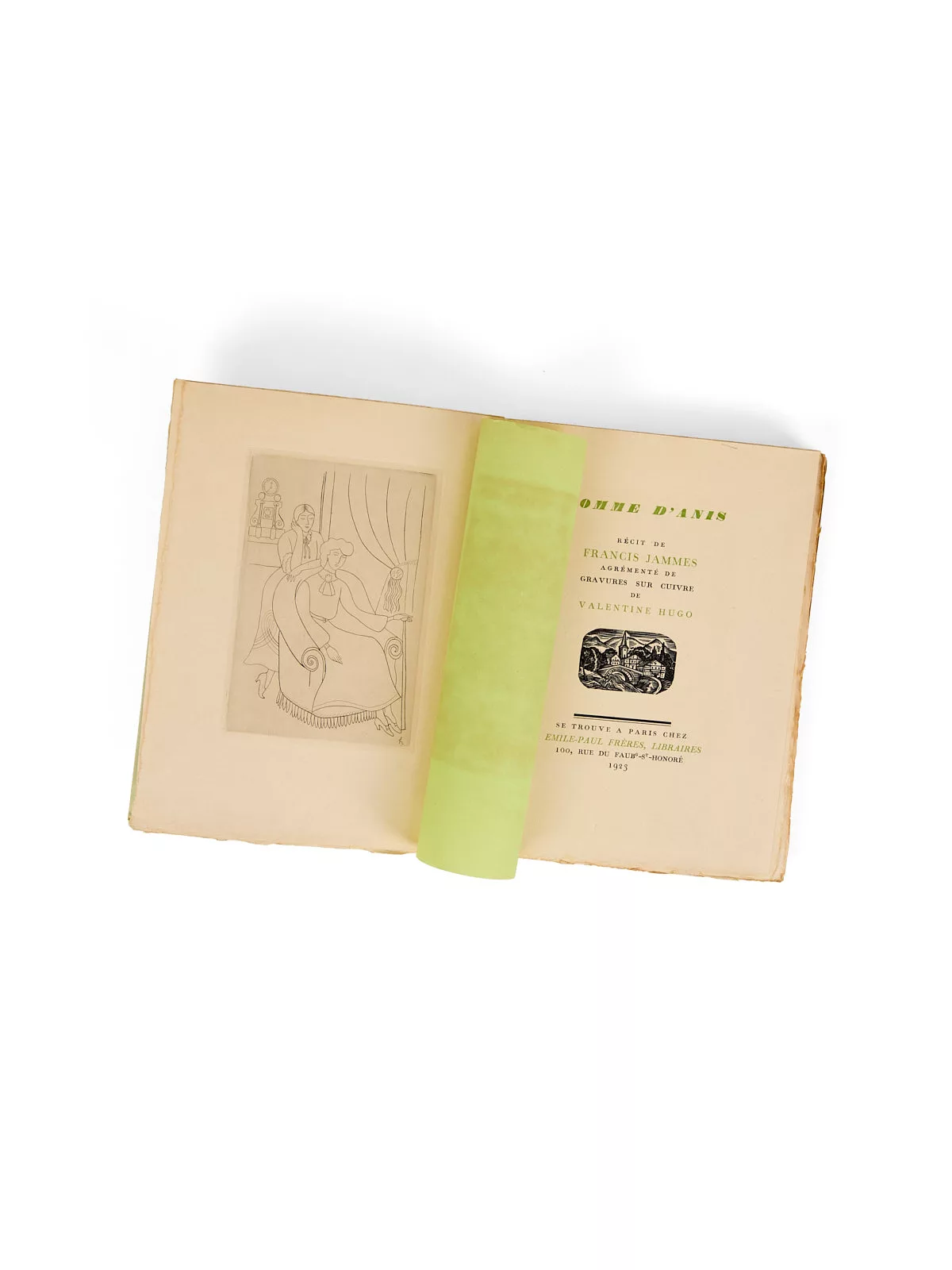
One of 15 copies on old Japanese paper (no. 3), with a suite of the illustrations printed on laid paper.
Pomme d’Anis originated in a scene Jammes witnessed at the Mont-de-Marsan train station in 1904: from his carriage, he observed a slightly disabled young woman — she limped — leaning out of the window as a young man with the same disability approached. “Poor boy, as unfortunate as I am,” Jammes heard her say. He turned this scene into the present novella, sending proofs to Colette, with whom he had formed a close friendship the previous year: “her deep understanding of the countryside and all who inhabit it — men, animals and plants —, her pity for the humble, her love of old houses and scented gardens […] nothing in Francis Jammes failed to awaken an ardent response in Colette” (in Colette & Francis Jammes, une amitié inattendue). Colette, in turn, sent him her first Dialogues de bêtes for his judgment, and he later wrote its preface.
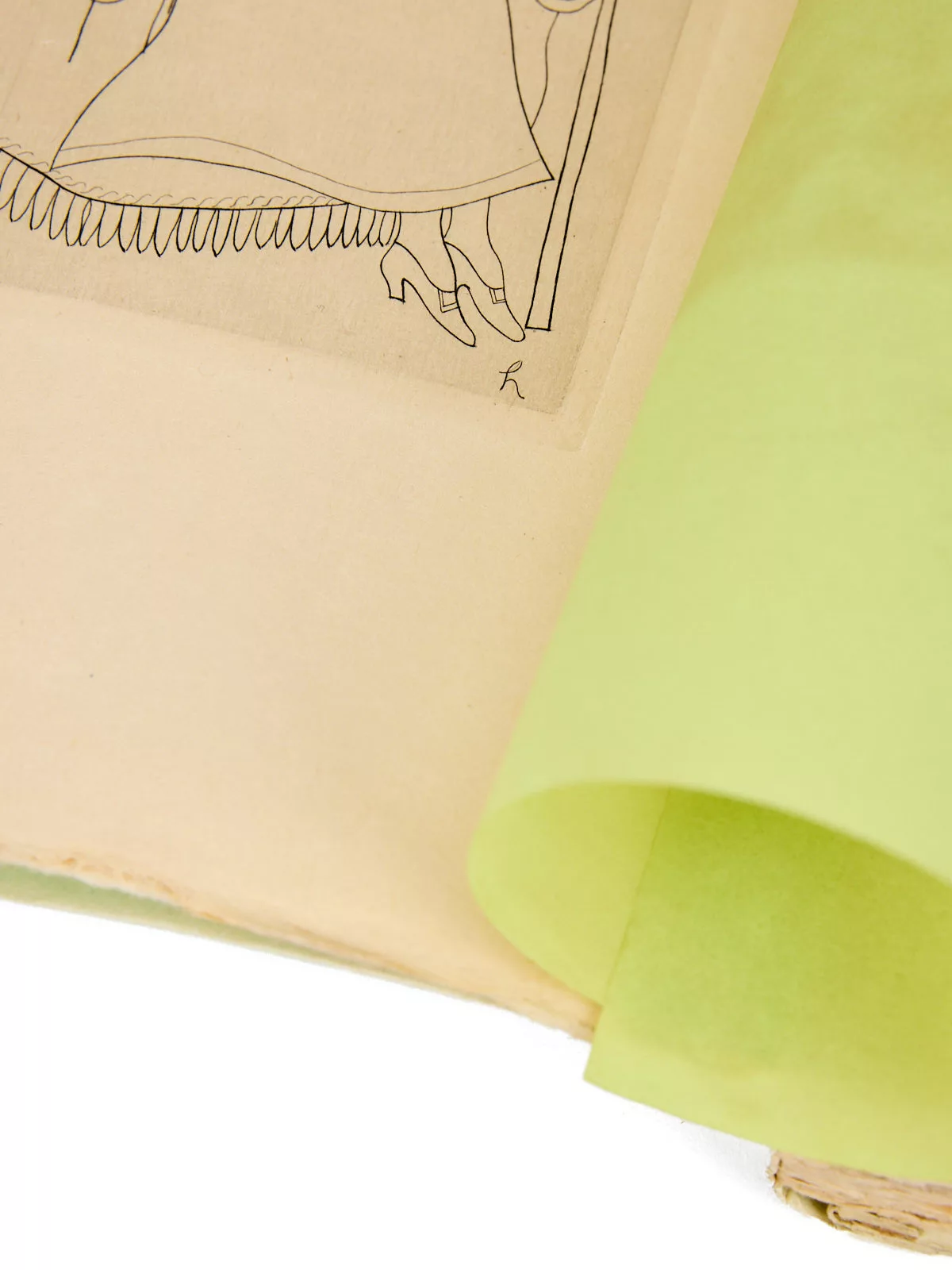
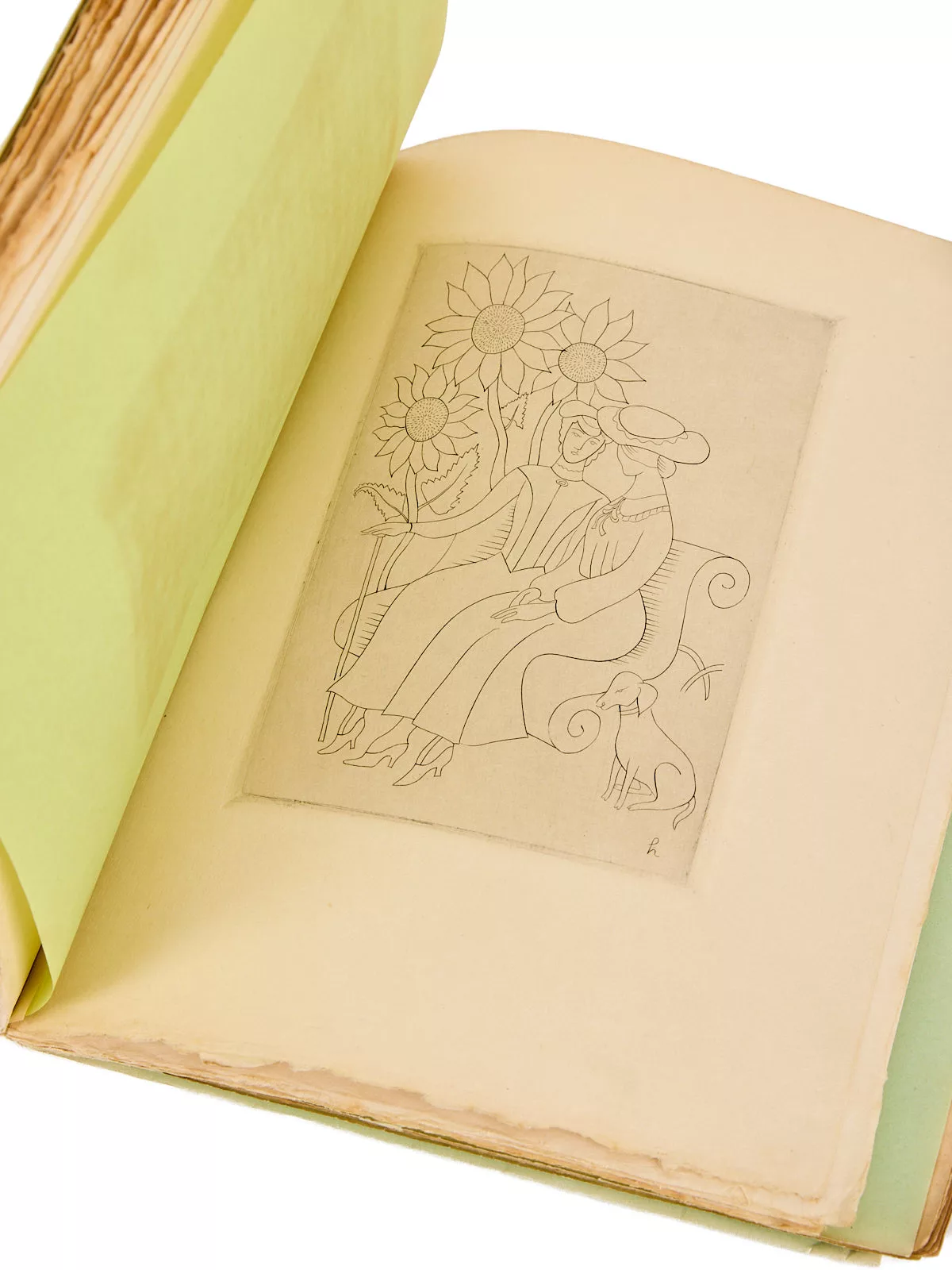
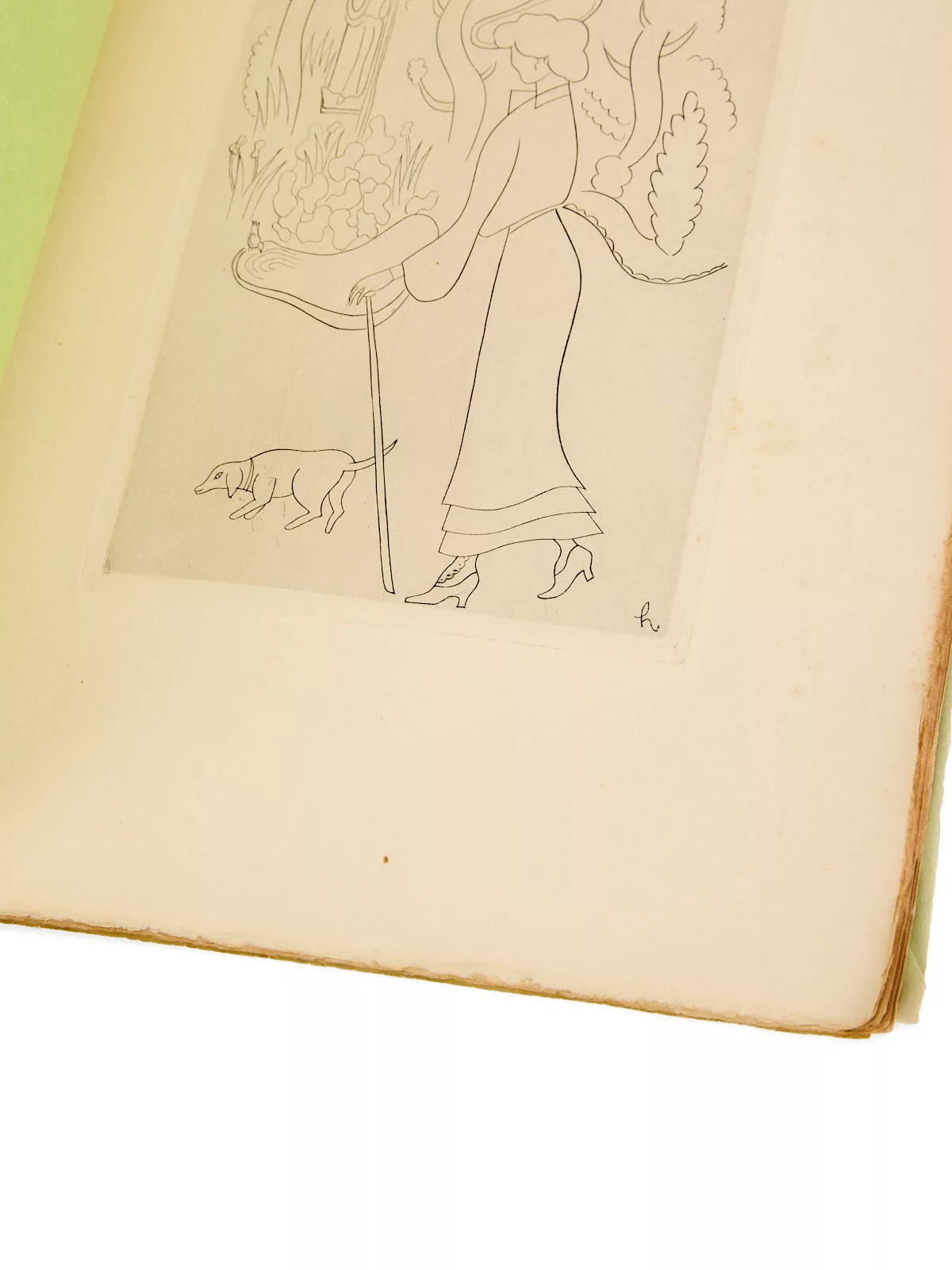
A very fine work, illustrated with charming engravings by Jean Hugo: those originally made by his wife Valentine were lost at the publisher’s during printing, and Jean Hugo, whom she had married in 1919, composed eight new ones to replace them. Beyond the letters documenting the affair, Francis Jammes’s own copy contains this unambiguous admission signed by the couple: “Avec ma fidèle amitié, cette imposture, Valentine Hugo, Jean Hugo.”
Monod, I, 6353; Talvart, X, 70; Carteret, V, 111; Anne de Margerie, Valentine Hugo.