

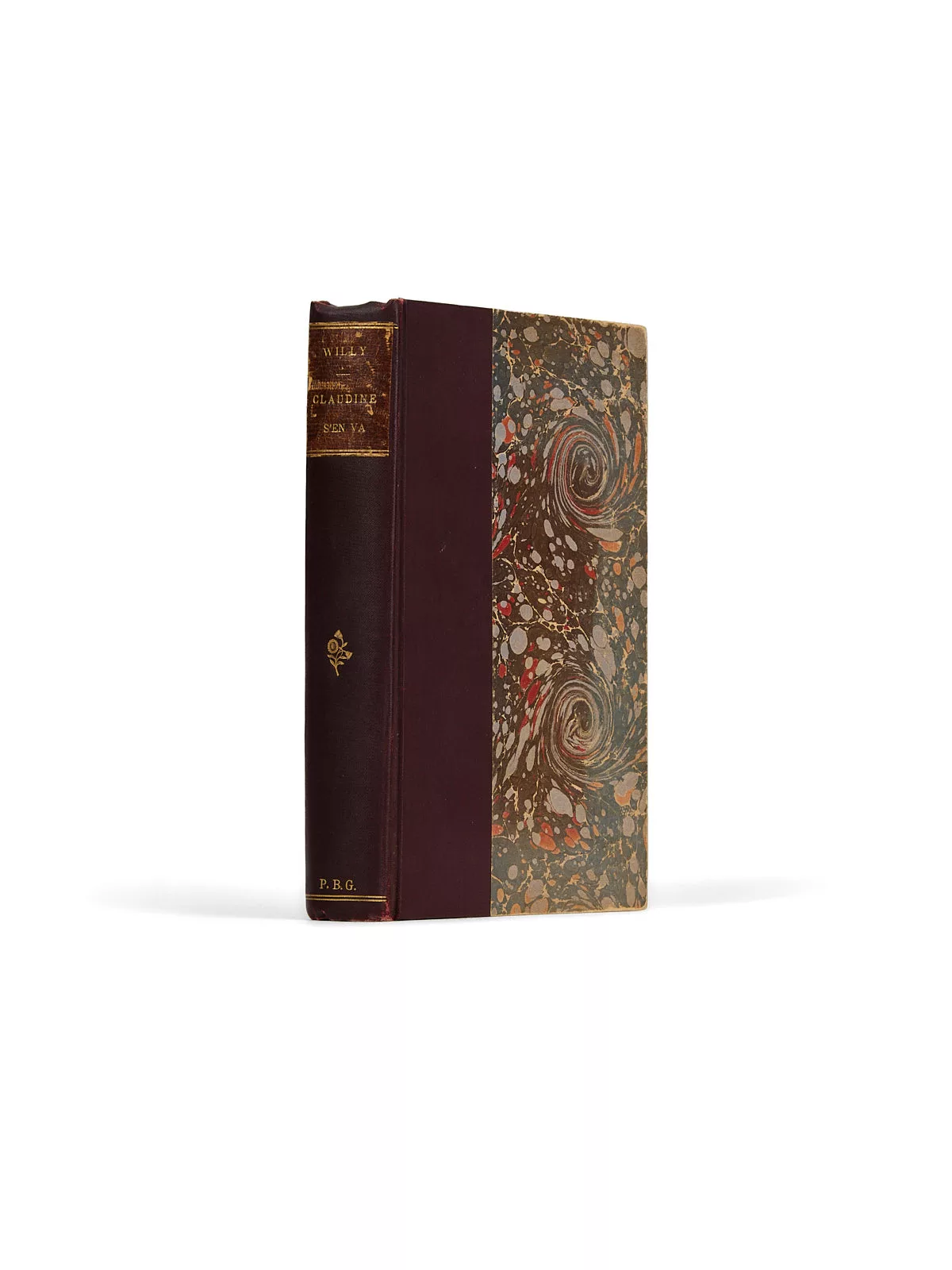
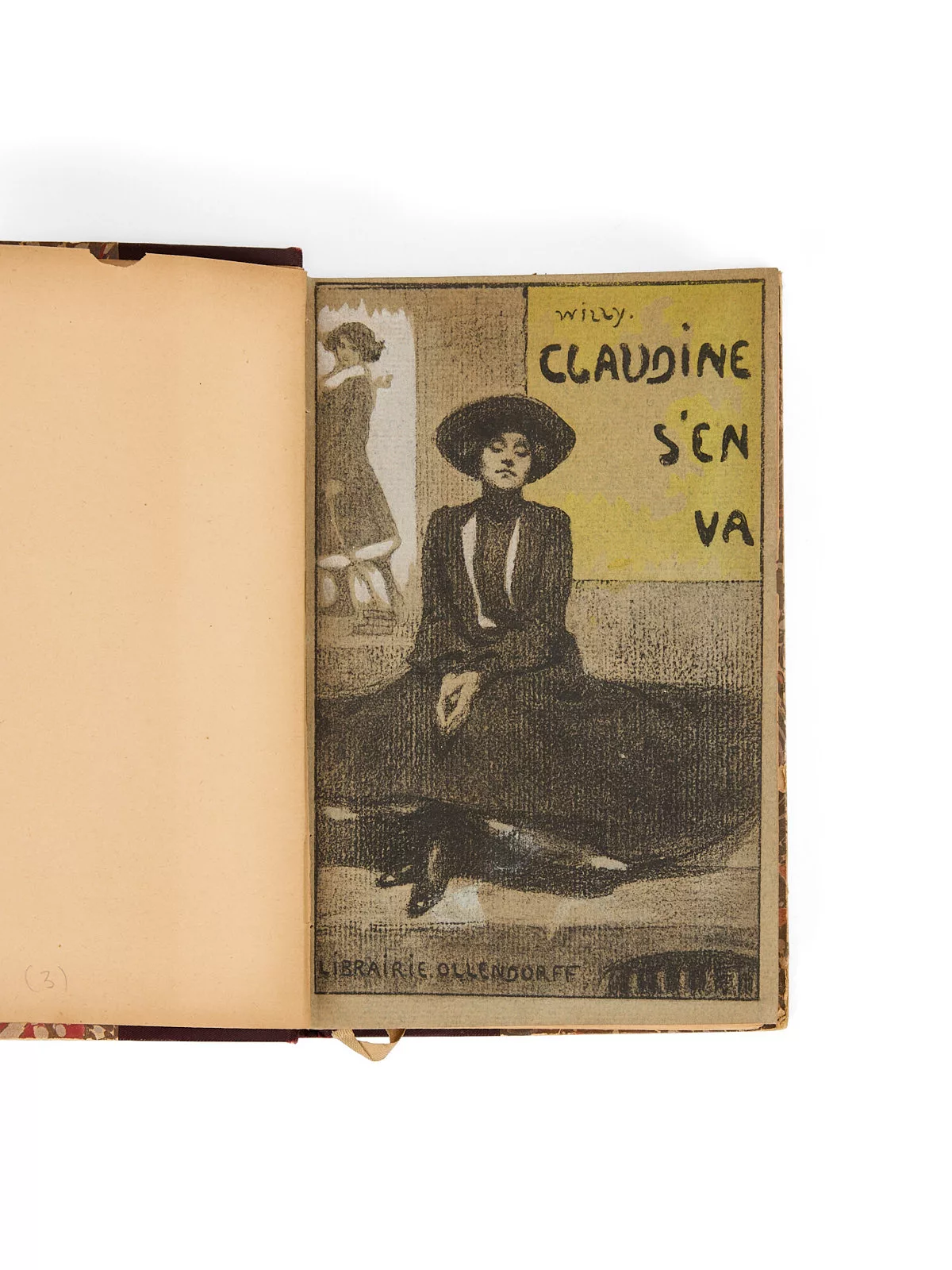
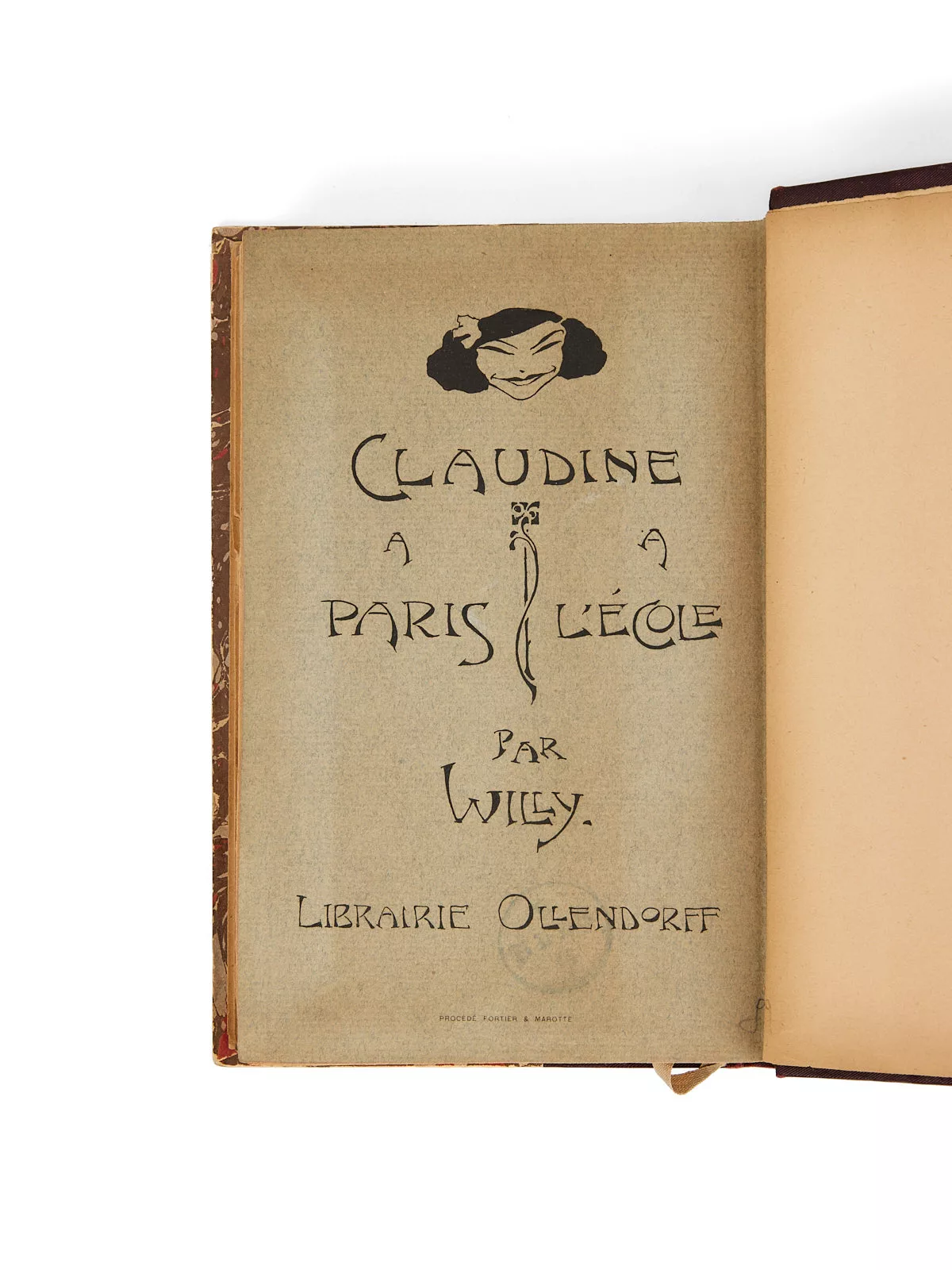
Claudine s’en va
Copy of the first printing.
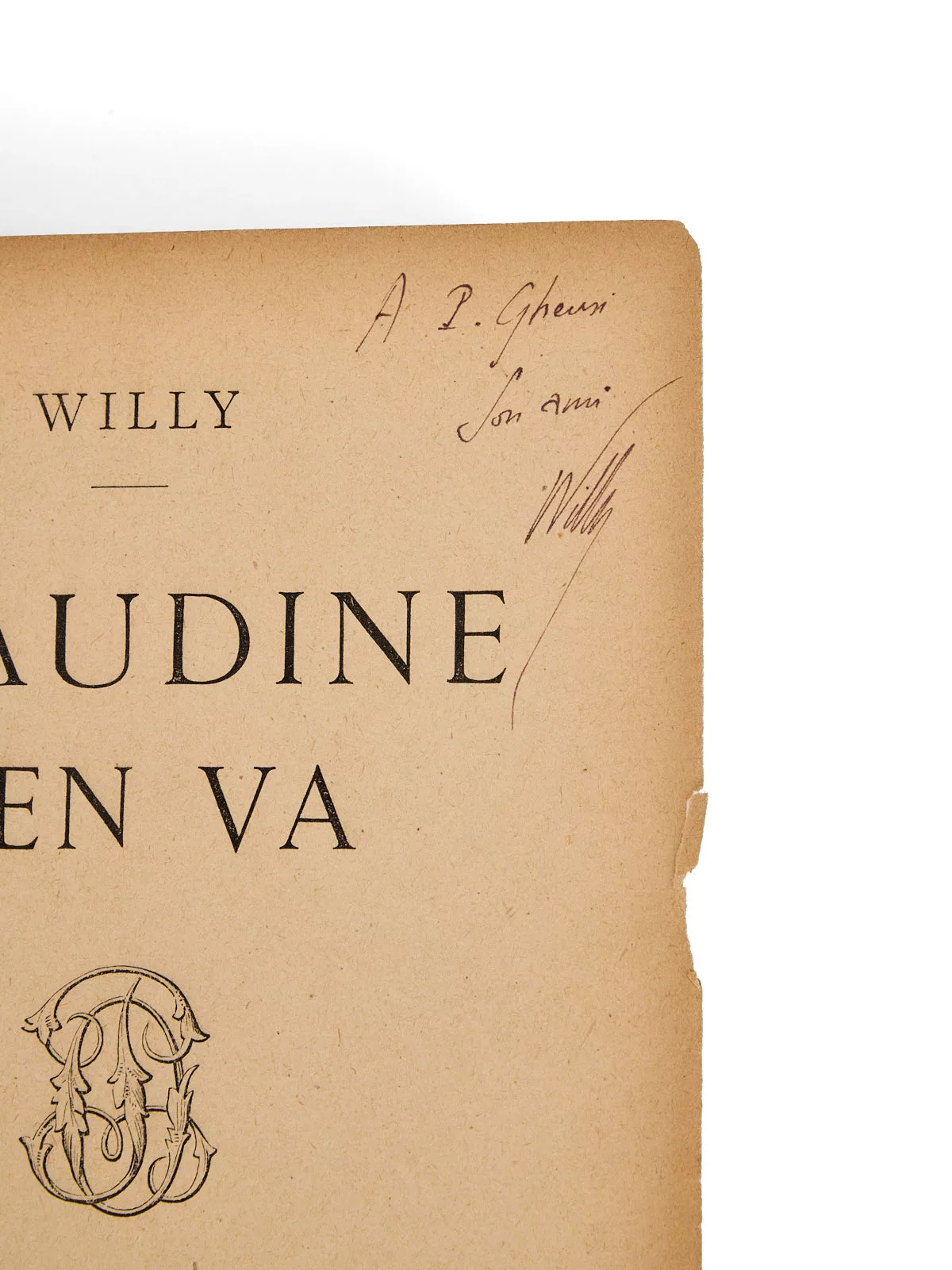
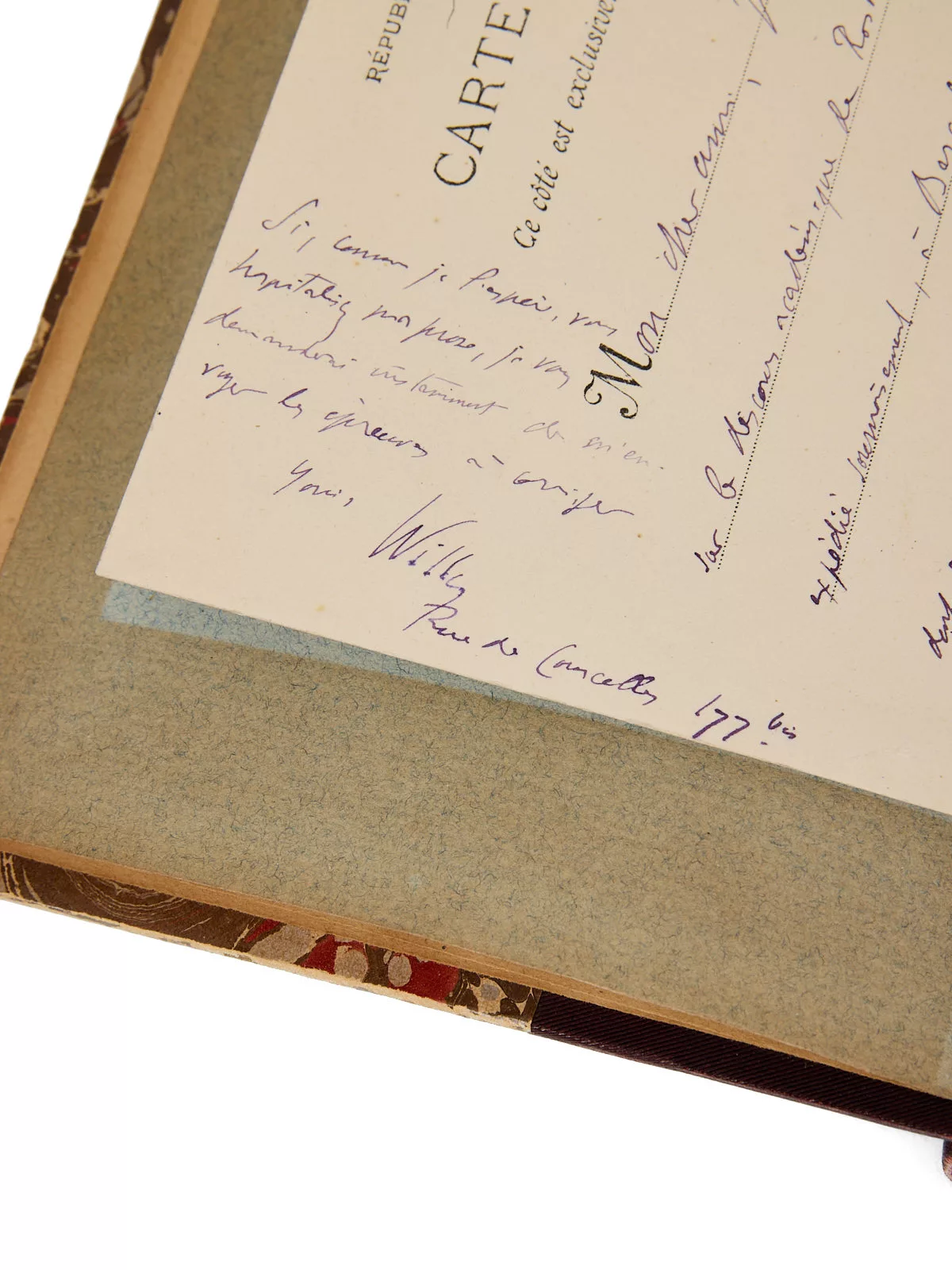
Presentation inscription signed by Willy to Pierre-Barthélémy Gheusi.
This text is the last title Willy would sign alone — high time, too. The following year, the Douze dialogues de bêtes would appear under the name Colette Willy.
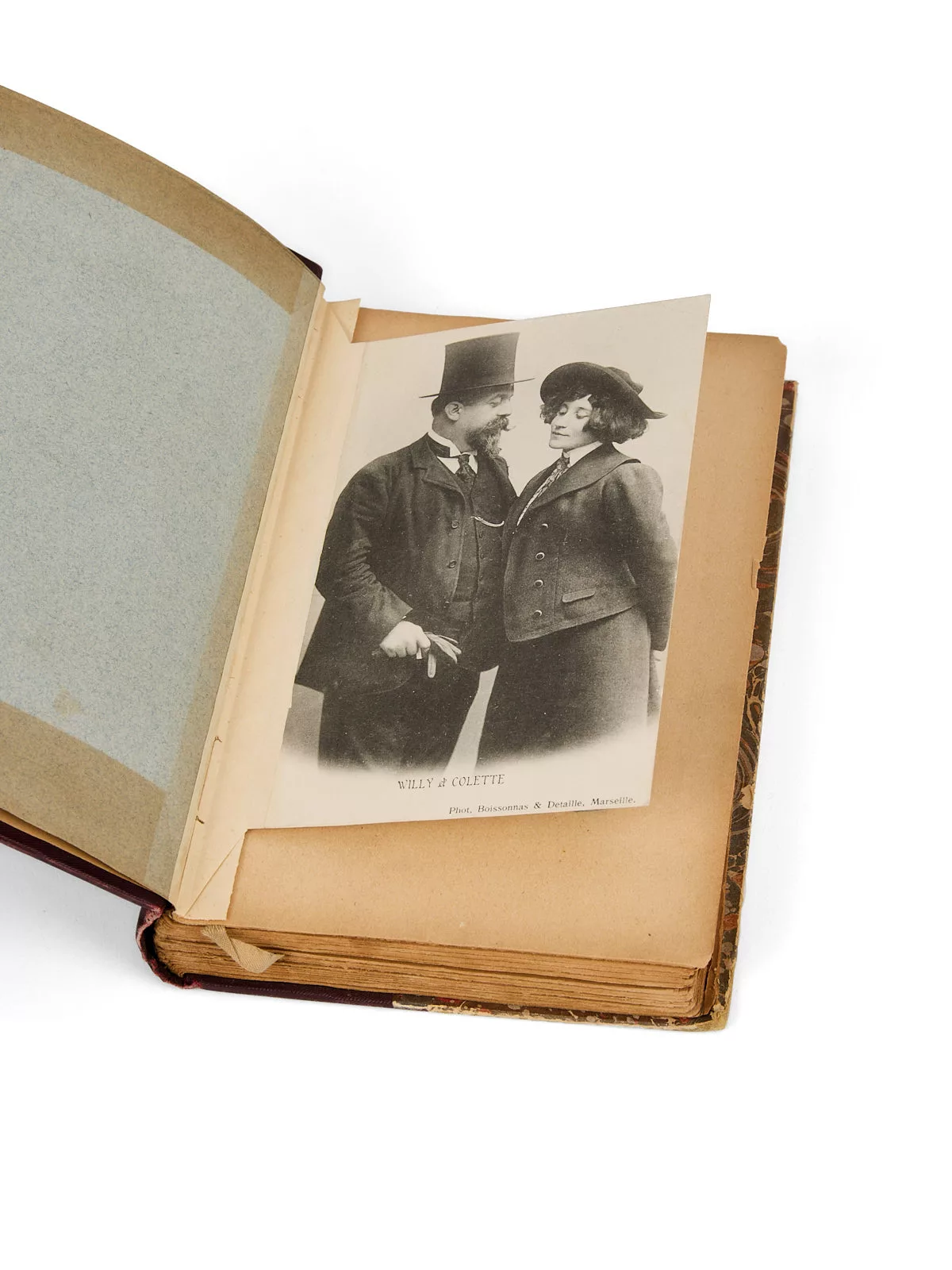
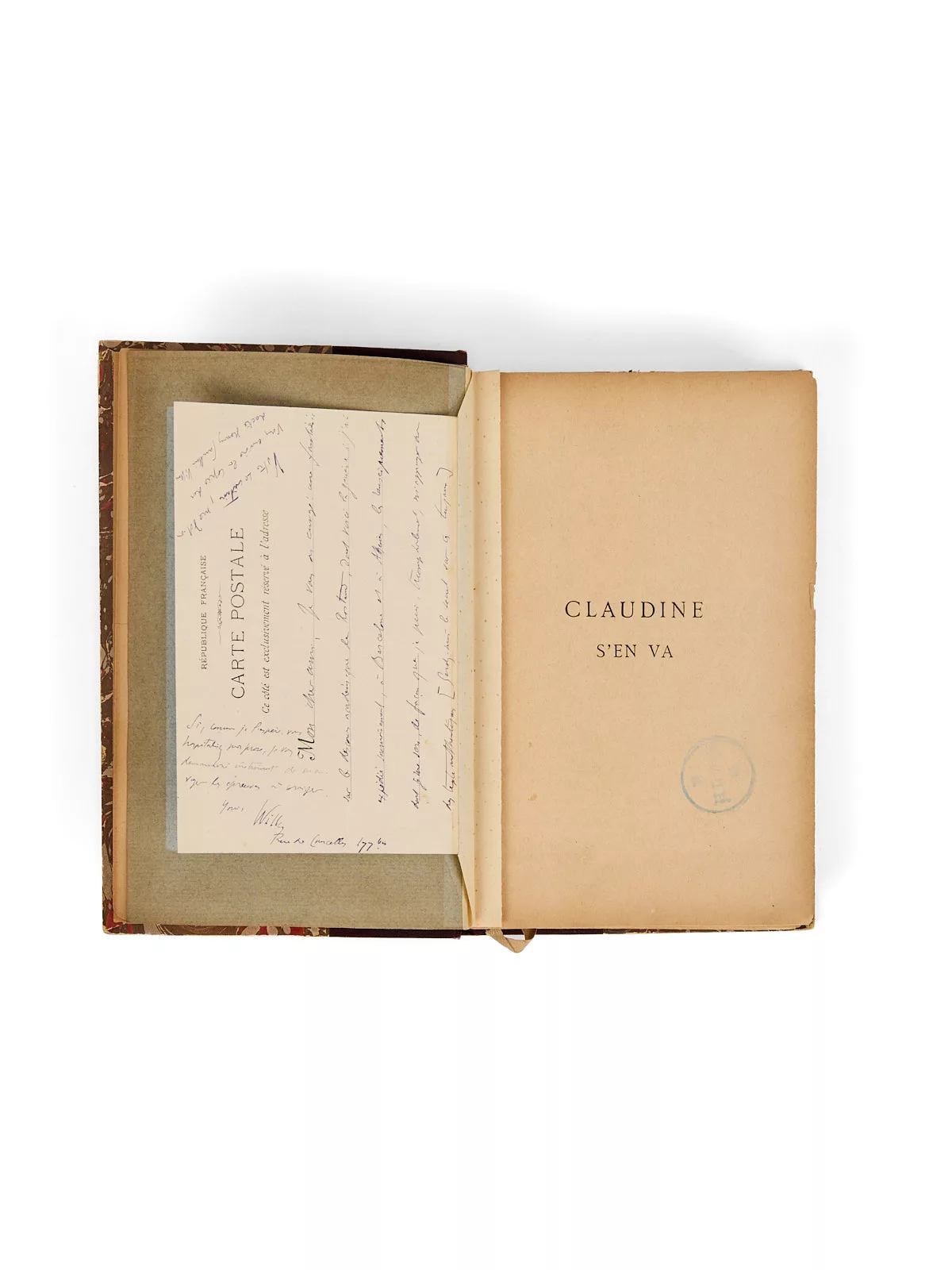
Mounted at front is an intriguing autograph card, signed on the verso of a photograph of the couple Colette and Willy, datable to March or April 1903: “Mon cher ami, je vous ai envoyé une fantaisie sur le discours académique de Rostand [qui sera reçu sous la Coupole, le 4 juin] dont voici la genèse : j’ai expédié sournoisement, à Barcelone et à Athènes, les renseignements dont je me sers, de façon que je puisse triomphalement m’appuyer sur des textes authentiques (Gardez-moi le secret sur ça toujours). Si, comme je l’espère, vous hospitalisez ma prose, je vous demanderai instamment de m’envoyer les épreuves à corriger […].”
And so it was that readers of the May 1903 issue of the Nouvelle Revue could read an article signed Henry Gauthier Villars, offering supposedly unpublished verse fragments of the future reception speech of the newly elected academician, authentically gathered — so it claimed — from a Greek newspaper and a Catalan gazette. This hoax and rhymed pastiche found a victim in Jules Clarétie, who marveled at Edmond Rostand’s talent in an article in Le Figaro published shortly afterward (cf. Caradec, Feu Willy, Pauvert, 1984).
A fine copy.