

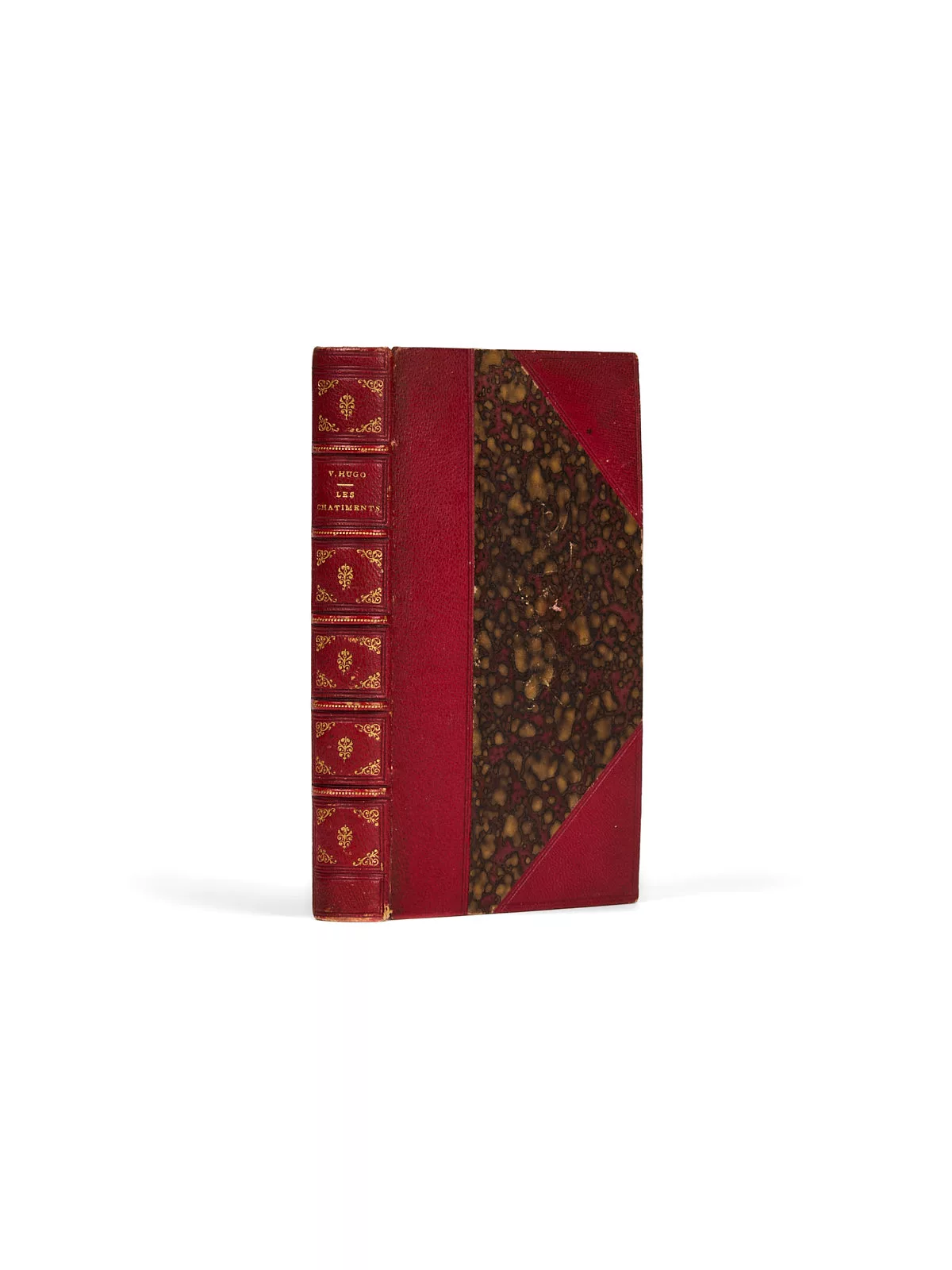
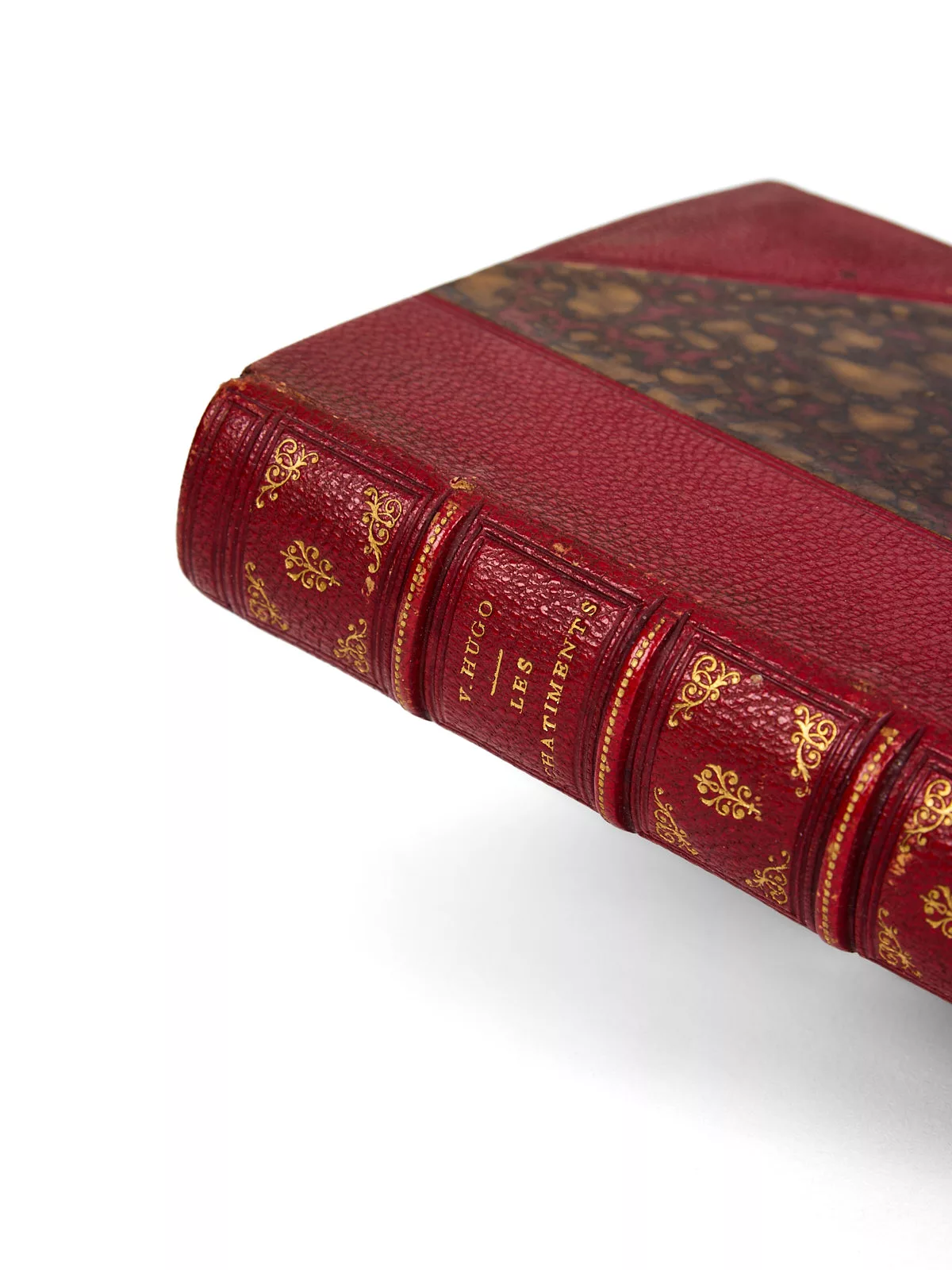
Châtiments
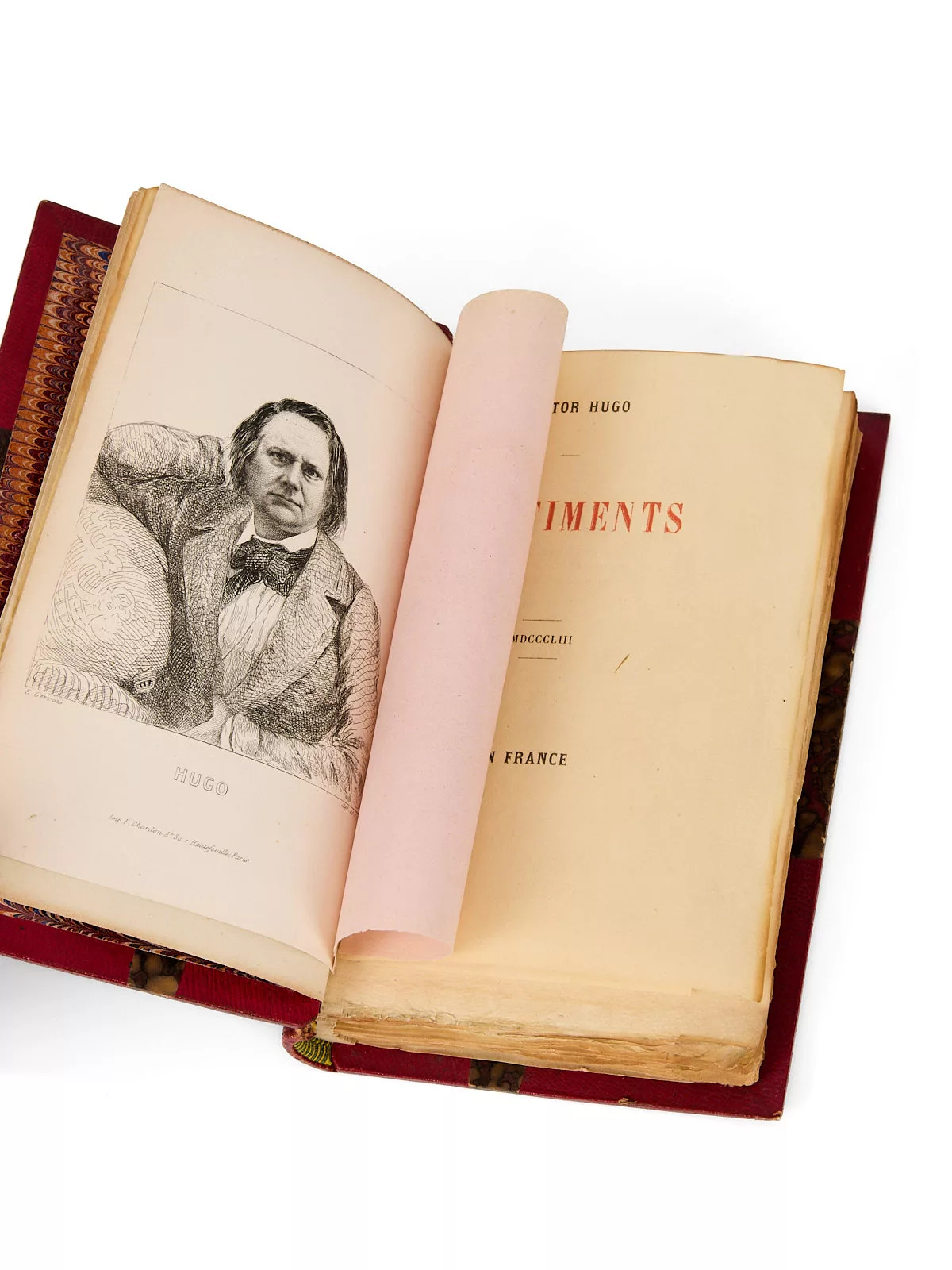
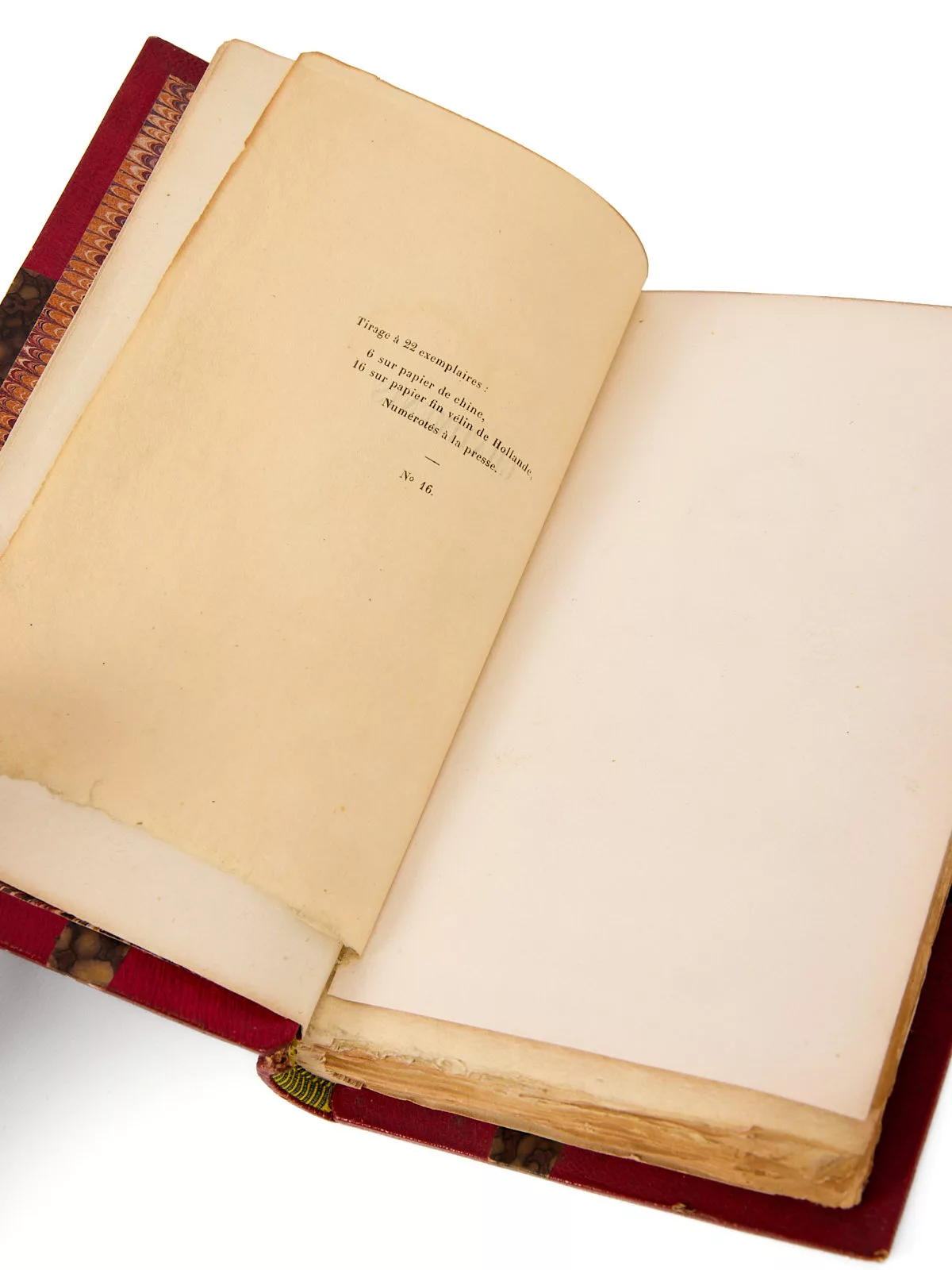
One of 16 copies on fine vélin de Hollande (no. 16) — after 6 deluxe copies on China paper.
Following the coup d’état of 2 December 1851, which brought Louis-Napoléon Bonaparte to power, Victor Hugo was forced into exile. After setting aside his Histoire d’un crime, which would not appear until 1877, and while beginning his pamphlet Napoléon-le-petit, Hugo was already conceiving its satirical counterpart. He considered calling it Les Vengeresses, then Le Chant du Vengeur, before settling on the single word Châtiments, a “threatening and simple title, that is to say, beautiful,” as he wrote to his publisher Hetzel.
The collection appeared in two editions in Brussels in November 1853: an official version, self-censored with rows of dots, which Hugo called “the Eunuch,” and a clandestine version bearing the fanciful imprint “Genève & New-York.” From the complete text, 22 large-paper copies were réimposé and issued separately (six on China paper and sixteen on Hollande), with which the Brussels typographer Samuel was highly pleased: “I regret,” he wrote, “having sent you the first five thousand: the second batch is infinitely better…” The only variant on the large-paper copies is the imprint “En France,” replacing “Genève & New-York.”
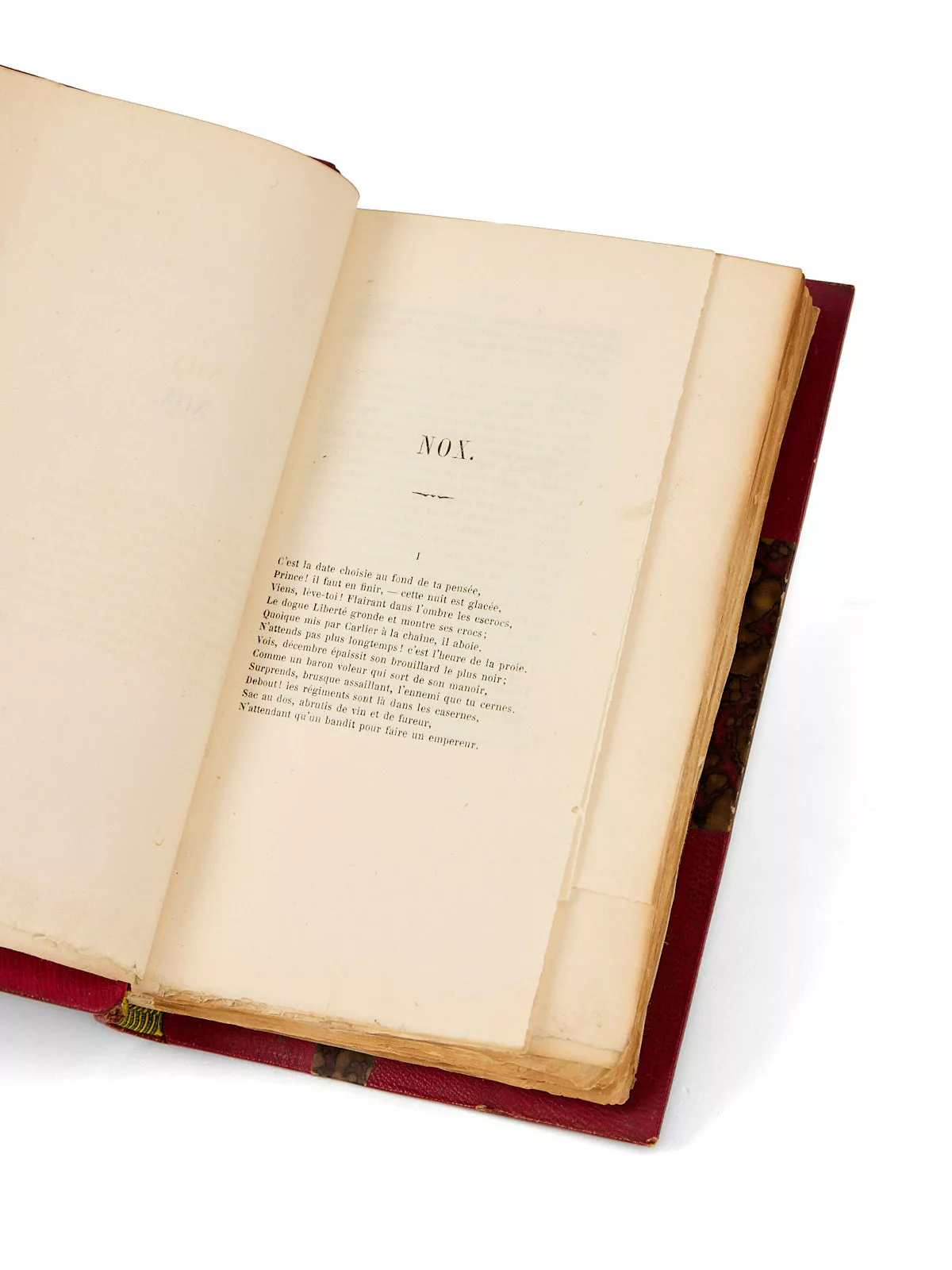
The first edition, clandestine like all the others, is truncated: a large number of lines are replaced by rows of dots, since the Faider law forbade the publication in Belgium of anything directed against a foreign sovereign.
The preface contains the following declaration: “A truncated edition of this book was published in Brussels, preceded by these lines: ‘false oath is a crime.’ The few lines just read, preface to a mutilated book, contained the commitment to publish the complete book. That commitment we now keep. V.H.”
Flavien Michaux, Essais bibliographiques concernant les œuvres de Victor Hugo parues pendant l’exil; Vicaire, IV-313; absent from Carteret and Clouzot.