

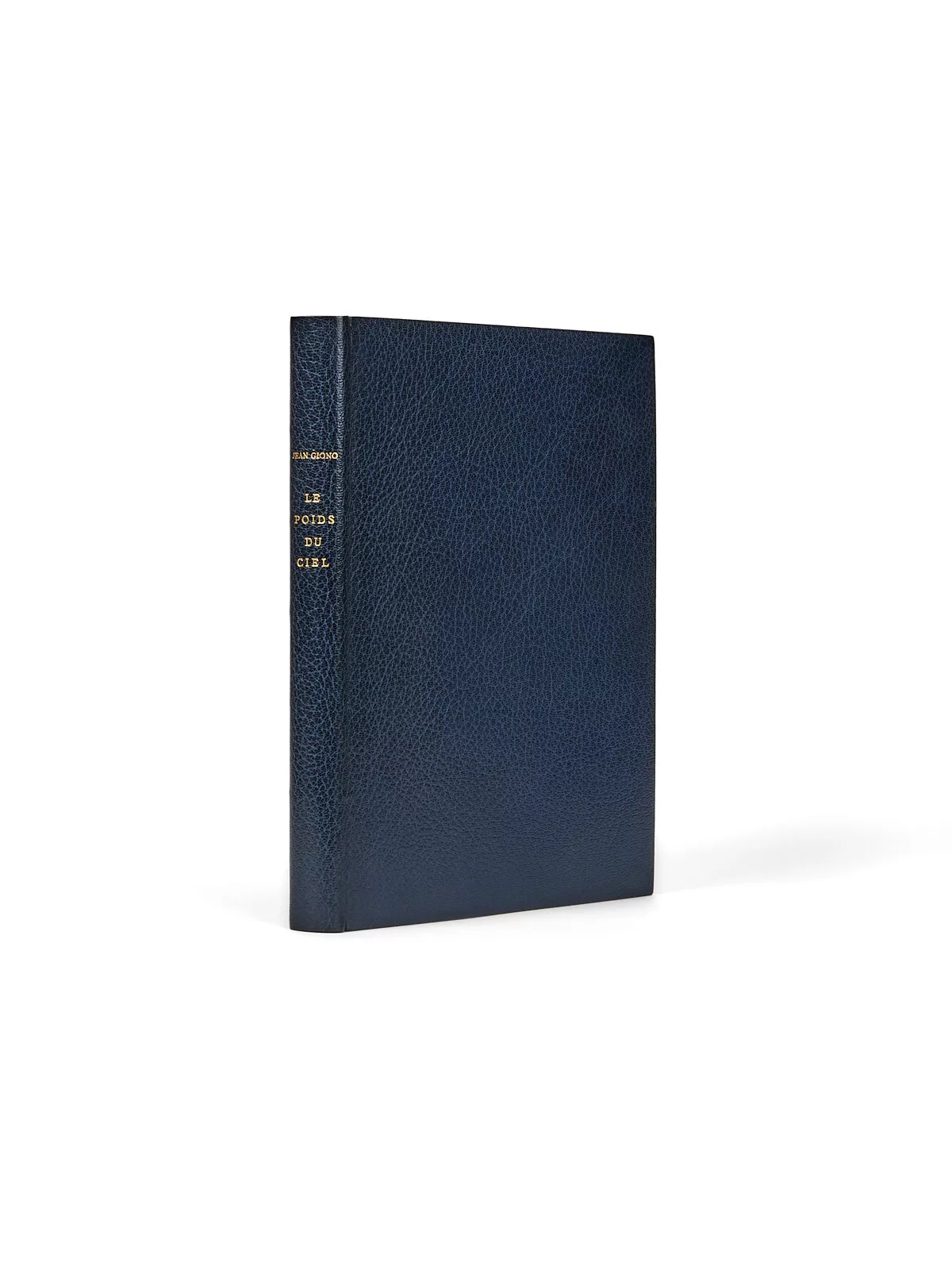
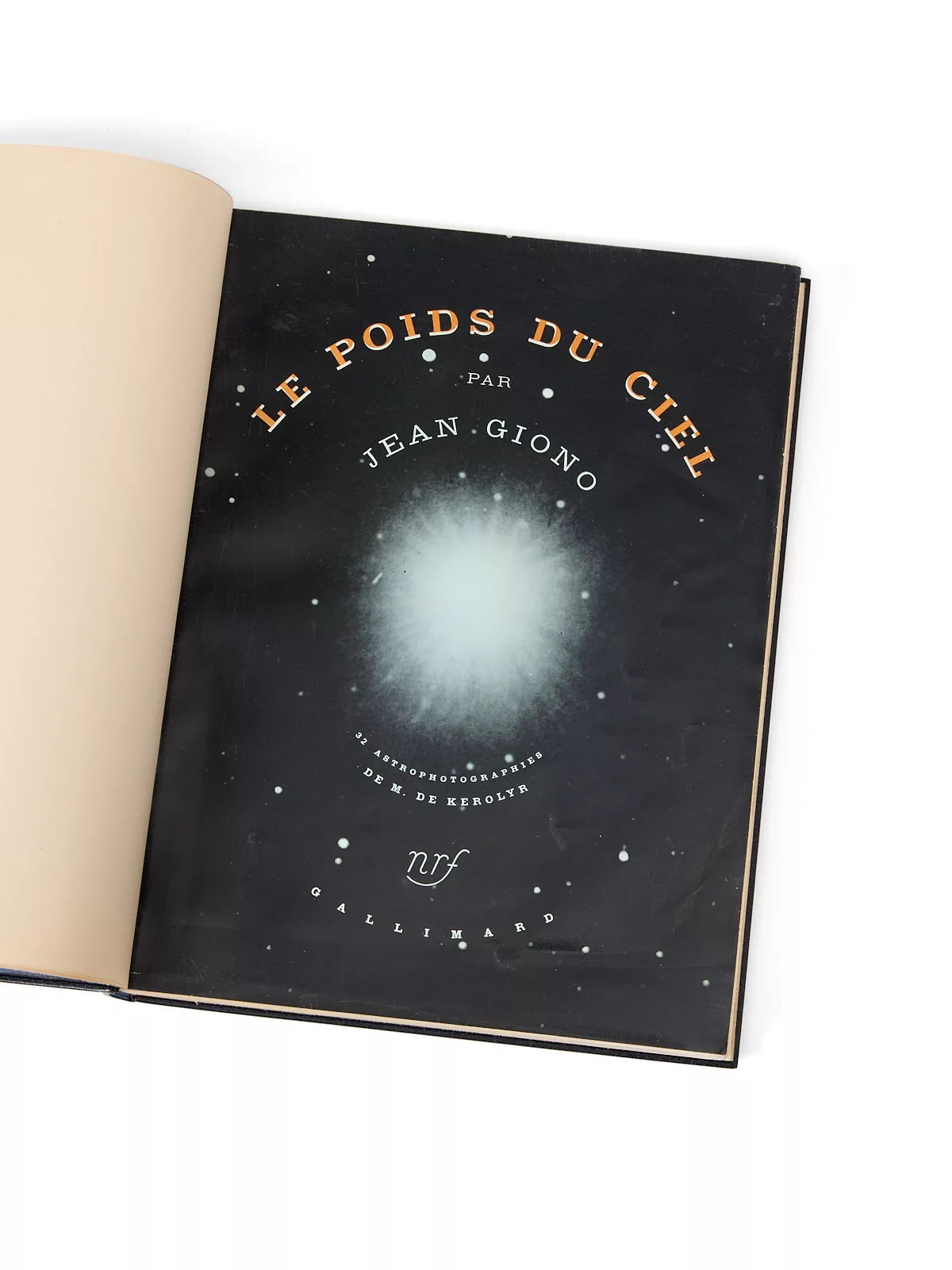
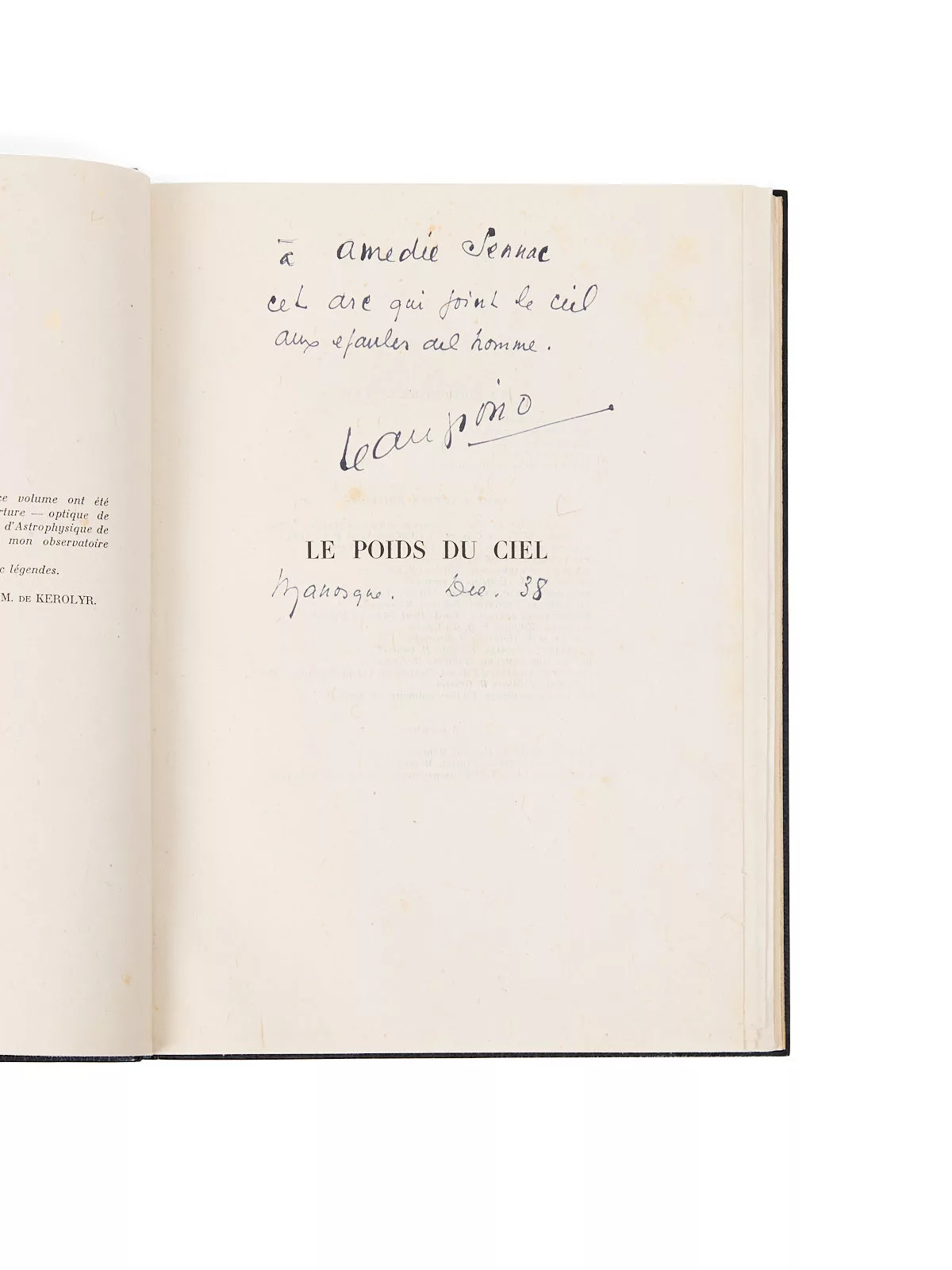
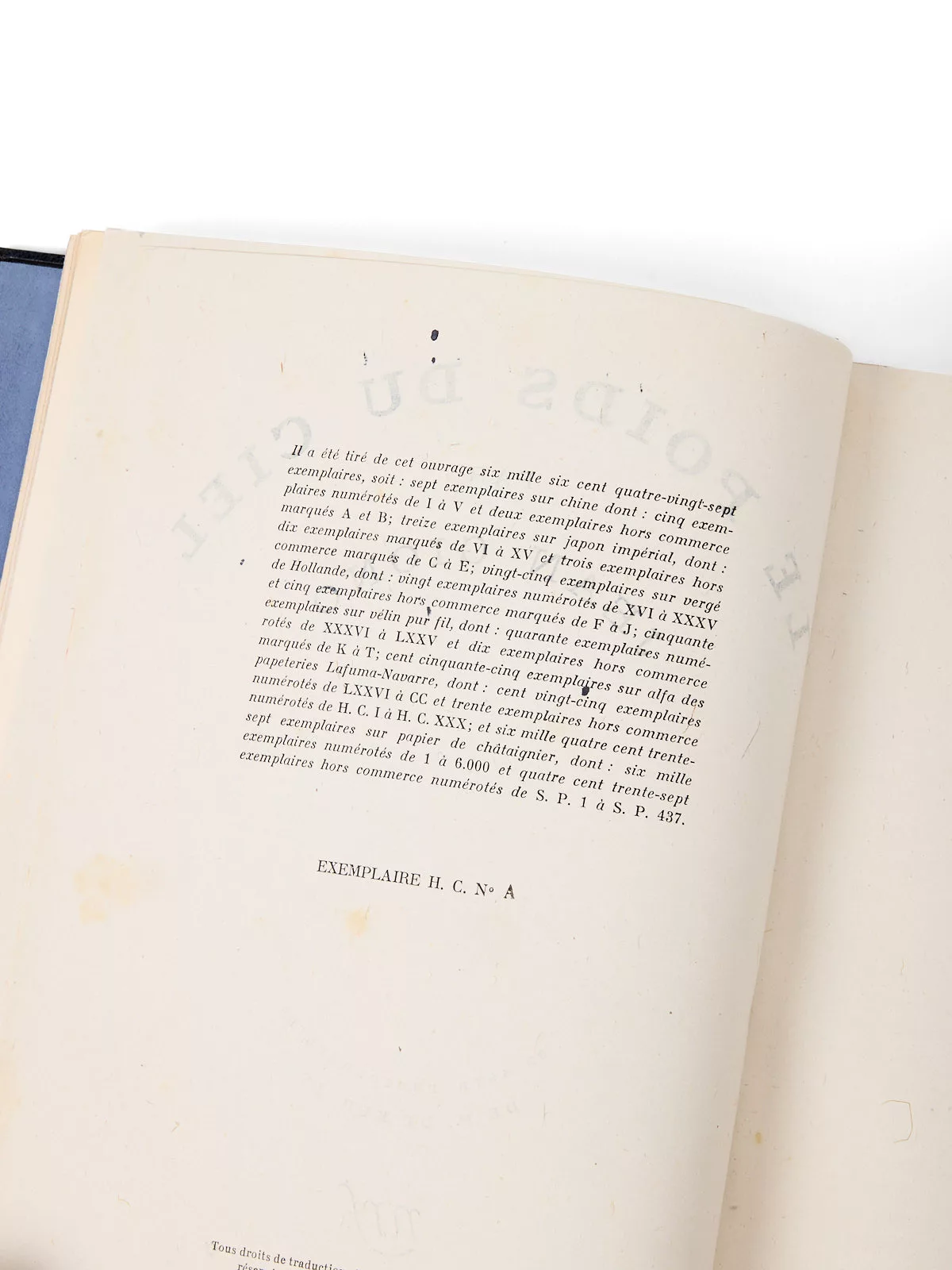
One of the 7 first copies on China paper, this copy hors commerce (no. A).
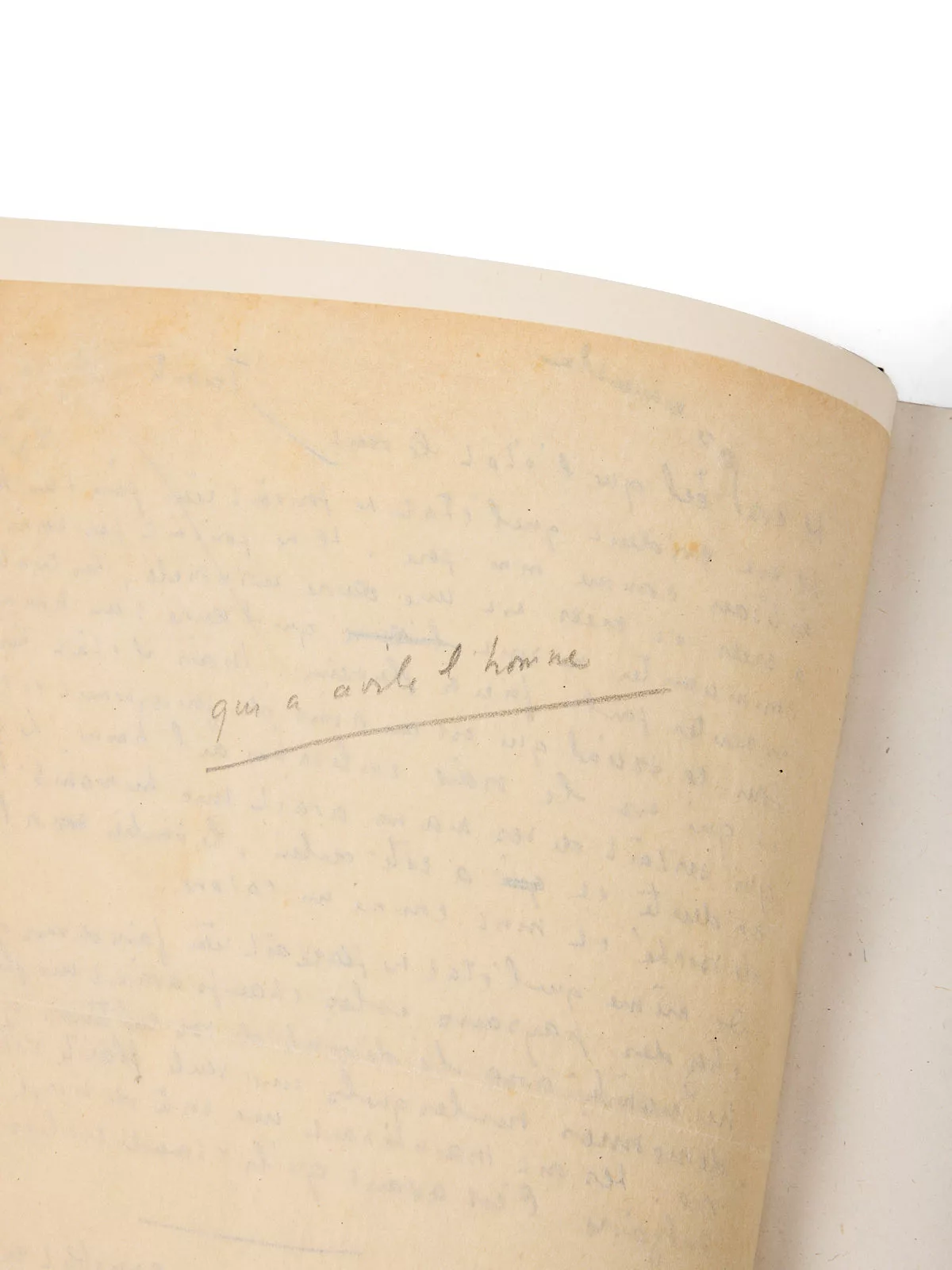
Signed presentation inscription: “à Amédée Sennac, cet arc qui joint le ciel aux épaules de l'homme. Jean Giono, Manosque, Dec. 38.”
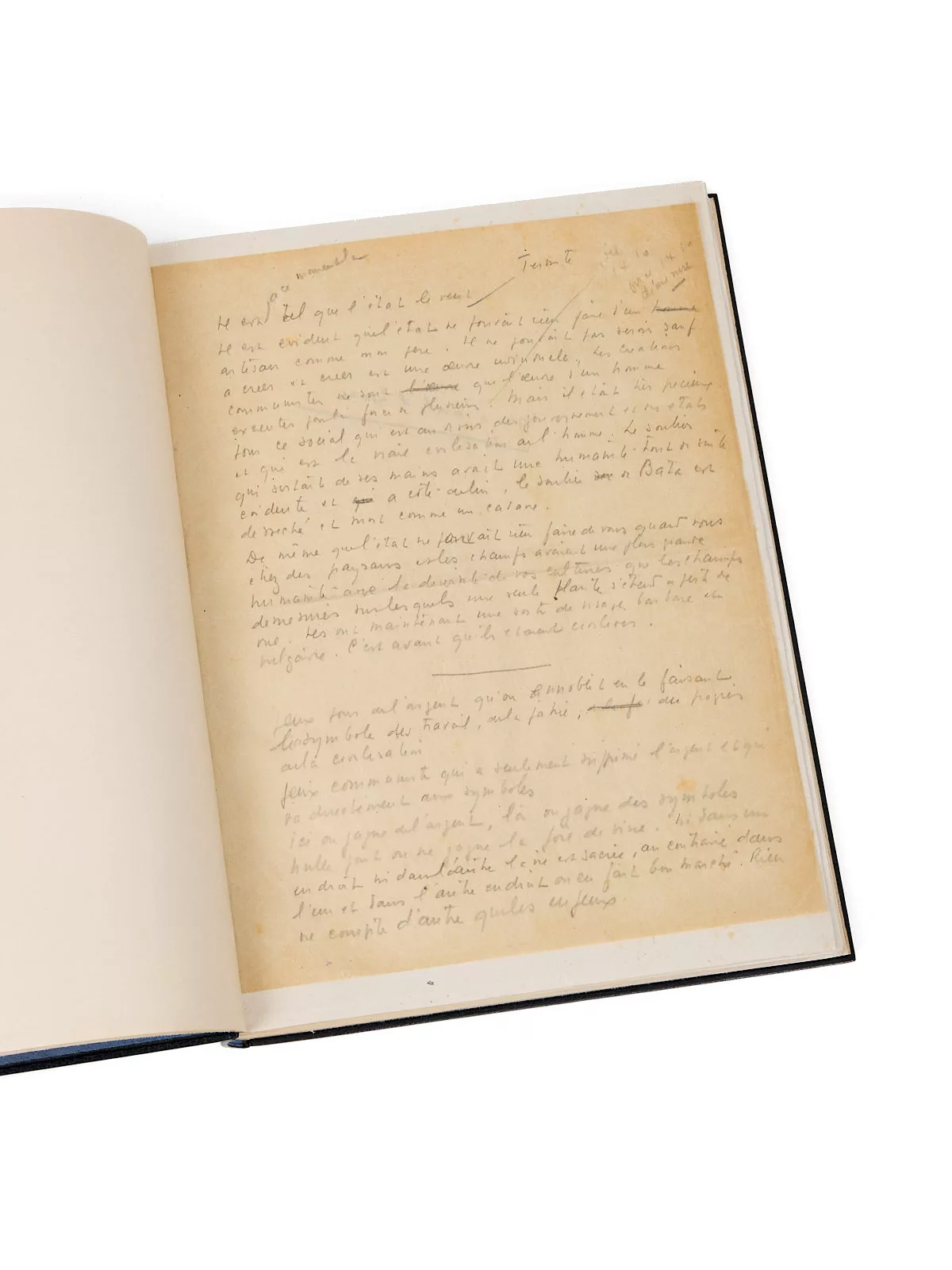
Bound in at front: autograph draft (1 leaf on onionskin paper), sketching the themes of the book, notably the condition of peasants and the critique of modern ideologies: “[…] là on gagne de l'argent, là on gagne des symboles. Nulle part on ne gagne la joie de vivre. Ni dans un endroit ni dans l'autre la vie est sacrée, dans l'un et dans l'autre endroit, on en fait bon marché. Rien ne compte d'autre que les enjeux…”.
On the eve of the war, Jean Giono brought together three texts (Danse des âmes modernes, Les Grandeurs libres, Beauté de l’individu), extending the meditation begun in Les Vraies richesses. Here again are his exaltation of natural life, his critique of mechanization and his radical pacifism, but the horizon widens: he invokes the cosmos as a metaphor for man, placing the peasant and the individual in resonance with the universe.
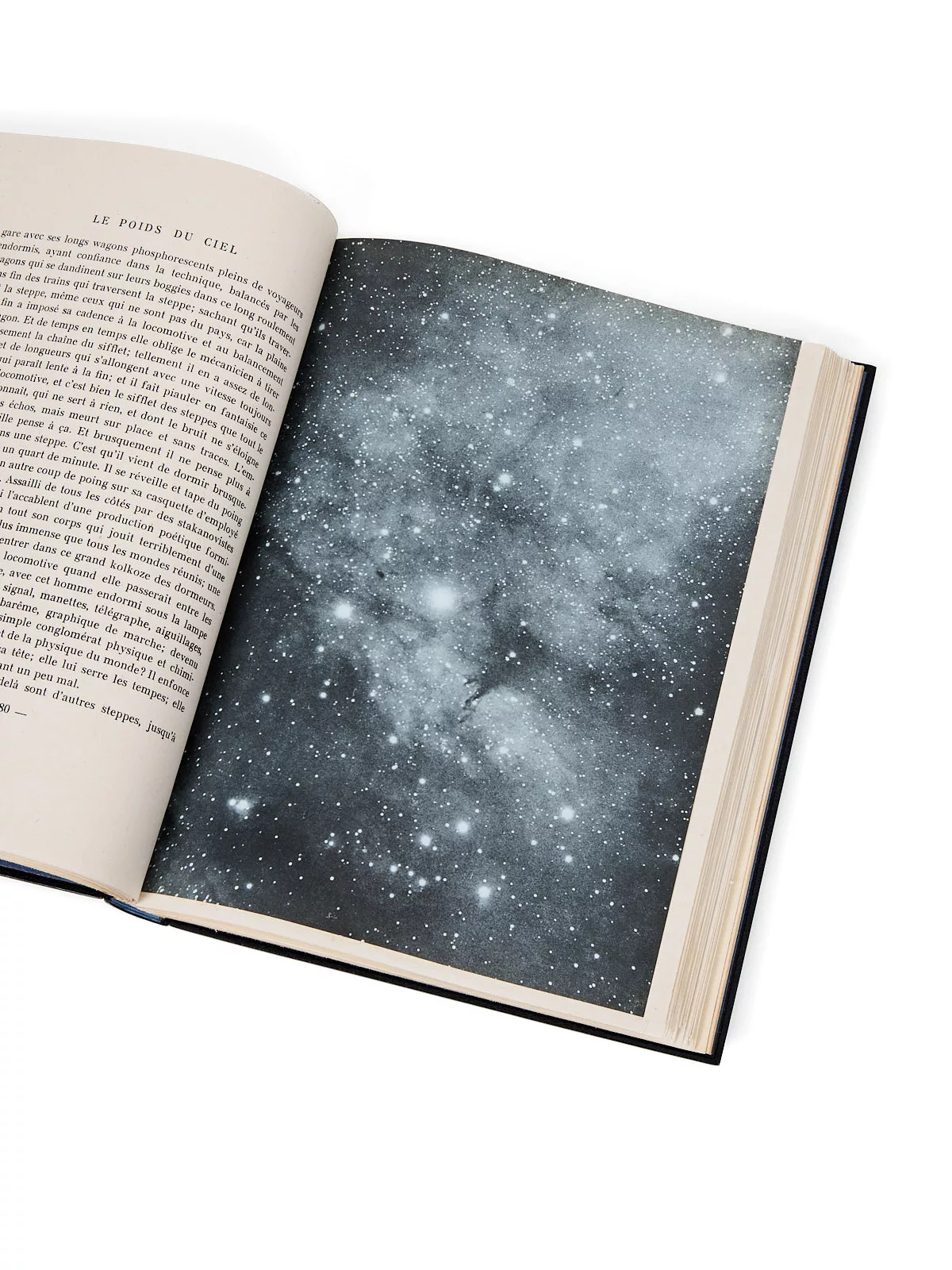
To embody this connection, Giono chose to illustrate the book not with rural imagery but with astrophotographs. He turned to Marcel de Kérolyr (1889?–1969), a photographer whose work he had discovered two years earlier and had been captivated by. A pioneer of astronomical photography, attached as an observer to the astrophysics station of the Paris Observatory at Forcalquier, Kérolyr contributed 32 plates of constellations and nebulae for this edition.
In his biography of the author, Pierre Citron noted: “It was with Le Poids du ciel that Giono inaugurated a particular technique that he would use until his death: the use of notebooks that served him, in a sense, as a palette.” These were simple spiral notebooks that remained permanently on his desk, beside his working manuscript, which from this period on shows few corrections: “certain sentences are set down only after being weighed, sometimes tried in several forms.”
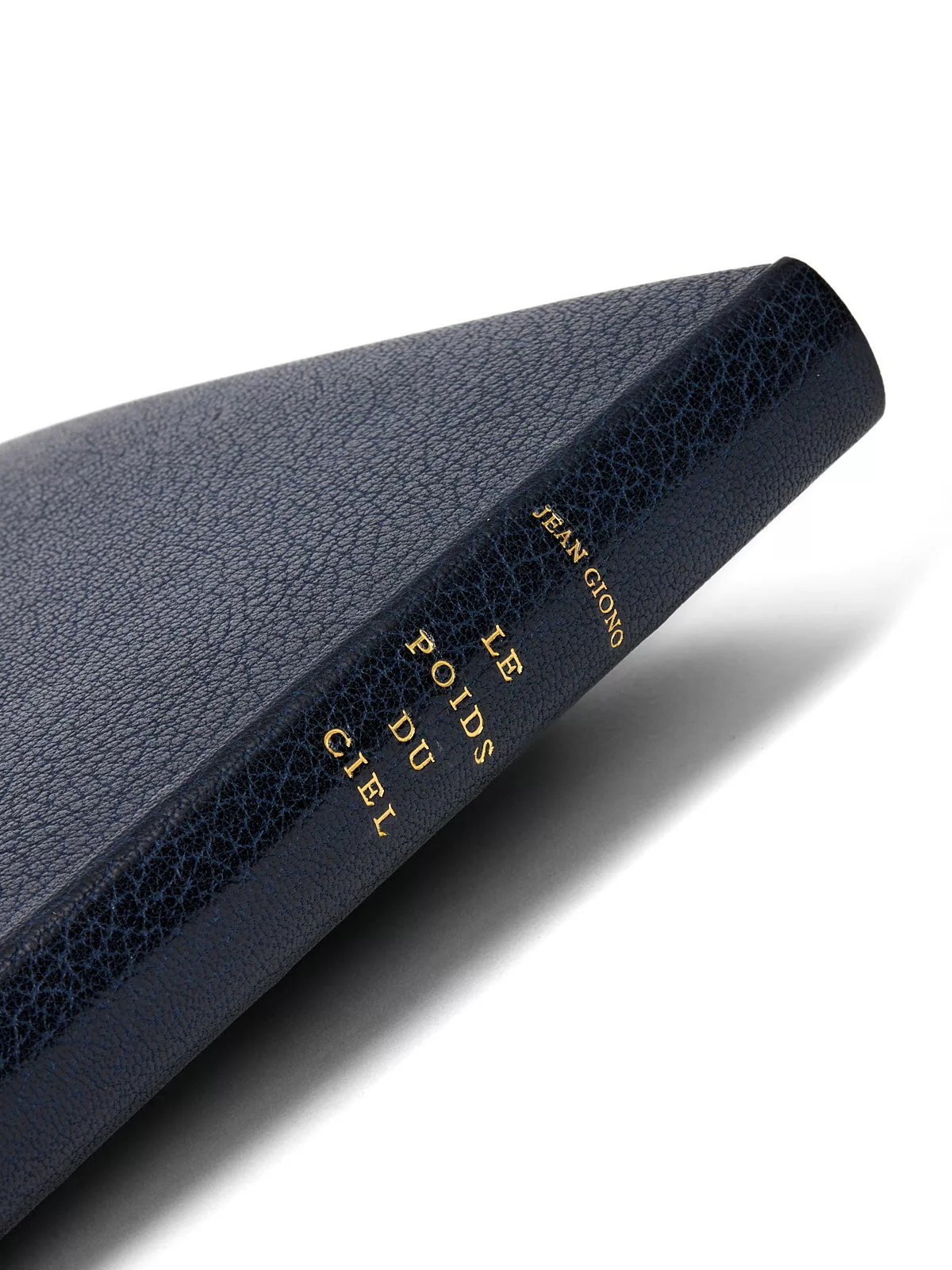
A magnificent copy, precious in more ways than one, and in perfect condition.