


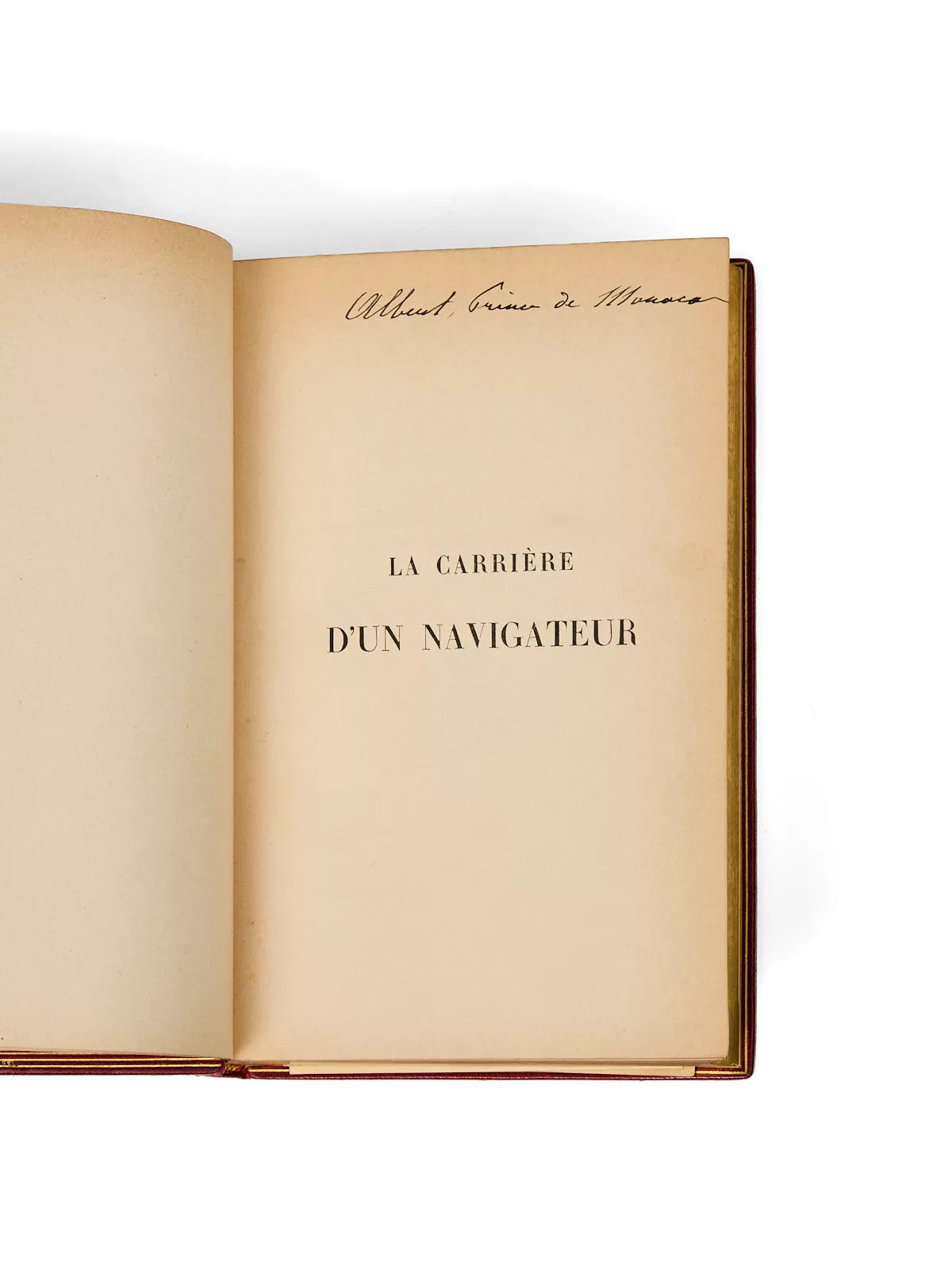
La Carrière d’un naviguateur
A key book in the printed œuvre of the “learned prince,” founder of the Oceanographic Museum of Monaco (opened in 1910) and of the Institut océanographique (Paris, 1906), this account of voyages gathers texts first published in periodicals into a volume that forms a maritime as much as a scientific autobiography, aboard L’Hirondelle and later the Princesse Alice, one of the first vessels designed for oceanographic campaigns: a three-masted schooner with a teak hull on steel frames, its figurehead representing Princess Alice, wife of Prince Albert I — the first American princess on the Rock, sixty-seven years before Grace Kelly — and the ship’s godmother.
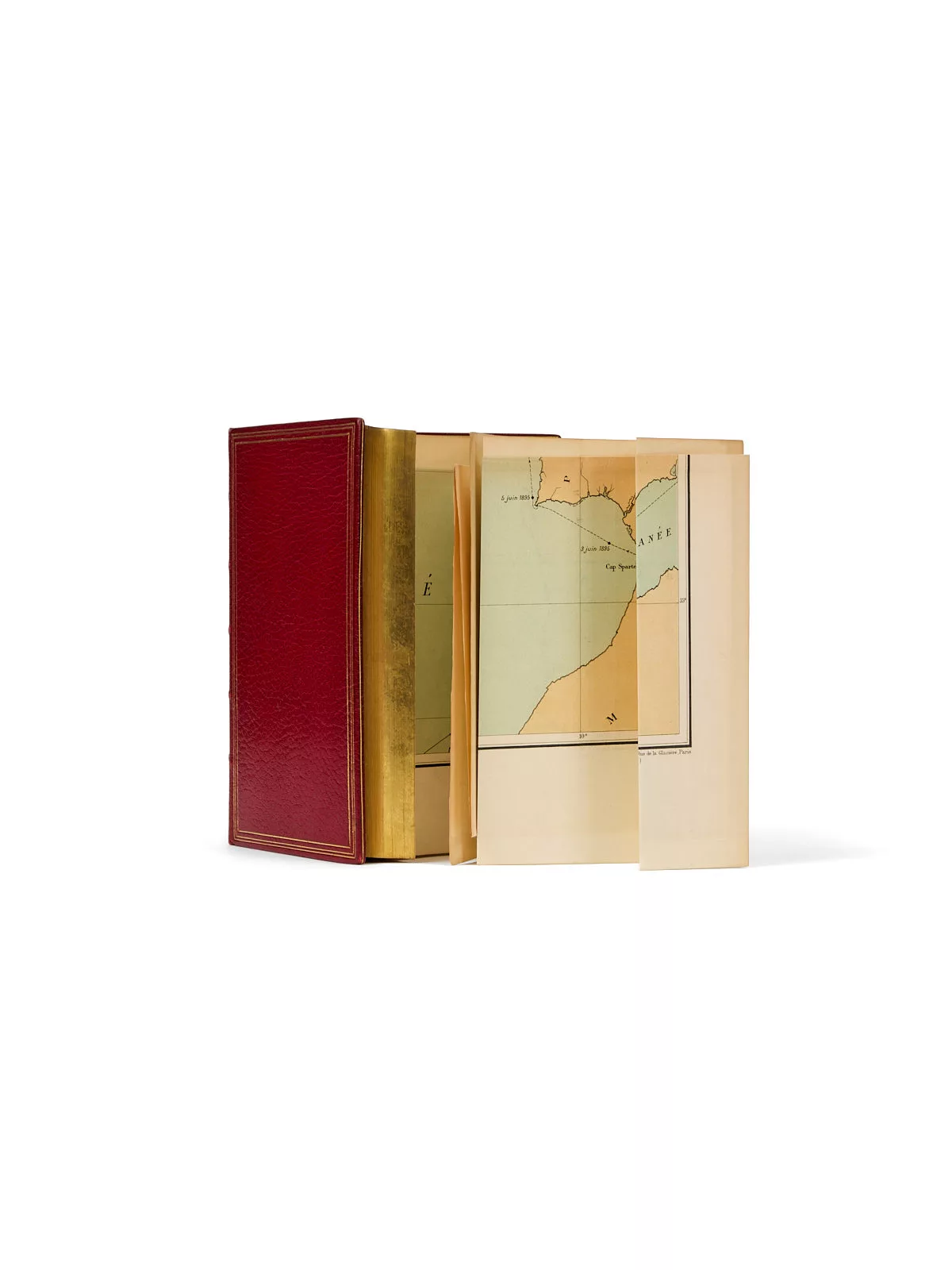
Albert I describes, with instruments in support, stations, soundings, trawling, currents, deep-sea fauna and bathymetric surveys, with the precision of a practitioner and the phrasing of a humanist. Between 1885 and 1915, he directed twenty-eight campaigns, totaling 3,698 observation stations; his expeditions to the Azores and, above all, to the Arctic (1898, 1899, 1906, 1907) contributed to decisive advances in the cartography of the region, securing the Prince’s lasting place in the history of oceanography and polar geography.
While ascending to the throne (September 10, 1889) and without shirking his governmental responsibilities, he gave Monaco a new face: scientific patronage, coastal modernization, and a cultural policy oriented toward field research and the sharing of knowledge. His pacifist humanism runs through his writings, in which science, diplomacy and maritime ethics respond to one another; the rupture of 1914, his active neutrality (making his facilities and wireless telegraphy resources available for the relief of the wounded), and then the reversal provoked by the bombardment of Reims Cathedral, would lead to the moral manifesto that extends the navigator’s philosophy, La Guerre allemande et la Conscience universelle (1919).
La Carrière d’un navigateur sets down the method, the cartography and the imaginative world of a life devoted to the sea, and the conviction that science brings peoples closer together and establishes a shared moral prosperity.
This first edition, published by Plon, is rare in this first printing produced in Monaco; a copy signed by the Prince is exceptionally rare.
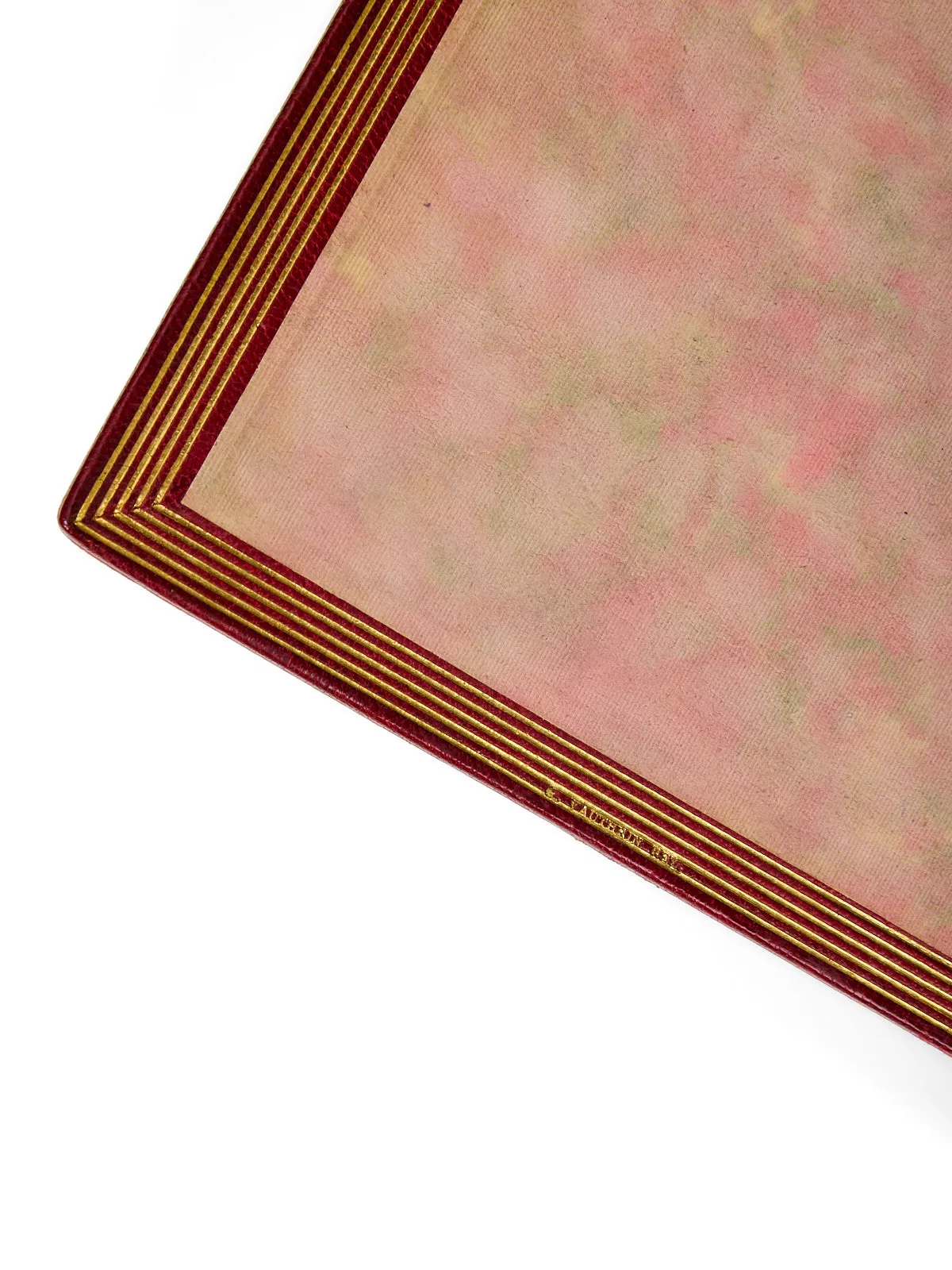
A sumptuous binding by Germain Vauthrin (a pupil of Bernard David, rue Visconti), of great elegance, no doubt executed for a discerning patron.
A choice copy and a milestone in the literature of modern maritime and oceanographic exploration.