

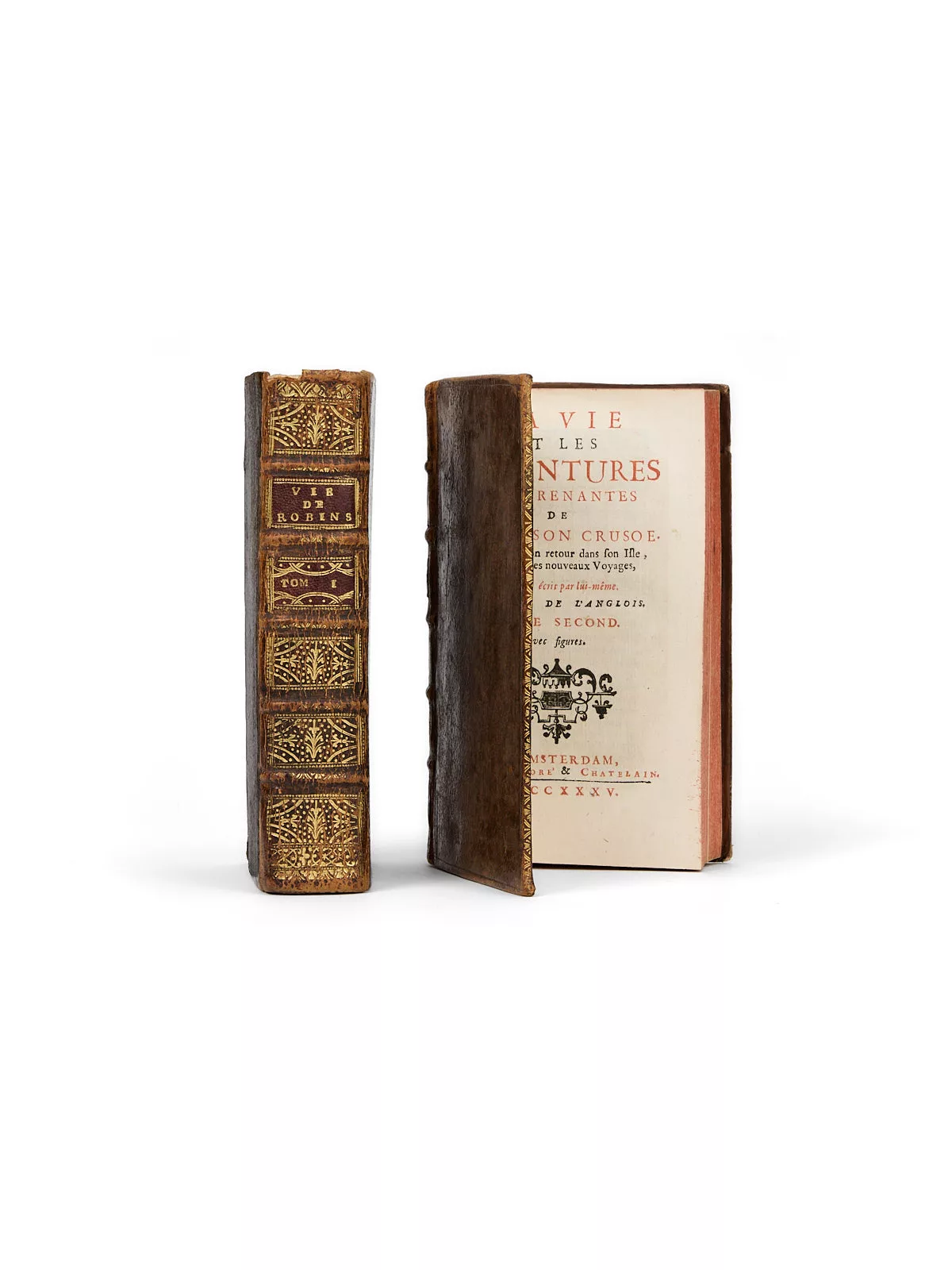
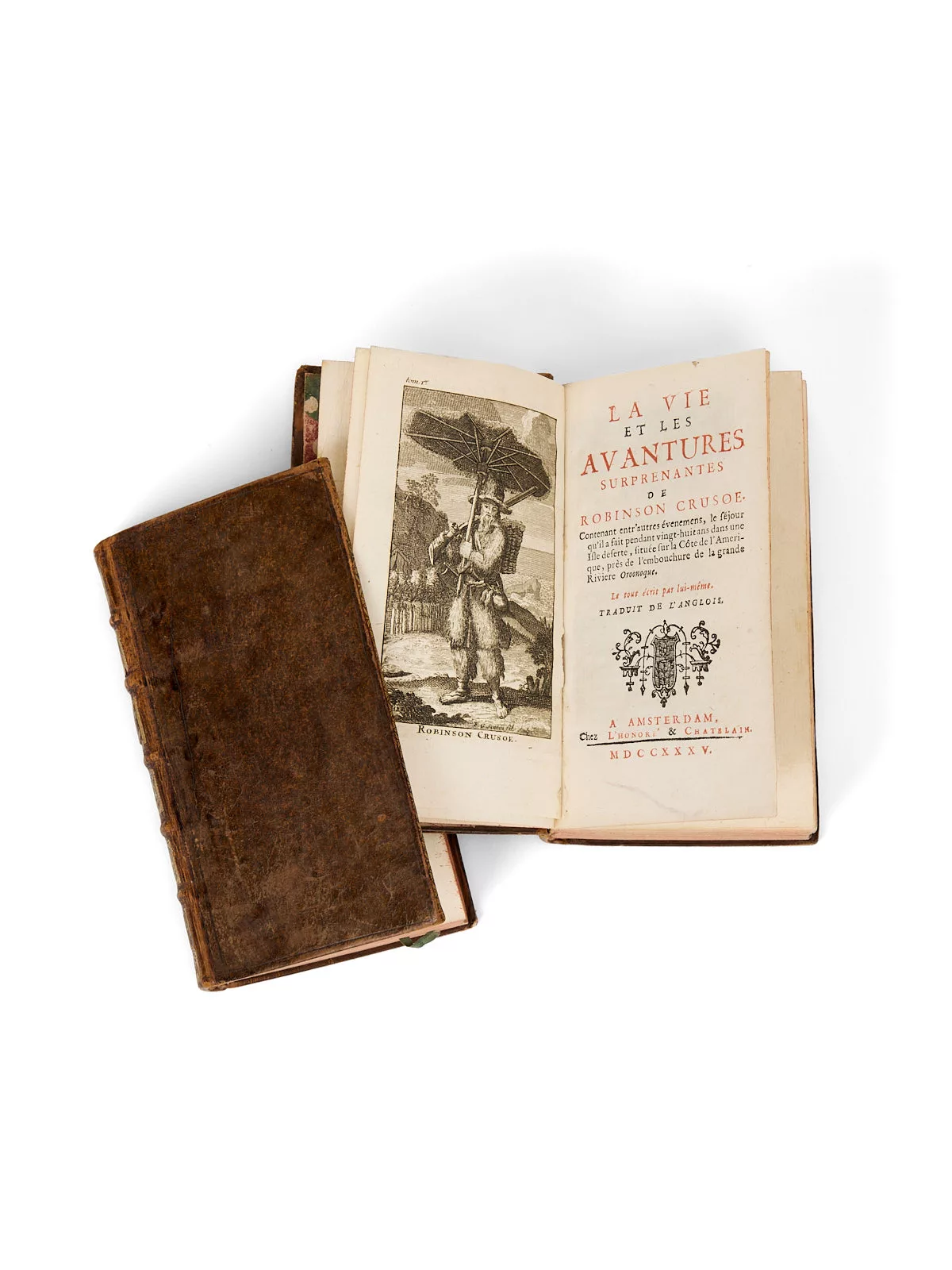
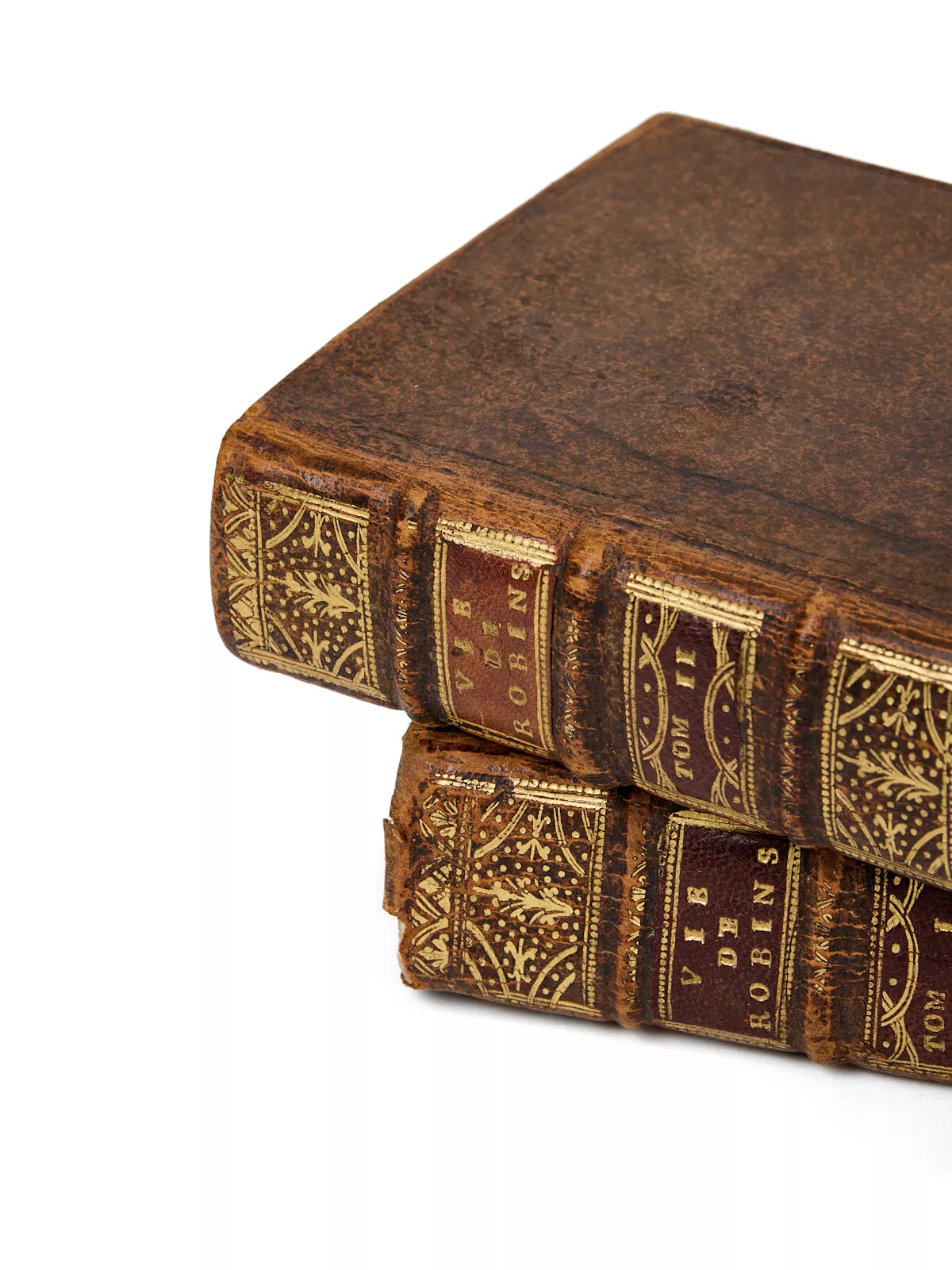
La Vie et les Avantures surprenantes de Robinson Crusoé
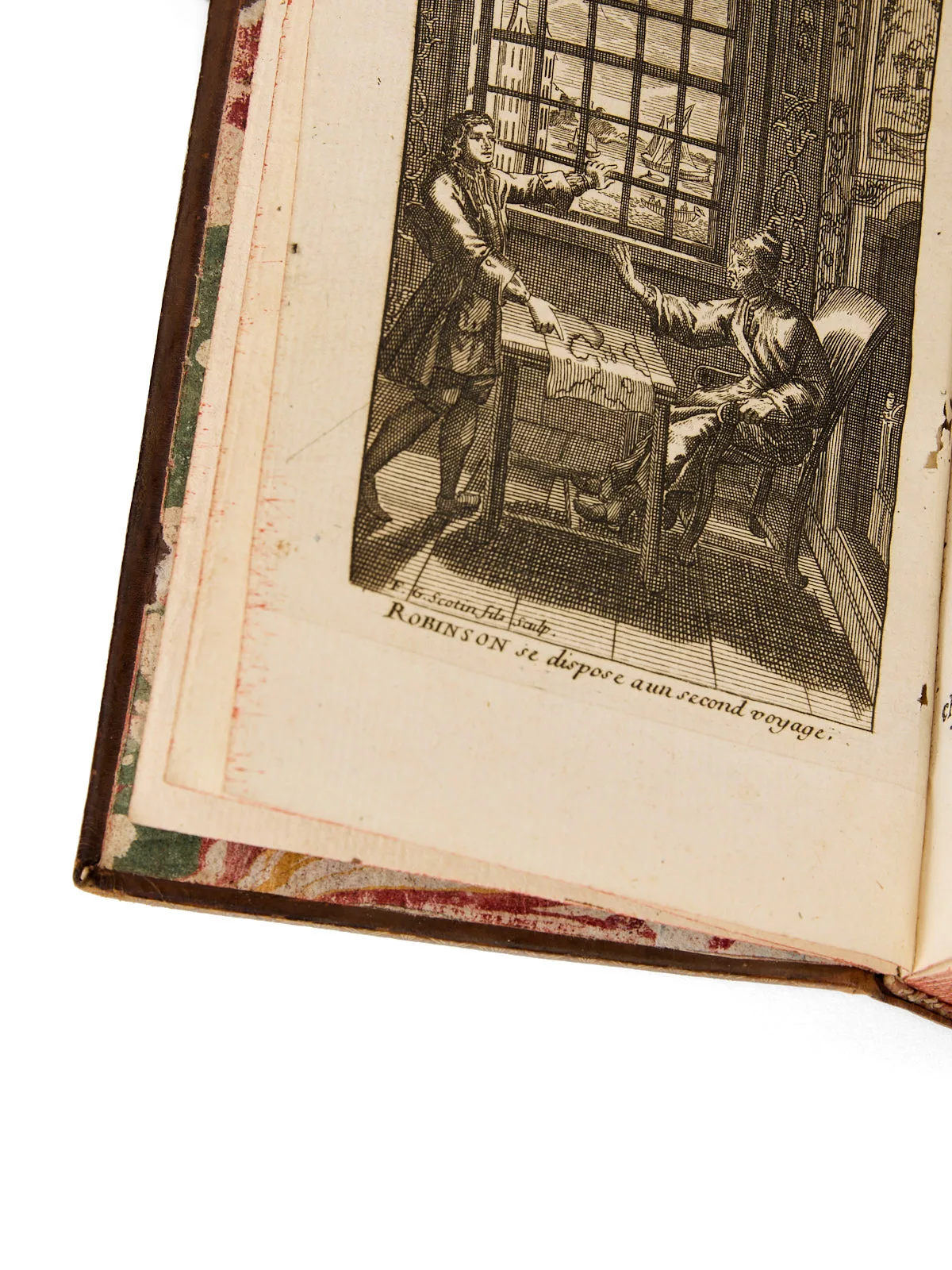
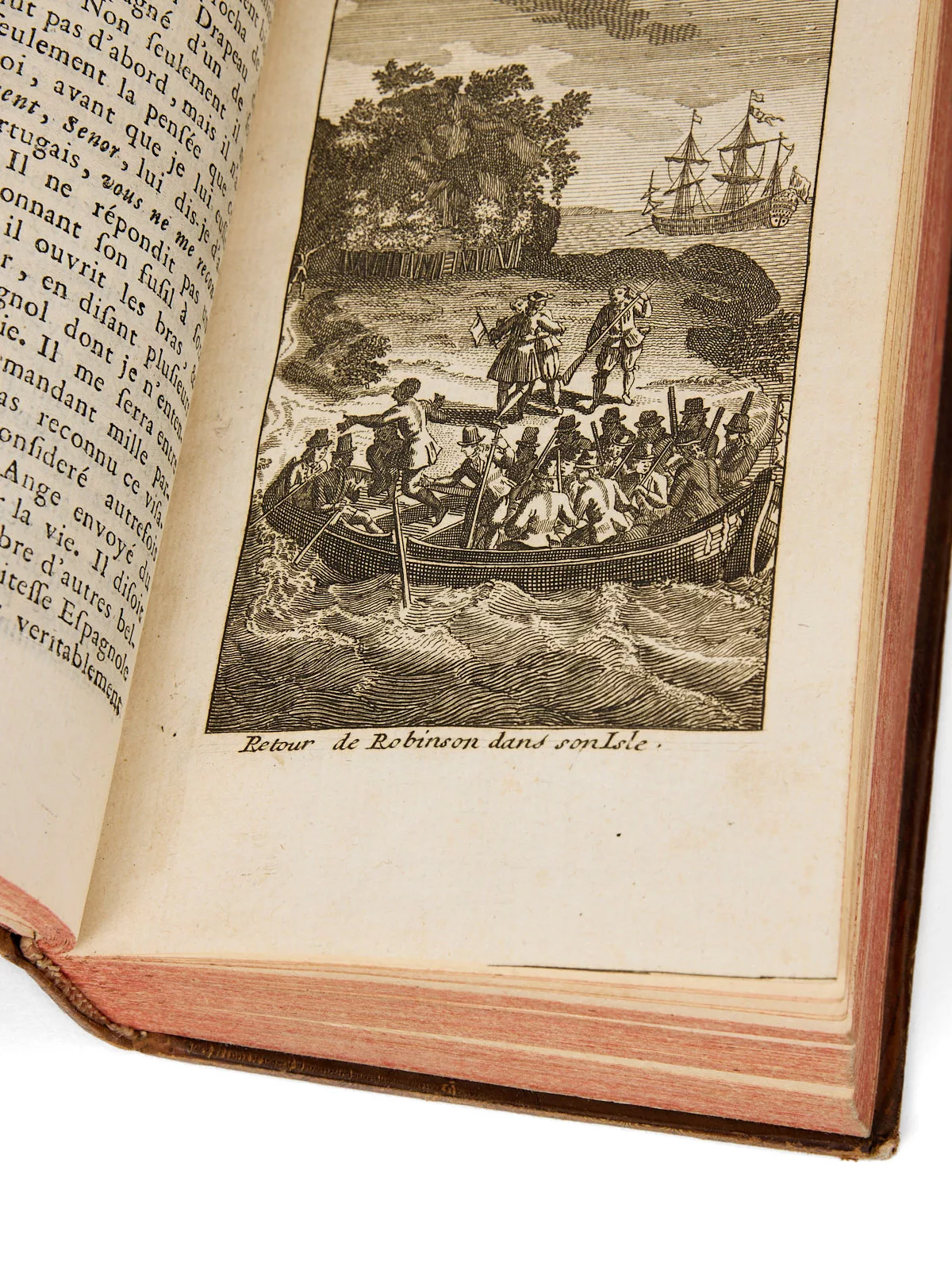
Two engraved frontispieces and plates.
After several earlier voyages, Robinson Crusoe, a sailor from York, sets sail for Guinea on 1 September 1659. The ship is caught in a violent storm, drifts for several days, and is finally wrecked off the coast of northern Brazil. The sole survivor, Robinson reaches an island off the mouth of the Orinoco, where he gradually secures a decent subsistence: he will remain there for nearly twenty-eight years, at first alone, then accompanied by a loyal native whom he names Friday.
Very loosely inspired by the real adventures of the Scottish sailor Alexander Selkirk, the novel published by Defoe in 1719 met with immediate and lasting success. James Joyce would later call Defoe the “father of the English novel,” not only because the author innovated by presenting his book as an authentic manuscript discovered by the publisher, but also because he created a new kind of hero: an ordinary man recounting his extraordinary story exactly as he lived it. Defoe’s realism made him a model for later English novelists, and Robinson Crusoe is famously the only book Rousseau allows his Émile to read.
A fine copy of the Amsterdam edition, illustrated with engraved plates.
One headcap damaged and minor wear consistent with age.