

Les Bêtes – Le Temps des morts
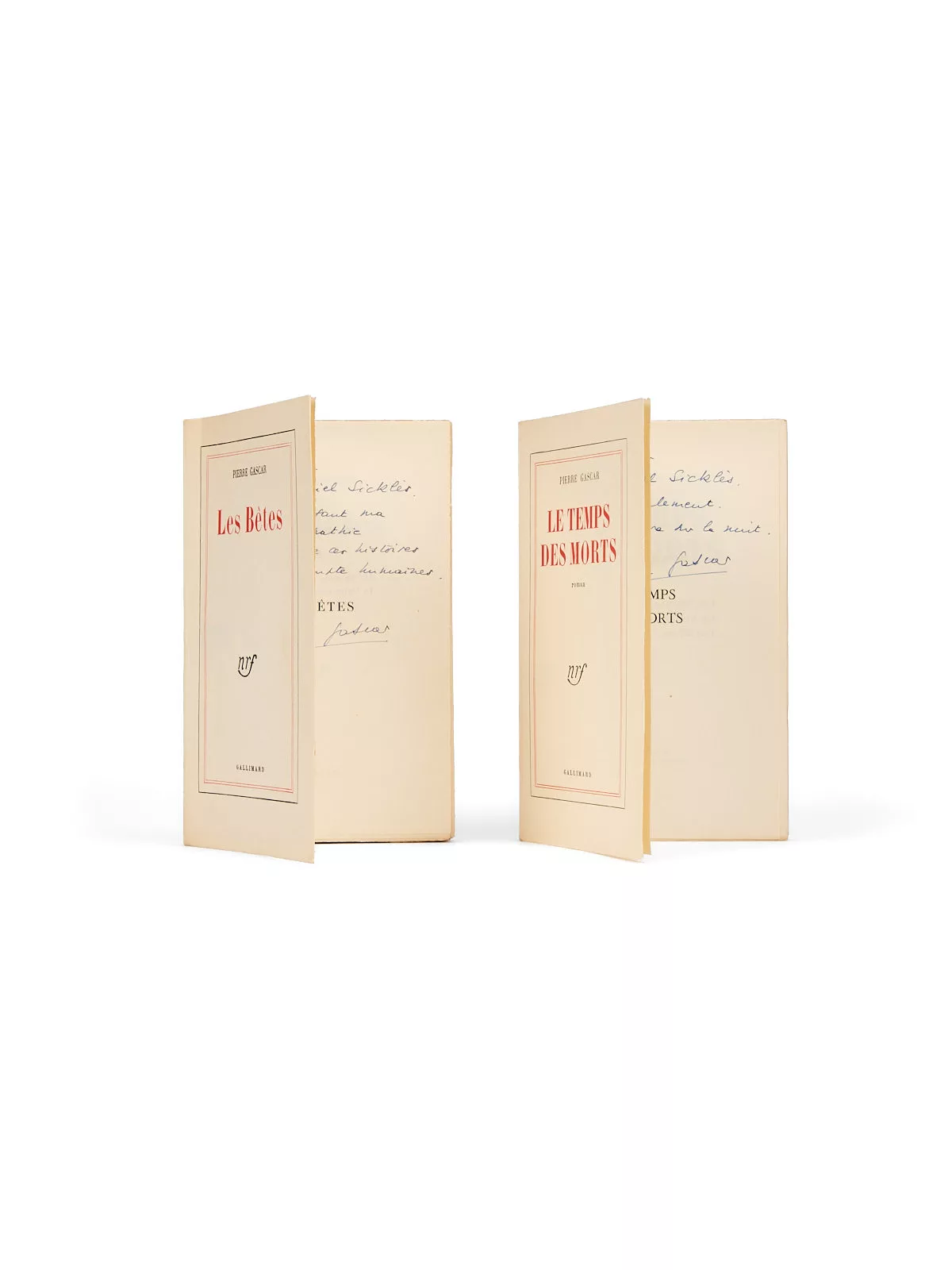
One of 55 and 50 copies from the first issue on vélin pur fil (no. 29 and no. 8).
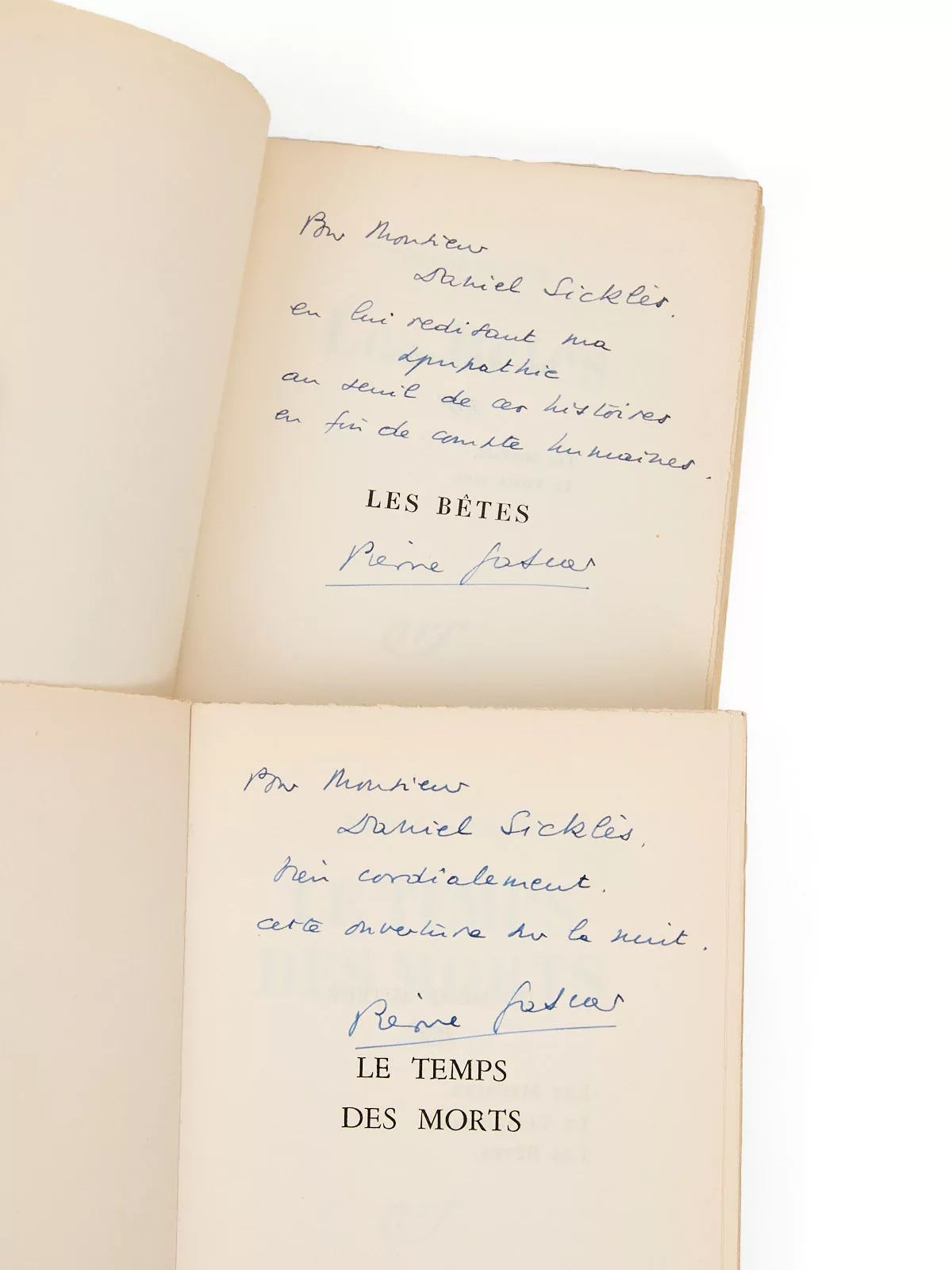
Signed presentation inscriptions: “Pour Monsieur Daniel Sicklès, en lui redisant ma sympathie au seuil de ces histoires en fin de compte humaines”; “Pour Monsieur Daniel Sicklès, bien cordialement, cette ouverture sur la nuit, Pierre Gascar.”
Prix Goncourt 1953. Awarded for Les Bêtes, Pierre Gascar (1916–1997) received the prize not for a novel, but for a collection of six short stories. Far from fables, these are harsh texts, nourished by his experience of war and captivity, in which close proximity to horses, rats or dogs reveals instincts of survival, fraternity and brutality alike. Published the same year, Le Temps des morts extends this exploration of the human condition.
Gascar was long celebrated as a singular voice in French literature, but his work, difficult to classify, escaped easy categorization. His dozens of books published by Gallimard placed him in a fertile dialogue with the Nouveaux Romanciers, while pursuing a deeply personal vein of his own. Visionary, he placed ecology at the heart of literature as early as the 1970s, publishing Le Présage, a collection devoted to lichens, a metaphor for the fragility of living things in the face of pollution. He was among those who, at the time of the Stockholm Conference and the first environmentalist journals, gave voice to a nature under assault.
This celebrated writer, winner of the Prix Goncourt in 1953 and of the Grand Prix de l’Académie française in 1969, admired by Kenzaburō Ōe, gradually fell into obscurity. His rediscovery seems all the more necessary today, as his texts, carried by a writing of the senses, resonate with contemporary environmental awareness.