

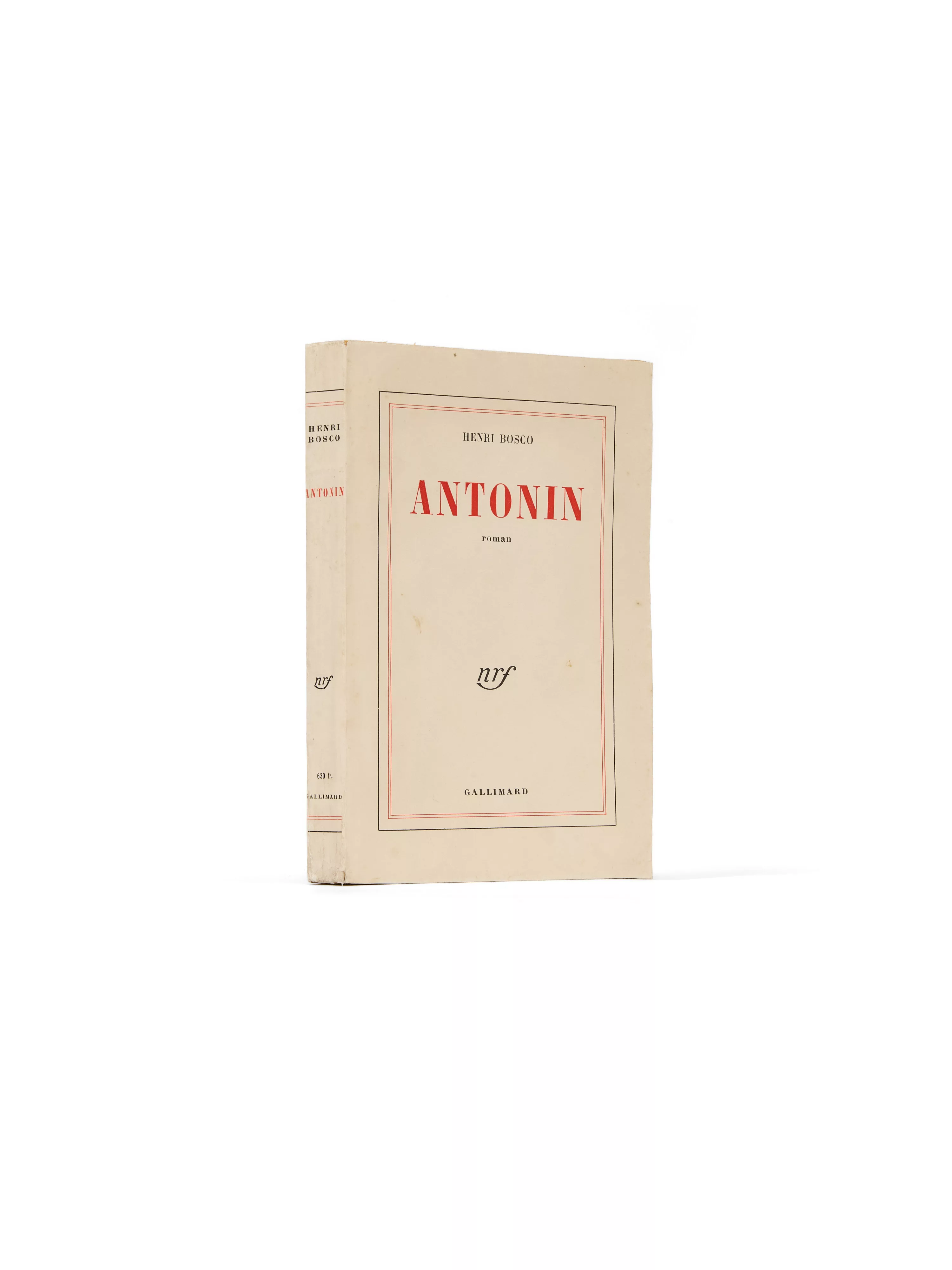
Antonin
One of the review copies, stamped as such.
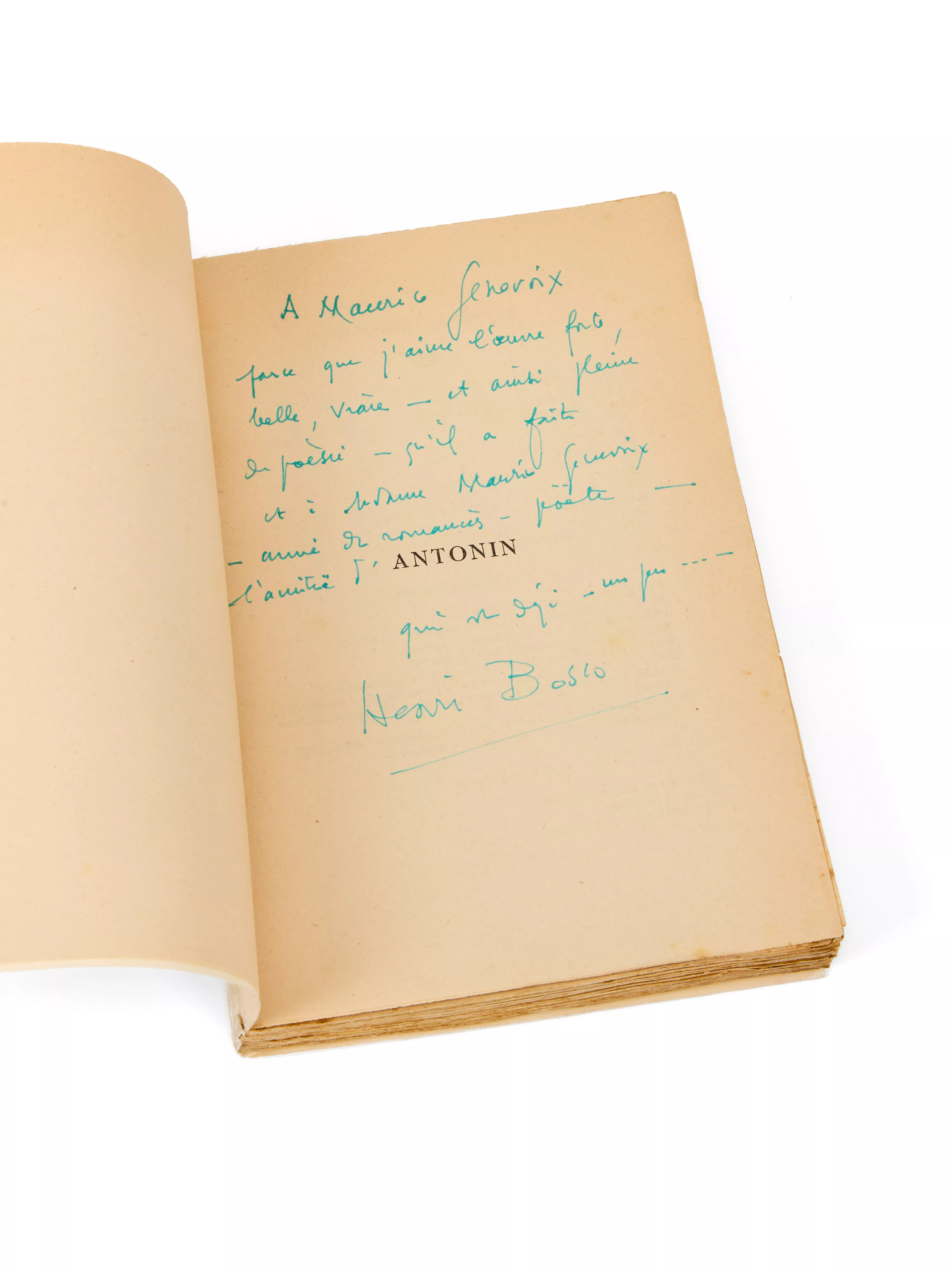
Presentation copy inscribed by Bosco to Maurice Genevoix: “À Maurice Genevoix parce que j'aime l'œuvre forte, belle, vraie - et ainsi pleine de poésie - qu'il a faite et à Madame Maurice Genevoix - aimée des romanciers-poètes - l'amitié d'[Antonin] qui est déjà un peu… Henri Bosco.”
Antonin belongs to that vein in Bosco’s work where childhood is never merely an age but a world: a fragile kingdom crossed by secrets, forebodings, fears and revelations, a world in which Bosco writes and thinks “in the manner of children; they do not reason, they imagine.”
The novel unfolds largely in and around Avignon. Émile Henriot, writing in Le Monde on 9 April 1952, praised this new novel as “very good Bosco,” noting that one found there “the same hand, the same ink, the same places,” without the book being confused with Malicroix or Le Mas Théotime. He was right: Antonin extends Bosco’s work without repeating it.
The provenance gives this copy a particular resonance. In the books of Maurice Genevoix as in those of Henri Bosco, one hears the voices of writers bound to the land, to waters, to houses and to silences. In one, the Loire, the woods, the ponds, the animals, the seasons of Sologne; in the other, the white earth of Provence, the shadows of the Luberon, the paths of Avignon and the pale pebbles of the Durance. Two deeply inhabited bodies of work, mutually respectful, answering each other in a language where landscape is never mere setting.
From the library of Maurice Genevoix (bookplate and signed presentation inscription).