

One of the 118 photographs shown to visitors, preserved on its original mount.
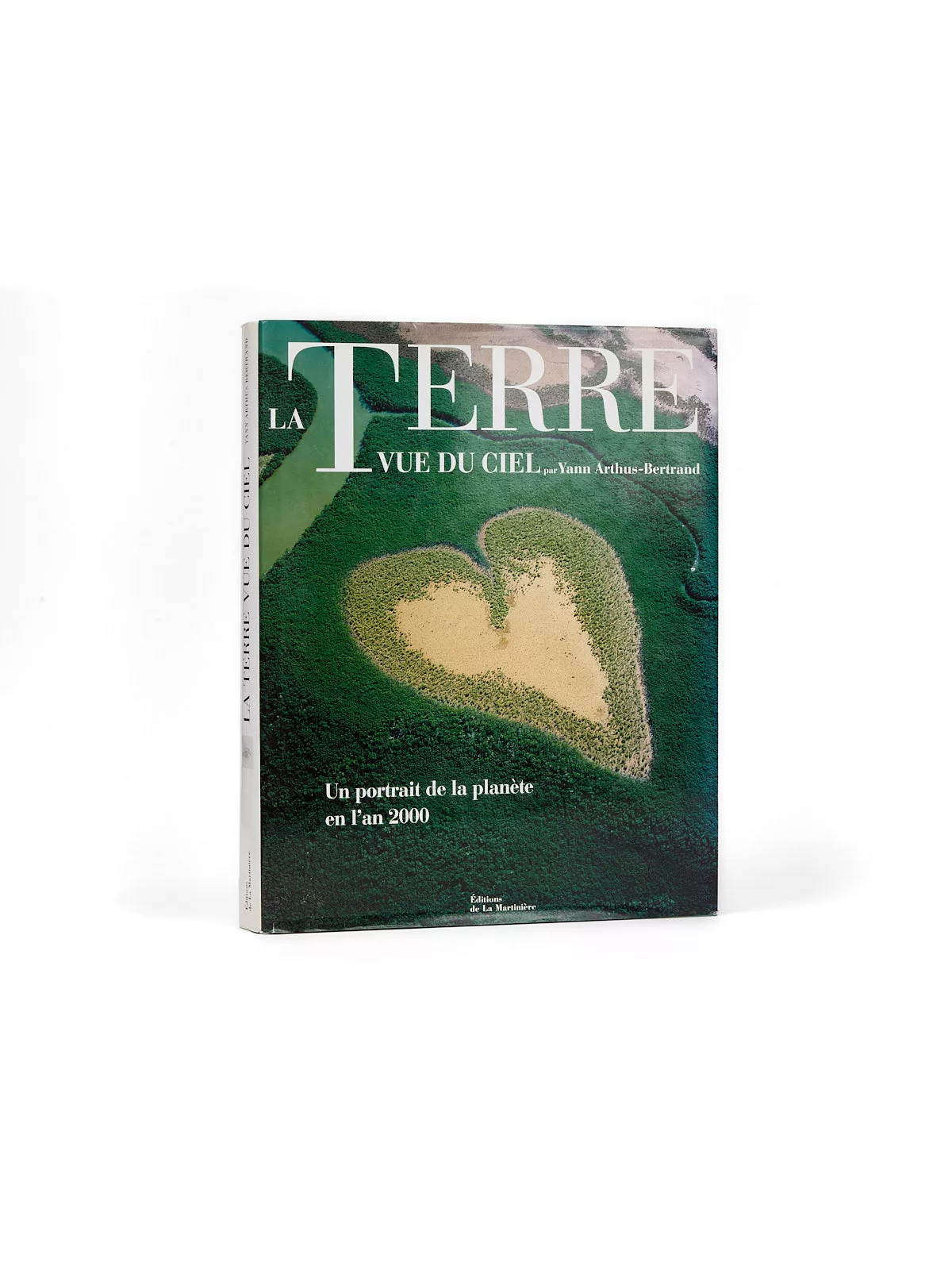
The idea for the book emerged at the Rio Earth Summit in 1992, when Yann Arthus-Bertrand decided to launch a major photographic project on the state of the world and its inhabitants. He mortgaged his house and set out on a helicopter survey of the planet — eighty countries across five continents — during which he took thousands of photographs. Six years of labor, selection and editing produced a spectacular result and a publishing triumph, though the risk was considerable: “Tempers flared in the corridors of the publisher La Martinière over the fate of this large-format ‘monster’ (37 x 29 cm), weighing 3.5 kg, running to 426 pages, mostly double-page photographs, and printed with exceptional care in paper, engraving and printing. The gamble was considerable. At what price should the first print run of 35,000 copies — already substantial for an illustrated book — be sold? Against the publisher’s advice, Arthus-Bertrand insisted on a price under 300 francs, and eventually prevailed. The book went on sale ahead of the holiday season, was quickly praised by Bernard Pivot on his literary television program, and sold out within weeks. From then on, the publishing house struggled endlessly to satisfy booksellers panicked by stock shortages, as the presses could not keep pace with such a complex object, notably one with numerous foldouts. La Terre vue du ciel was on its way to becoming the best-selling photography book in history. ‘I have never seen anything like it,’ said Hervé de La Martinière. ‘It’s extraordinary. The presses never stop running and we cannot keep up with demand.’”
The first edition was published at the end of summer 1999: the volume upended the conventions of the “beautiful book” and met with an immediate and overwhelming response: 500,000 copies by summer 2000, 800,000 by autumn, with foreign co-editions quickly pushing the total toward one million. This publishing success of unprecedented scale was amplified by the decisive contribution of Robert Delpire, who together with Arthus-Bertrand devised an enormous exhibition conceived as a “visual spectacle”: beginning May 2, 2000, 118 very large-format images were displayed free of charge along the rue de Médicis, on both sides of the railings of the Jardin du Luxembourg.
“The photographs are not only in the museum but in the gardens and in the street, mounted on the railings of the Palais du Luxembourg. Some visitors spend hours there, others return several times; among the crowd are teenagers on rollerblades, couples out for a stroll, parents holding their children’s hands. Word has spread across the country, foreigners are flocking in, and of course every professional in the image trade. They stand at a distance from the photographs, a few meters from the railings, to take in the whole view, then step closer to examine a detail or read a caption, then step back again… The exhibition is even more striking, and just as crowded, in the evening, when it is lit and the magic of the Earth bursts from each of the hundred and eighteen photographs, displayed like advertising posters along the railings of the Jardin du Luxembourg, along the rue de Médicis. Never had a photography exhibition drawn such an overwhelming, delighted crowd, won such enthusiastic support from visitors of every age, or received such glowing praise.” (Le Monde, May 20, 2000).
Given its immense success, the exhibition was extended twice, running until the last day of 2000: in total, more than three million visitors attended. Proposed by the artist a few days before the exhibition closed — on December 21, 2000 — the auction of the panels displayed at the Luxembourg raised 2.3 million francs, donated to Reporters sans frontières and the Fondation Daniel Balavoine.
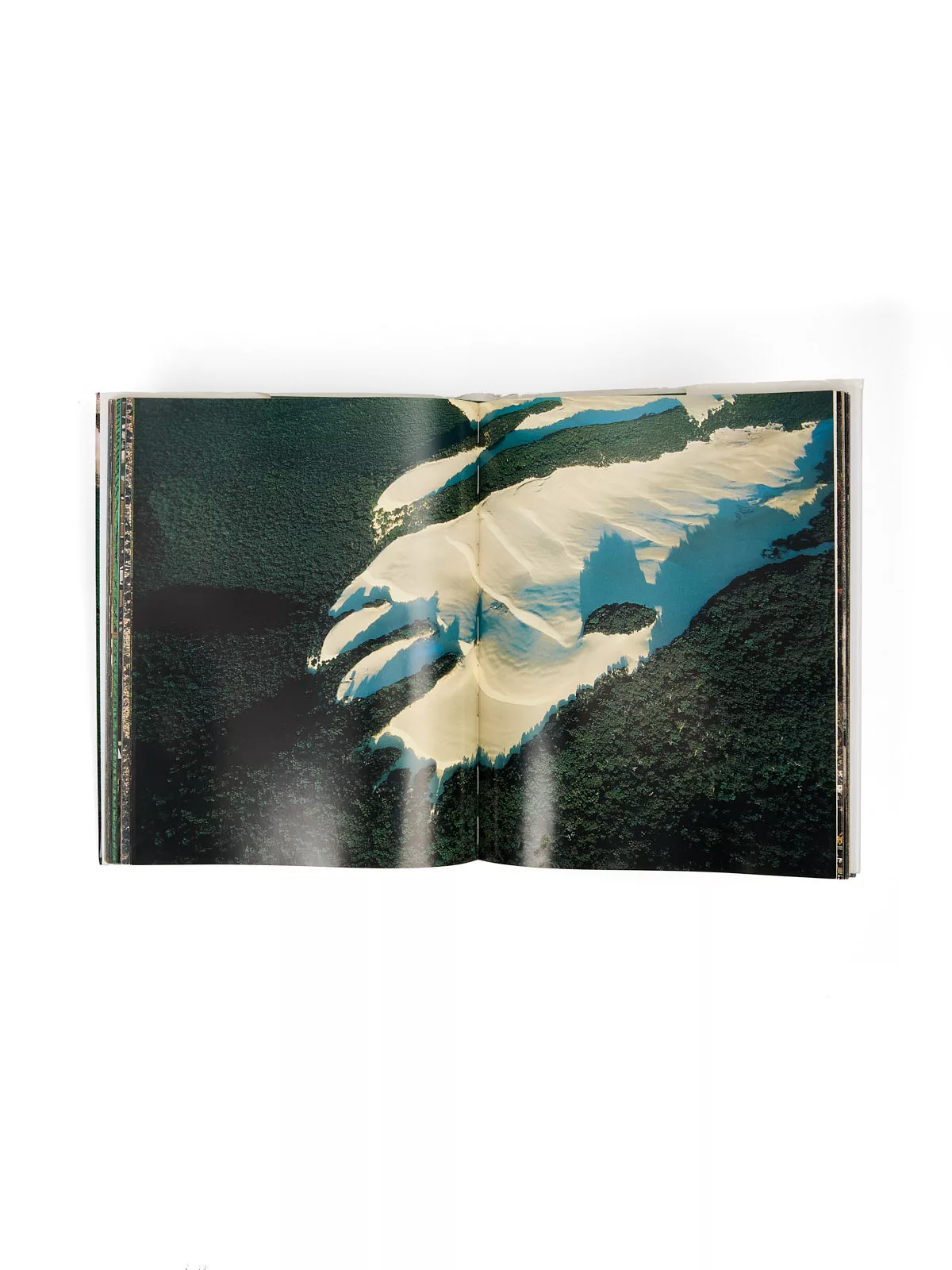
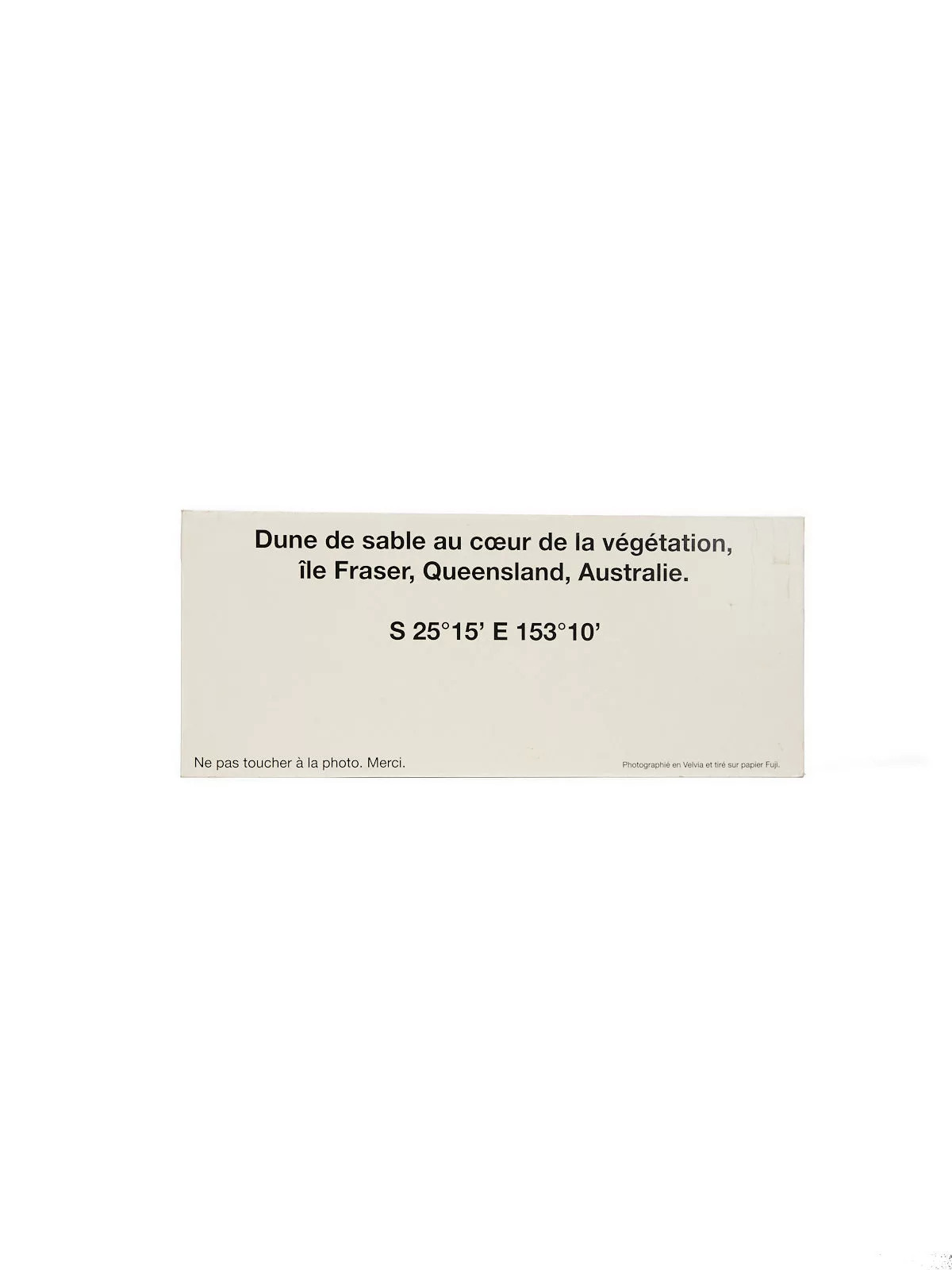
This original panel was taken down a few days later. It is the one entitled Dune de sable au cœur de la végétation sur l’île Fraser (Sand Dune amid Vegetation on Fraser Island): “Off the coast of Queensland, Australia, Fraser Island is named after a woman who took refuge there in 1836 after the wreck of the ship she was traveling on. At 120 km long and 15 km wide, it is the largest sand island in the world. Curiously, a lush rainforest has developed on this infertile substrate, threaded by broad dunes shifting with the wind. Fraser Island has abundant freshwater resources, with nearly 200 freshwater lakes, and is home to a varied fauna of marsupials, birds and reptiles. Exploited from 1860 for its timber, notably used in the construction of the Suez Canal, the island was later coveted by sand-mining companies in the 1970s; it is today a protected area, inscribed on the UNESCO World Heritage List since 1992.” The photograph is reproduced on the double-page spread pp. 200–201.
Taking the panel down, alongside Yann Arthus-Bertrand himself, posed a logistical problem for its fortunate new owner: his Fiat Uno at the time was far too small for such a format, which had to be transported securely lashed to a roof rack borrowed from a friend. Delivery by vehicle is possible only within France and continental Europe. All you need thereafter is a little space in your living room — with guaranteed effect!
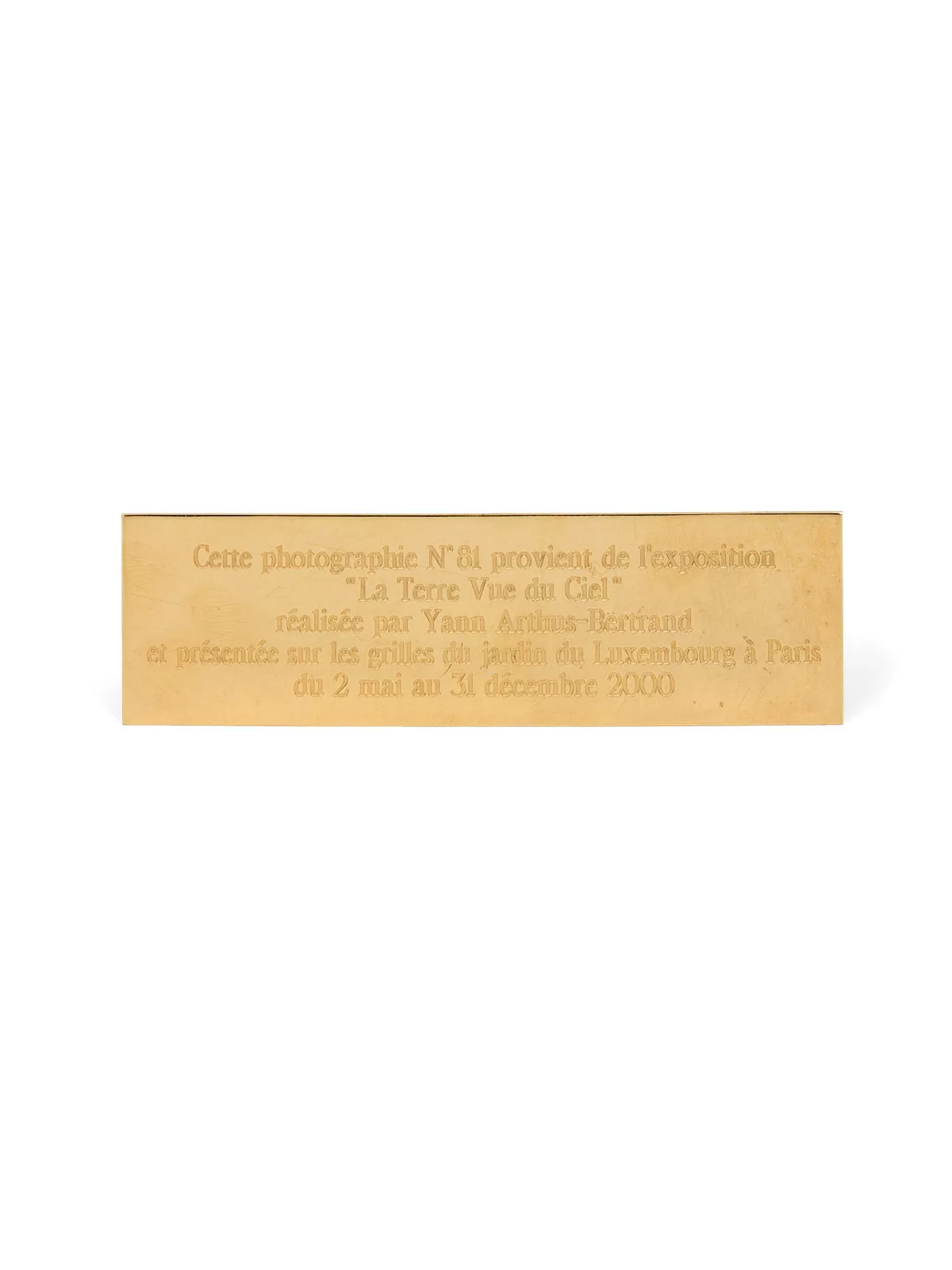
The panel remains complete with its printed texts and captions, printed on glossy card, which originally appeared beneath the image, as well as its gilt plaque issued at the time of sale certifying its provenance. The certificate of authenticity, on the reverse, has also been preserved.
The exhibition subsequently traveled the world, presented in new large-format (though smaller) printings in Japan, Belgium, Switzerland, Italy, the United States, Spain, Germany, Mexico, Turkey, Denmark (2001), Venezuela, Russia, Hungary, Sweden, Norway, Poland, Lebanon (2002), Senegal, Iceland, Singapore, Chile (2003), Taiwan, Saudi Arabia, the Netherlands, the United Kingdom, Qatar, Argentina, Portugal, South Korea, Austria (2004), Afghanistan, the Dominican Republic, Slovenia, Finland, Cyprus, Tajikistan, Armenia, Singapore (2005), New Zealand, the Czech Republic, Australia (2006), Uruguay, Puerto Rico, Serbia (2007), Peru, Thailand, Kyrgyzstan (2008), Morocco, Syria, India (2009), Mauritius, Hong Kong, Bangladesh (2010), and finally Brazil (2012).