

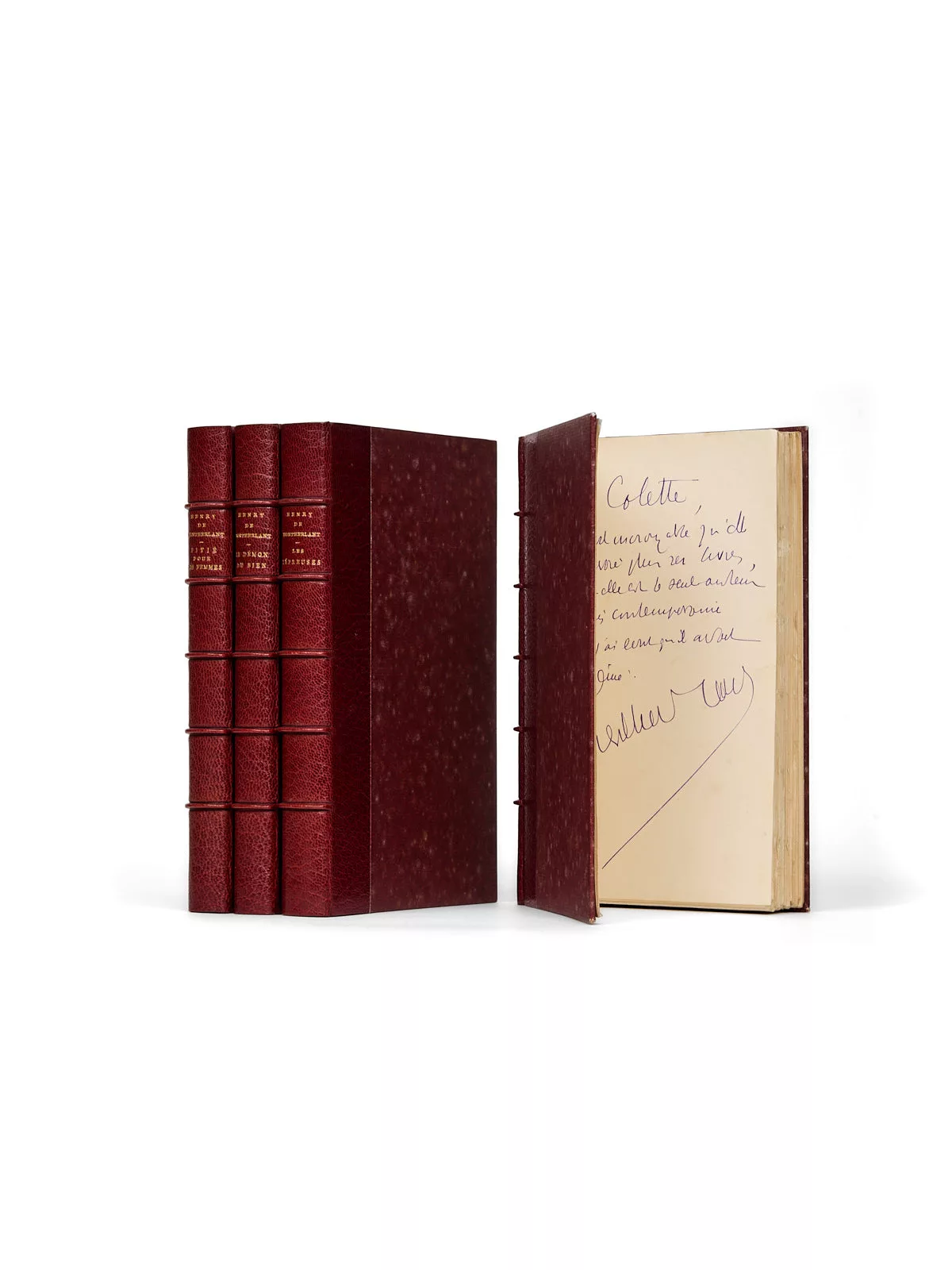
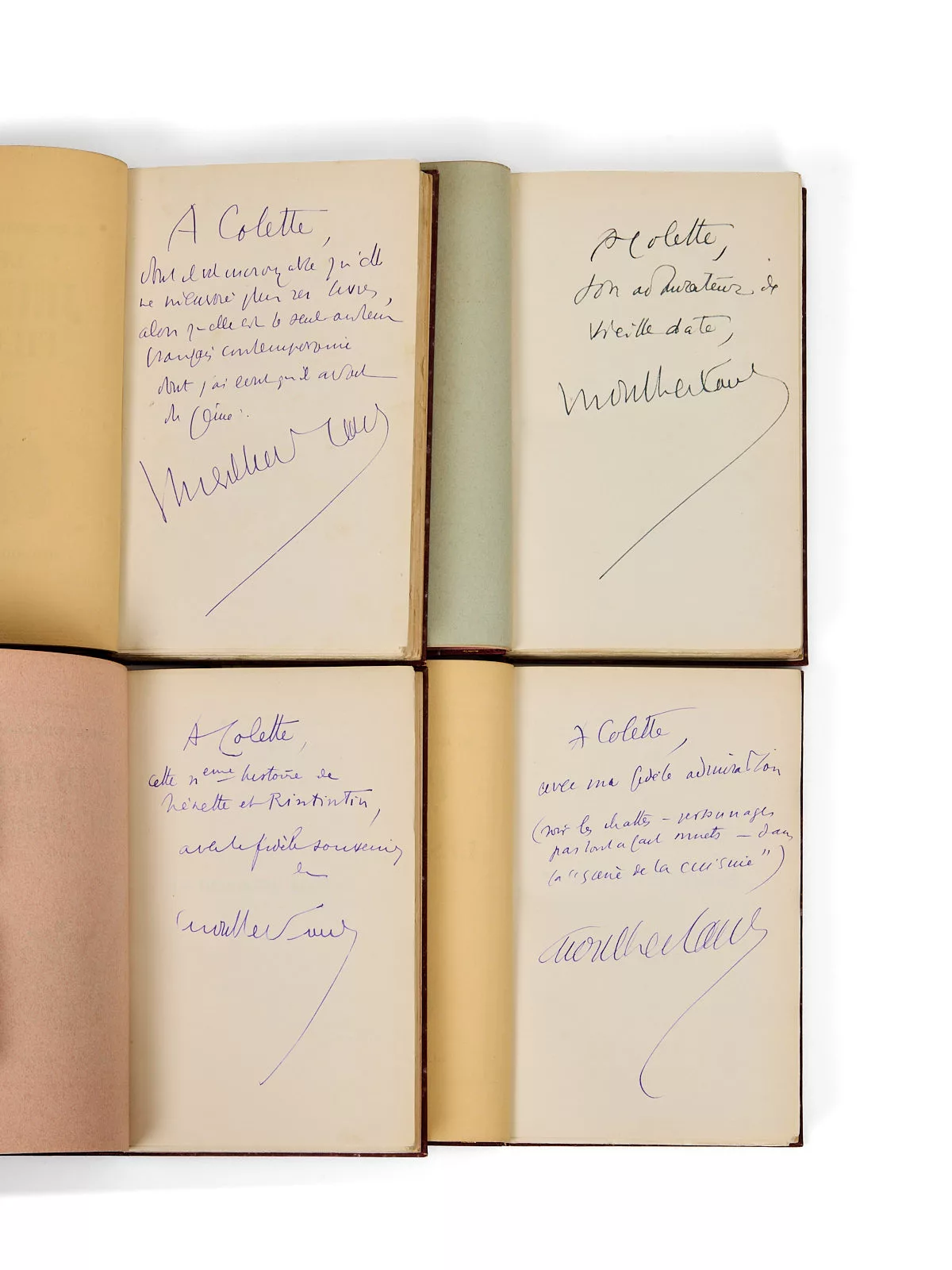
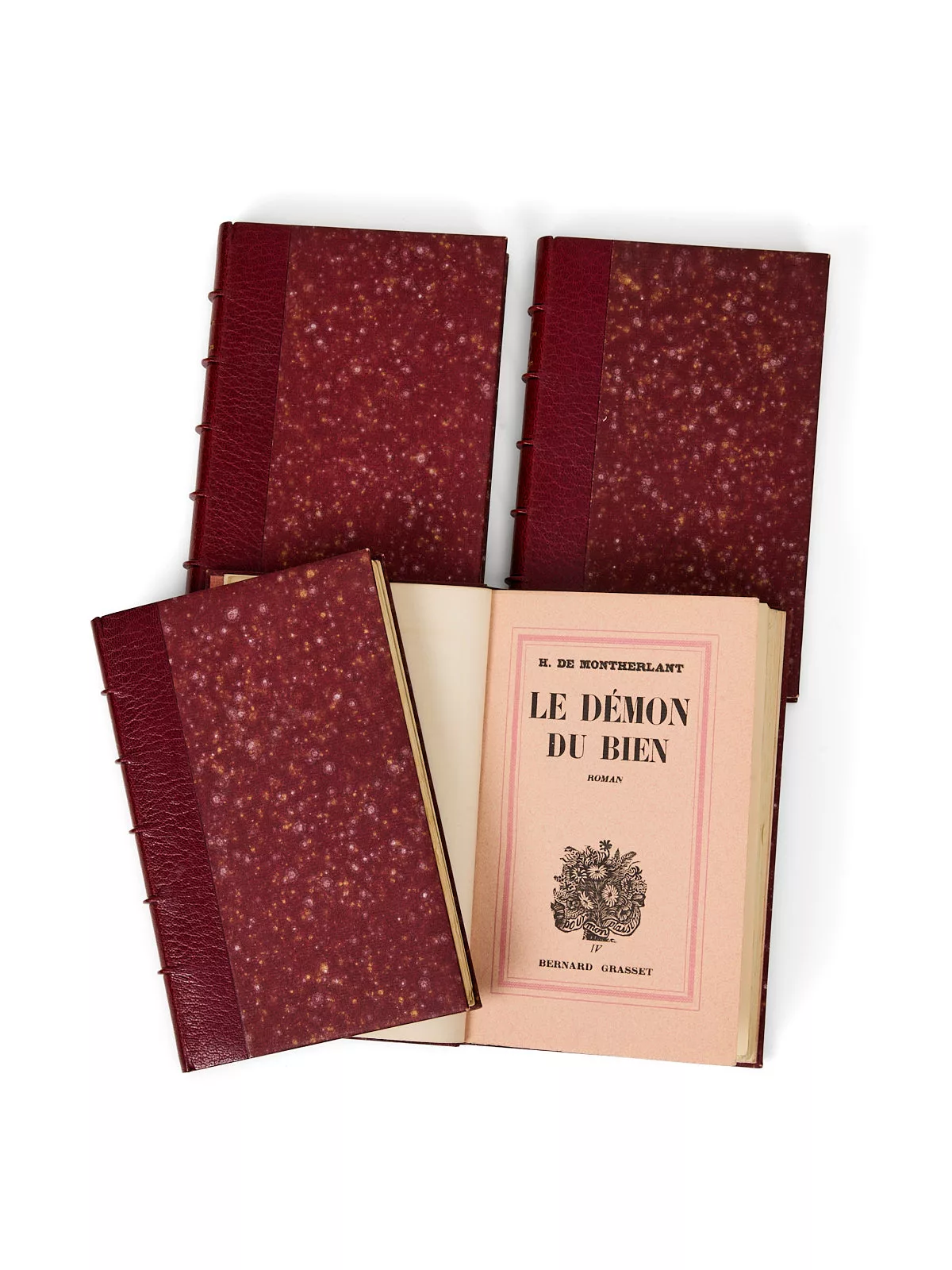
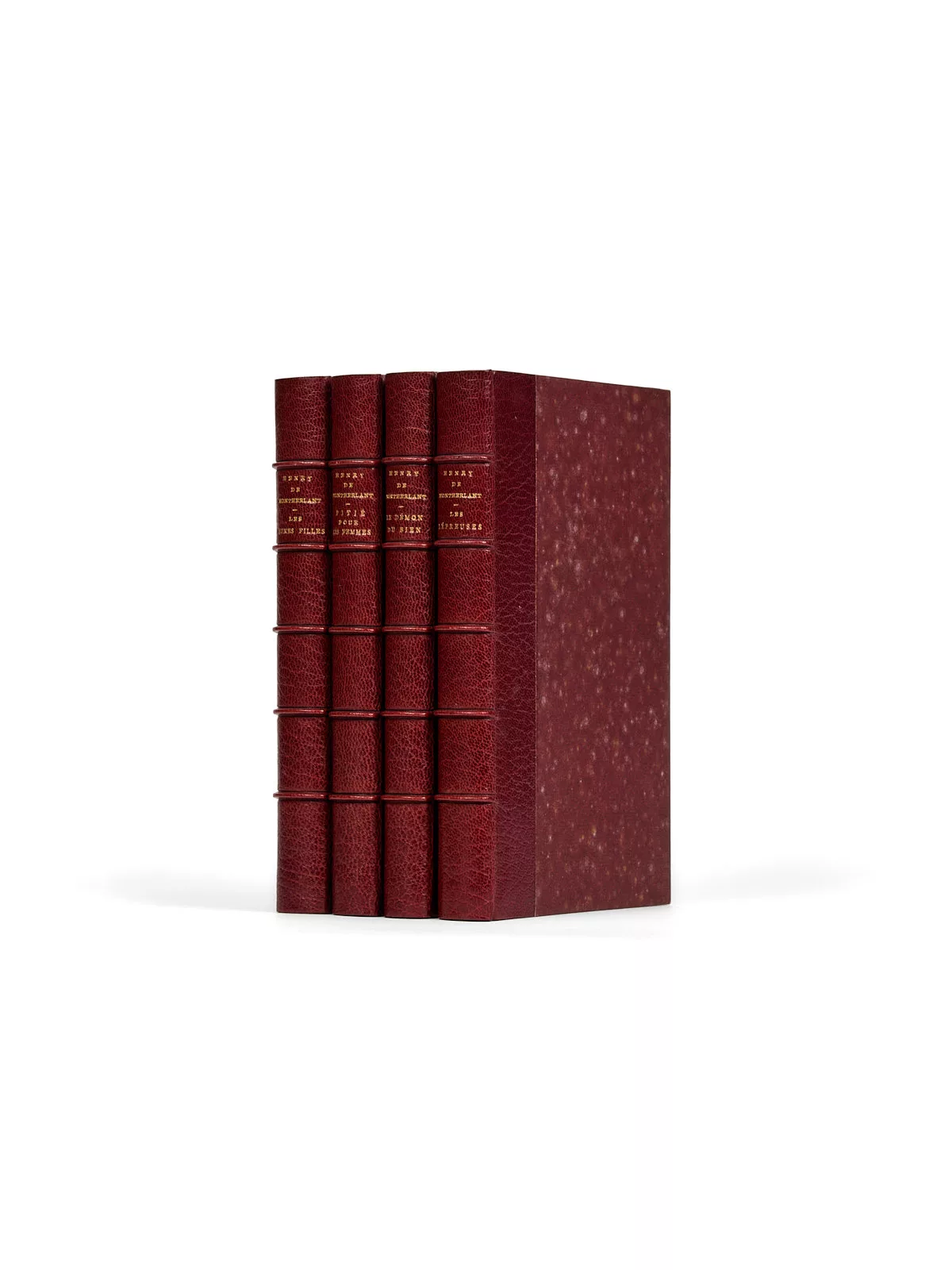
One of the numbered review copies.
Signed presentation inscriptions to Colette on each of the volumes:
“À Colette dont il est incroyable qu'elle ne m'envoie plus ses livres, alors qu'elle est le seul auteur français contemporain dont j'ai écrit qu'il avait du génie, Henri de Montherlant.”
“À Colette avec ma fidèle admiration (pour les chattes - personnages pas tout à fait muets dans la ‘scène de la cuisine’) Henri de Montherlant.”
“À Colette cette nème histoire de Nénette et Rintintin, avec le fidèle souvenir d'Henri de Montherlant.”
“À Colette son admirateur de vieille date.”
Montherlant met her at least once, at a dinner at her home in 1943, in the company of Jean Cocteau.
He would write of her that she “is the greatest French writer”; the Carnets of July–August 1934 contain a long note (Pléiade, p. 1131) in the form of a vibrant tribute, “not without a certain emphasis that only better highlights Montherlant’s contempt for ‘the literary chapel that claims to set the tone in France, and which (…) expresses its disdain [for Colette] through silence’ […] Montherlant does not merely admire Colette […] he sets her apart from the others because she is authentic […] Colette was, for Montherlant, an exception” (Jacqueline Michel, “Montherlant et Colette, réflexions sur un éloge,” in Revue d’Histoire Littéraire de la France, no. 3, 1976, pp. 412–427).
Montherlant returned to the subject in Tous feux éteints (Gallimard, 1975, pp. 34 and 112), where two brief notes bitterly emphasize the discredit into which Colette had fallen after her death.
Fine matching half-bindings by Pierre-Lucien Martin.