

Au seuil des guitounes
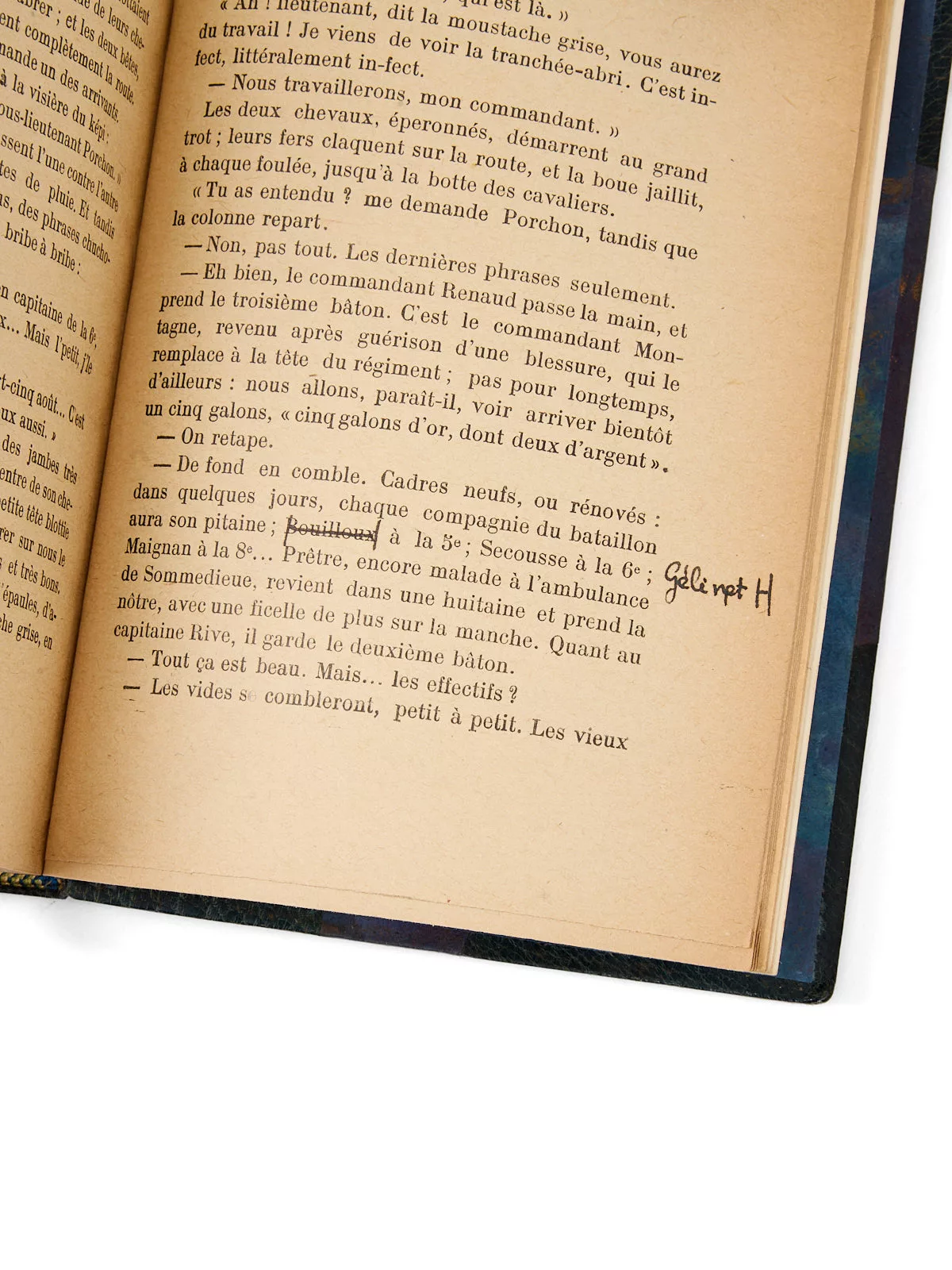
The author's own copy, with autograph corrections.
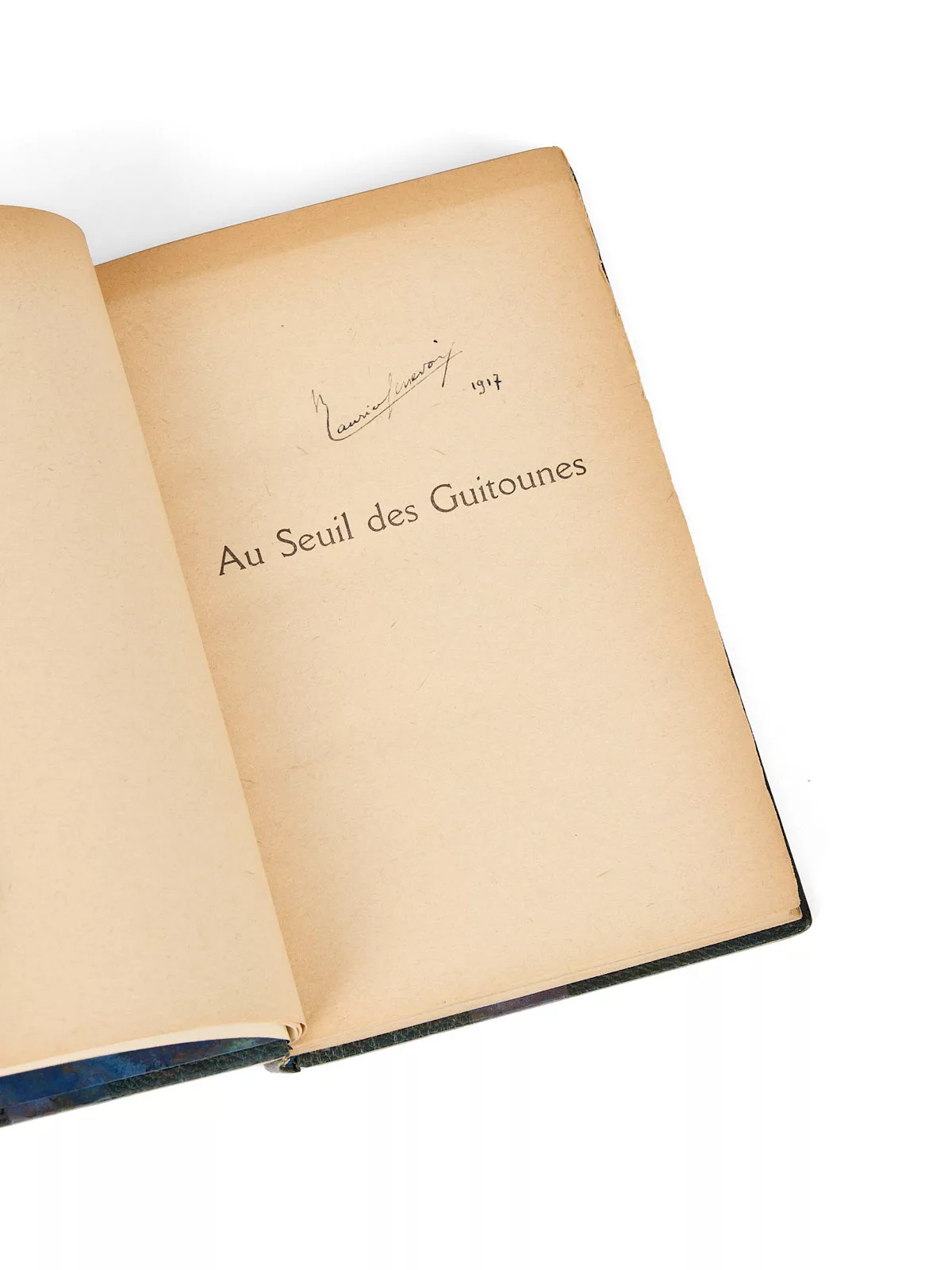
It bears at the front the manuscript ownership inscription: “Maurice Genevoix, 1917.”
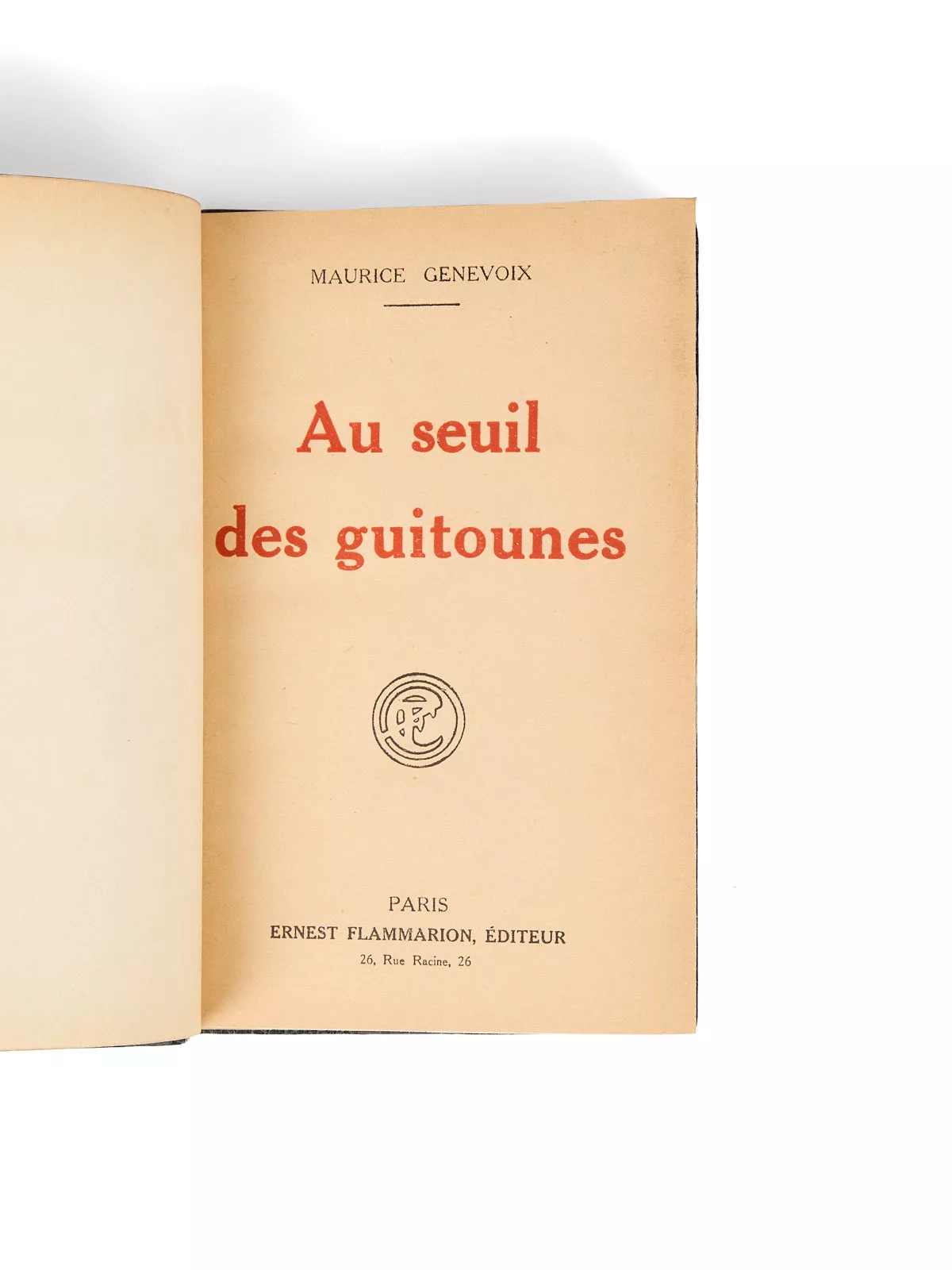
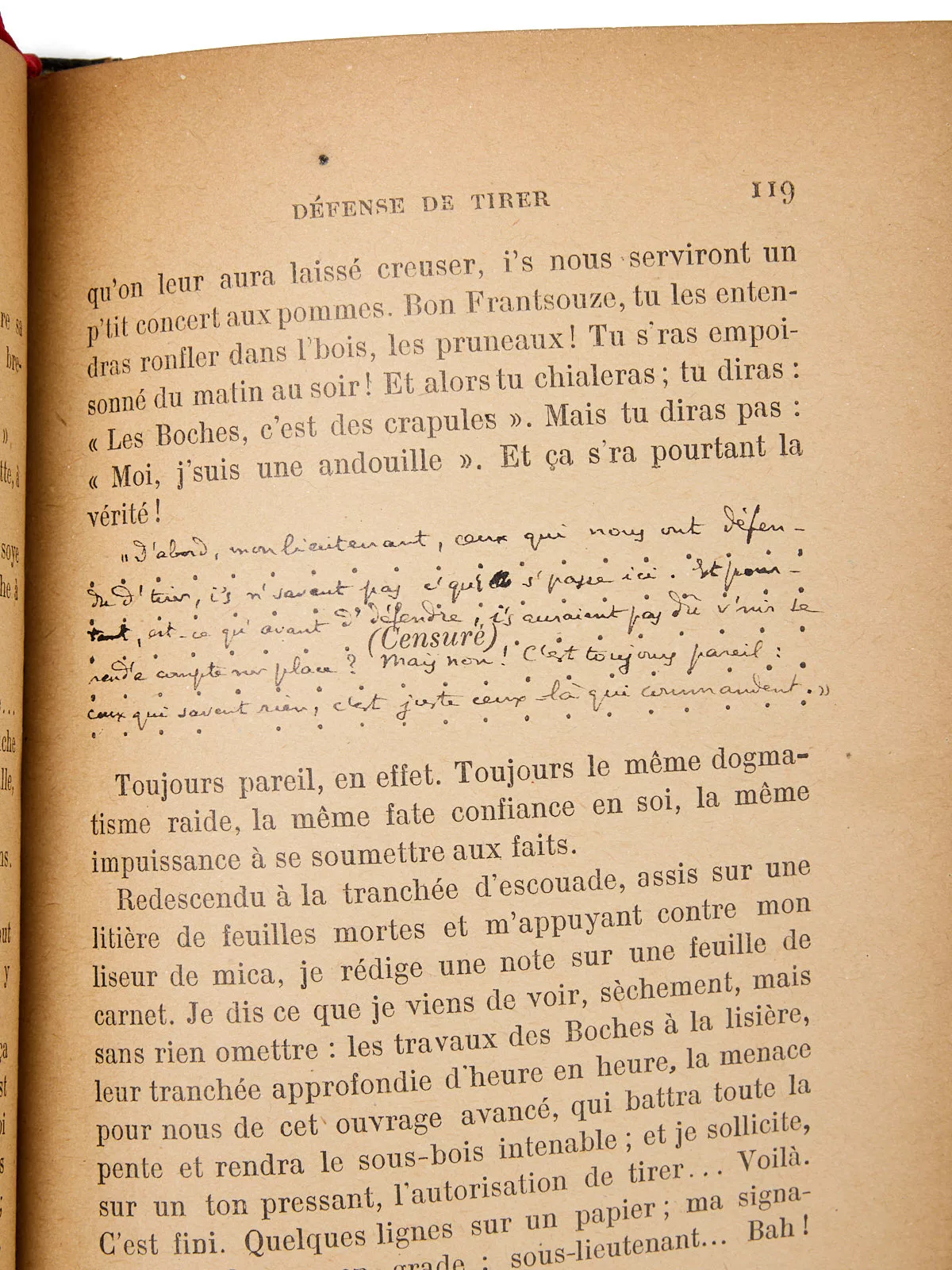
The third of Genevoix’s war narratives, Au seuil des guitounes (the term “guitoune”, of North African origin, was used in military slang to mean a tent) covers the period from 20 October to 3 November 1914, recounted over fifteen days. It is the direct sequel to Sous Verdun and Nuits de guerre, and shares their constraints: the narrative, written contemporaneously with events, could not escape military censorship. Here again, an entire passage was suppressed, on p. 119.
Genevoix kept this precious copy of the first edition, extensively corrected in his own hand. It contains more than a hundred autograph revisions: most are typographical, but several affect vocabulary, syntax, the balance of sentences, or the identity of characters — names left blank in the published edition are here sometimes made explicit.
Above all, Genevoix restores the censored passage. It is a dialogue sharply critical of the military command, spoken by the orderly Pannechon — a semi-comic but clear-sighted figure — which had been cut from the 1918 edition:
“D’abord, mon lieutenant, ceux qui nous ont défendu d’tirer, est-ce qu’is sont v’nus s’rendre compte sur place ? Pensez-vous ! C’est toujours pareil ! Ceux qui savent pas, c’est juste ceux-là qui commandent.”
And the narrator continues:
“Toujours pareil en effet. Toujours le même dogmatisme raide, la même fate confiance en soi, le même refus de se soumettre aux faits.”
Genevoix carefully copied this passage in pen into the blank space, where only the notation (Censuré) had remained. This restorative annotation, added to the numerous corrections to the text, makes this copy a genuine working document, preparatory to the complete, unexpurgated edition he would publish in 1926.
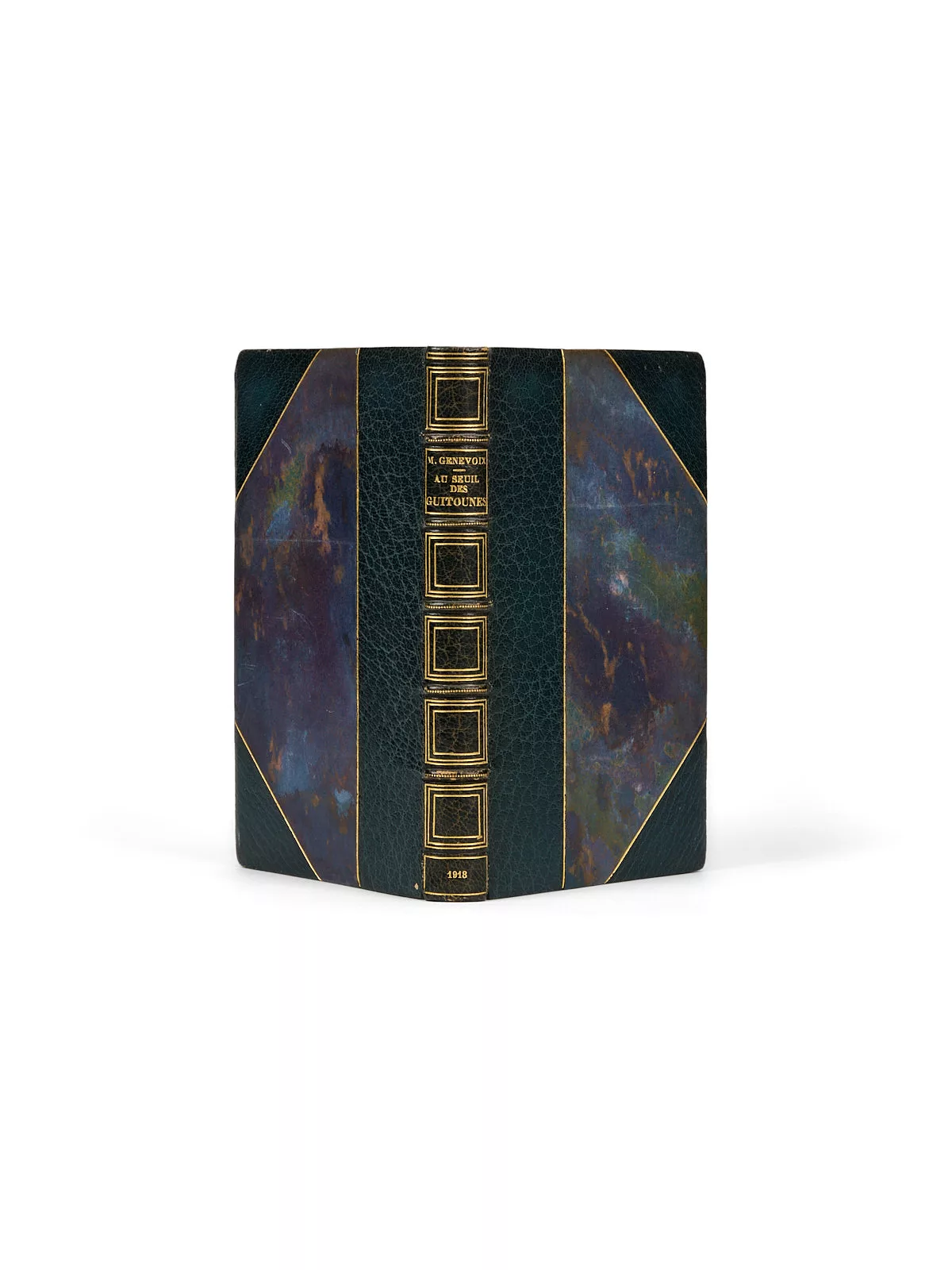
One of the finest known copies of this narrative, at once the author’s own copy, a manuscript of reconstruction, and a living archive of wartime censorship; it is preserved in a half blue morocco binding with corners, made identically to his other personal copies.
From the library of Maurice Genevoix, at “Les Vernelles”, with bookplate.