

L’Épervier de Maheux
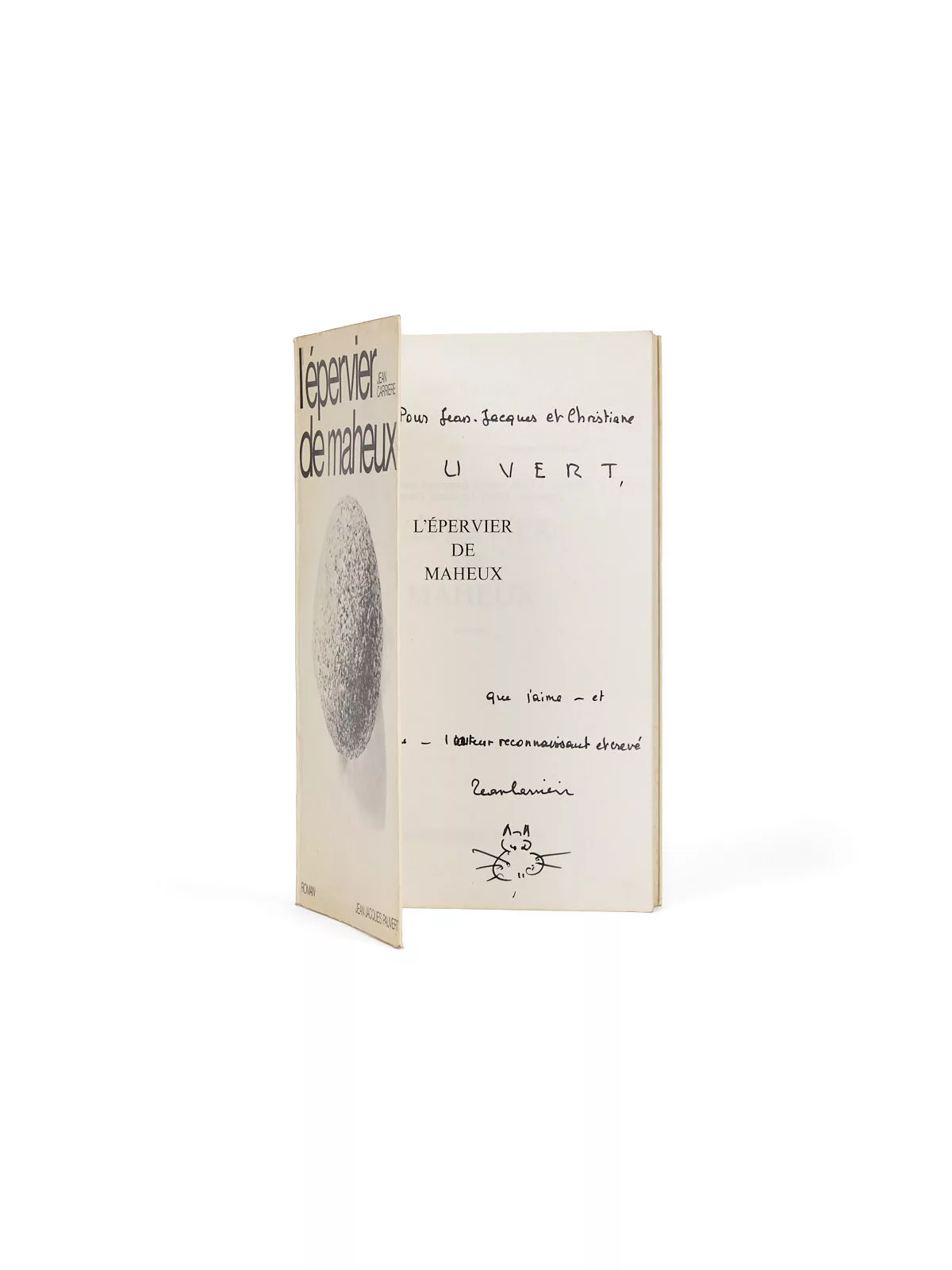
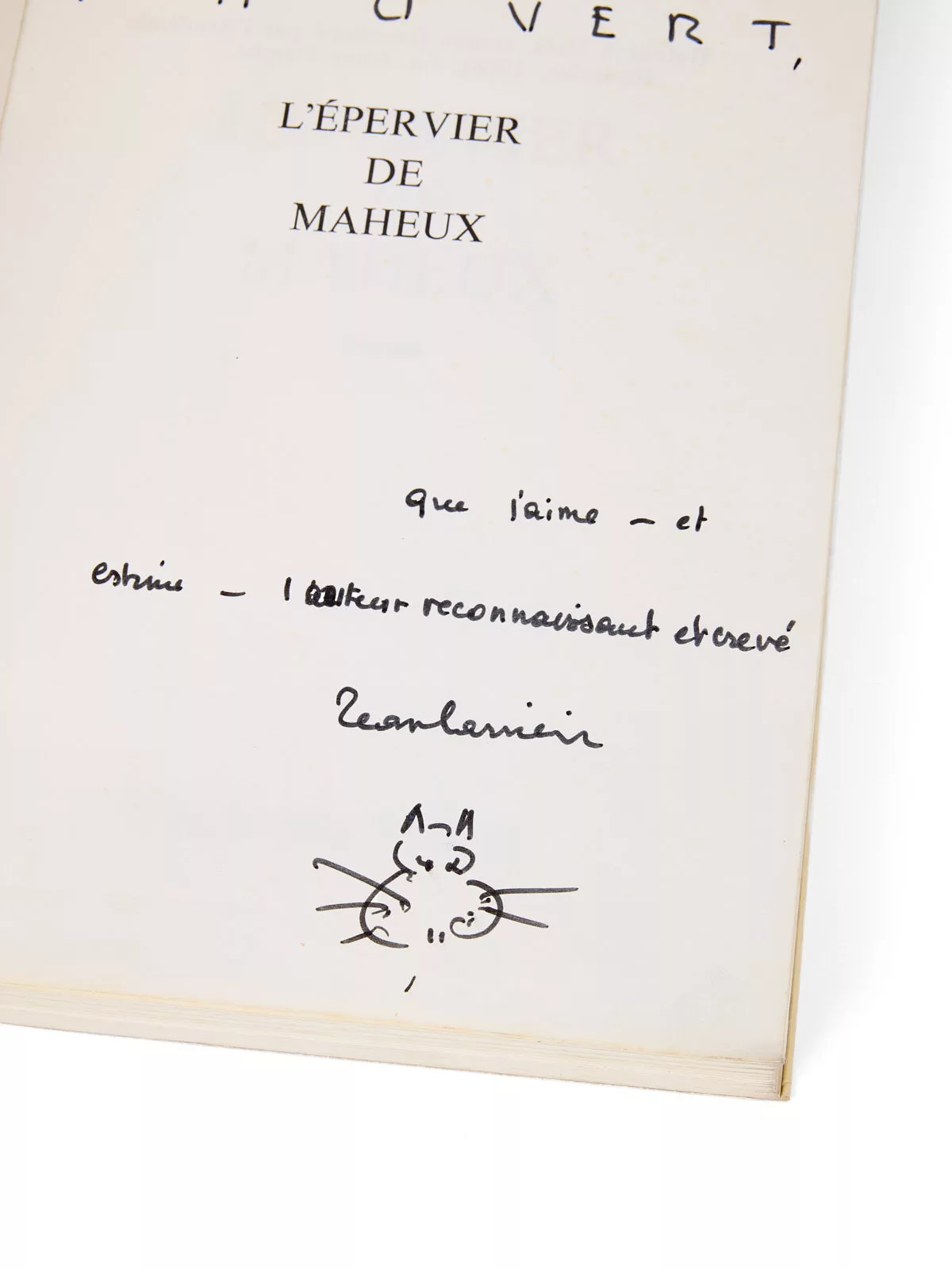
Signed presentation inscription with a small drawing: “Pour Jean-Jacques et Christiane Pauvert, que j'aime - et estime - l'auteur reconnaissant et crevé, Jean Carrière.”
On 20 November, after five rounds of voting, the jury awarded its prize to a still little-known author and an unexpected publisher: Jean Carrière and Jean-Jacques Pauvert, better known until then for having published Sade than for pursuing the Académie Goncourt. The surprise was total: L’Épervier de Maheux would become the best-selling Prix Goncourt novel in history, with nearly two million copies sold and fourteen translations.
A novel of the deep Cévennes, it depicts the disappearance of a remote rural world of abandoned hamlets and men and women crushed under the weight of “mineral oppression.” Nature, both splendid and hostile, imposes its law on families destined for extinction. Carrière, a native of the region, transcends this harsh material through a lyrical, at times emphatic, style shot through with metaphysical meditation on solitude and destiny.
But success became a private tragedy: thrust into the role of literary phenomenon, Carrière, a reserved and tormented man, experienced the Goncourt as a “catastrophe,” sinking into a depression he would later recount in Le Prix d’un Goncourt (1986). “Success is a misunderstanding, perhaps the worst of all,” he wrote, quoting Borges.
A very fine and historic copy, presented to his publisher.