

Mort à crédit
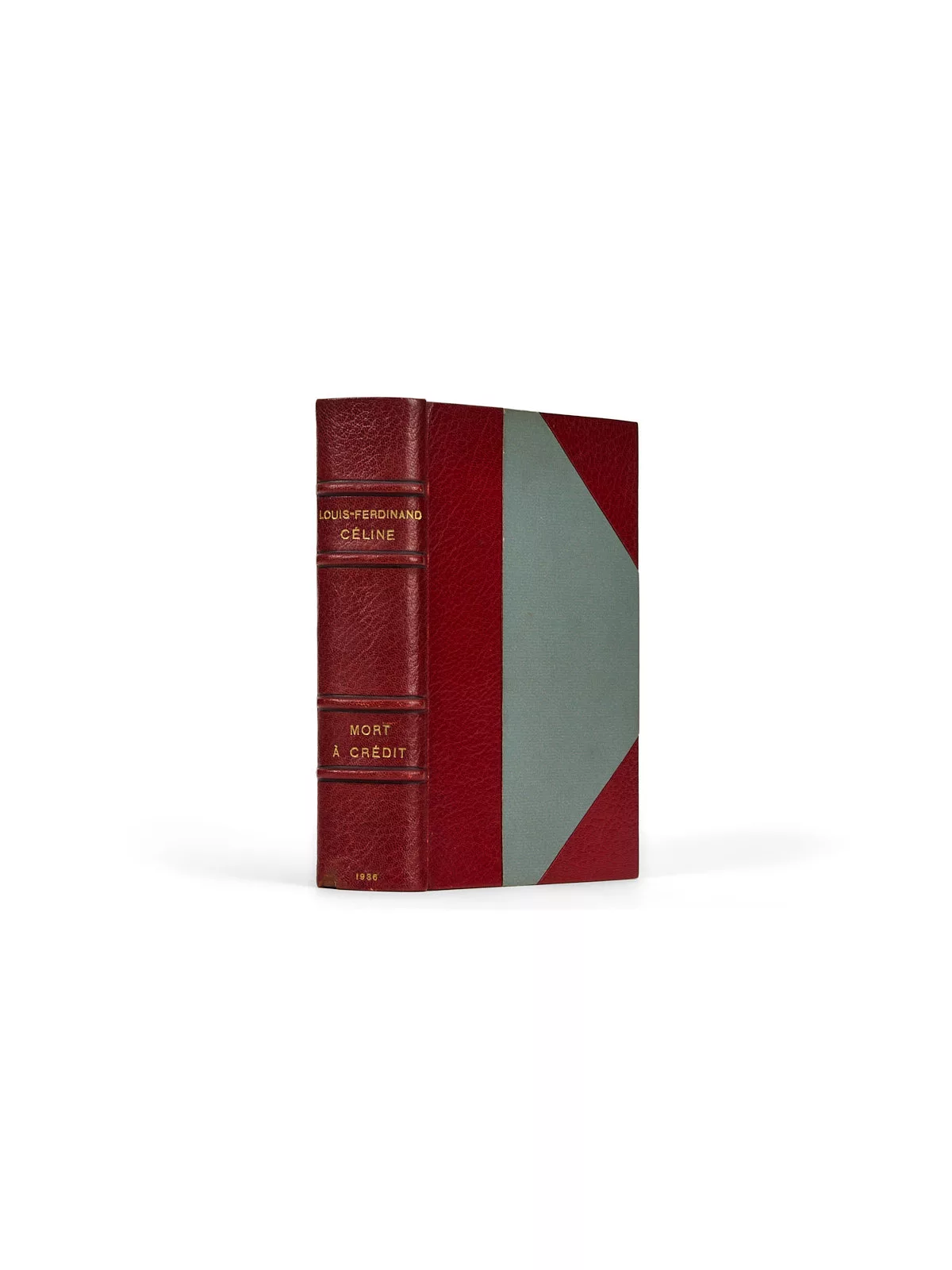
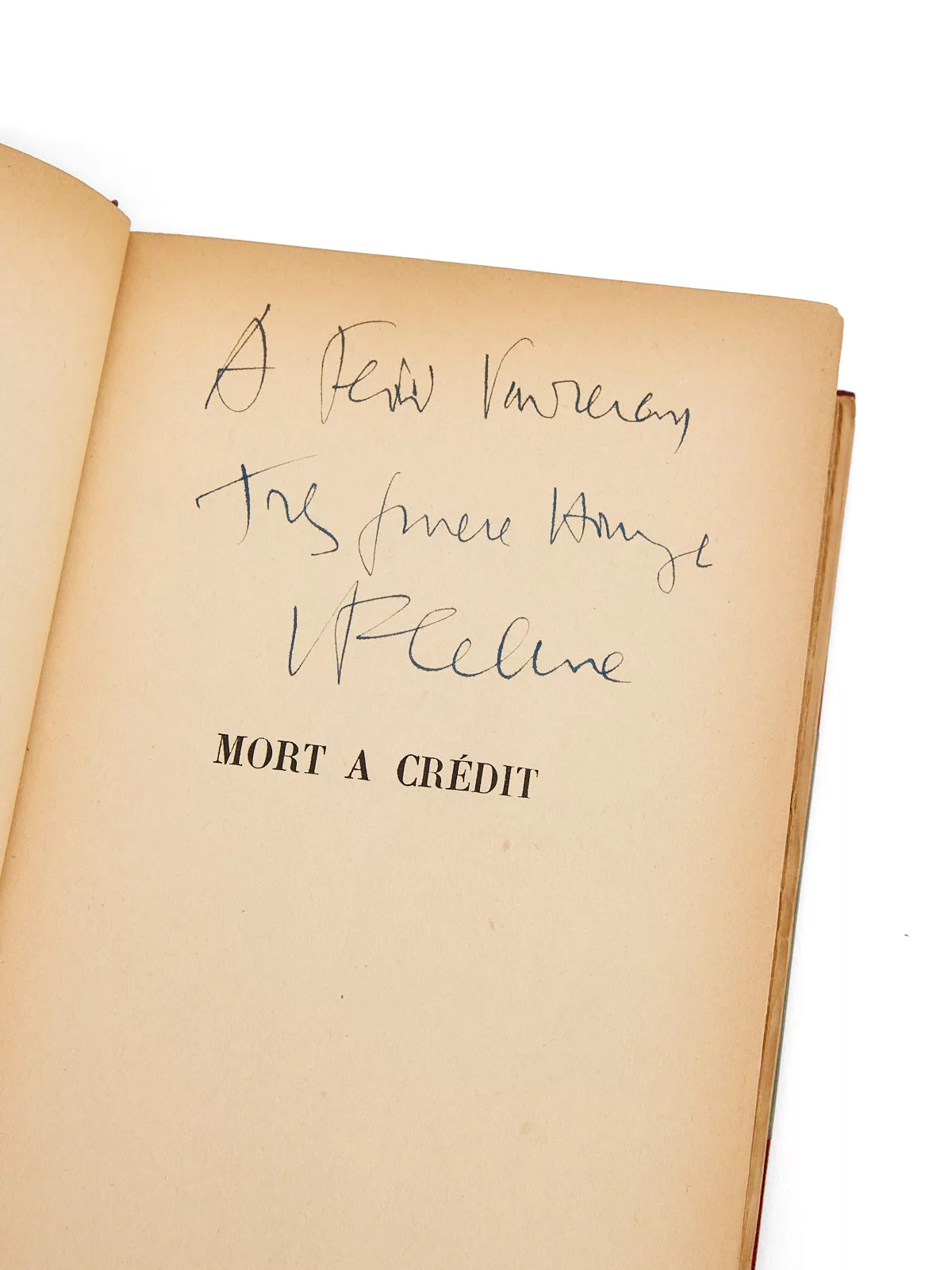
Presentation copy inscribed by Céline to Fernand Vandérem: “À Fernand Vanderem, très sincère hommage, LF Céline.”
Posterity has restored the book to its rightful place among the greatest works of French literature. With inspired rage, extraordinary vigor and a truculent ferocity, the narrator recounts his childhood, marked by poverty and destitution. Deliberately excessive in its narration, the story combines the grotesque with horror, and its form reveals a constant pursuit of style on the part of an author for whom only style ultimately mattered. Even more than Le Voyage au bout de la nuit, Mort à crédit marked Céline’s entry into what he himself called a “path of spontaneous refinement.”
It should be noted that only the hors-commerce copies of the first three papers contain the complete text, which readers would have to wait until 1982 and the Pléiade edition to finally obtain: “Sex, in Mort à crédit, is aggressively present… In 1936, the removal, at the publisher’s request, of the most scandalous words or passages had somewhat shifted the meaning of its provocation.”
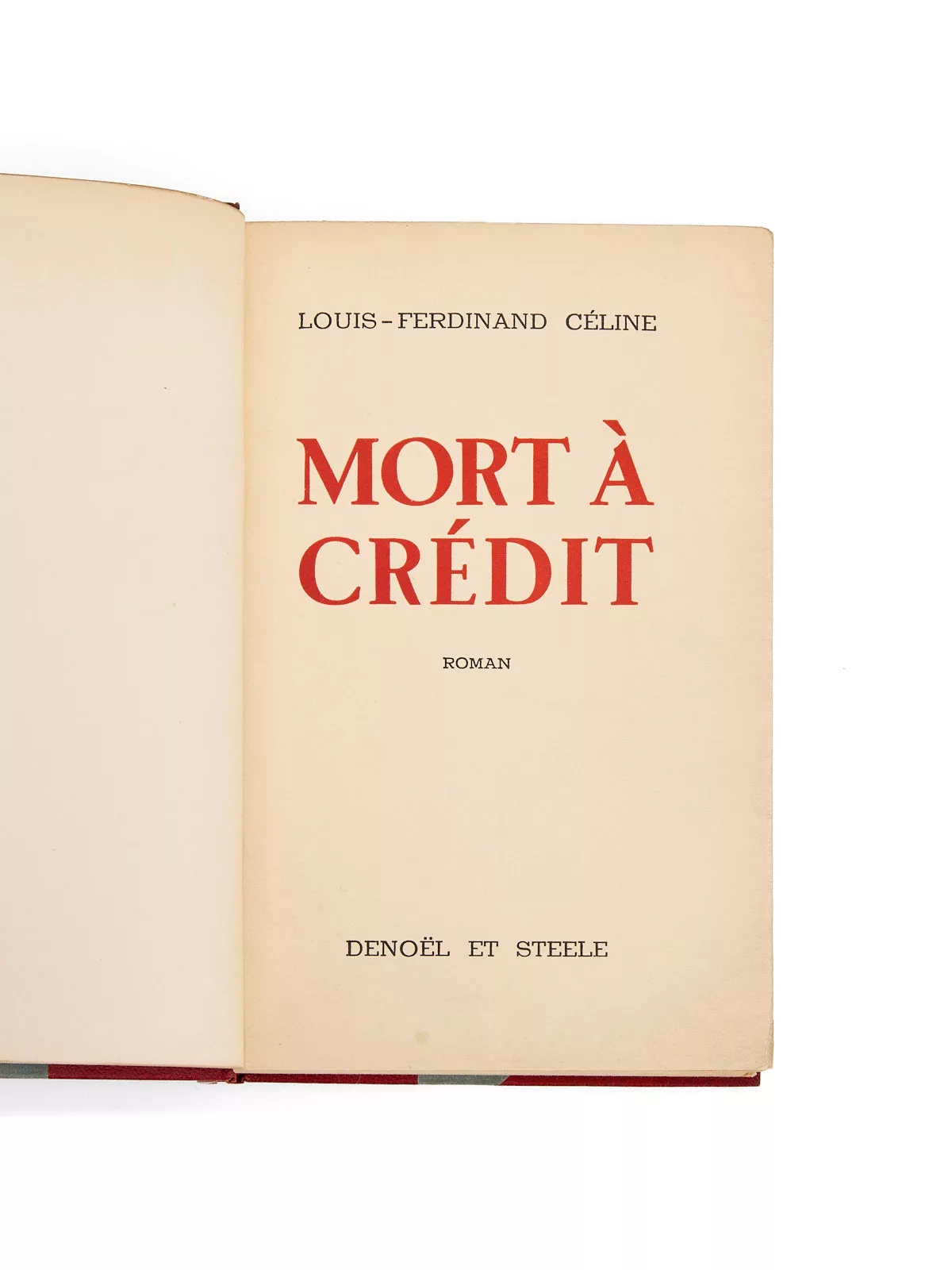
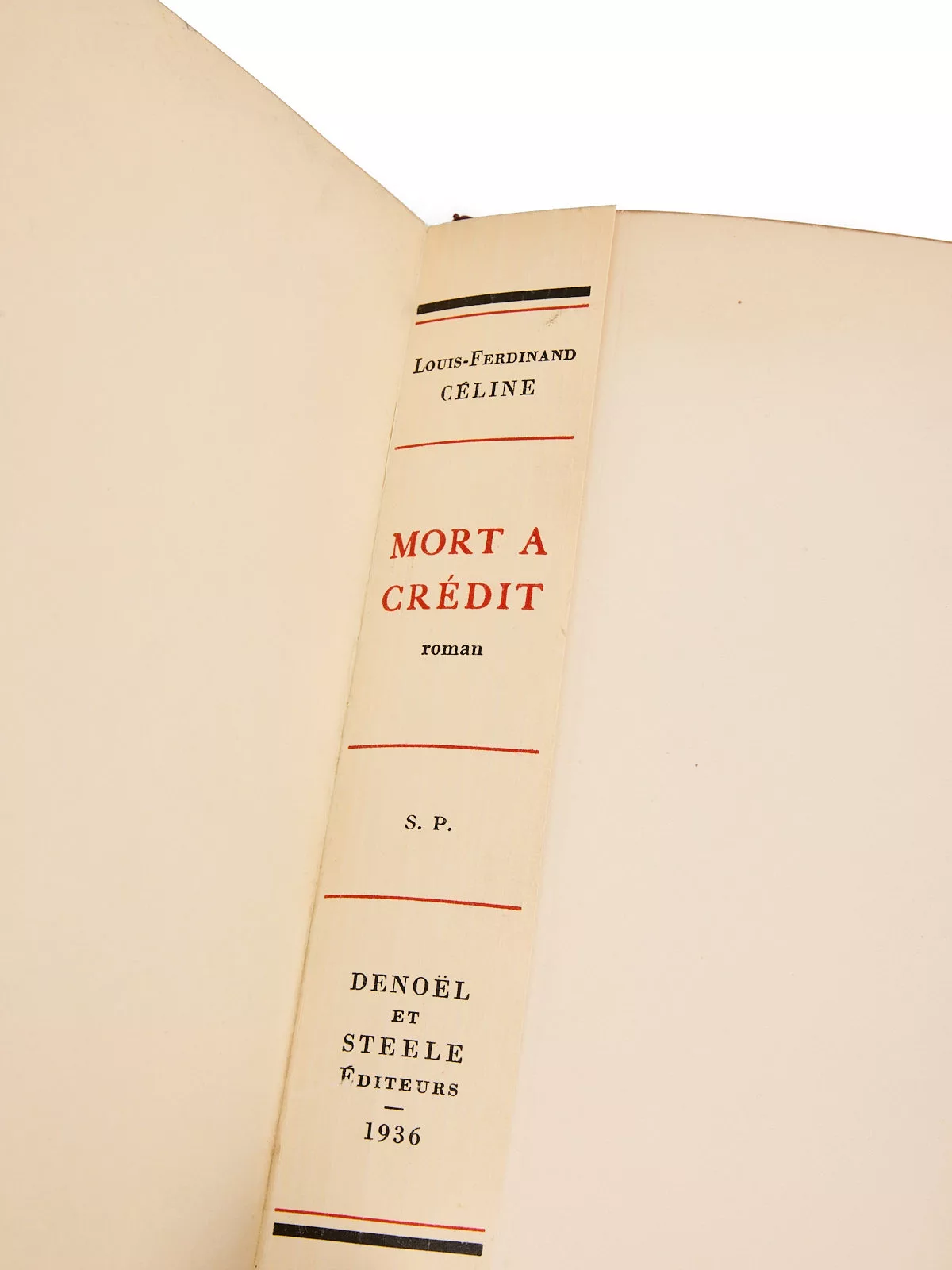
As early as May 6, 1936, the first pages were printed. Denoël wrote to Descaves, eager to read a novel whose publication date kept being postponed: “Here are the first 544 pages of ‘Mort à crédit.’ I do not want to make you wait any longer for this magnificent work. I will receive the ending on Friday evening and will have it brought to you at once.” This was done two days later, and on May 8 the copies could go to binding, where the wrappers awaited them. The deluxe-paper copies were manufactured immediately afterward, with of course the same completion date, during the week of May 11 to 17.
A rare copy from the press printing, produced under the same conditions as for Le Voyage au bout de la nuit: a princeps printing of 200 copies, put to press on May 8. At the last minute, the printer refused to have his name appear at the end of the work, no doubt fearing for his firm’s reputation: in the colophon, the indication “Imprimerie des Éditions Denoël et Steele, 19, rue Amélie, Paris” was substituted for the name of the printer Robert Bussière.
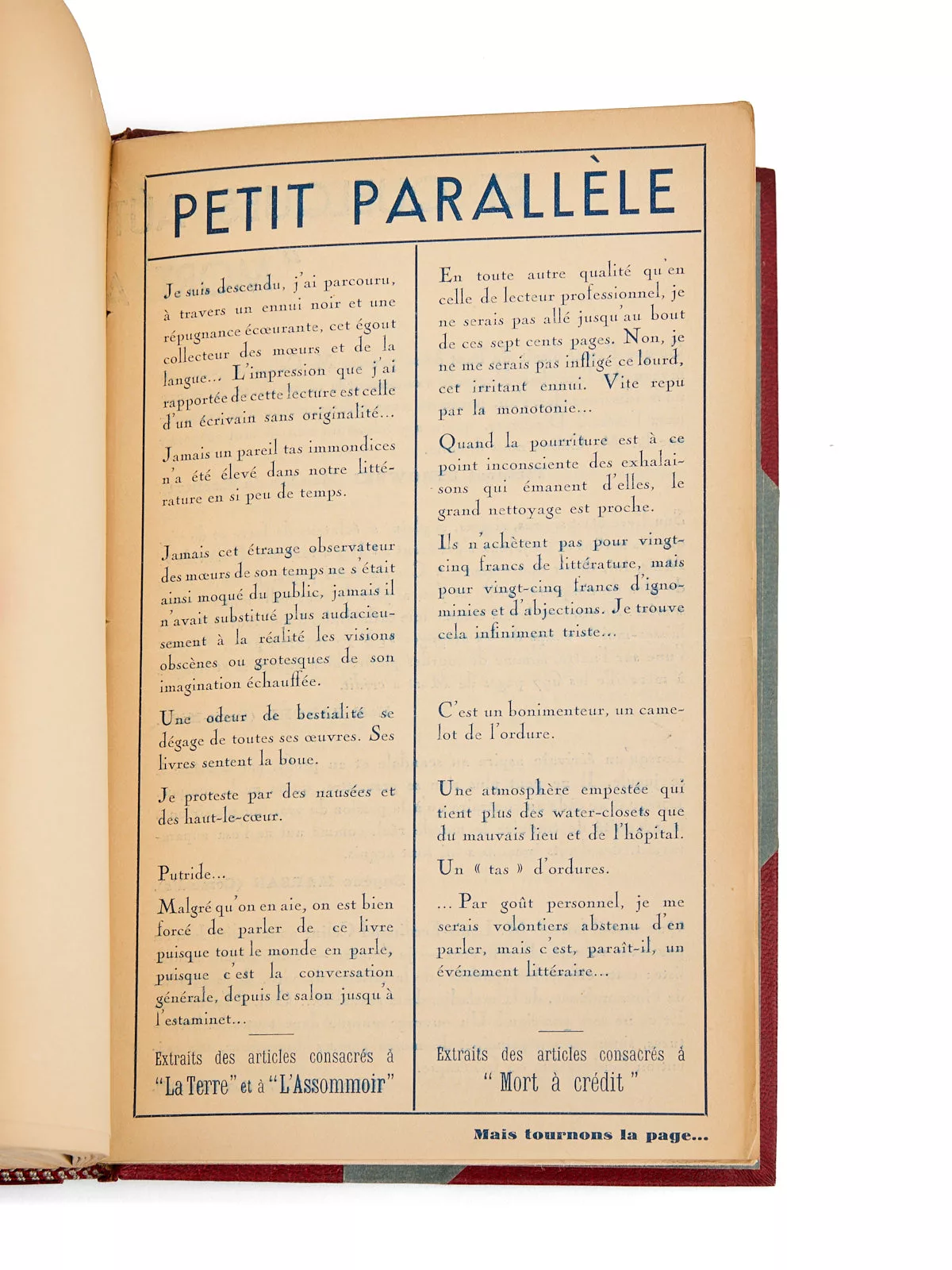
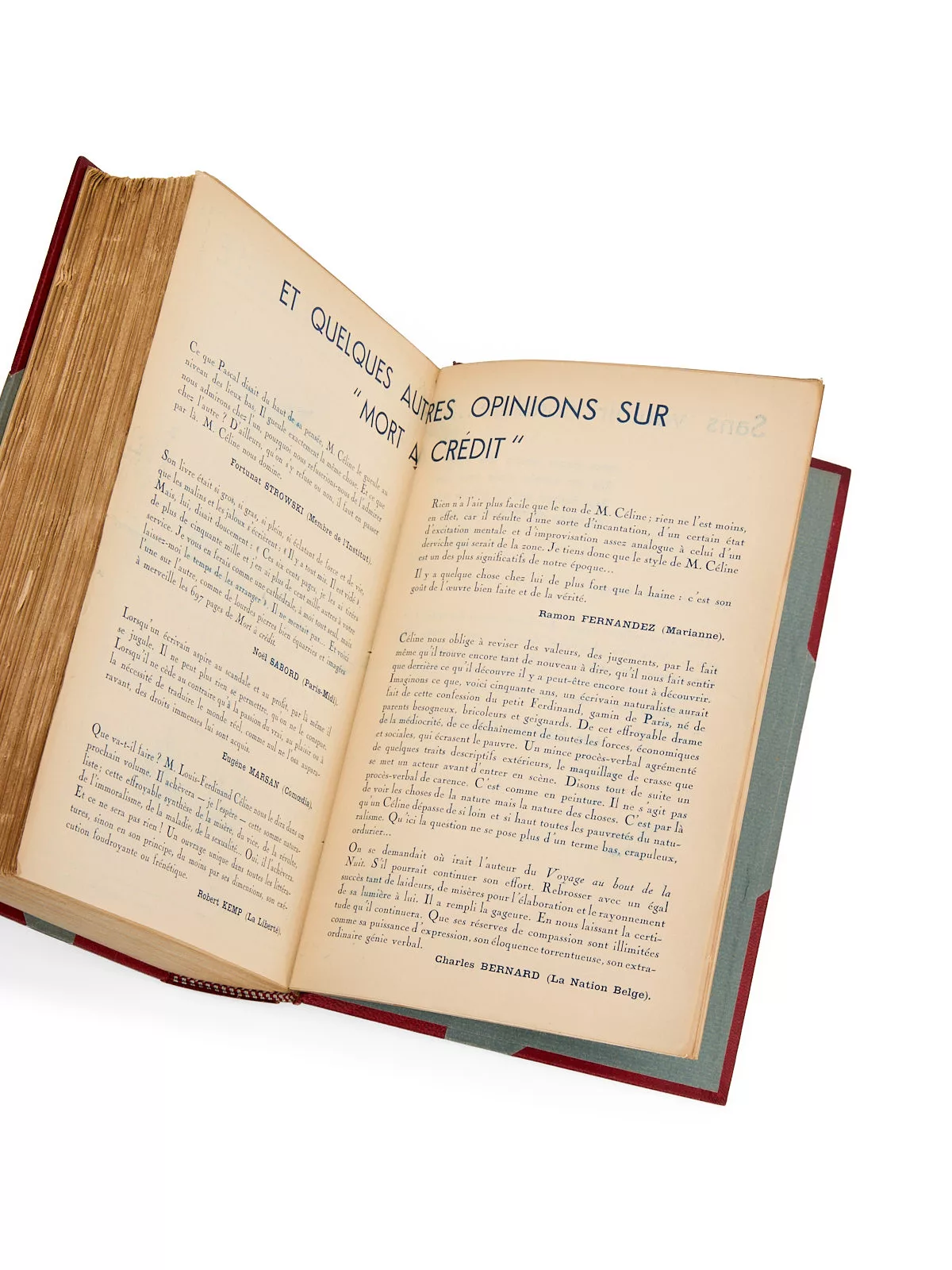
The copy is complete with the rare supplement published by the publisher, entitled Petit parallèle, presenting various opinions on Mort à crédit and ending with Sans vouloir conclure (bound in at the end).
The Fernand Vandérem copy: a writer, critic, bibliophile and major figure of the book world, Vandérem was also the director and one of the principal contributors of the Bulletin du bibliophile, and the author of the columns collected under the title La Bibliophilie nouvelle. His library, rich in particular in nineteenth-century first editions, was dispersed shortly after his death (Giraud-Badin, 1939 and 1940). Céline had already sent him, four years earlier, a copy of Voyage au bout de la nuit.
Provenance: Fernand Vandérem (signed presentation inscription, and sale, Giraud-Badin, 1940, no. 789); librairie Louis Conard (bought at); private collection. Bagatelles pour un massacre accompanied Mort à crédit in the 1940 sale.