

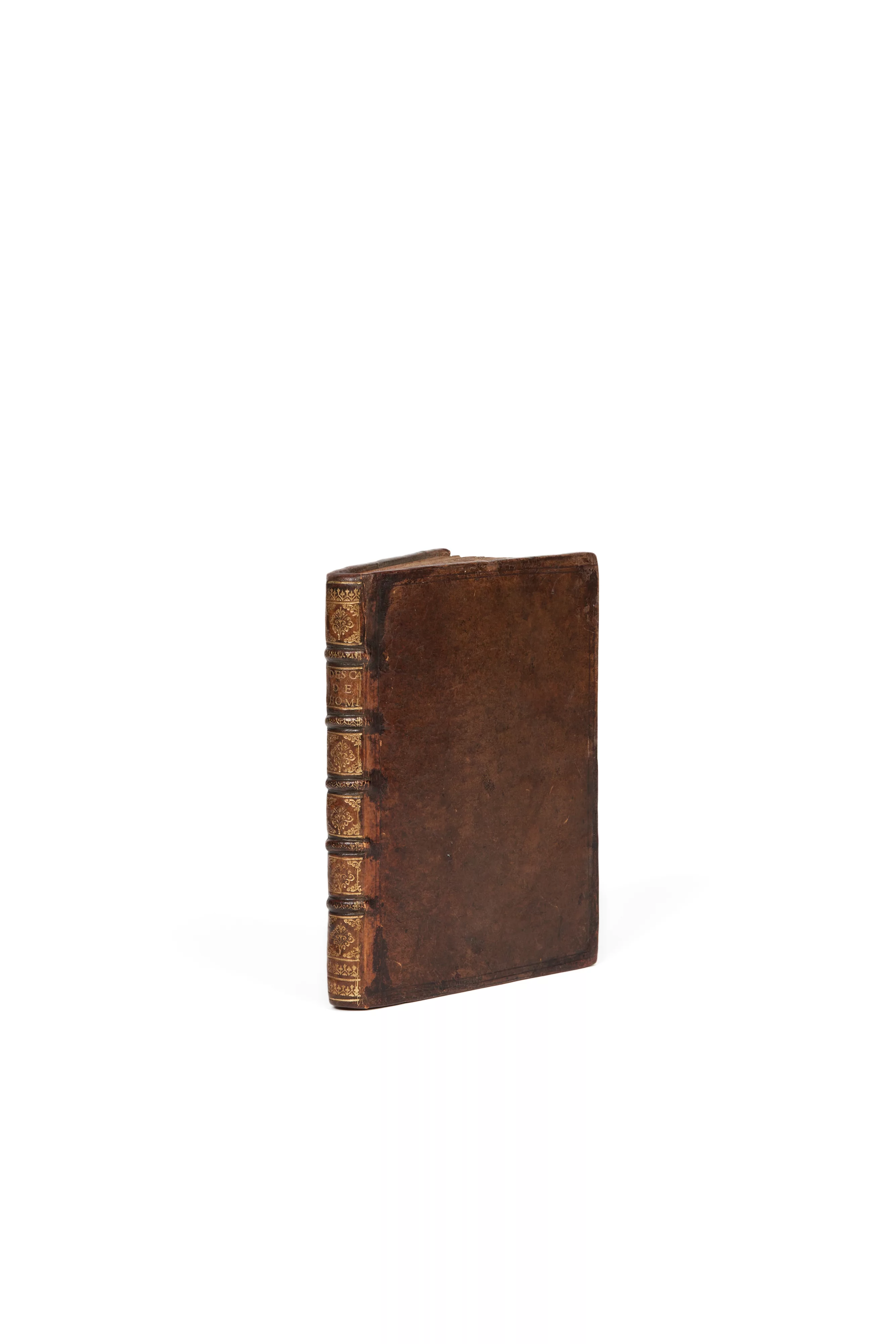
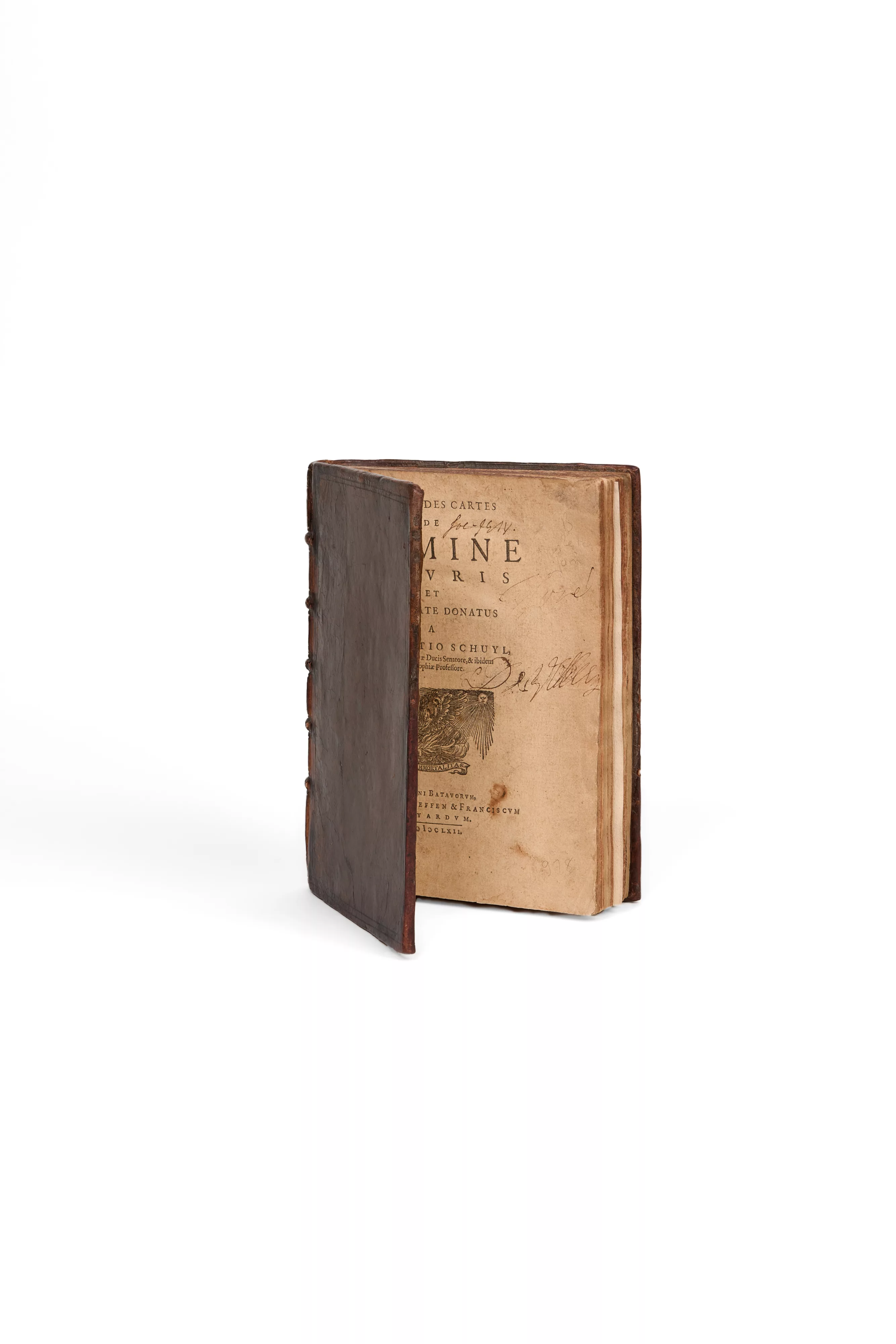
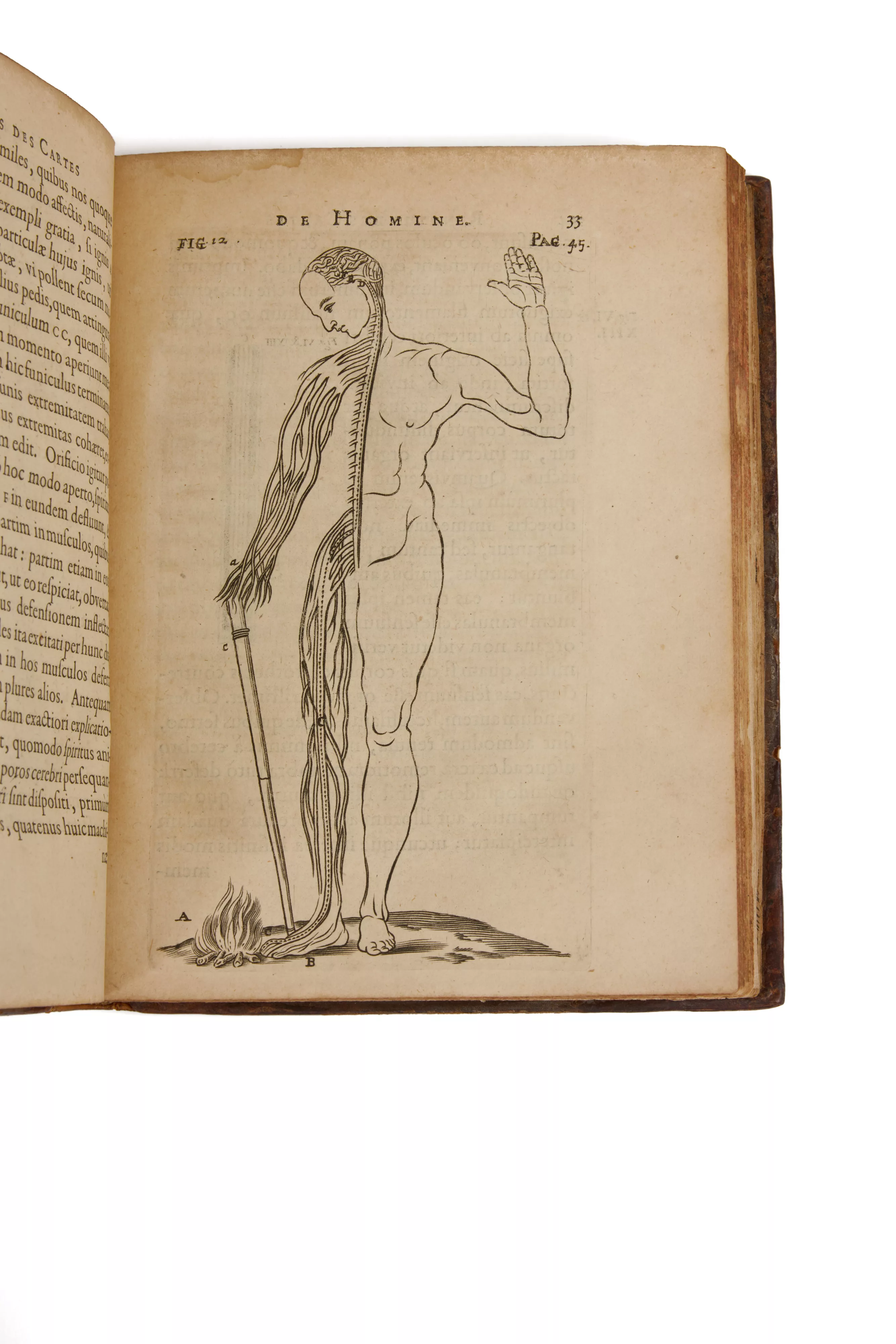
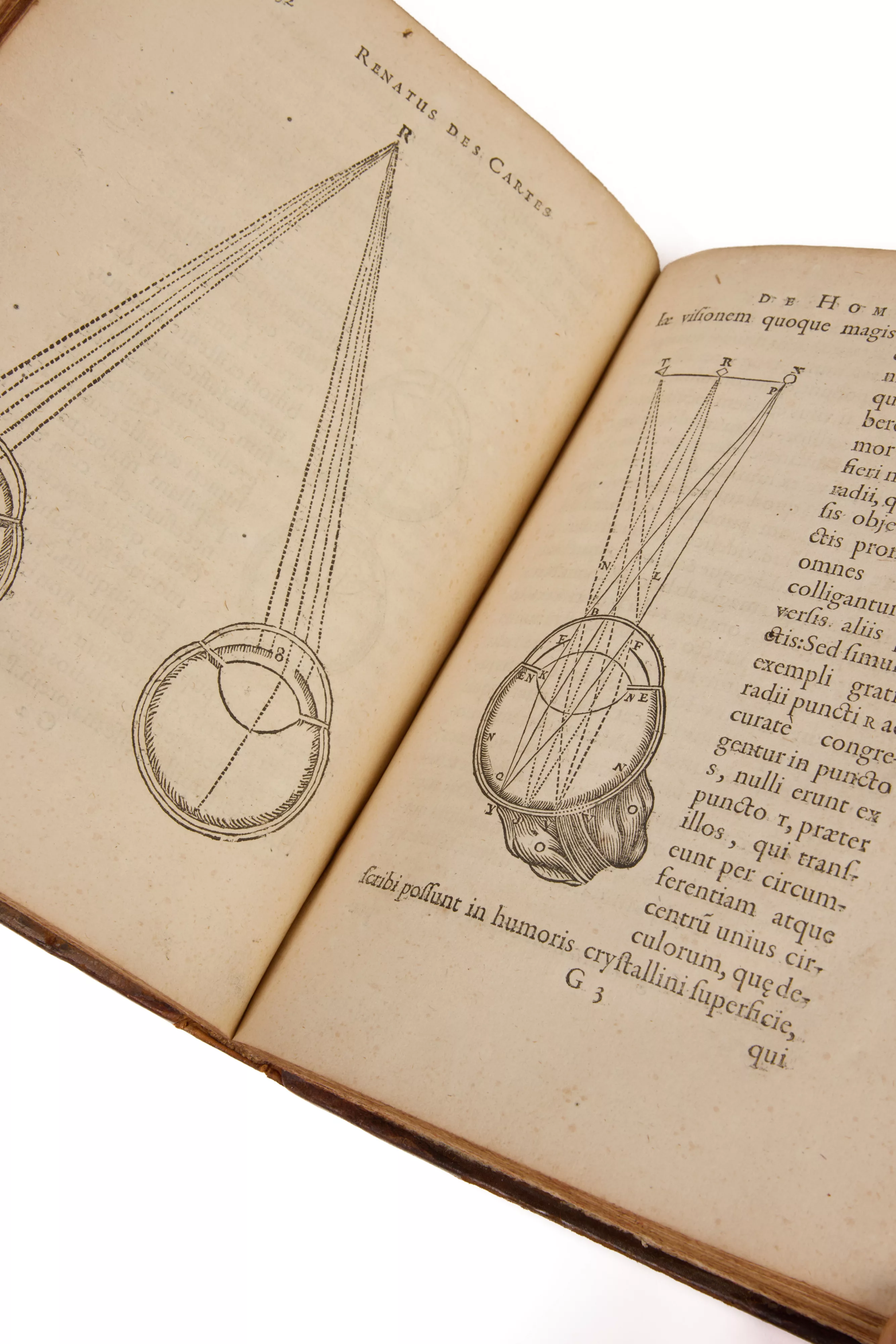
De Homine figuris
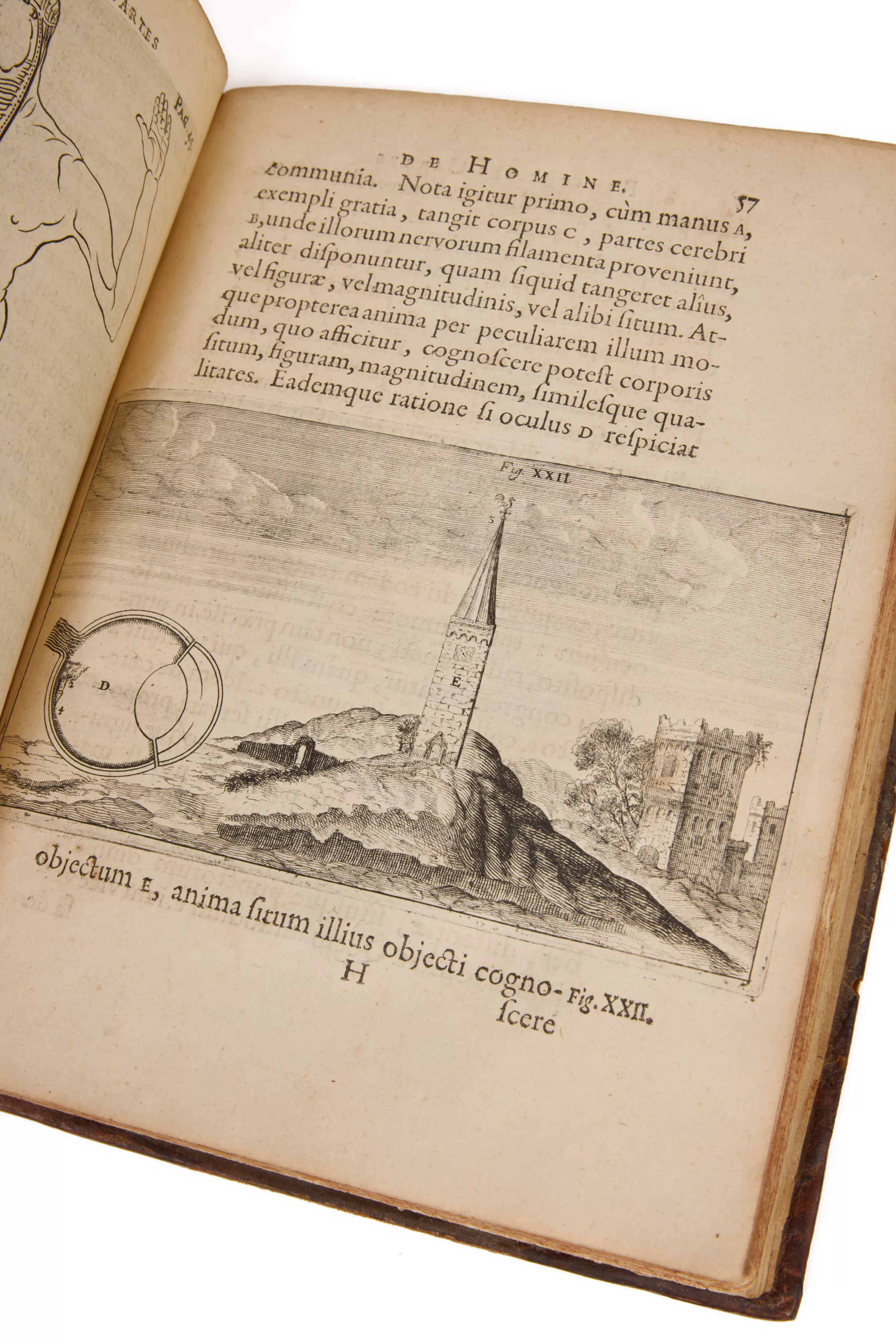
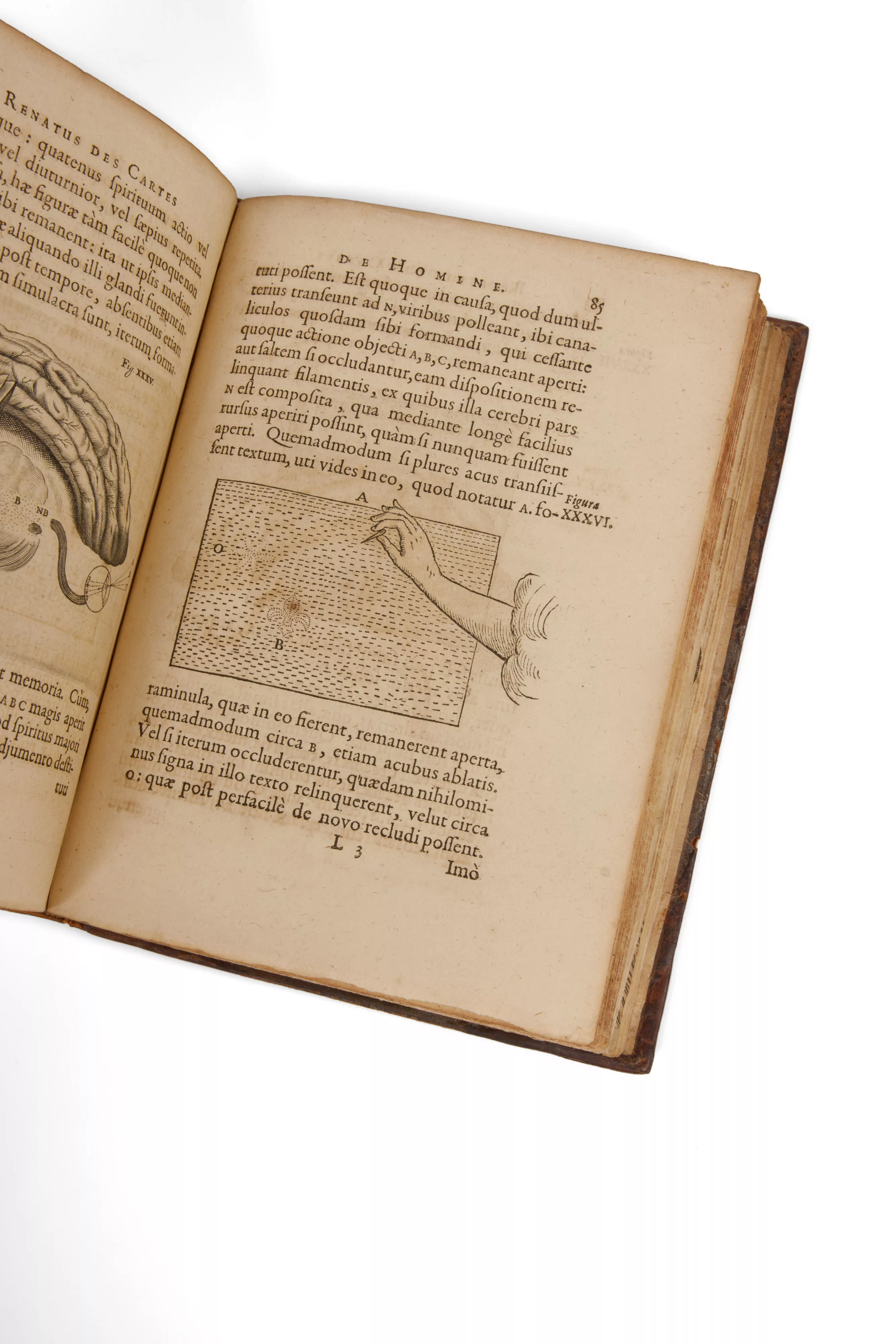
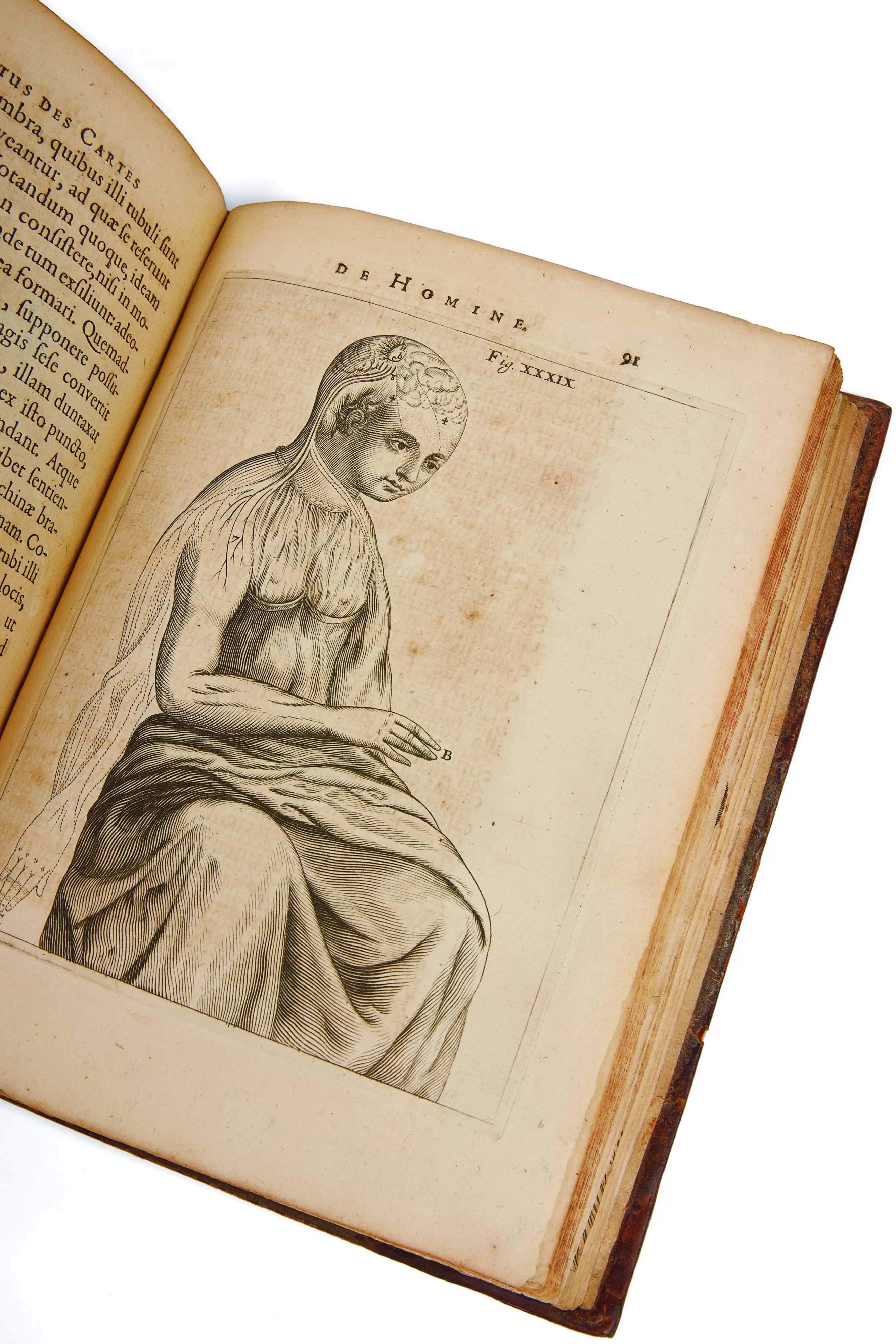
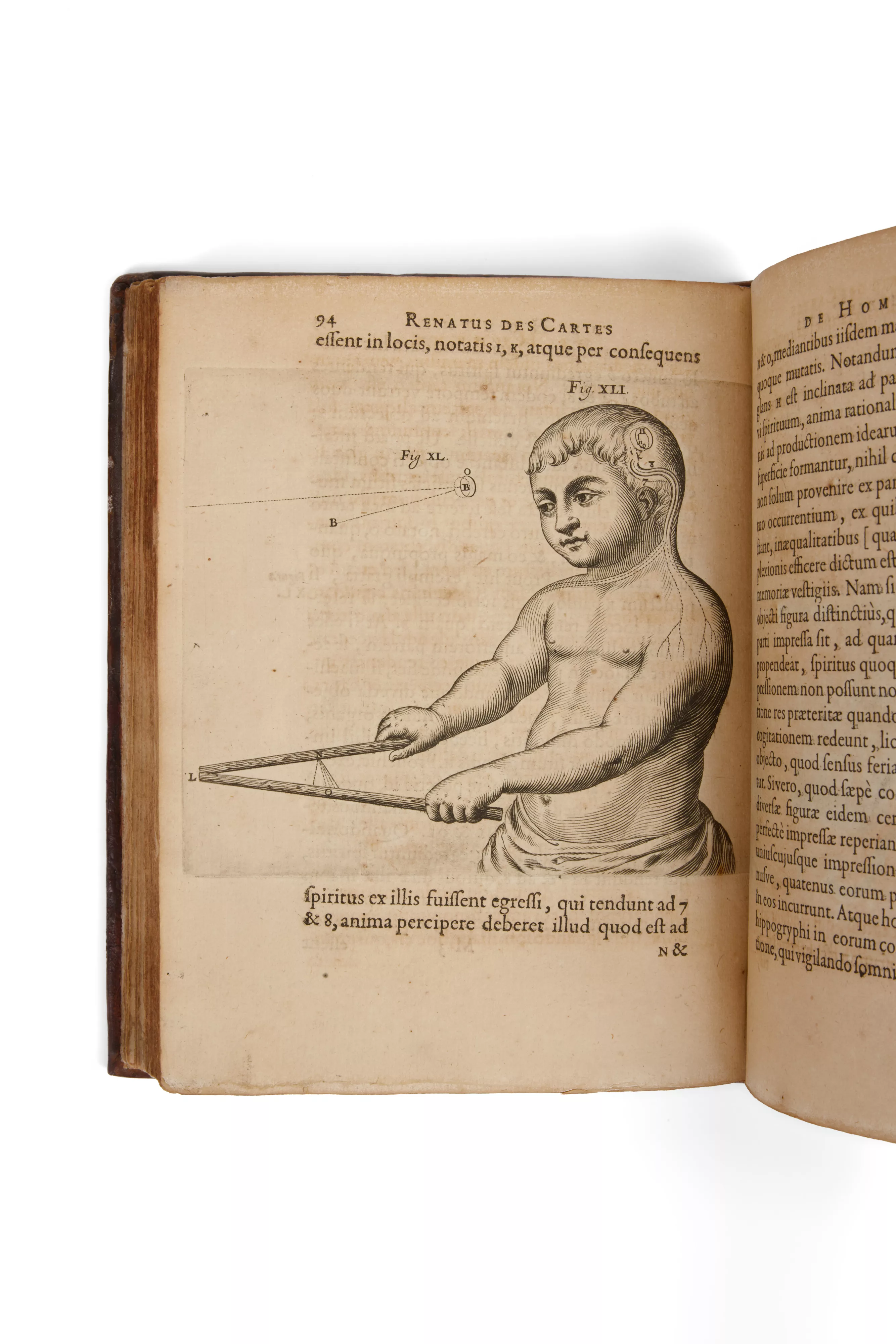
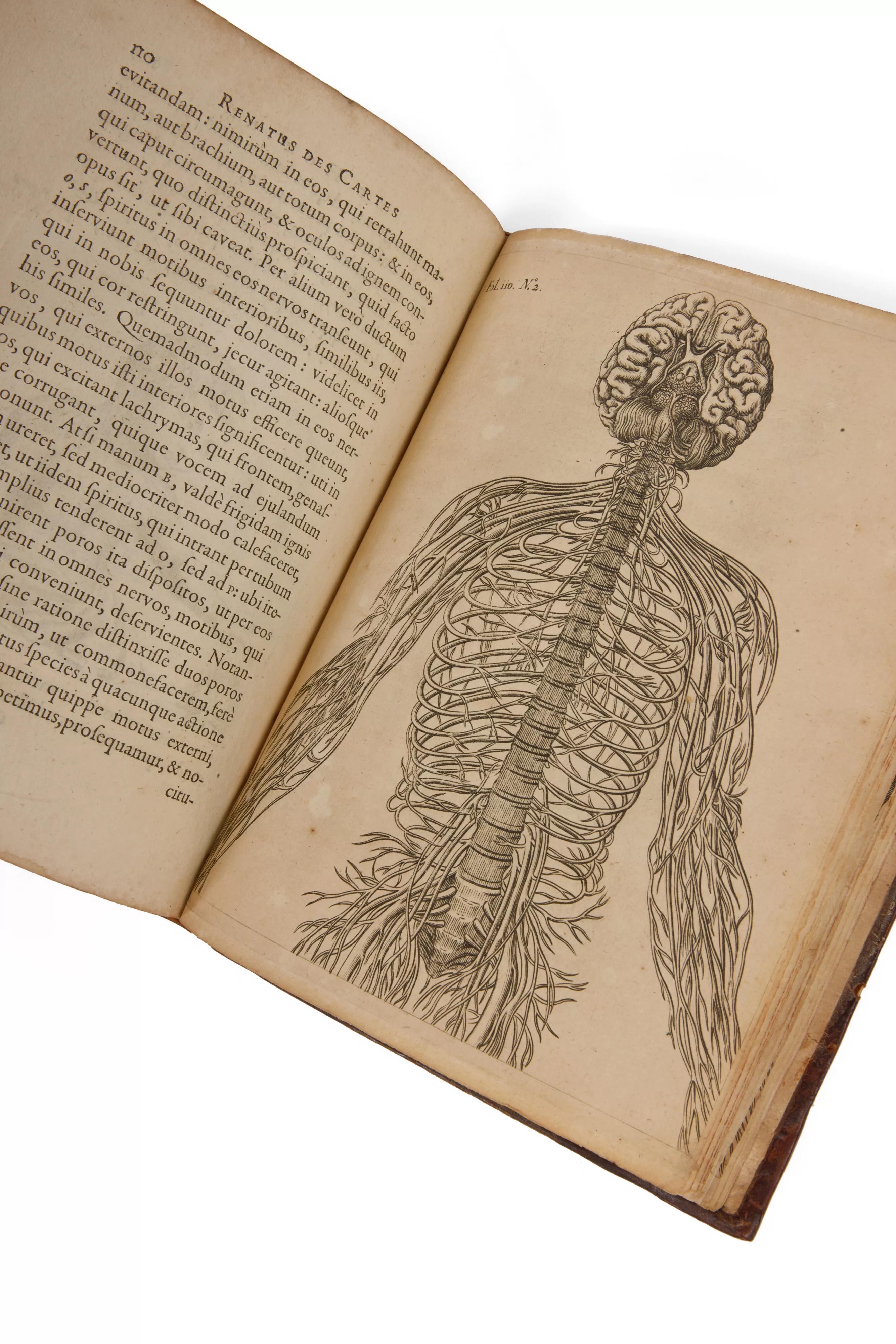
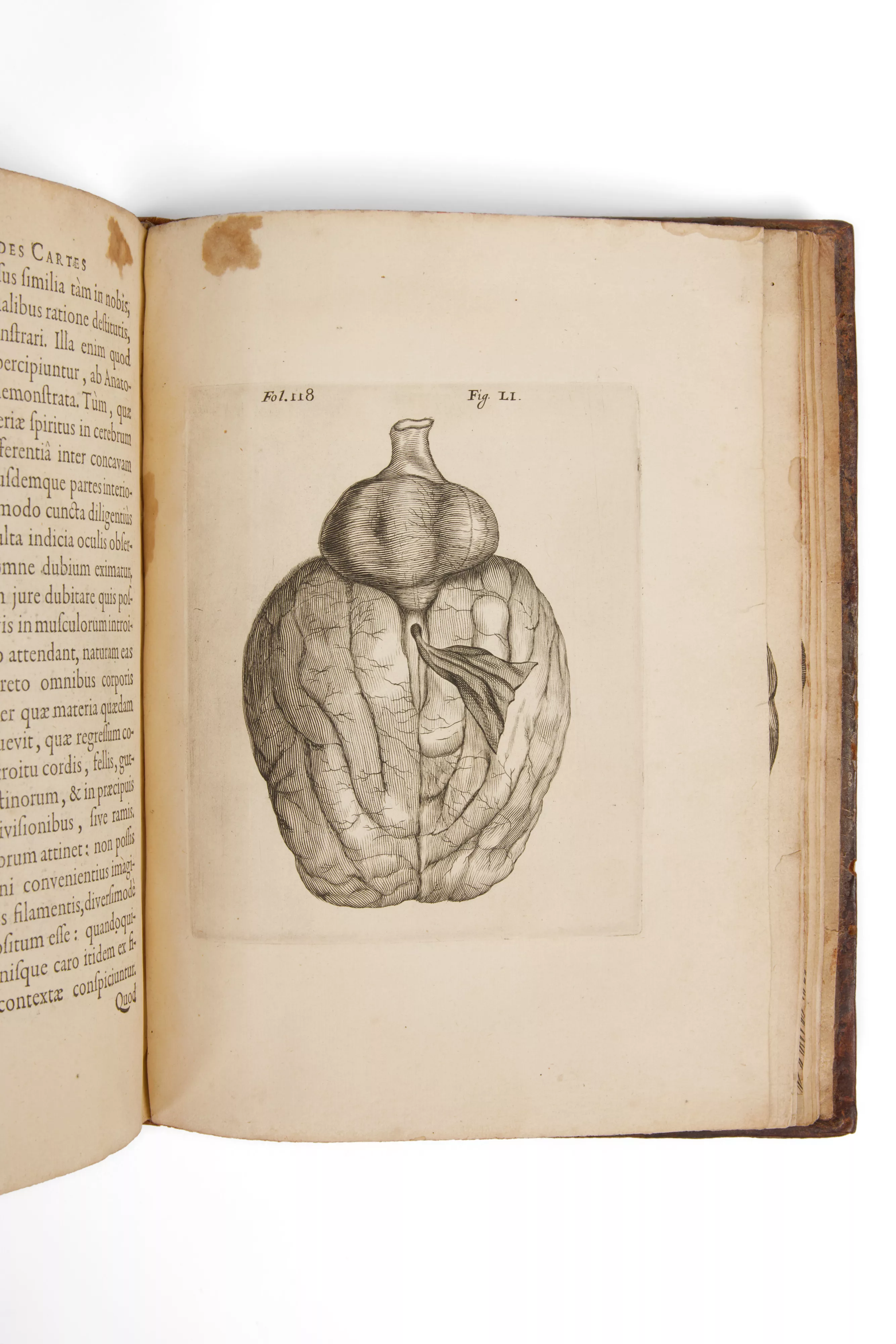
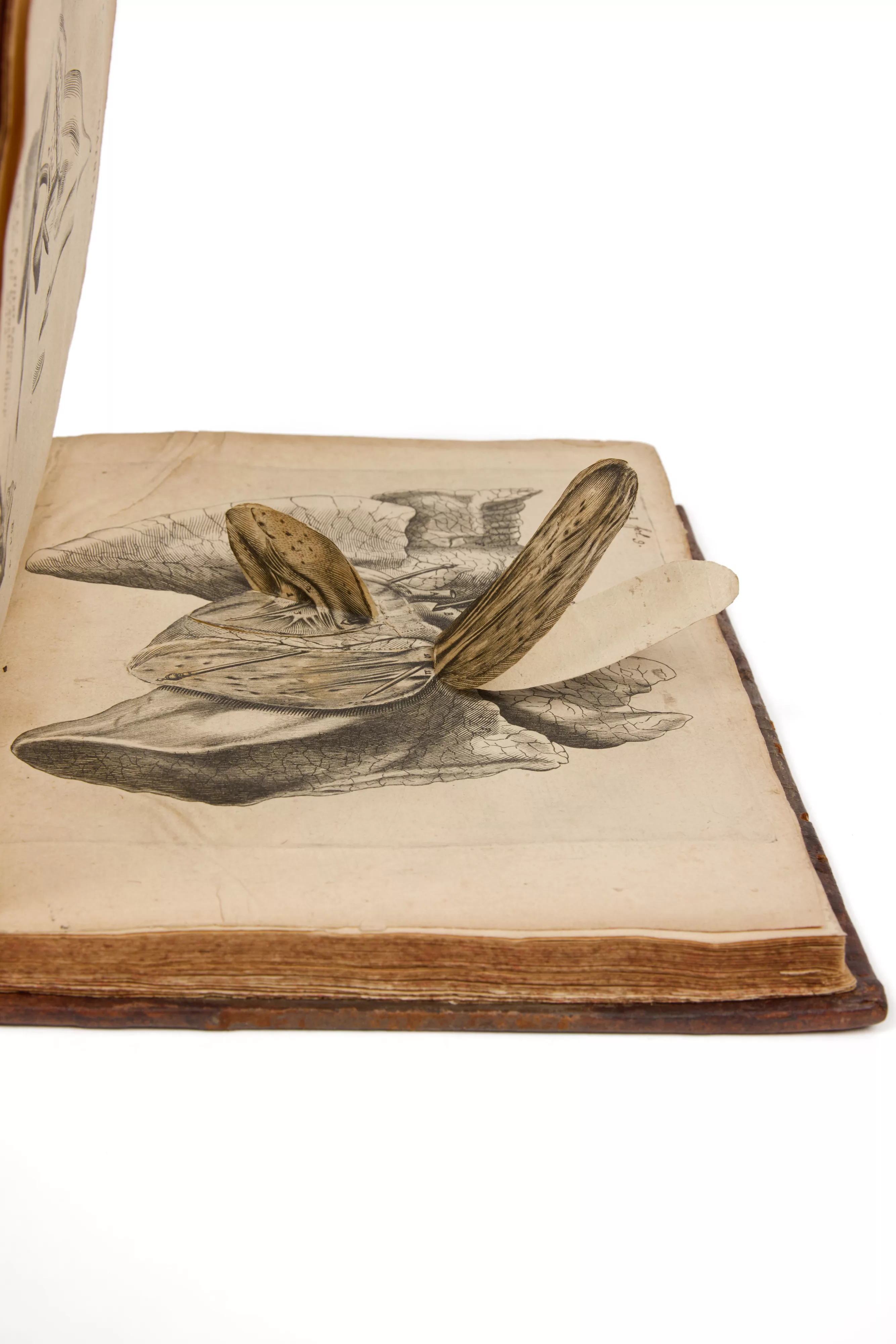
The illustration comprises 34 copper engravings, from 10 full-page plates: plate no. 1, missing, has been replaced by an added leaf with a drawing of the plate in ink, copied after the original by an old and confident hand. There are also 23 woodcuts in the text and seven ornaments (headpieces, decorative initials and tailpieces).
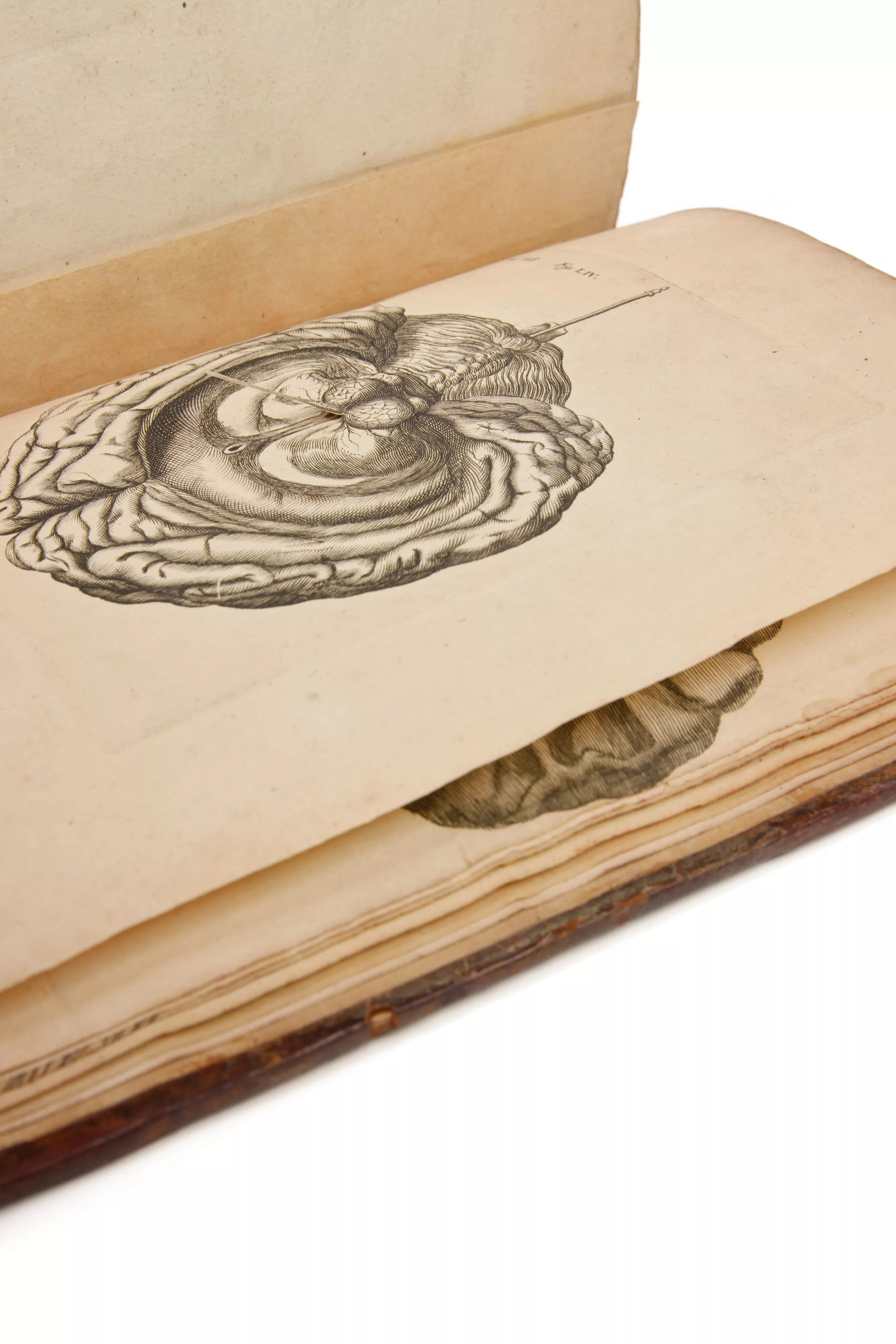
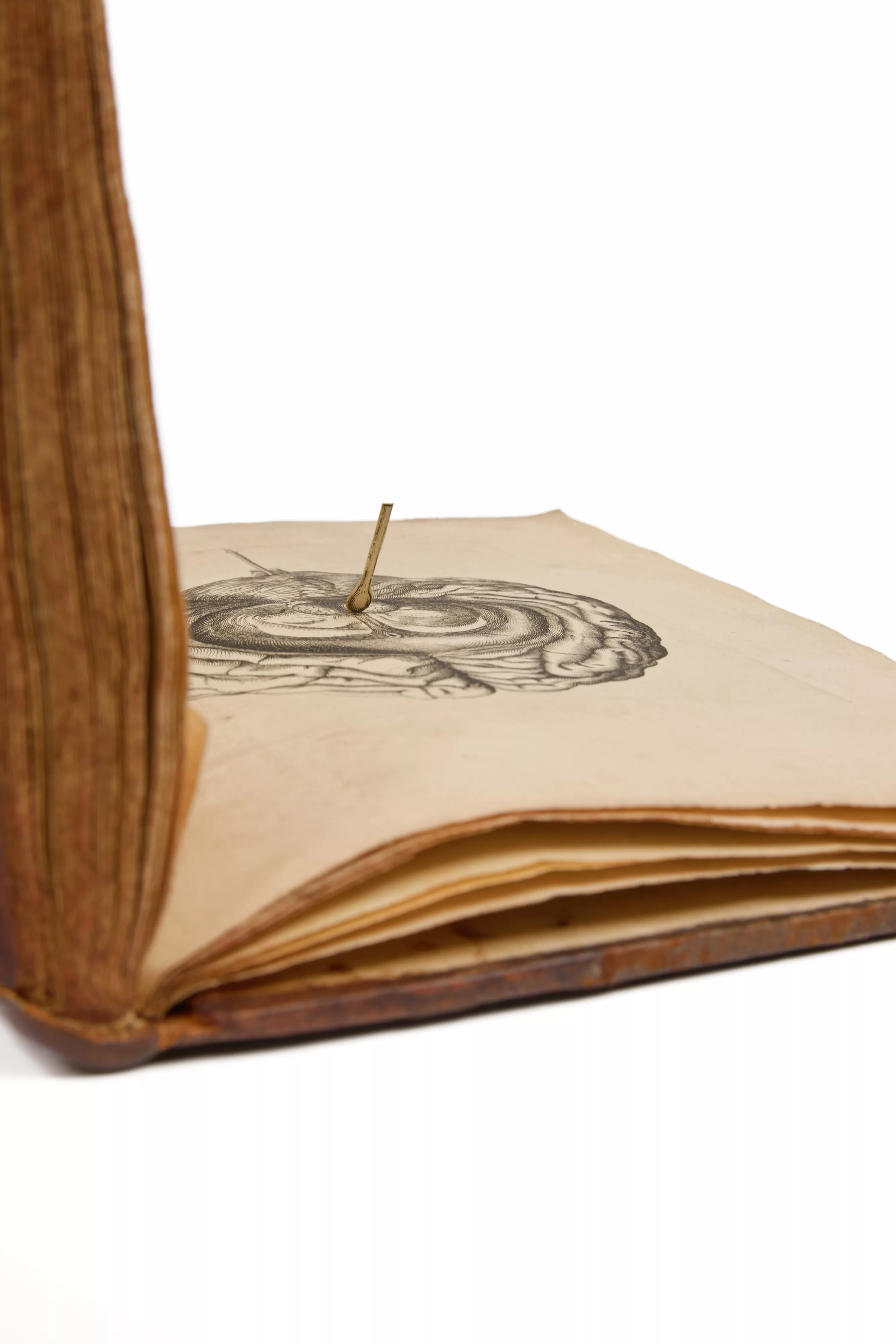
The plate of the heart is complete with its movable parts, and, more significantly, the small movable volvelle on the plate of the brain is present: it is absent from the great majority of copies.
Descartes had completed his text as early as 1633, but the condemnation of Galileo by the Italian Inquisition that same year, for the publication of his Dialogue sur les deux grands systèmes du monde, proved decisive: fearing that his own materialist-mechanist vision might likewise be judged heretical, Descartes changed his mind and did not have this treatise published during his lifetime.
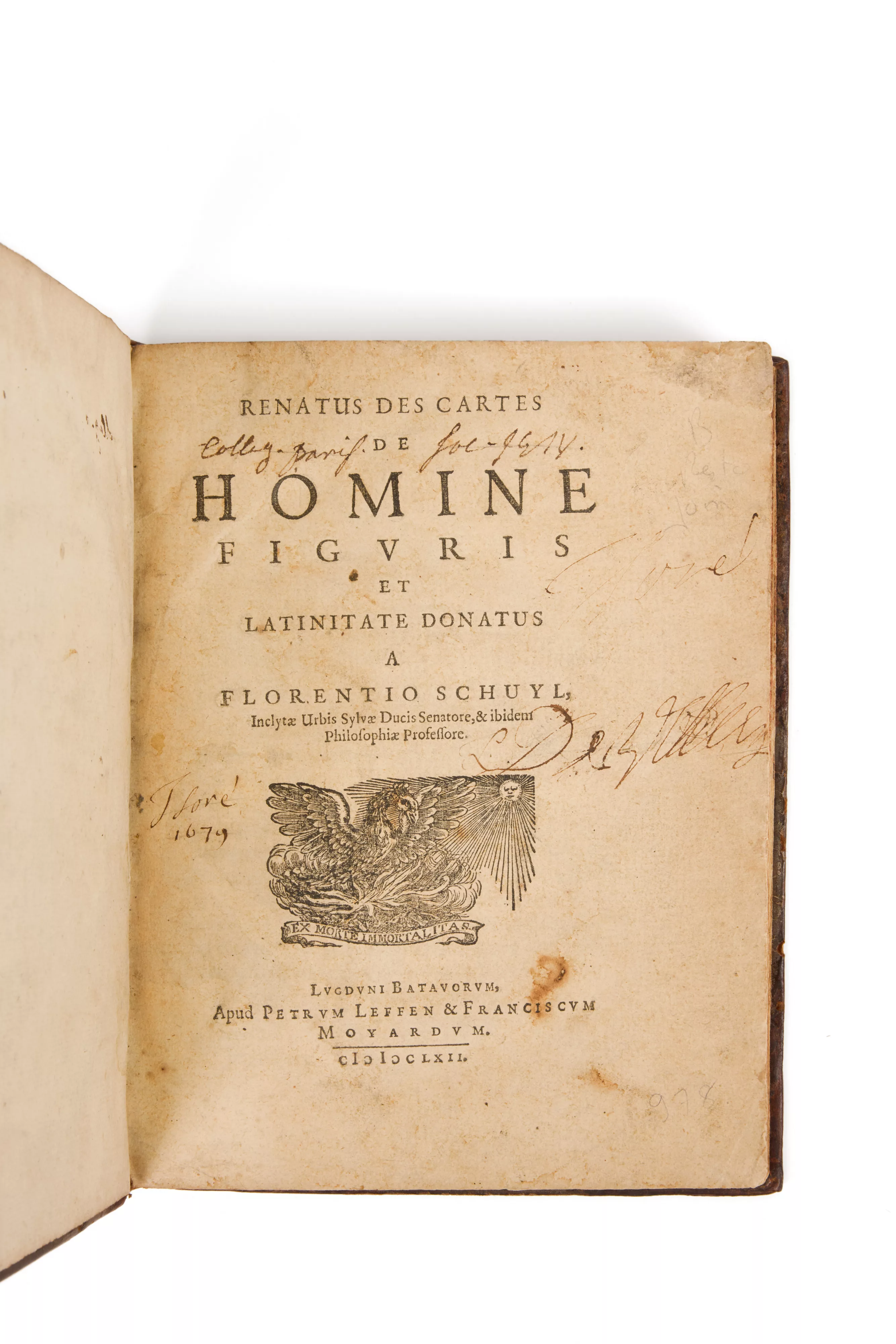
Some time after the author’s death in 1650, manuscript copies circulated among his friends and correspondents: the first publication is this Latin translation, prepared by Florentius Schuyl at Leiden. Two further years passed before a second version appeared, this one in French, under the title Traité de l’homme, edited by Claude Clerselier, Descartes’s self-appointed literary executor.
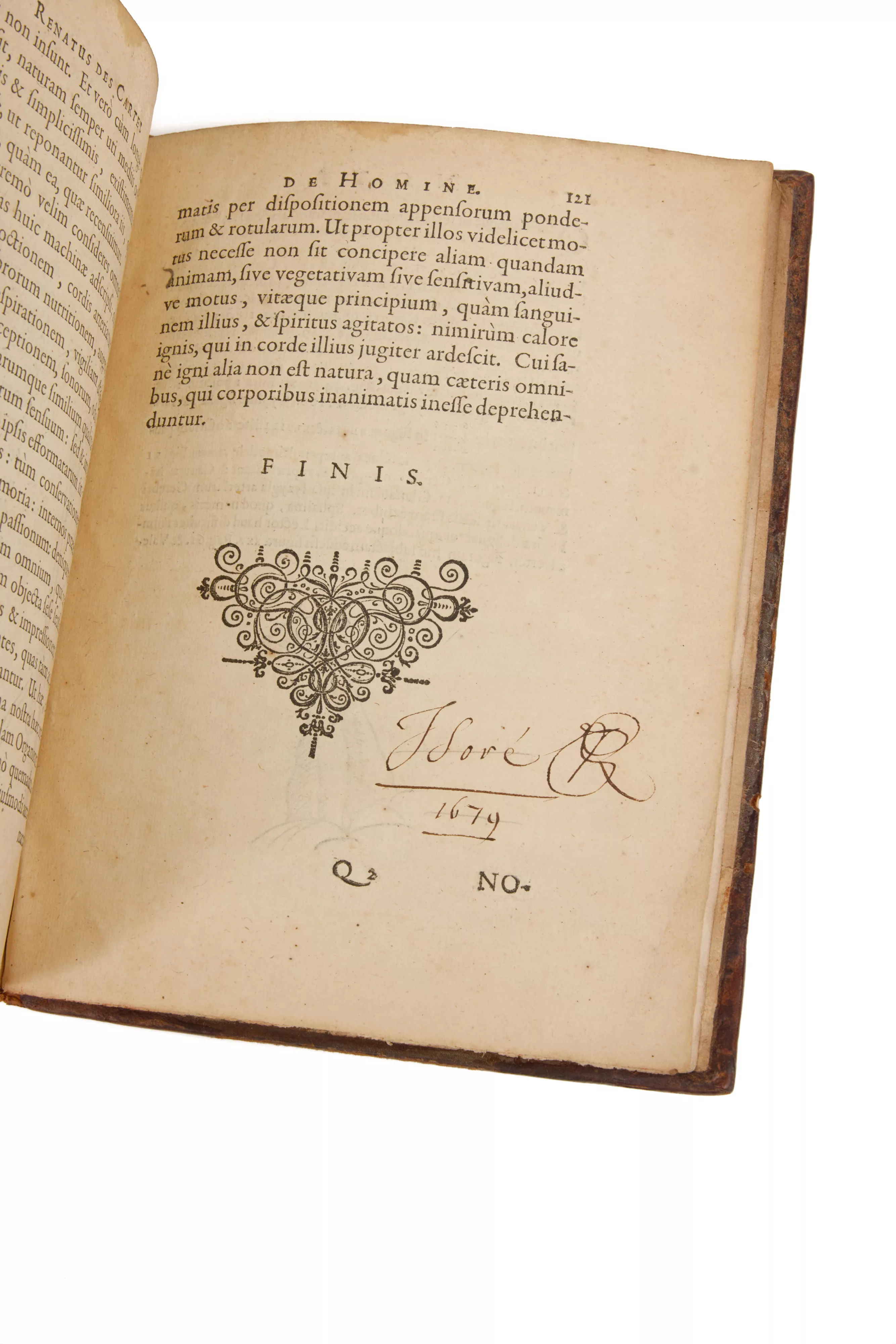
Bookplate dated 1679 and manuscript ownership inscription of the Jesuit College of Paris (on the title page).
Garrison-Morton, 574; Guibert, 196, 1 Norman, I, 627; Tchemerzine, II, 798; Osler 931; Heirs of Hippocrates, 295.