

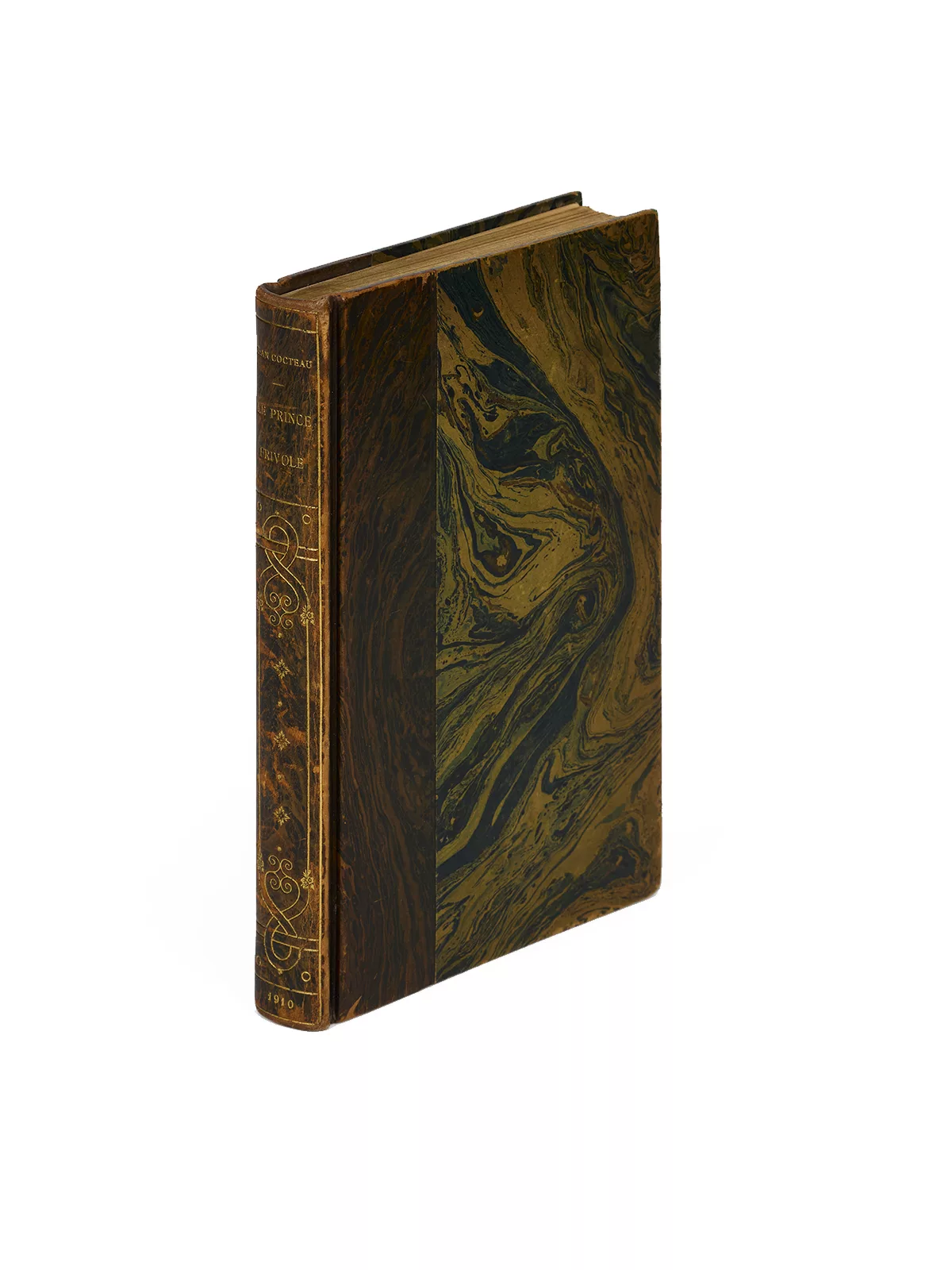
Le Prince frivole
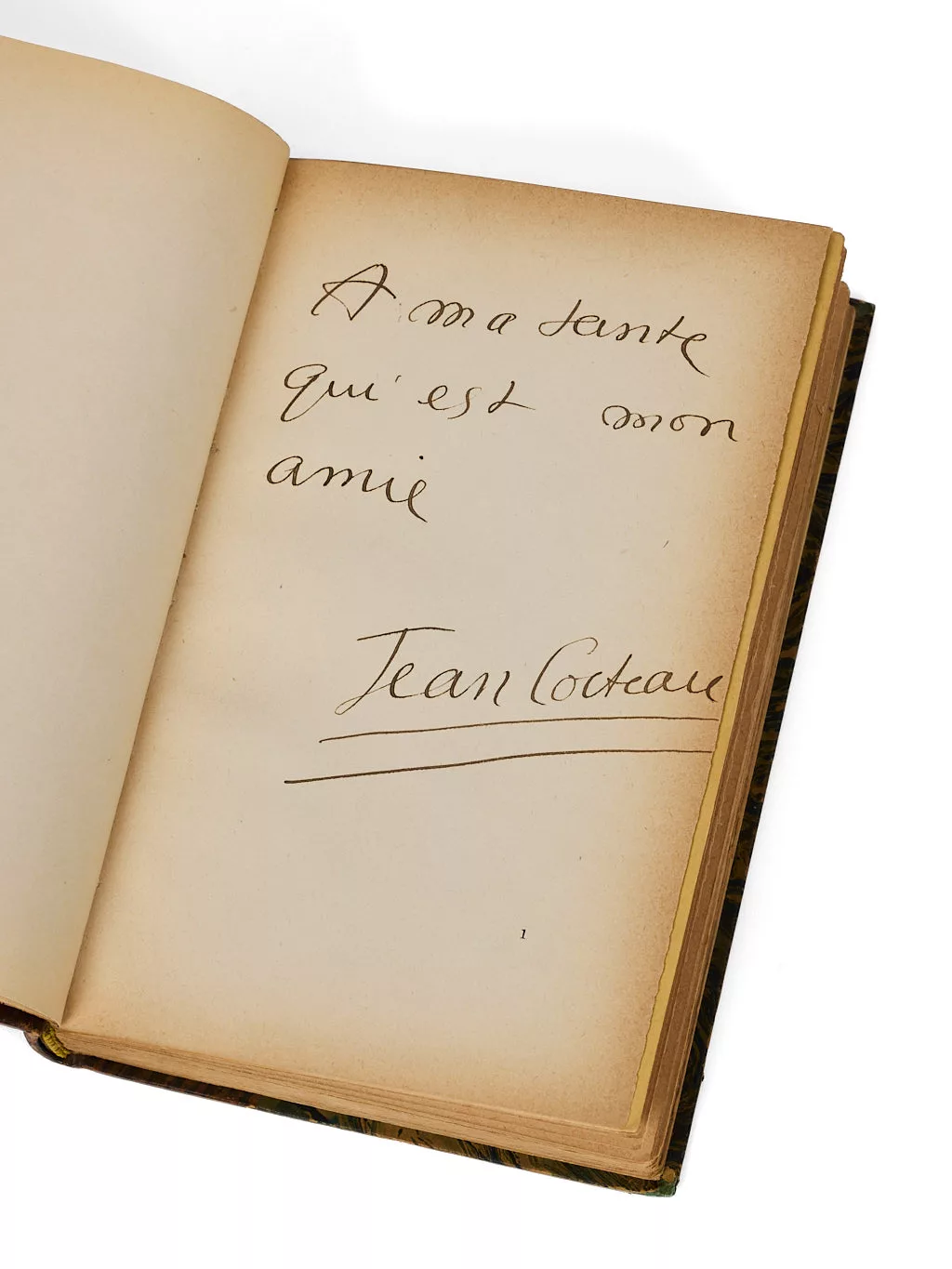
Signed presentation inscription: “à ma tante, qui est mon amie, Jean Cocteau.”
In 1909, the year his first book, La Lampe d’Aladin, appeared, Jean Cocteau frequented artistic bohemian circles, where he quickly earned the nickname “prince frivole” — a term he adopted for his second collection, published the following year.
Through his uncle Raymond Lecomte, Cocteau had been introduced to fashionable society, where his mother mixed with Nadar and Jacques-Émile Blanche. This diplomat, who was homosexual, mattered greatly to the young man, as did the entire maternal branch of the family, nicknamed “Les Eugène” by Cocteau, reflecting the considerable influence that his grandfather, his mother [both named Eugène and Eugénie] and his uncles and aunts had on his imagination — an influence strong enough to inspire Le Potomak, published in 1914.
Among the “Eugène,” Cocteau had two uncles: Raymond, and Maurice, who was also his godfather. Maurice had married Marie Jacob in 1884. It was at his aunt’s home that the young boy took refuge in March 1898, a few days before his father’s suicide on 5 April. Marie Lecomte looked after her nephew for several weeks during this difficult period, and the family bond between them endured throughout their lives.
Only two other presentation copies to this aunt are known, one for Le Potomak and the other for Thomas l’imposteur.
A fine copy in a contemporary binding.