

Épées de joaillier
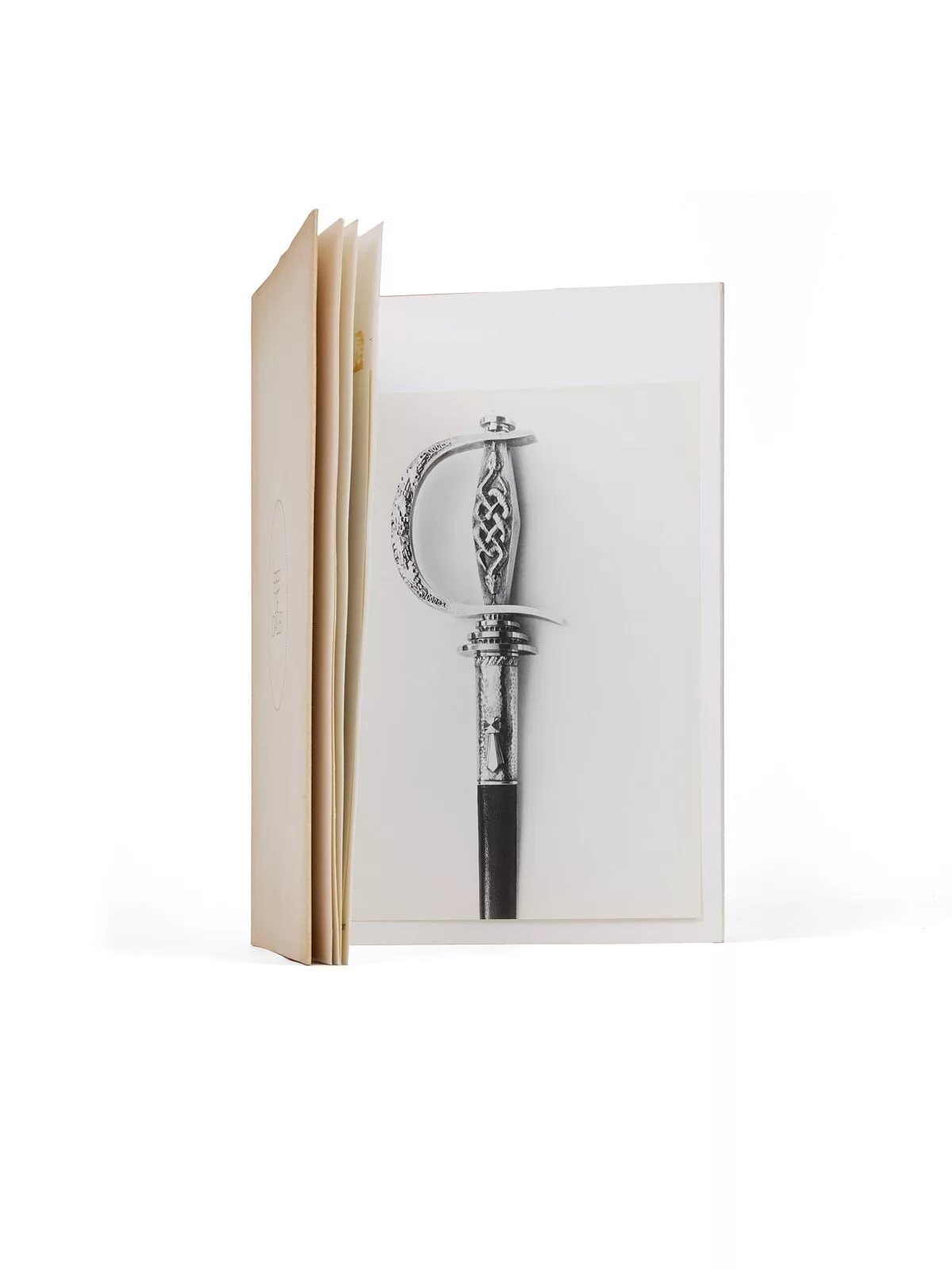
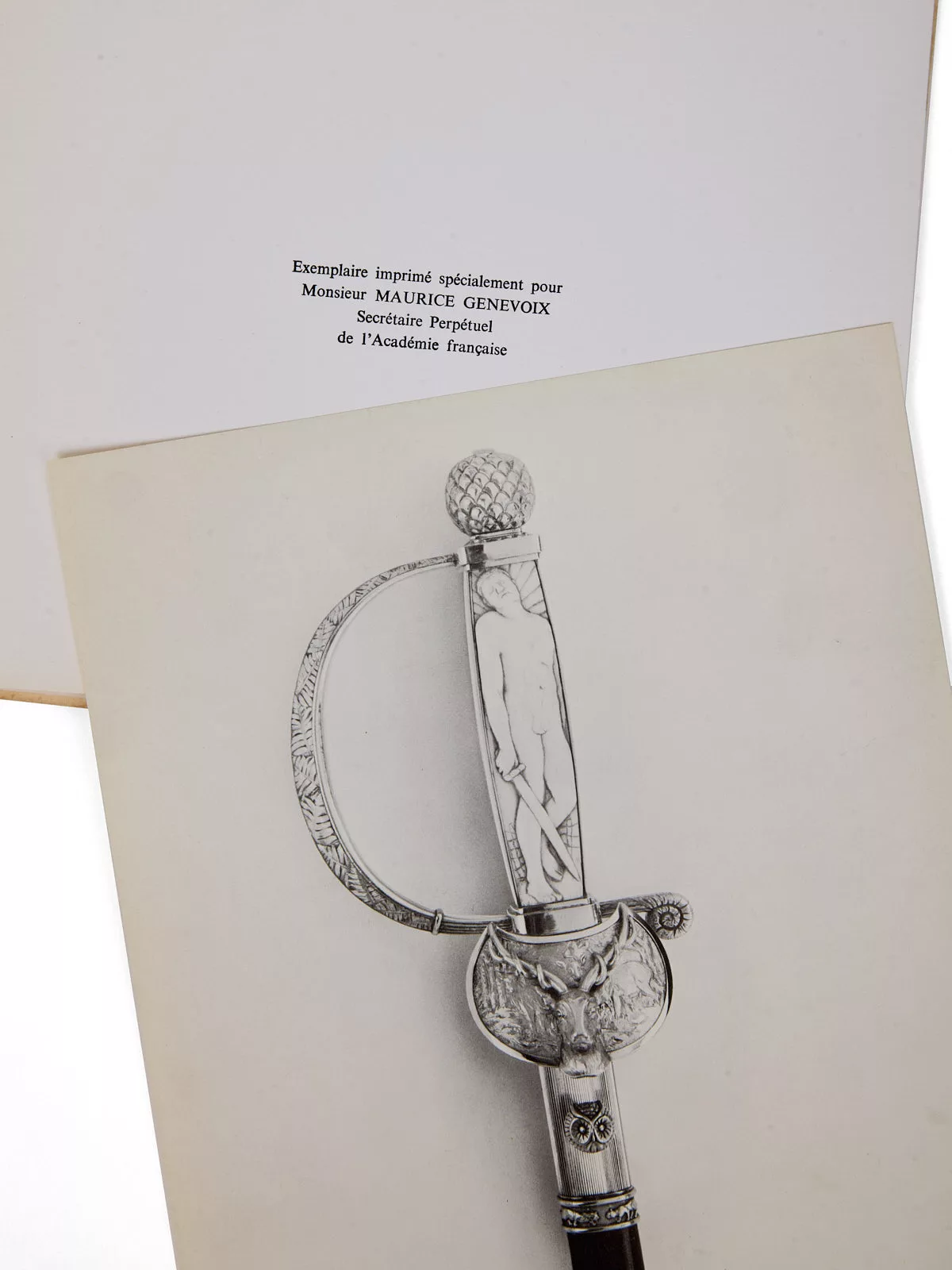
Between 1931 and 1999, the goldsmith Cartier received twenty-seven commissions for académiciens’ swords, solemnly recorded in the firm’s annals. In 1934, François Mauriac’s sword was the first of twenty-one swords made for a member of the Académie française.
The Institut national, created after the Revolution, made no provision for a costume or sword for its members. Since the Revolution had abolished the wearing of the sword as a mark of nobility, members of the Institut soon wished for a distinctive sign, leading to the award of a cane in 1800 and of a costume established in 1801, but no sword was provided for. Born as a mere piece of uniform and never made compulsory by any regulation, the “académicien’s sword” is today the most personal attribute of the ritual of the Académie française: presented privately, often funded by subscription, it evolved from the Second Empire to the present day from a ceremonial sword with a mother-of-pearl hilt into a portable work of art, a symbolic portrait of its recipient. The exhibition at the Bibliothèque de l’Institut (September 16–December 16, 2004) traced this evolution: after uniform weapons and models inspired by the Institut d’Égypte, the Belle Époque and the interwar years saw goldsmiths raise the sword to the rank of a unique work through the greatest jewelry workshops. In the twenty-first century, the tradition has continued to evolve: some women académiciennes have embraced the sword (Hélène Carrère d’Encausse, Emmanuelle Bona), while others have adopted meaningful objects instead; many members choose a historic sword, while others entrust an artist with an entirely new creation. Between protocol and creation, the sword thus concentrates public memory, friendship and style — a “secular reliquary” of the writer — and remains, in Arnaud d’Hauterives’s fine phrase, a portrait rather than a weapon.
A handsome monograph devoted to the subject, printed here for its permanent secretary.