

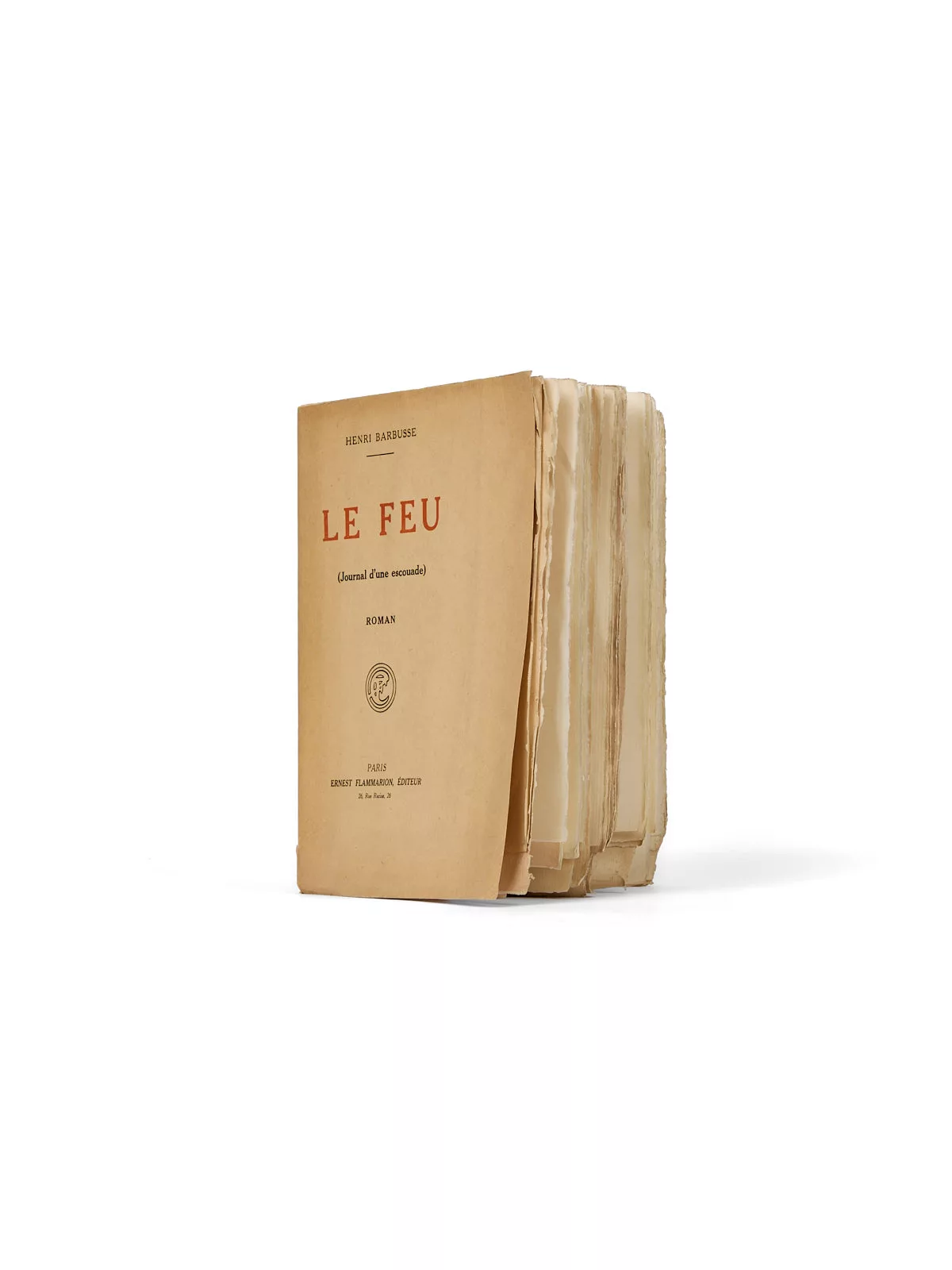
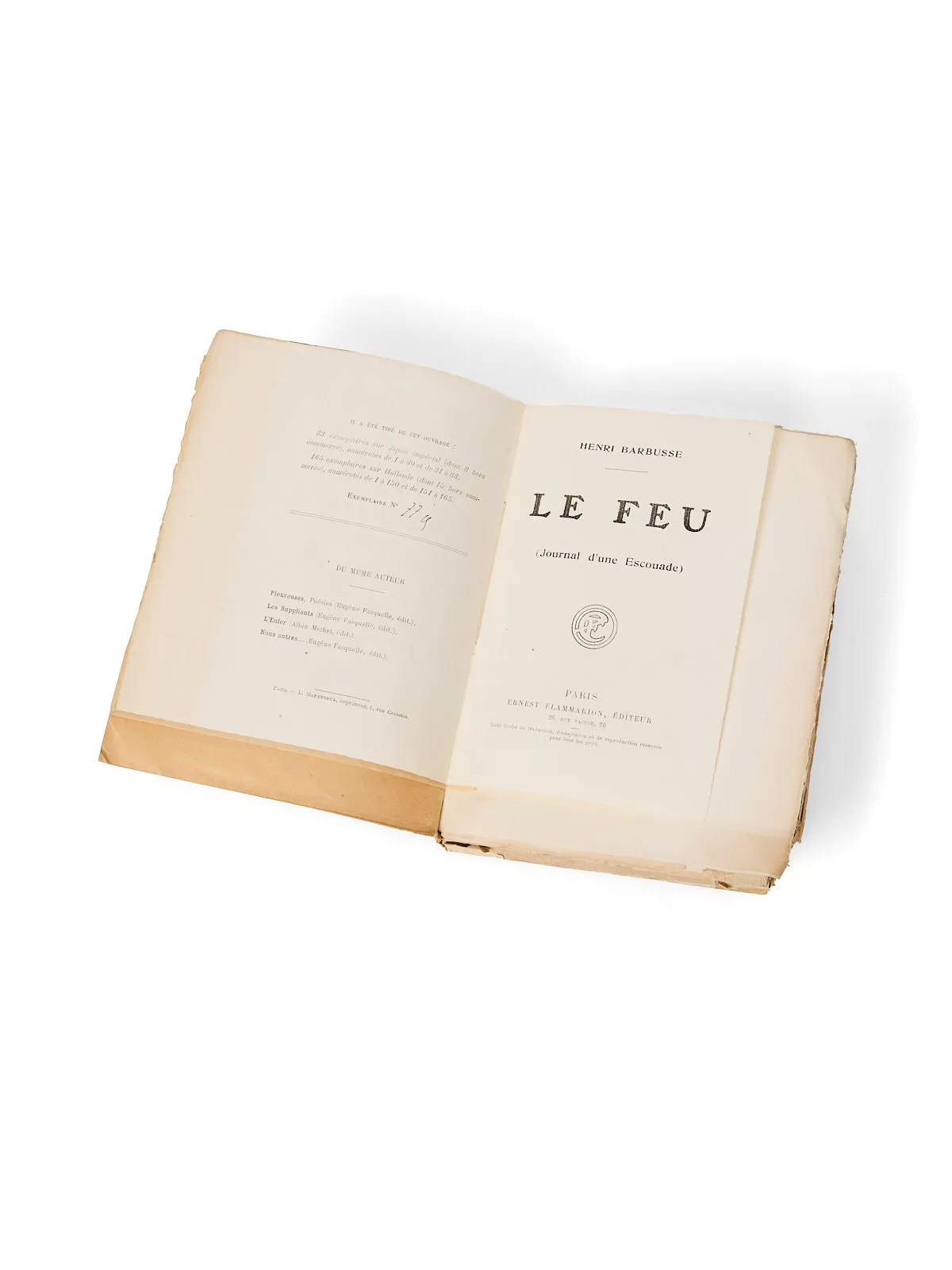
One of 165 copies on Hollande paper (no. 77), numbered and initialed by the publisher.
Henri Barbusse had experienced the fire of the trenches from 1915, first as a soldier, then as a stretcher-bearer. Writing largely from hospital, in twenty-four chapters, he recorded the daily reality of the front and the “dreadful, unnatural exhaustion, the water up to one’s belly, the mud, the stench and the vile filth floating on the voracious earth,” drawing on a wartime notebook in which he had set down his lived experience.
The novel was finished by early spring, and the idea of the Prix Goncourt was already taking shape among his publishers even before the contract was signed. Serial publication of the first chapters began on 3 August in the daily L’Œuvre: the Fischer brothers, literary directors at Flammarion, sensed the opportunity and approached the author to acquire the rights to Le Feu. On 26 October, on the eve of a preparatory meeting of the Académie, they wrote to him:
“We spoke of the possibility we foresee regarding the Goncourt. Certain conversations we have had these past days, notably with Paul Margueritte, lead us to believe we were not altogether mistaken. But we would need to move remarkably fast.”
Barbusse hesitated, being bound to other publishers, but the prospect of the Goncourt decided him. A week later the contract was signed — six days before the end of the serialization (93 installments). On 15 November the text went to press and appeared just in time from Flammarion in early December, in an initial printing of 1,000 copies, including the deluxe papers: 33 on Japanese paper and 165 on Hollande paper.
Barbusse won the Prix Goncourt on the first ballot, on 15 December, with eight votes, without those of Léon Daudet or Elémir Bourges, as he had anticipated.
A special printing limited to 20 copies for the bibliophile society “Les XX” also exists, all signed by the author.