

Vendredi ou les Limbes du Pacifique
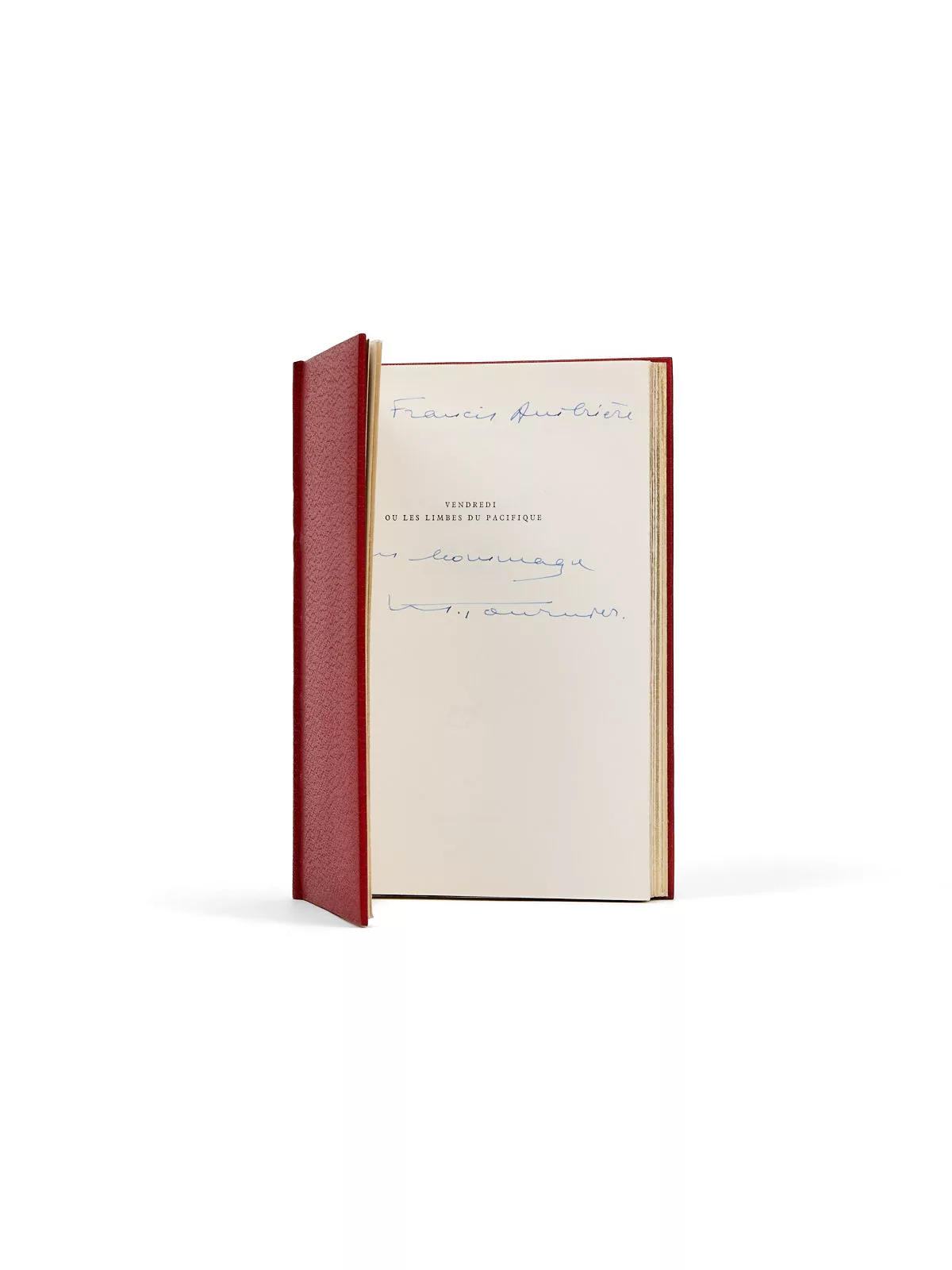
Signed presentation inscription: “à Francis Ambrière, en hommage, Michel Tournier.”
When he received the Grand Prix du Roman de l’Académie française for Vendredi ou les Limbes du Pacifique, Michel Tournier was forty-two years old, and it was his first novel. It was Raymond Queneau who spotted the book’s originality on the Gallimard reading committee and pushed for its publication. On its release, the novel did not receive immediate recognition from literary circles and was rarely mentioned in the press, apart from an article by René Marill Albérès in Les Nouvelles littéraires, which in April 1967 praised this “Robinson Crusoe revised and corrected through Freud, Jung and even Claude Lévi-Strauss.” The book passed the summer unnoticed and appeared on no literary prize lists, least of all that of the Académie Goncourt, which, for the first time in its history, considered not awarding its prize at all, as permitted by the Goncourt brothers’ will and the academy’s statutes.
Such a measure required unanimity among the jurors, which was never achieved. But, as juror Philippe Hériat warned at the final selection meeting, it served as “a warning shot against the mediocrity of what is being published” (Registre du prix Goncourt, minutes of 7 November 1967, Archives Goncourt, Nancy).
At the Académie française, however, there was a wish to break new ground by crowning a young, powerful new voice: Vendredi ou les Limbes du Pacifique was put forward by Maurice Genevoix, who had received the text as early as June. The Académie’s Permanent Secretary — whether or not he had initiated the choice — explained with skill and subtlety, in his speech of 21 December 1967, why the book deserved the prize: “Almost every year, the Commission du Prix du Roman faces an alternative: consecration or discovery. Looking at the list of past winners, it seems, especially in the early years of the prize, that our choice more often favored the first criterion. In 1967, we changed course. The expression is fitting, since the prize-winning narrative opens with a storm followed by a shipwreck. Vendredi ou les Limbes du Pacifique, by Mr. Michel Tournier, is indeed the author’s first published book. One encounters symbols in it that I shall not attempt to explain, for the narrator is skilled at blurring the trail, hiding myths and philosophical reflection beneath his taste for adventure and his naturalist’s eye. We follow, step by step, this explorer, by turns serious and mocking. We share in his fervor for nature, even when it leads him to strange unions. It is a book both baroque and tightly constructed. It has vigor, scent and a fine power of reasoning. It reveals a personality steeped in culture, yet willful enough to escape any influence. When I add that it is written in a confident language, seeking both precision of terms and harmony of sentence, one will understand why we are impatient to read the new novels announced by Mr. Tournier. By its originality and mastery, this book had its place among our winners.” (Maurice Genevoix, “Discours sur les prix littéraires,” annual public session, 21 December 1967).
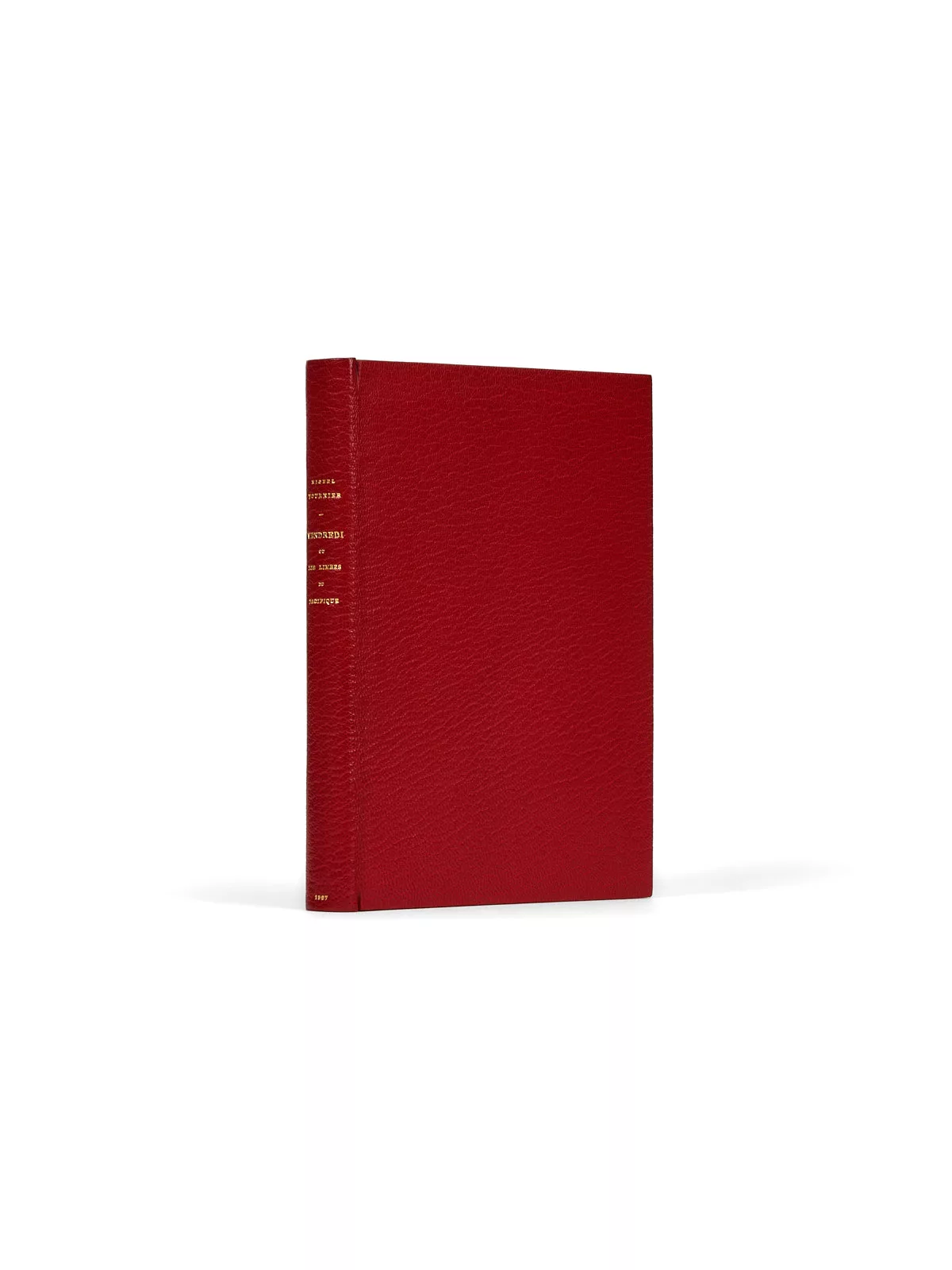
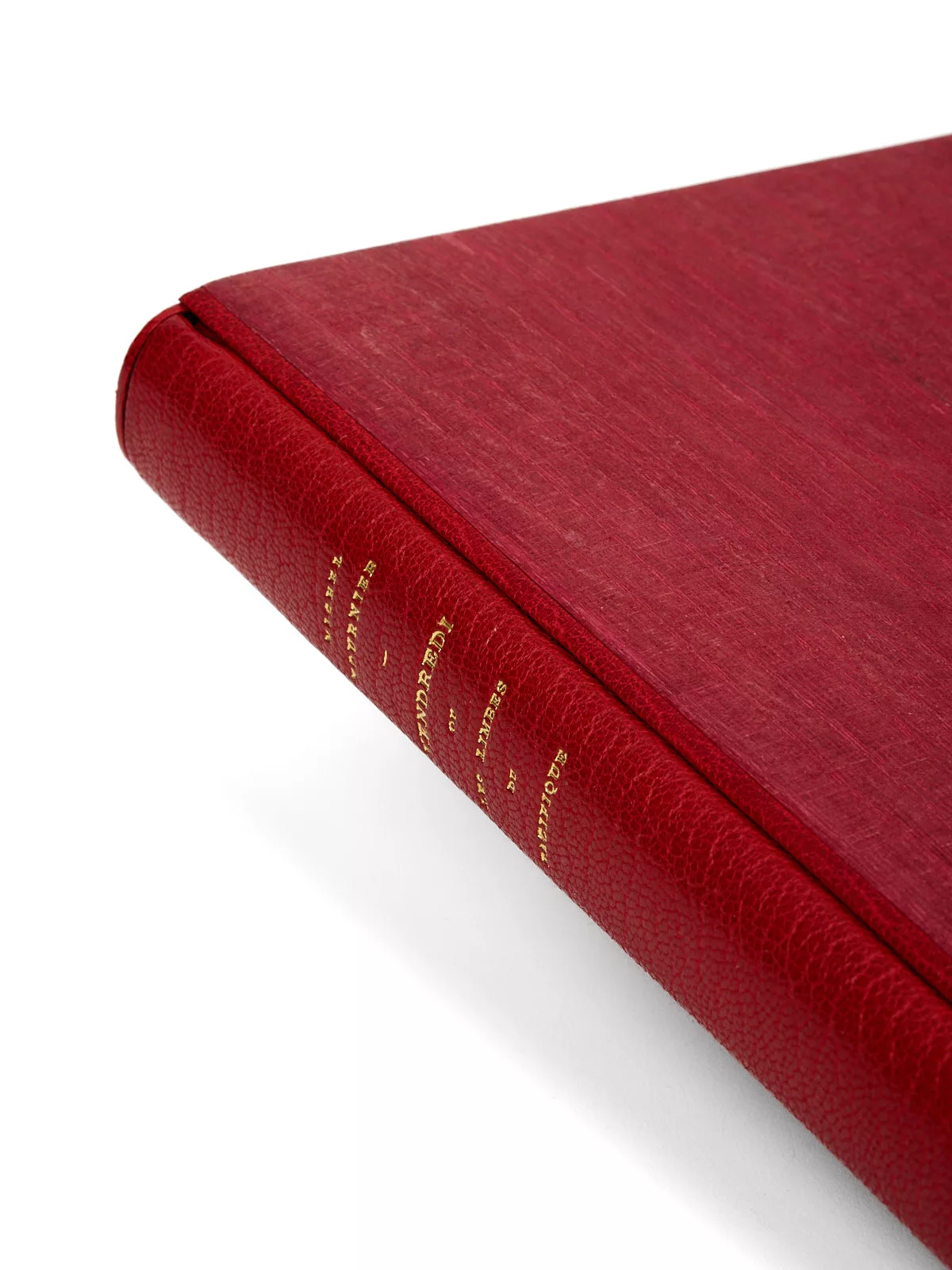
A very fine copy, in a full binding by Patrick Loutrel, with an excellent provenance: that of Francis Ambrière, winner of the Prix Goncourt in 1940 for Les Grandes vacances.