

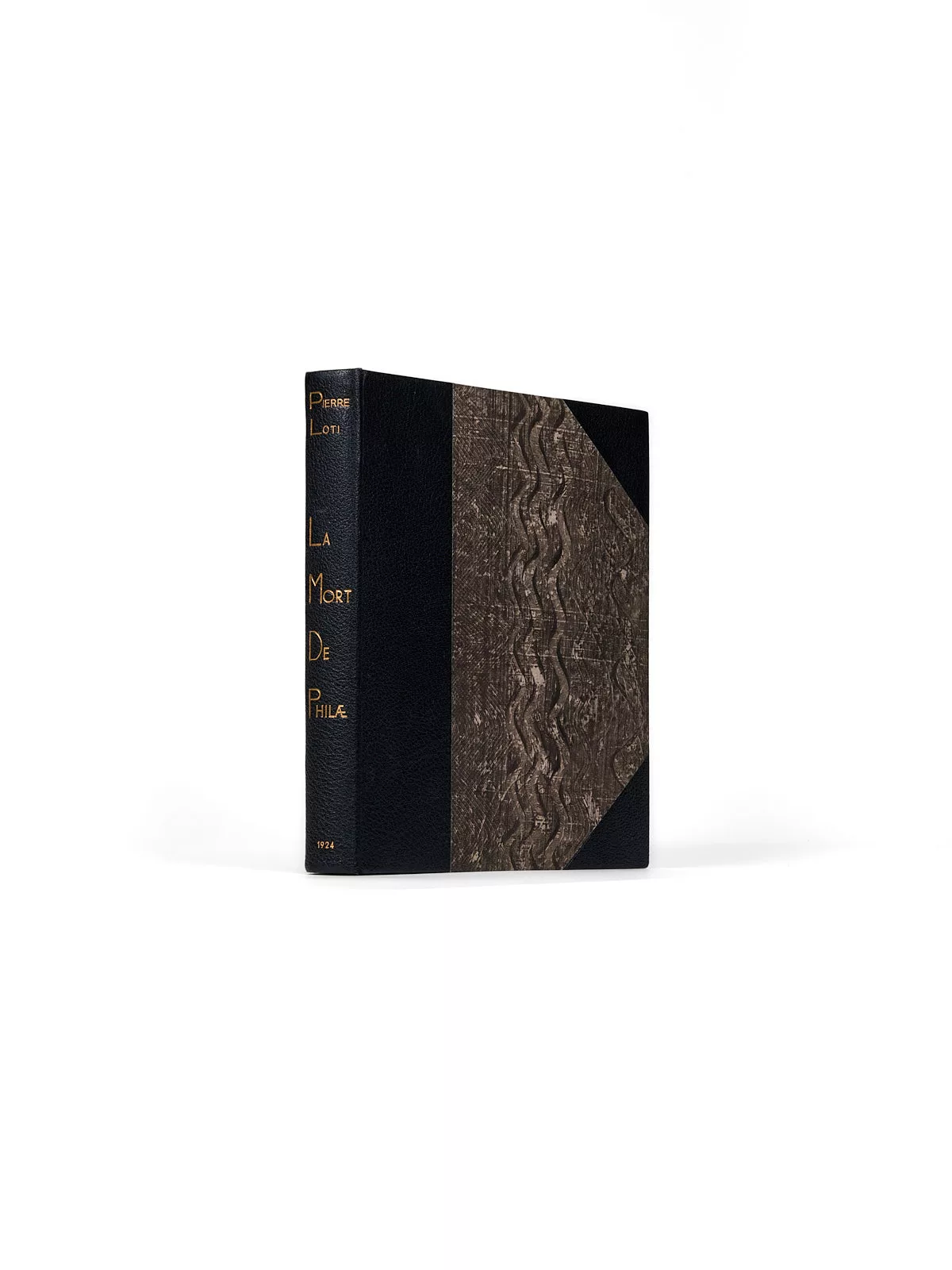
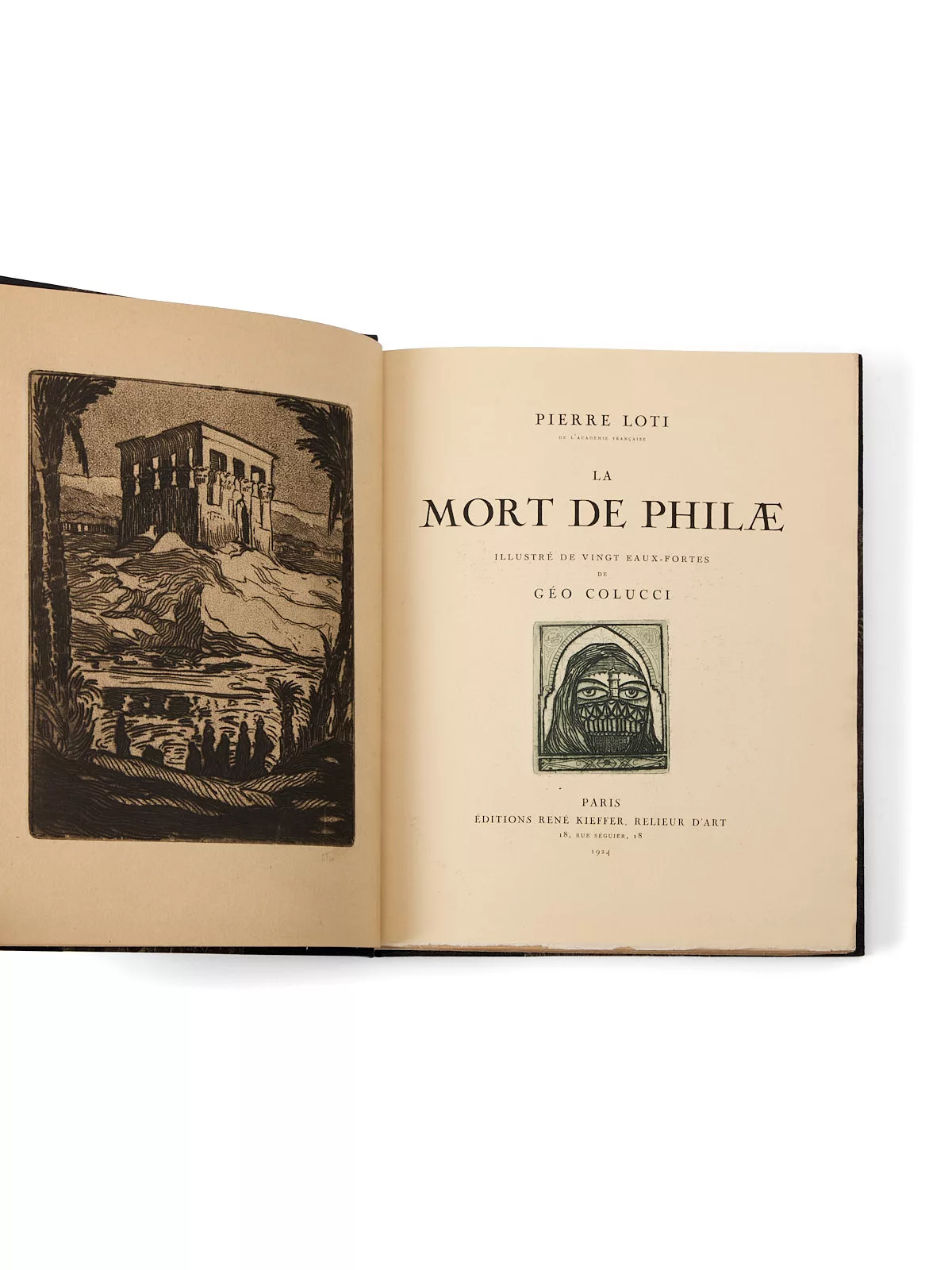
La Mort de Philae
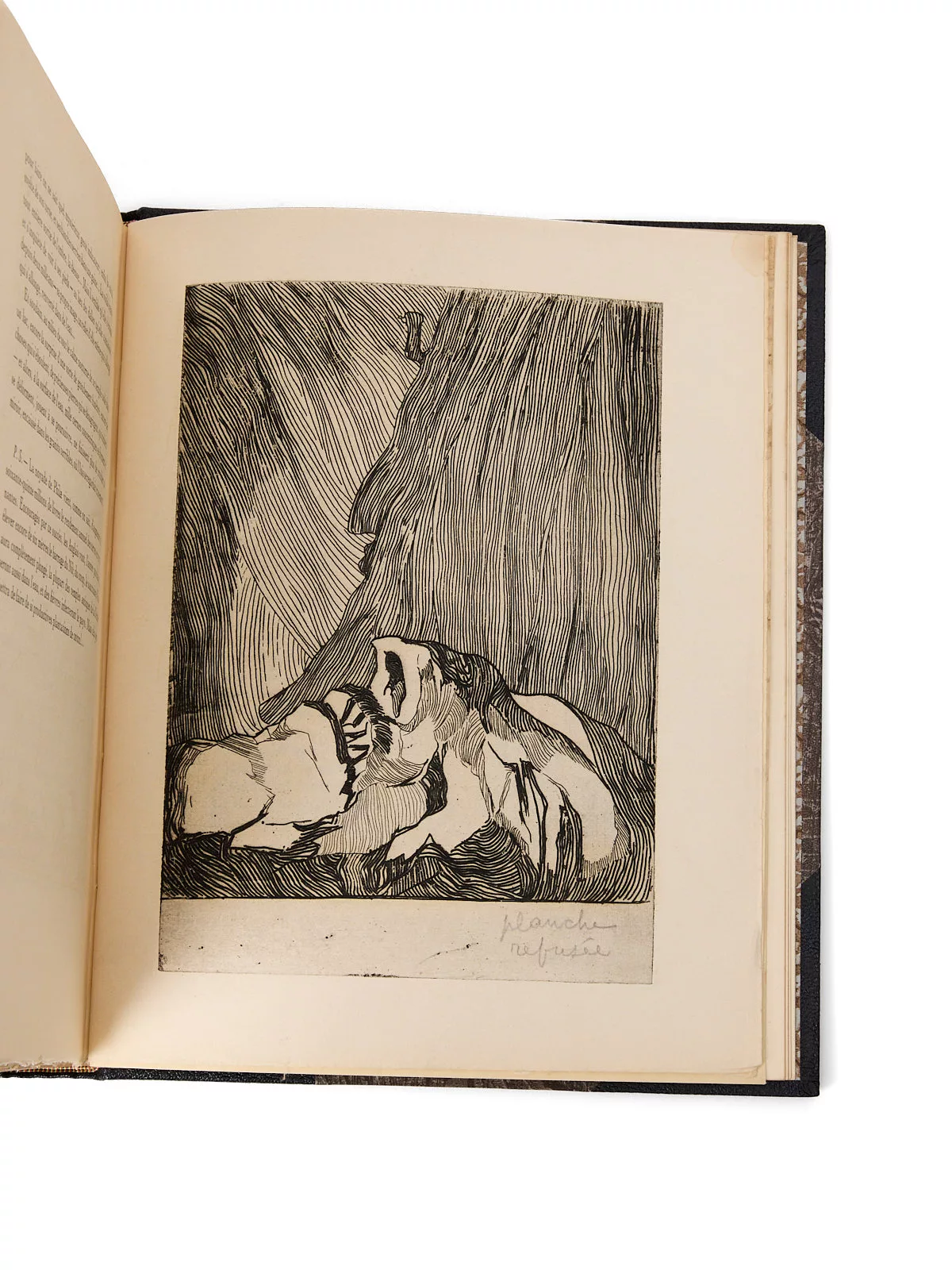
One of 460 copies on handmade vellum (unnumbered), this copy enriched with an additional engraving, marked “planche refusée.”
First published in 1909, La Mort de Philae is one of Pierre Loti’s most melancholic texts, born of his fascination with ancient Egypt and his despair at its modern desecration. He vehemently denounces the touristic ravaging of the Orient and the smug vulgarity of contemporary travelers, those “society people flaunting their ignorant self-satisfaction at every step”; he also condemns British colonial policy, whose Aswan Dam had condemned numerous sanctuaries to submersion.
Philae, the sacred island dedicated to Isis, becomes under Loti’s pen the symbol of a vanished world, a neglected memory, an impossible mourning. “Today, because of the dam built by the English, the water has risen and risen, like a tide that never recedes again; this lake, almost a small sea, replaces the meanders of the river and finishes swallowing up the sacred islets.” This text, among Loti’s most personal, marks the end of an era: that of the great inward journeys disguised as journeys across the world.