

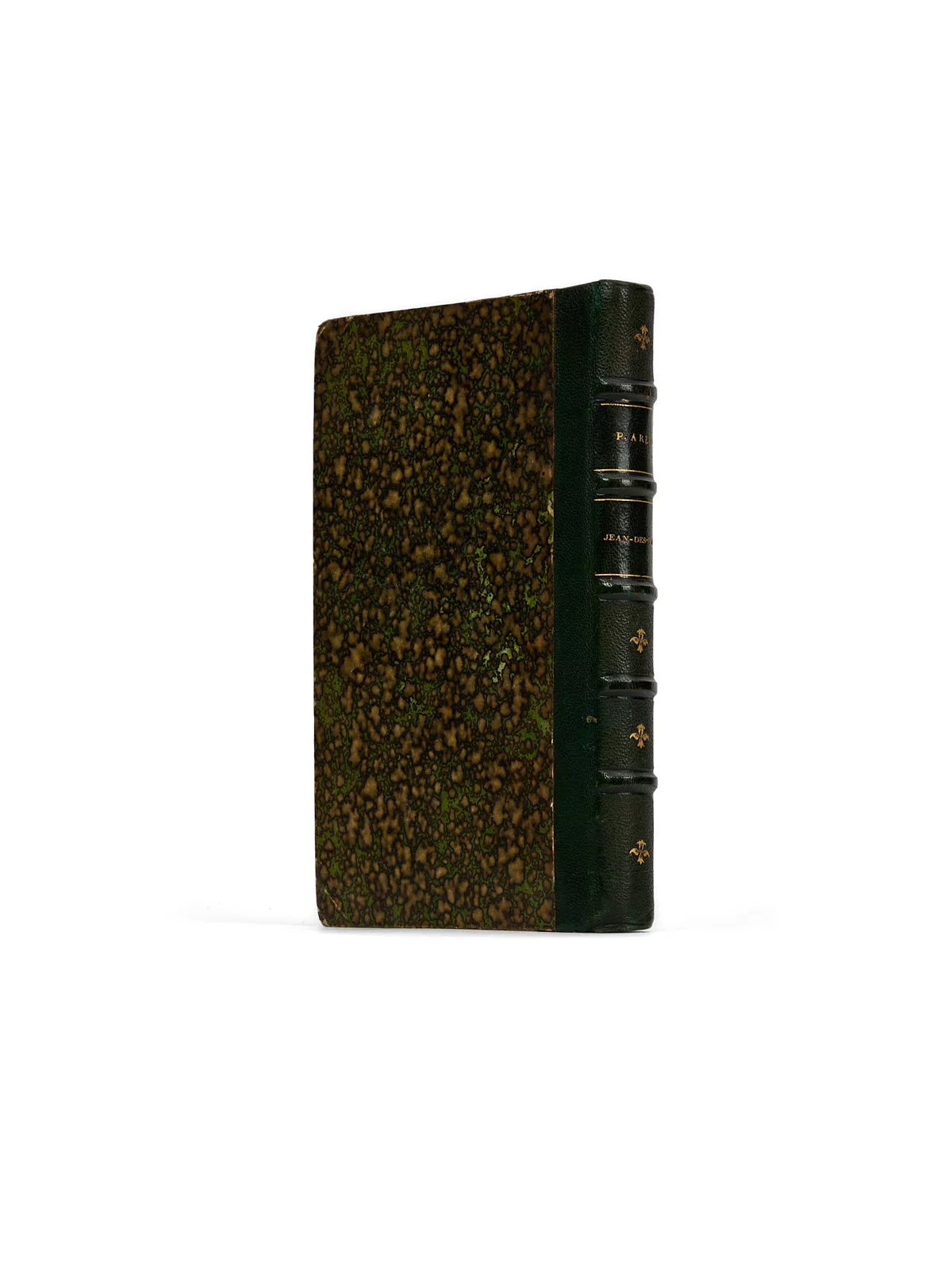
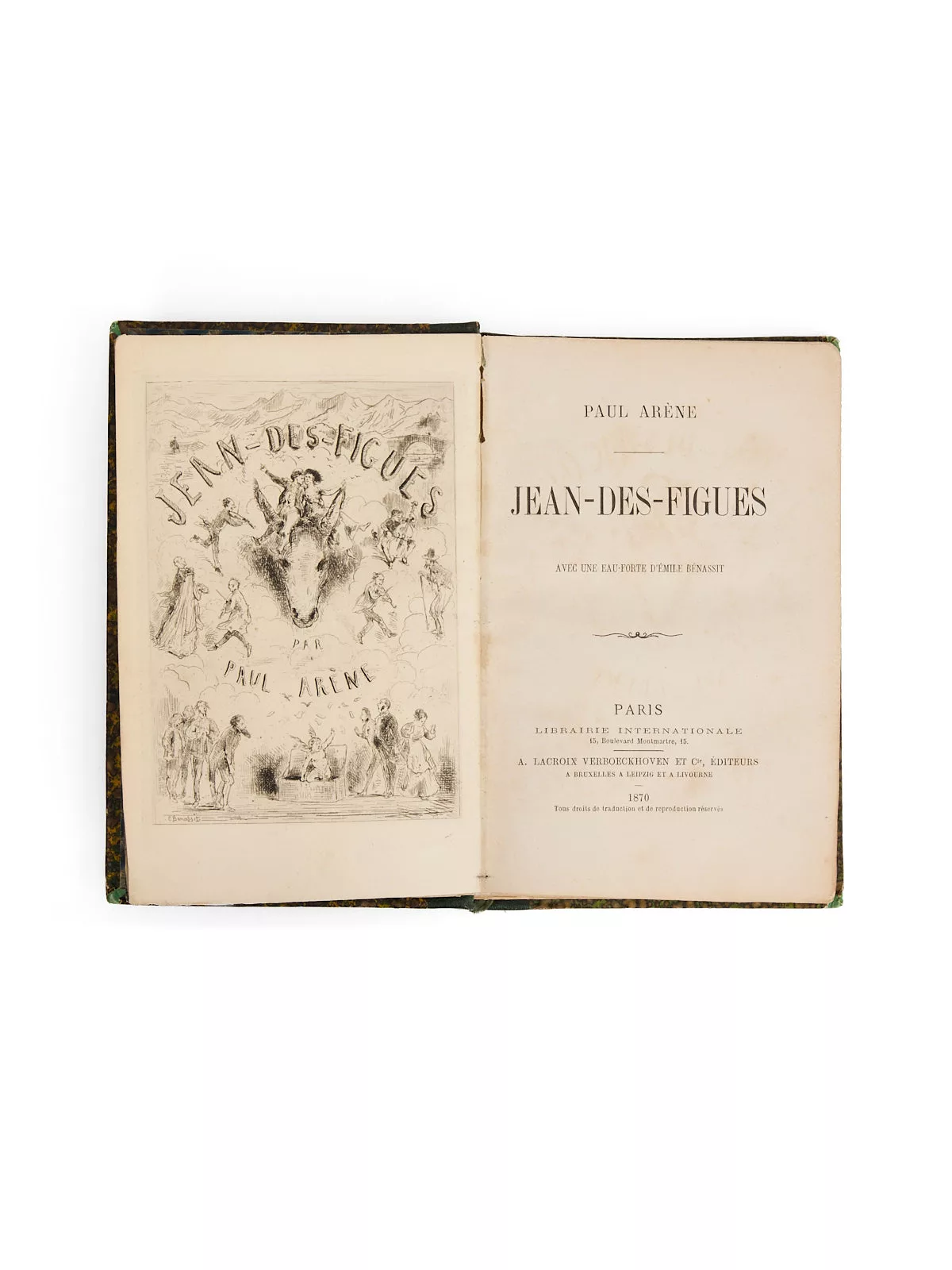
Jean-des-figues
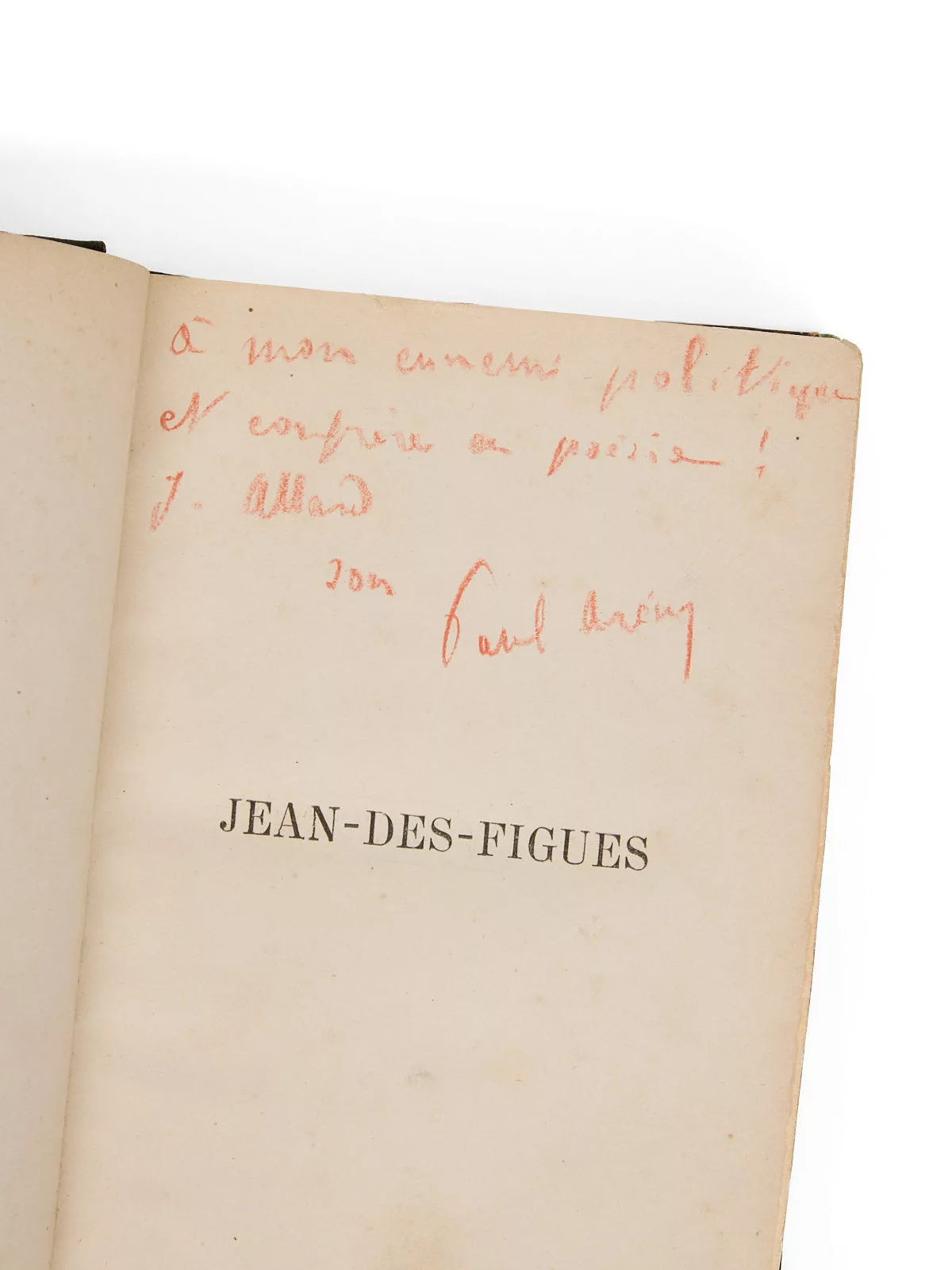
Inscribed and signed: “à mon ennemi politique et confrère en poésie ! J. Allard, son Paul Arène.”
This collection of Provençal tales, the author’s finest, is often compared to the Contes du lundi of his childhood friend Alphonse Daudet, to whom the volume is dedicated. The closeness between the two writers is essential here, though it must be stated precisely. Arène was indeed Daudet’s close friend and collaborator; the two men published several tales together under the pseudonym Marie-Gaston in L’Événement in 1866. More importantly, Paul Arène’s involvement in the early stages of the Lettres de mon moulin is considered certain, even if its exact extent remains debated by scholars for lack of decisive manuscripts — except for “La Chèvre de monsieur Seguin,” for which a manuscript corrected by Arène survives.
Jean-des-figues clearly belongs to this same southern vein, in which Arène transposes his native Provence into literature and follows a young Provençal who has come up to Paris.
This copy is inscribed to Jules Allard, father of Julia Allard, the future Mme Alphonse Daudet. The dedication carries particular weight, since Jules Allard was no ordinary writer’s relative but a striking figure in his own right: a Parisian industrialist of Breton origin and a man of advanced ideas, he was a “bleu,” imprisoned for joining the Barbès conspiracy and for the clandestine printing of the Moniteur républicain, which earned him six months at Sainte-Pélagie prison. He belonged to a generation of literary republicans for whom political commitment was entirely compatible with a taste for verse. With his wife Léonide, he published a collection of poetry, Les Marges de la vie, giving his daughter Julia an example of a household in which literature was a family practice. Alphonse Daudet dedicated his first major novel, Fromont jeune et Risler aîné (1874), to his parents-in-law: “Aux deux poètes Jules et Léonide Allard, témoignage de mon affection et de mon respect filial.” Lucien Daudet would later recall his grandfather as a man of conversation and poetry, while Alphonse himself, according to his son, considered him “his best friend.”
Arène’s playful “political enemy” in the inscription thus takes on its full flavor: it points not to hostility but to a fellow man of letters with whom differences of opinion could still be voiced with mischief, against a background of deep respect.