

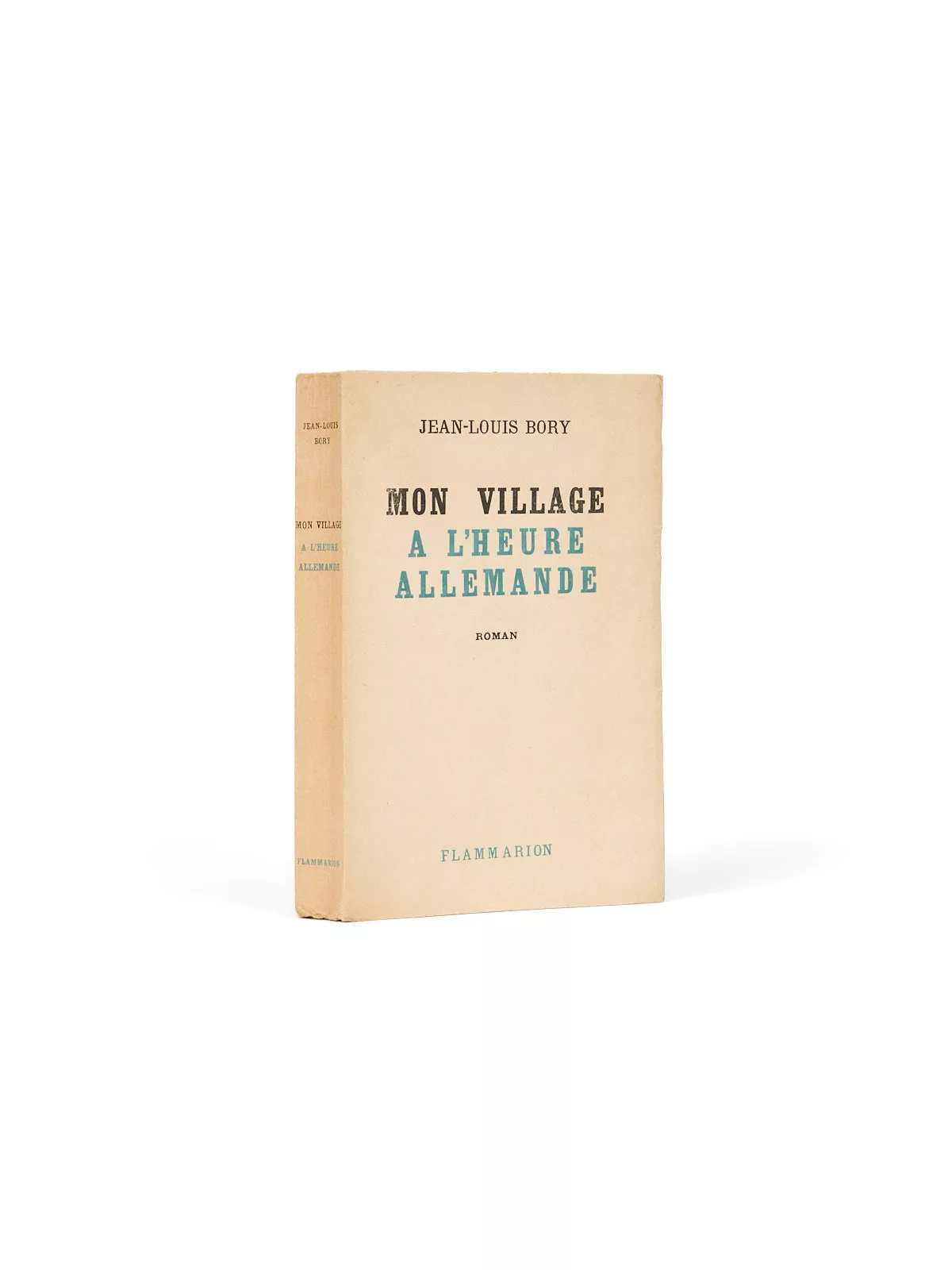
Mon village à l’heure allemande
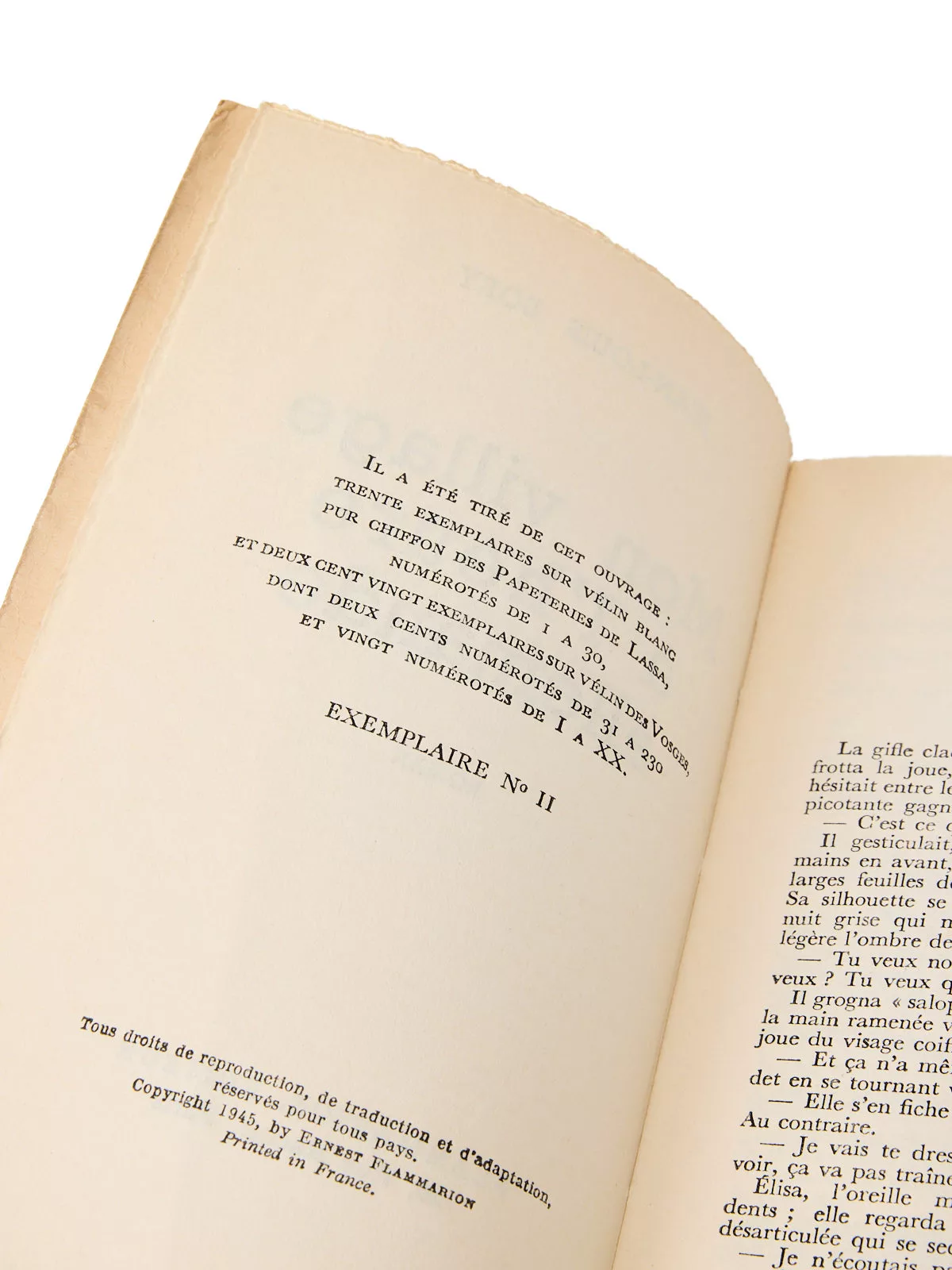
One of 220 copies on vélin des Vosges (no. II).
Jean-Louis Bory (1919–1979), barely twenty-six years old — the youngest winner of the prize — wrote this first novel between May and July 1944 in his native town of Méréville (transformed into Jumainville), while taking part in the Resistance maquis of Orléans and Angerville.
On 14 December 1945, the Académie Goncourt, meeting at Drouant, awarded in succession the prizes interrupted by the war: the 1944 prize to Elsa Triolet (Le premier accroc coûte deux cents francs) and the 1945 prize to Bory for this novel. Rarely has a first book corresponded so exactly to the expectations and wounds of its contemporaries: a chronicle of a village in the Beauce under the Occupation, it spoke to every Frenchman then emerging from four years of war and collaboration.
Success was immediate and massive: more than 300,000 copies sold within a few weeks, praised by Paul Morand and Colette. But this overwhelming triumph weighed heavily on its author. Jean-Louis Bory, a teacher at the Lycée Henri-IV, went on to a career in literary and film criticism. A prominent figure of Le Masque et la Plume alongside François-Régis Bastide, he became an emblematic voice of postwar cultural criticism.
He is remembered for the program’s theme music (La Fileuse, by Mendelssohn), the little cascade of piano notes that opens the celebrated France Inter program — a tune chosen in 1978 by François-Régis Bastide, then the program’s host, to lift the spirits of his commentator. It was not enough: in June 1979, overcome by depression, he took his own life at his house in Méréville.
From the “Prix Goncourt” library of Gérard Pouguet, with bookplate.