

Djamila Boupacha
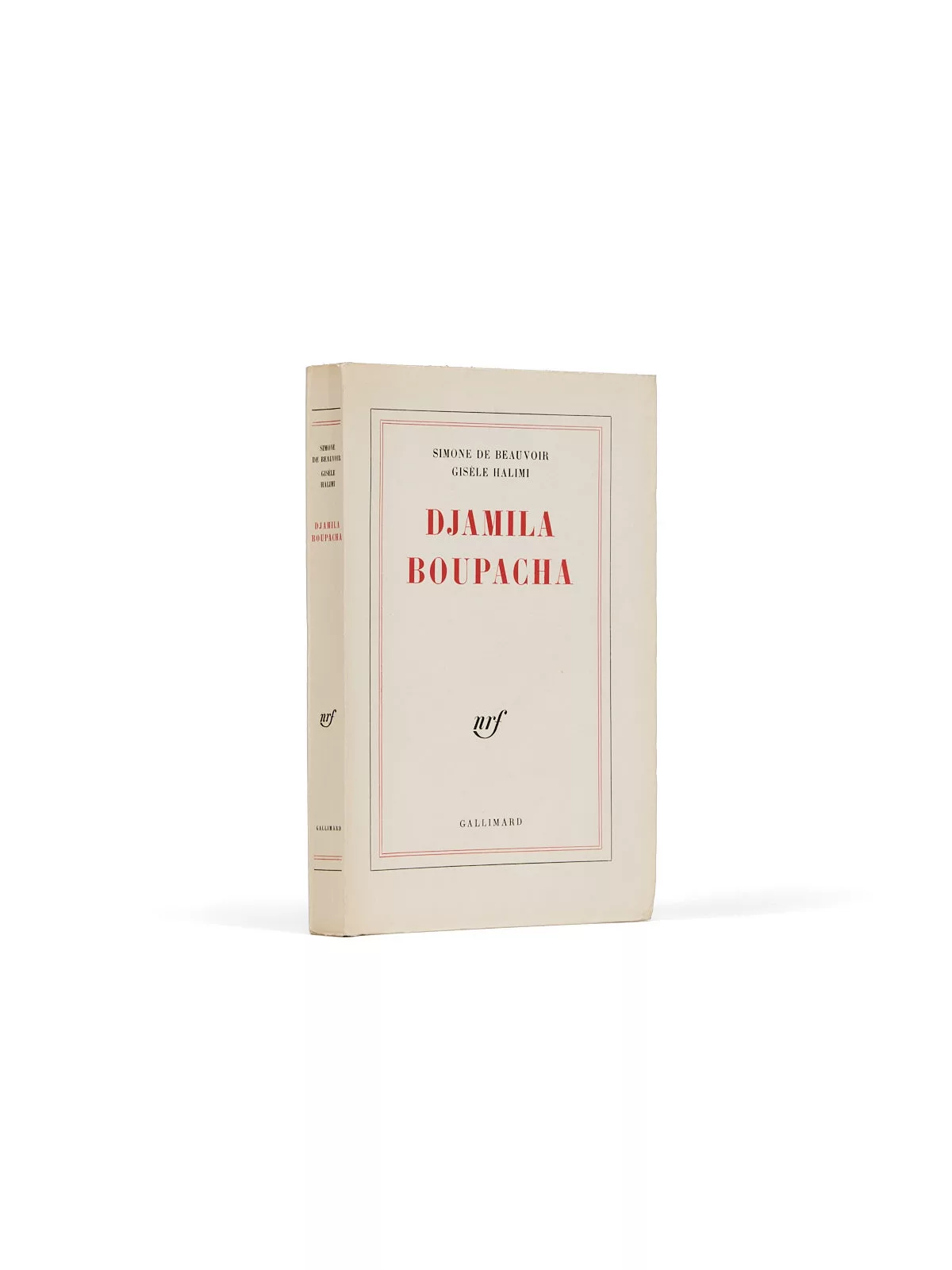
One of 125 copies on vélin pur fil, from the deluxe issue, this copy no. 92.
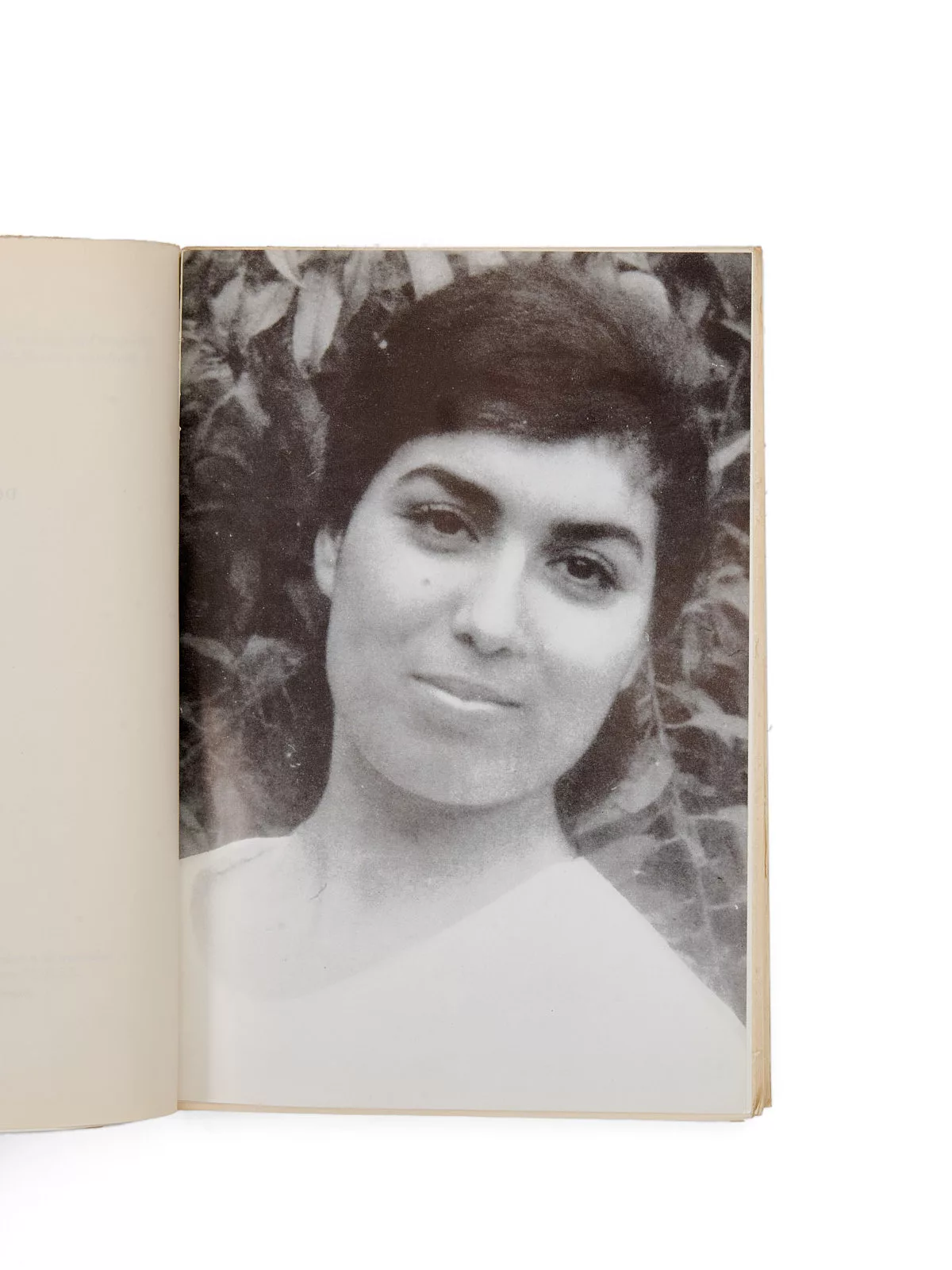
A document-book at the heart of the legal and moral battle waged during the final years of the Algerian War, it grew out of the collaboration between Gisèle Halimi and Simone de Beauvoir around the case of Djamila Boupacha, a 22-year-old typist and FLN militant, arrested during the night of 10–11 February 1960 and charged over a device planted in September 1959 at the Brasserie de la Faculté in Algiers (a bomb that was found and defused, causing no casualties). Between her arrest and her appearance before a judge (15 March), Djamila was tortured and raped at the Hussein Dey center, extracting a “confession.” Halimi, a member of the Paris bar, took on her defense in May 1960 (first meeting at Barberousse prison, 17 May 1960) and built a public strategy: establishing the abuse she had suffered (electric shocks, burns, rape used as an instrument of torture) in order to have the confession revoked, avoid the death penalty and prosecute those responsible. She won the support of Simone de Beauvoir, who published the essay “Pour Djamila Boupacha” in Le Monde on 2 June 1960, which triggered the formation of a support committee including Jean-Paul Sartre, Louis Aragon, Elsa Triolet, Gabriel Marcel, Geneviève de Gaulle, Aimé Césaire and Germaine Tillion. The campaign secured decisions that were then exceptional: the case was removed from the Algiers military tribunal in favor of the Caen public prosecutor’s office, and the prisoner was transferred to France.
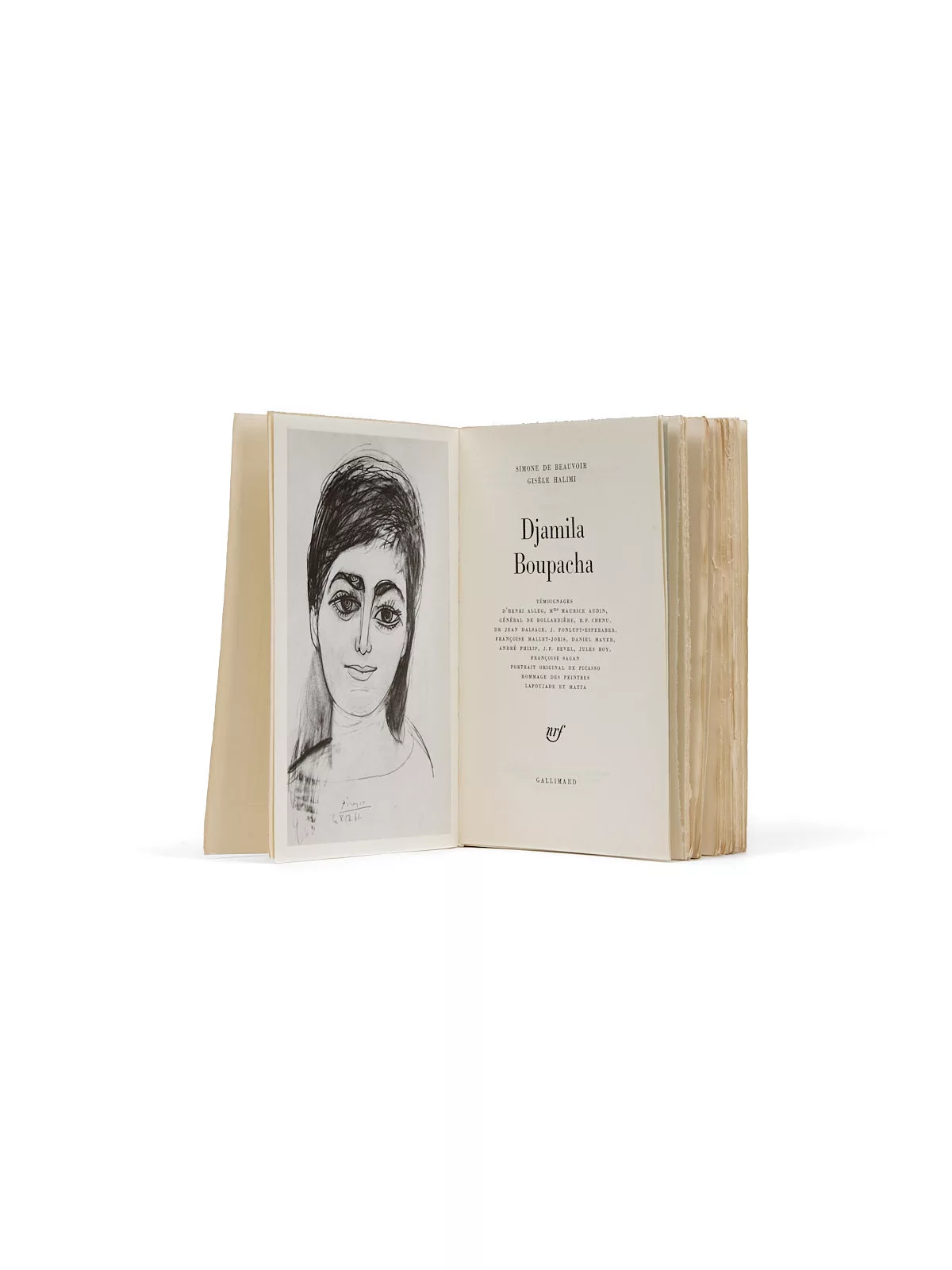
The book, published in February 1962, brings together the accounts by Beauvoir and Halimi, supplemented with documents and testimonies (Henri Alleg, Mme Maurice Audin, General de Bollardière, Fr. Chenu, Dr. Jean Dalsace, J. Fonlupt-Esperaber, Françoise Mallet-Joris, Daniel Mayer, André Philip, J.-F. Revel, Jules Roy, Françoise Sagan). The book opens with a charcoal portrait of Djamila drawn by Picasso in December 1961, commissioned by Halimi from a photograph, which became the volume’s frontispiece.
Three months later, following the Évian Accords, Djamila Boupacha was released on 24 May 1962, without ever having been brought to trial.
A pivotal text against torture.