

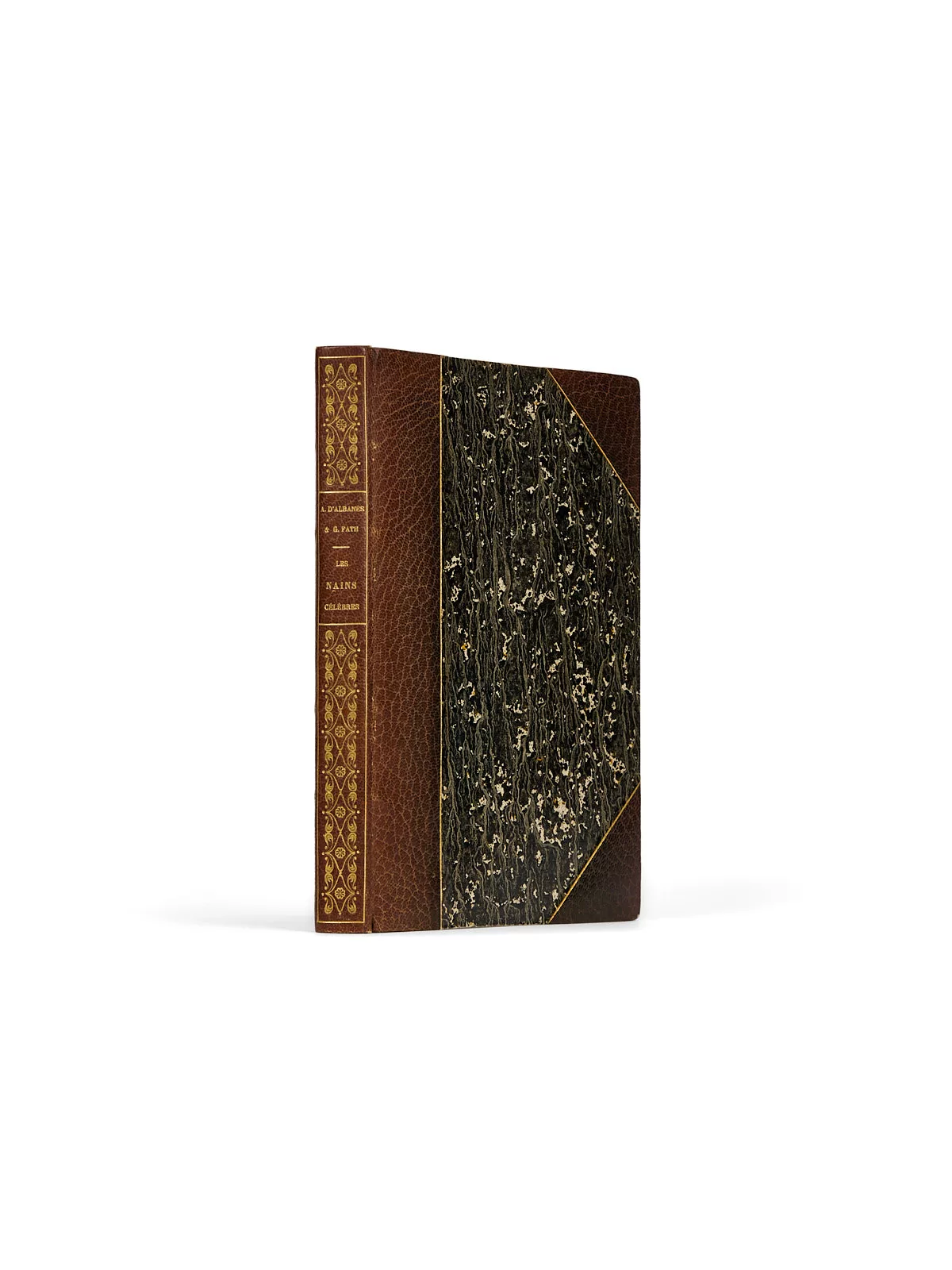
Les Nains célèbres
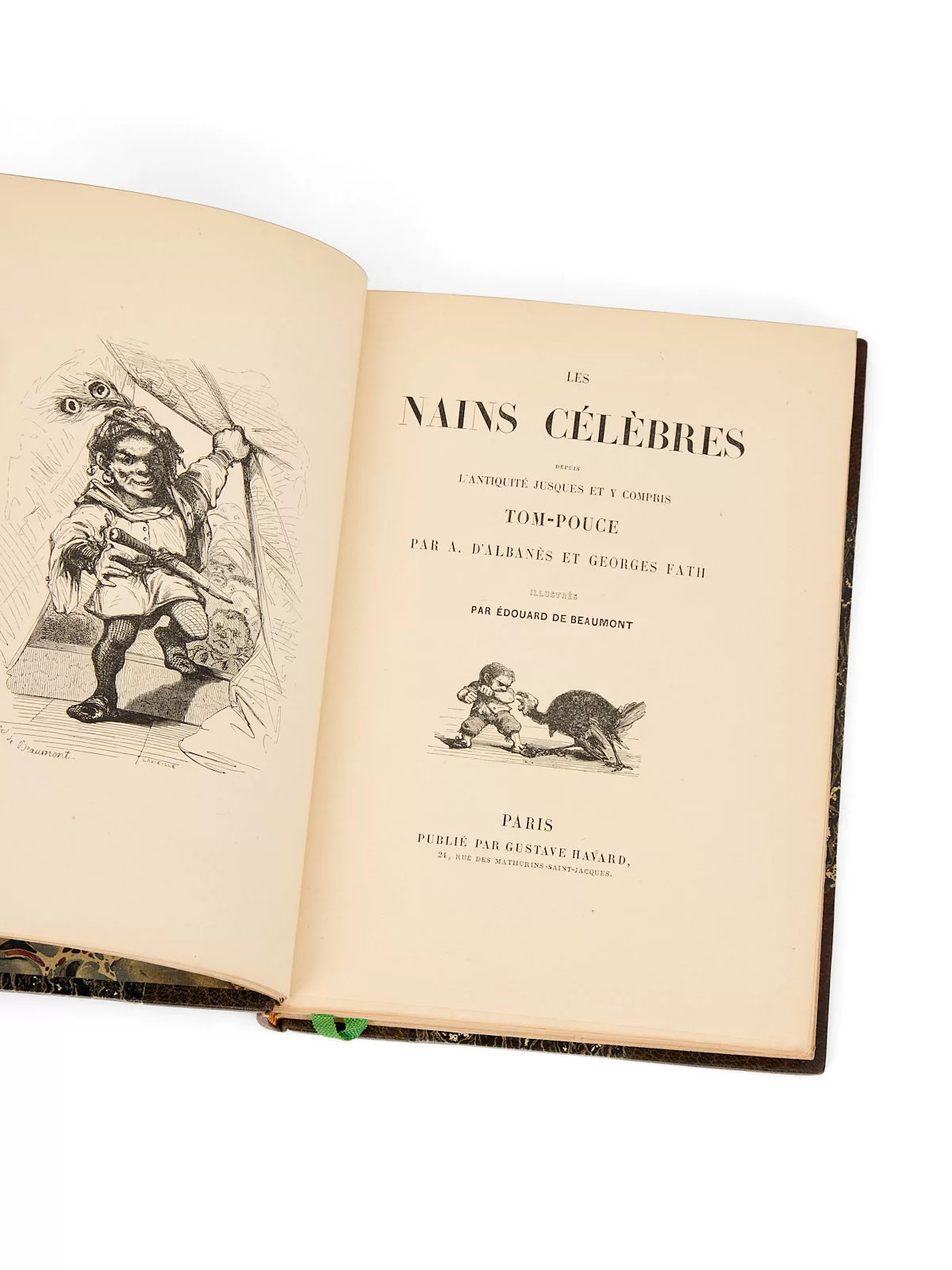
A frontispiece and 100 vignettes engraved on wood by Laveille after drawings by Édouard de Beaumont.
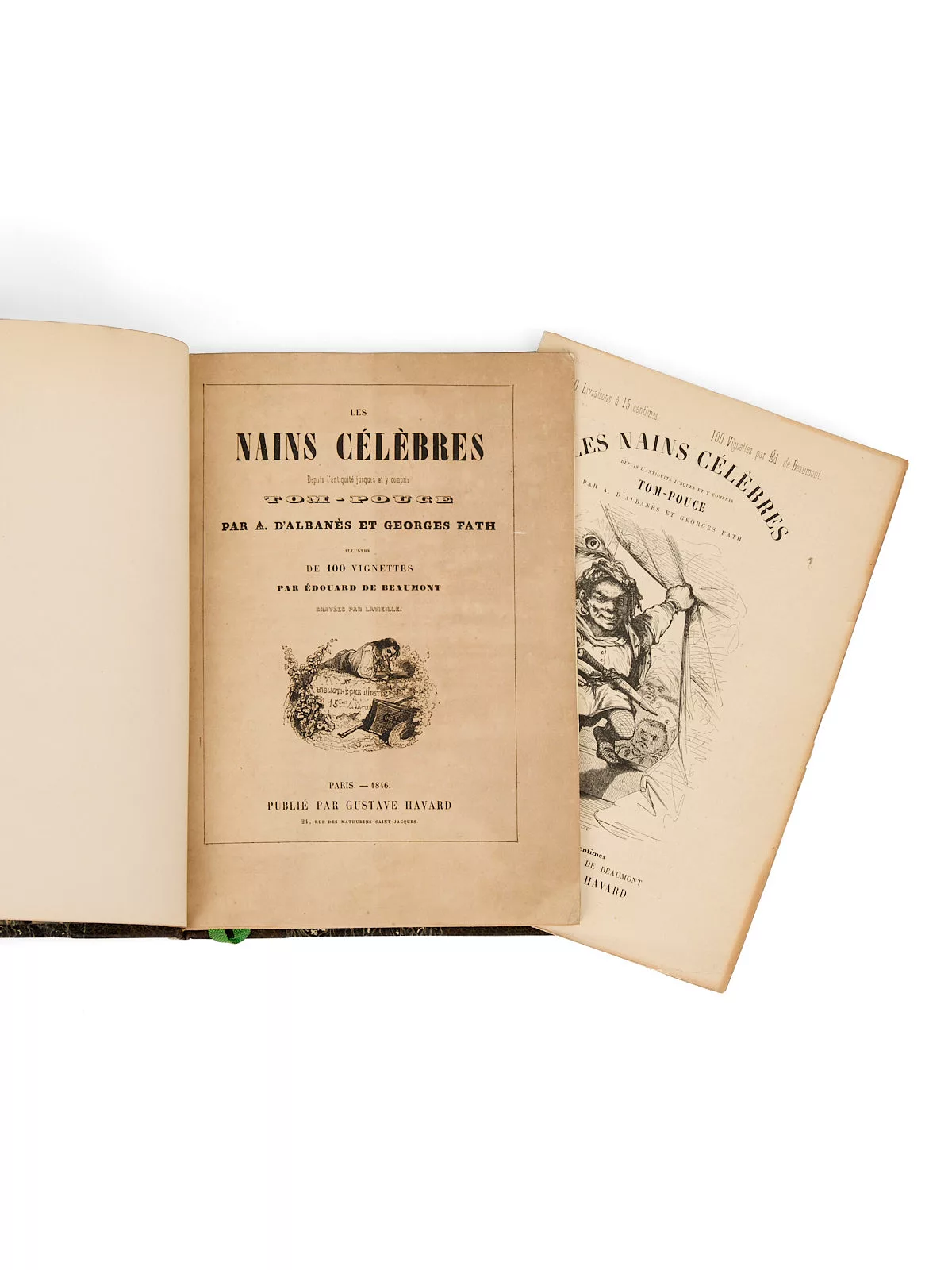
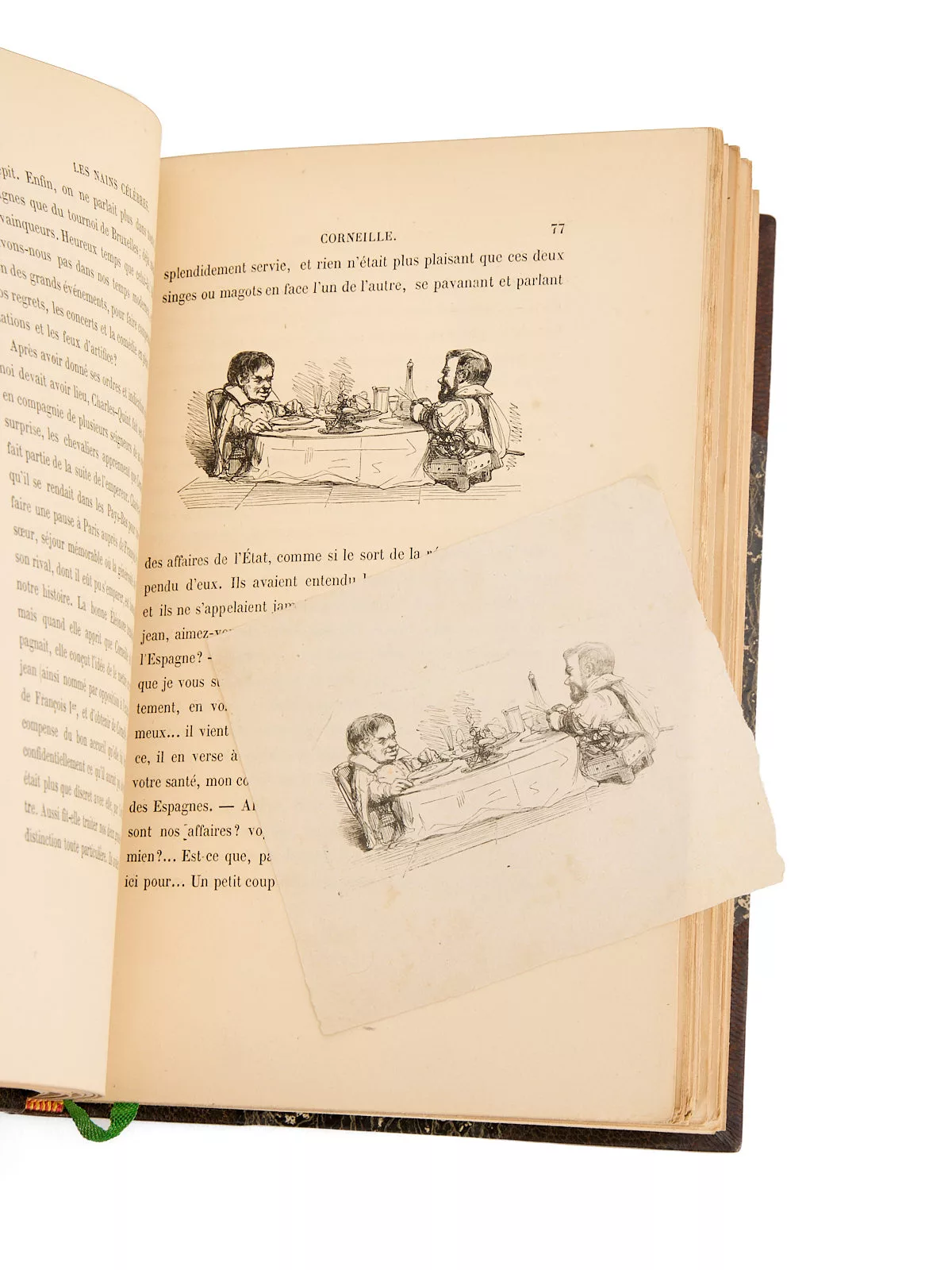
A fine copy enriched with the publisher's prospectus and 18 fumés of the illustrations.
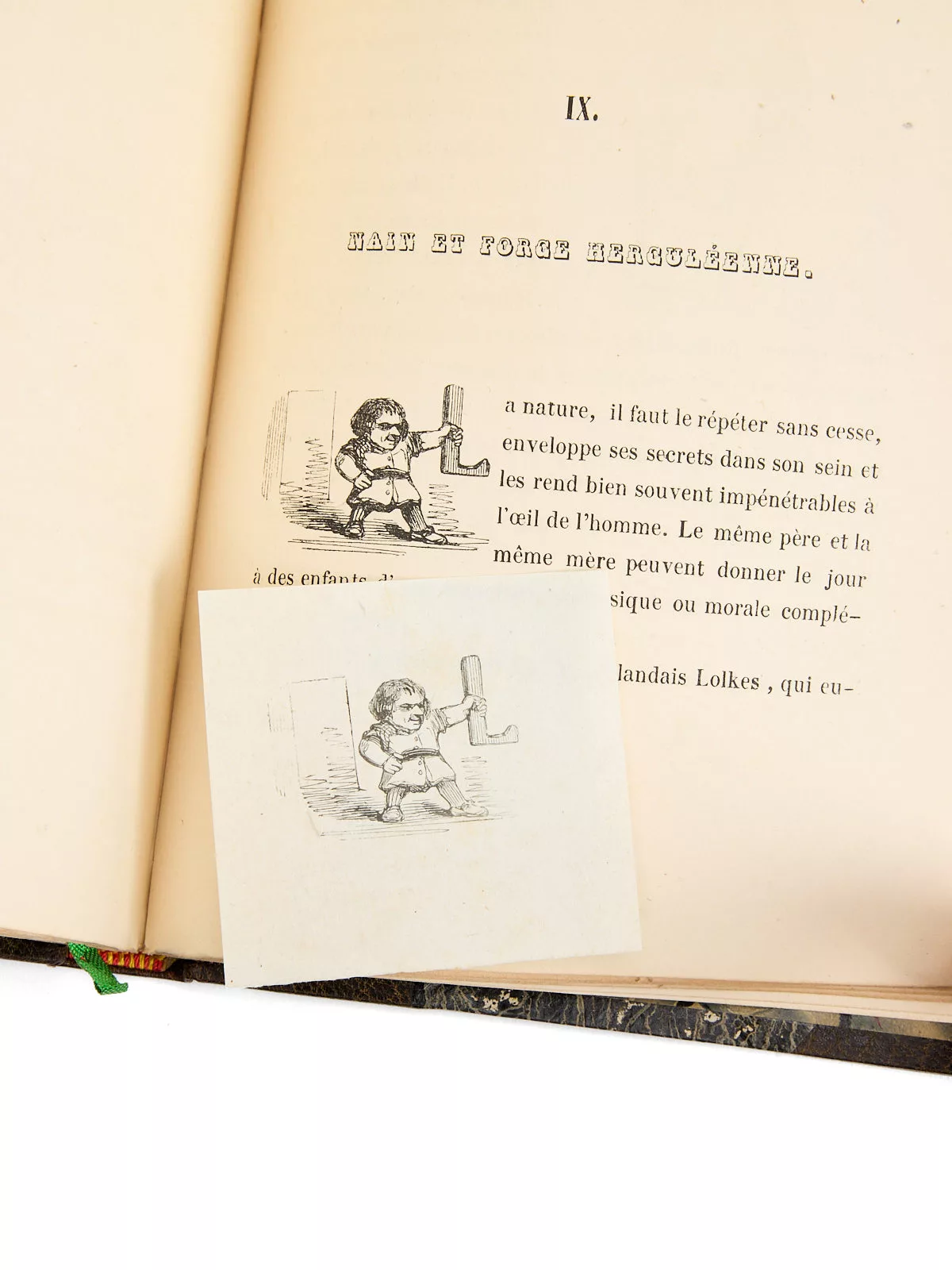
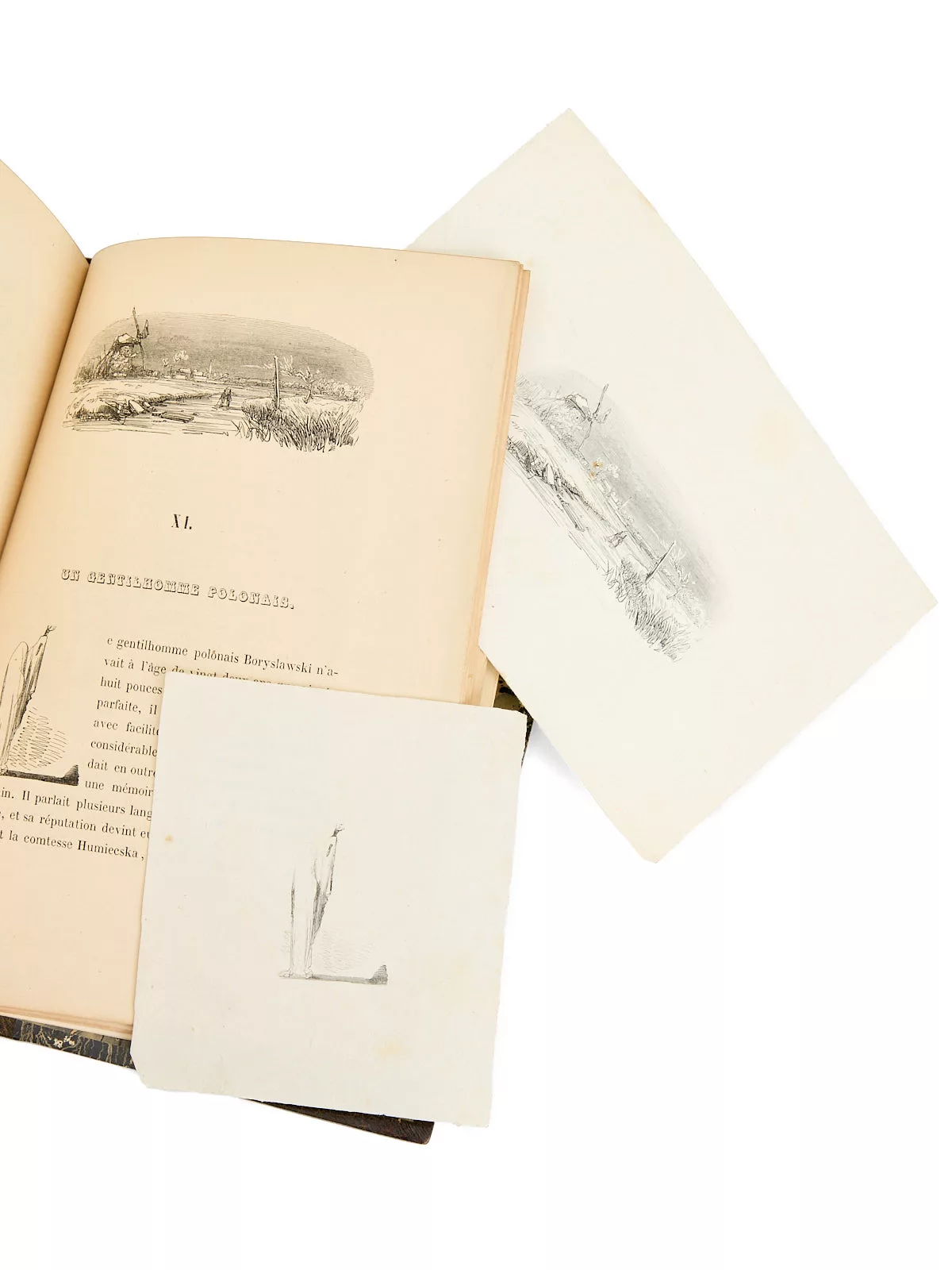
This curious gallery brings together figures of small stature remembered by history, chronicle or spectacle, from Antiquity to the contemporary phenomenon of General Tom Thumb. Among those featured are Philetas of Cos, the Greek poet and grammarian traditionally said to have been so thin that he had to weigh down his shoes with lead, Jeffrey Hudson, favorite of Queen Henrietta Maria of England, and Charles Stratton, famous as Tom Thumb.
The work is by Jean-Alexandre Havard, who wrote under the pseudonym A. d’Albanès, and by Georges Fath, playwright, storyteller and future author of numerous books for children. Havard was the brother of Gustave Havard, the publisher of the volume — a family collaboration that no doubt explains the care taken over the production.
The figure of Tom Thumb gives the book its immediate topicality. Discovered as a child by Phineas Taylor Barnum, Charles Stratton had been transformed by the American showman into a stage prodigy. His European tour, begun in 1844, was a triumph: presented to Queen Victoria and then received in France by Louis-Philippe, he became an international celebrity within a few months.
The text mixes biography, legend, court anecdote and sometimes fantastical narrative, without always distinguishing documentary fact from accumulated tradition, complemented by abundant illustration by Édouard de Beaumont, which contributes greatly to the charm of the volume.
A painter, draftsman and lithographer who worked for the illustrated press, Beaumont excelled at historical scenes and picturesque figures. His drawings, engraved on wood by Laveille, give each character his own setting, costume and physiognomy.
The copy is of particular bibliophilic interest: the publisher’s prospectus documents the sale and promotion of the work, while the 18 fumés preserve a separate state of several engravings, printed with heavily loaded ink to bring out the woodcut work. These proofs, rarely preserved with the volume, allow a more direct appreciation of the vigor of Beaumont’s line and the detail of his compositions.
Spine slightly faded.
Osterwalder 103; Carteret III, 93; Sander 5; Vicaire I, 24.