

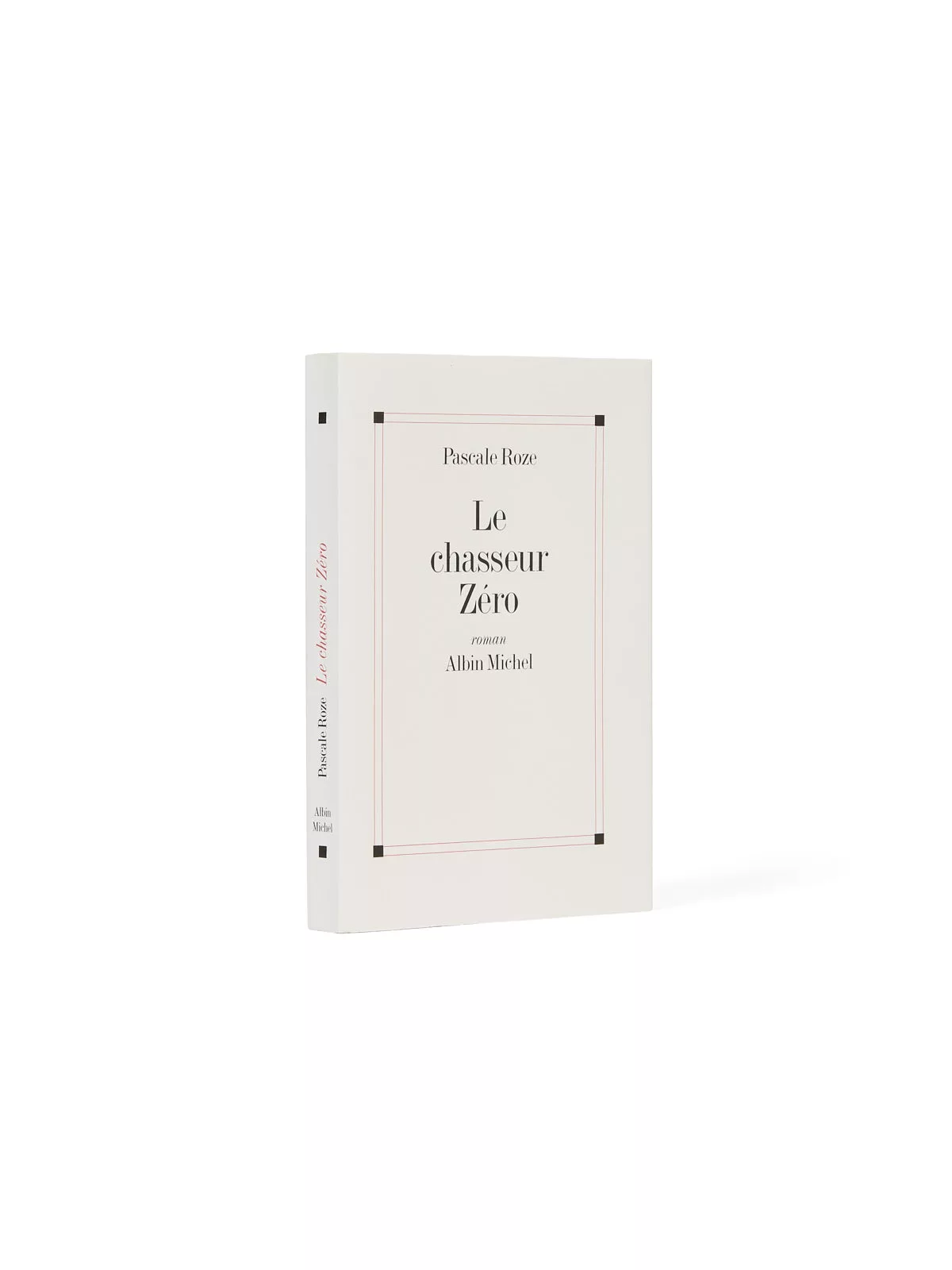
Le Chasseur Zéro
One of 20 copies on white Holland Van Gelder laid paper, after 10 numbered copies on Marais paper reserved for members of the Académie Goncourt, this copy no. 13.
The 1996 Prix Goncourt was a surprise. It crowned a first novel, written by Pascale Roze, then unknown — a choice praised for its independence but hotly debated in literary circles, no less than around the table at Drouant: François Nourrissier, in his first year as president of the Académie Goncourt, cast his deciding double vote on the third ballot, against Eduardo Manet’s Rhapsodie cubaine.
A novel of obsession, Le Chasseur Zéro opens on a traumatic memory: the roar of a kamikaze plane, a Mitsubishi Zero, crashing in April 1945 onto the aircraft carrier Maryland off Okinawa. The heroine’s father dies in the attack, and this dull, ghostly sound haunts his daughter for the rest of her life, leaving an invisible mark on the generations that follow.
On publication, the novel went largely unnoticed: on 11 November, Pascale Roze herself confided to Claude Cherki, CEO of Albin Michel, her distress after the Brive book fair, where over three days she had signed only four copies of her book, while Cavanna, seated next to her, signed continuously. The following day, the Goncourt changed her fate. It marked the end of years of struggle, during which her manuscripts had been rejected and she had lived alternately on unemployment benefits for performing artists and on her work as an actress. Le Chasseur Zéro went on to enjoy a meteoric success, with more than 300,000 copies sold following the prize — a sudden recognition and an abrupt passage from obscurity into the light.
With Le Chasseur Zéro, Albin Michel won its second Goncourt in three years, after Didier Van Cauwelaert’s Un aller simple (1994). This victory confirmed the house’s standing, often regarded as more attuned to popular authors than to literary prizes.