

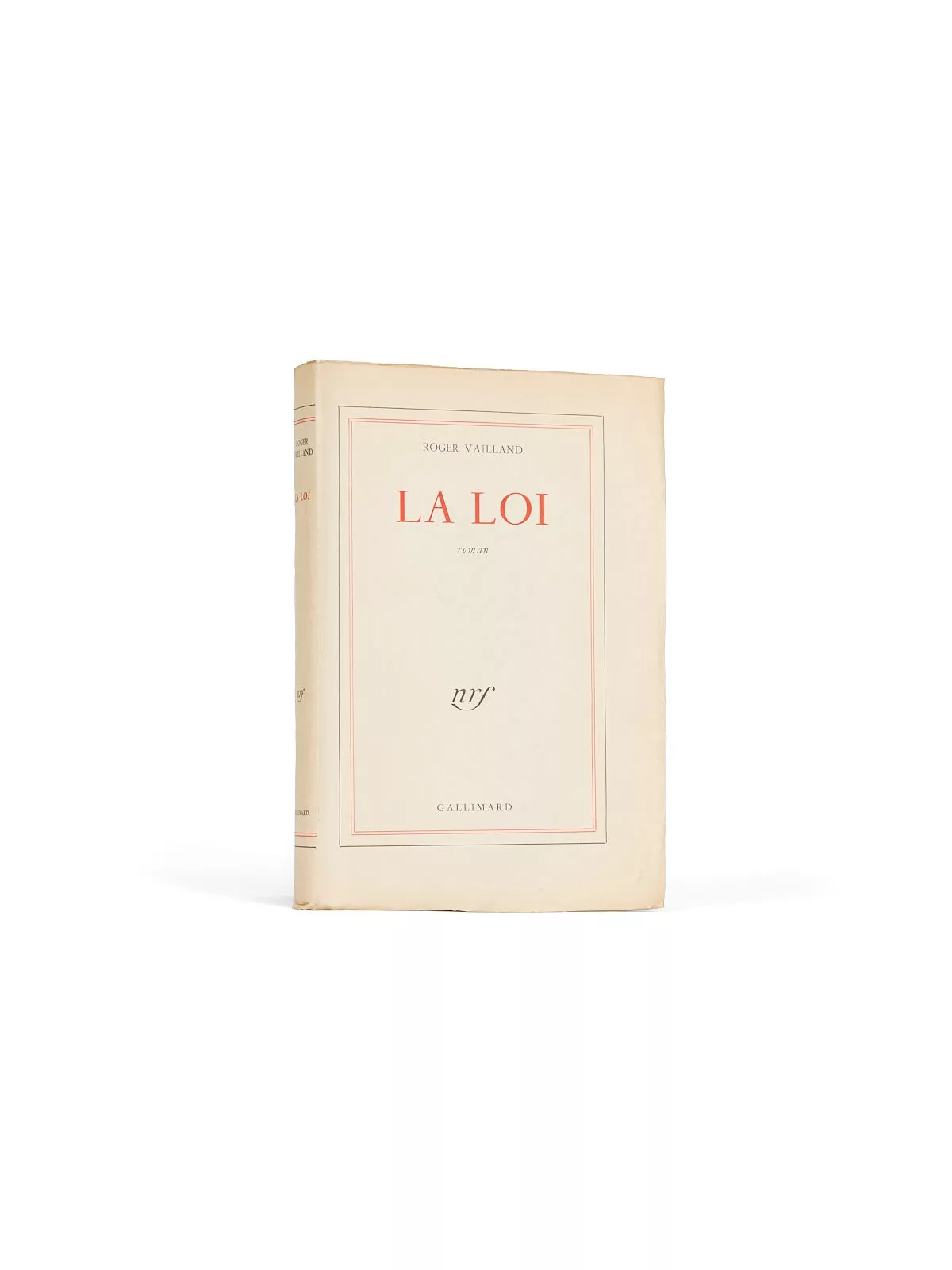
La Loi
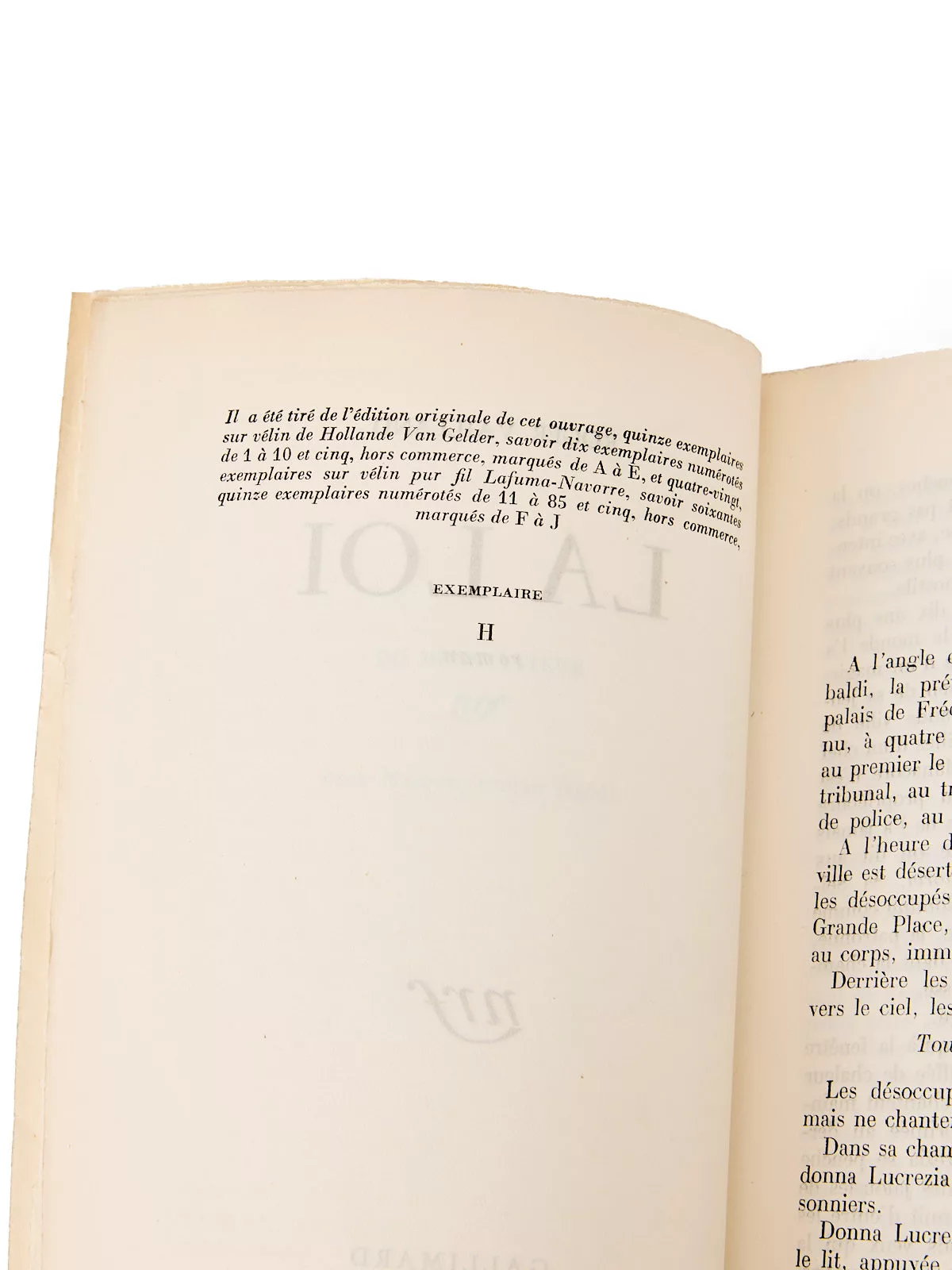
One of 80 copies on vélin pur fil, this copy among the 5 hors commerce copies (H).
With La Loi, Roger Vailland (1907–1965) turns his sharp eye on the mechanics of domination in a small town in southern Italy. Through its depiction of rivalries, clan struggles, and strategies of alliance and seduction, the novel becomes a parable on the workings of power and social hierarchy. The Académie Goncourt awarded La Loi the prize on the second ballot, by six votes to four over Michel Butor’s La Modification, favoring a realist, political novel over the avant-garde of the Nouveau Roman.
A graduate of the École Normale Supérieure with a degree in philosophy, a companion of the Surrealists and co-founder of the review Le Grand Jeu, Vailland had already made his mark on the postwar period with Drôle de jeu (Prix Interallié, 1945), a novel drawn from his experience as a Resistance fighter specializing in sabotage. An engaged intellectual, he lived through the contradictions of his era: a fervent Communist, he was shaken by the revelation of Stalin’s crimes at the Khrushchev report in 1956. In his journal he wrote: “I wept the day Stalin died. And I wept again on the road to Moscow […] when I had to kill him a second time, after reading the account of his crimes.”
Vailland remains a complex figure, closely watched by the Renseignements généraux — a 1952 report described him as “an alcoholic, intoxicated by the use of narcotics” — yet celebrated by critics as one of the most lucid observers of the political and social passions of his time.