

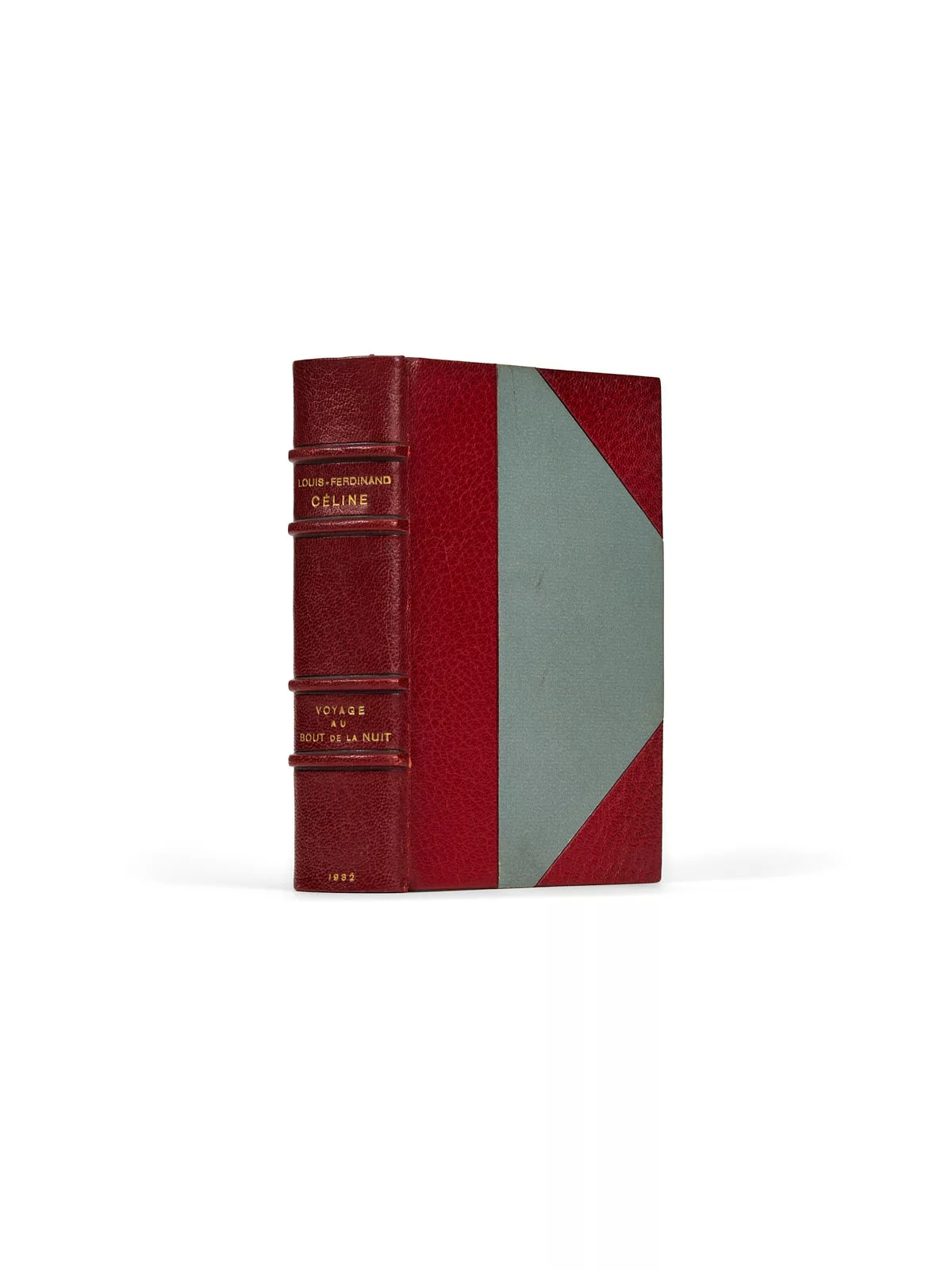
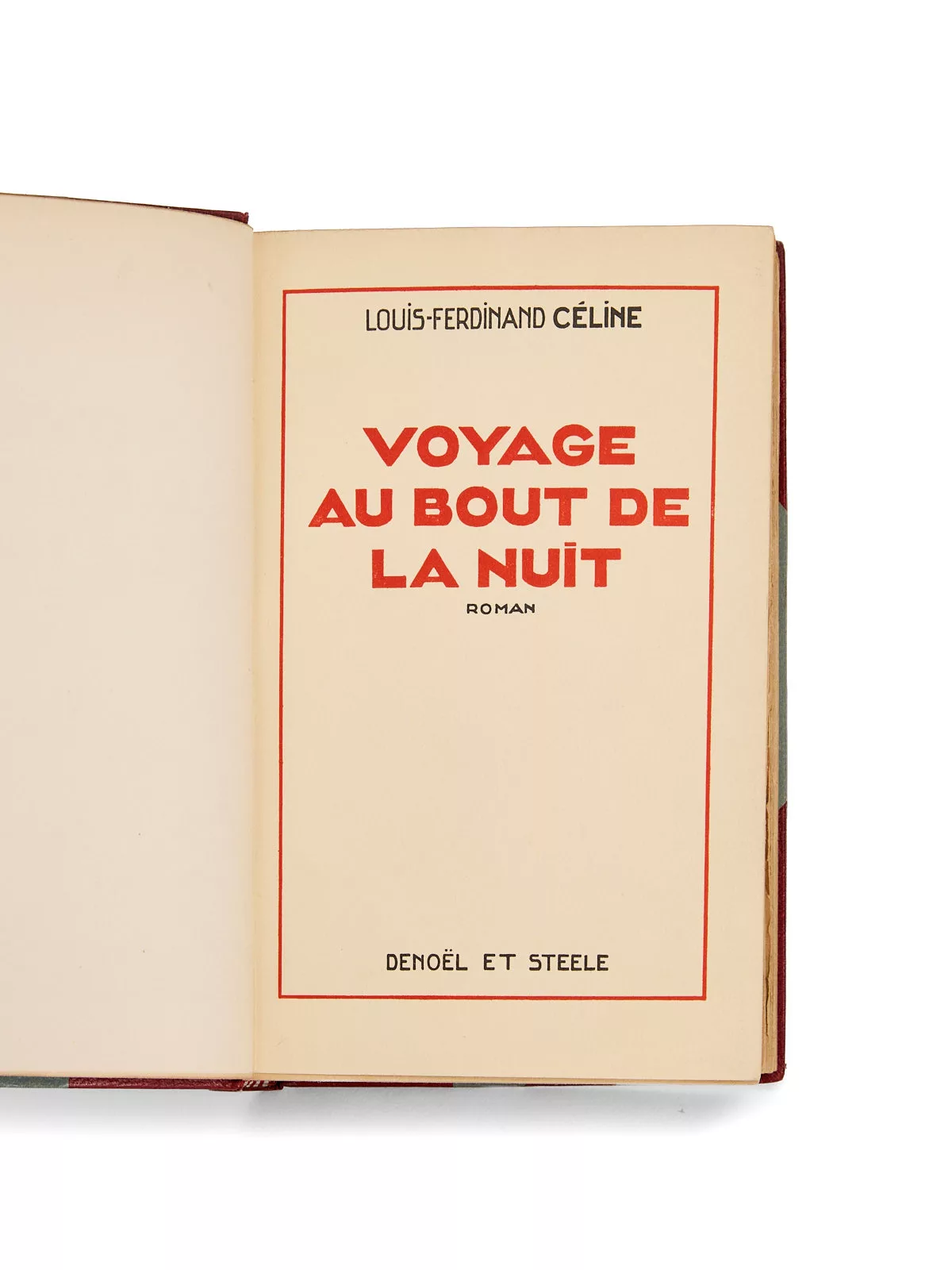
Voyage au bout de la nuit
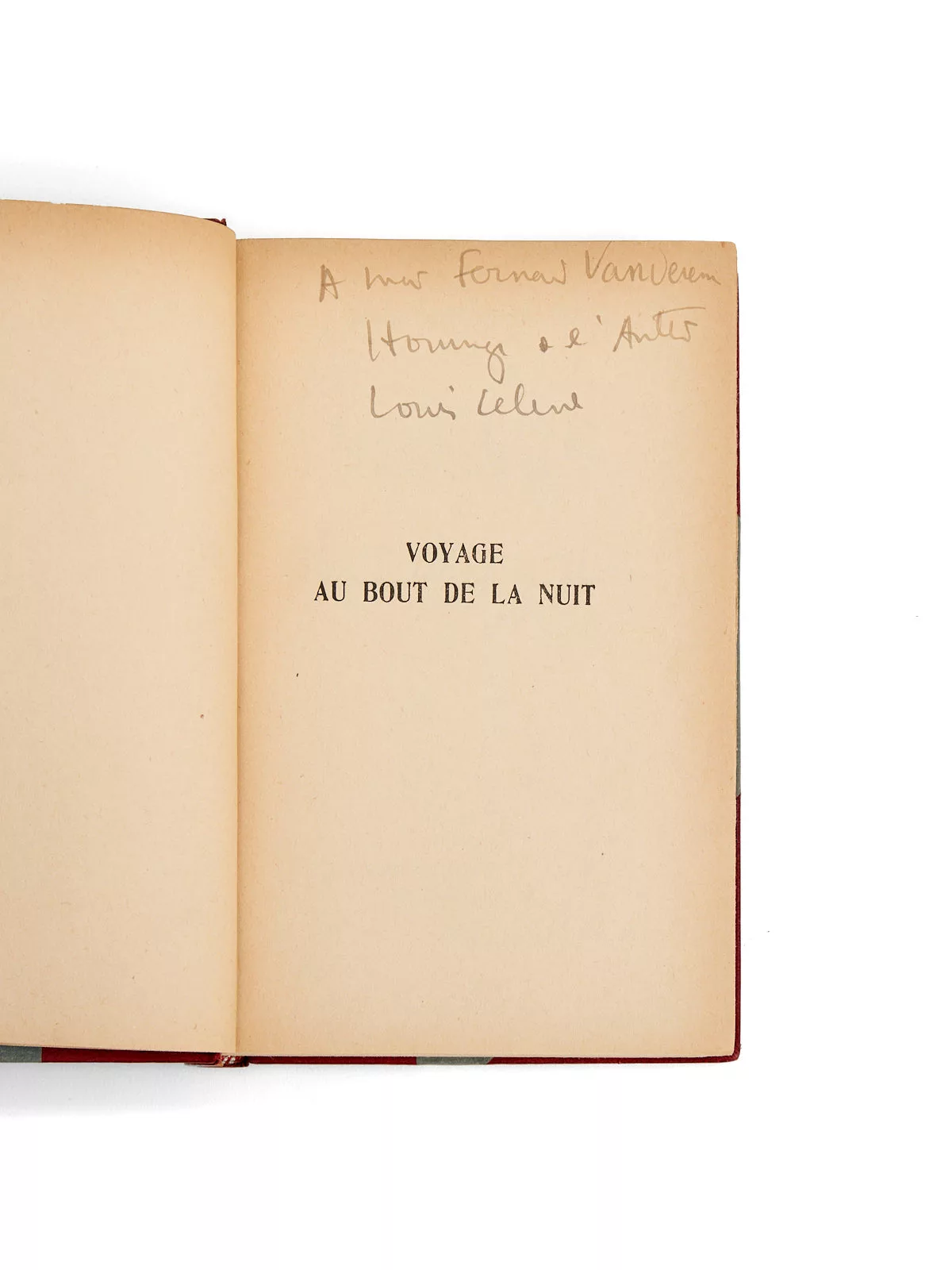
Presentation copy inscribed by Céline: “À mon cher Fernand Vanderem, Hommage de l’auteur, Louis Céline.”
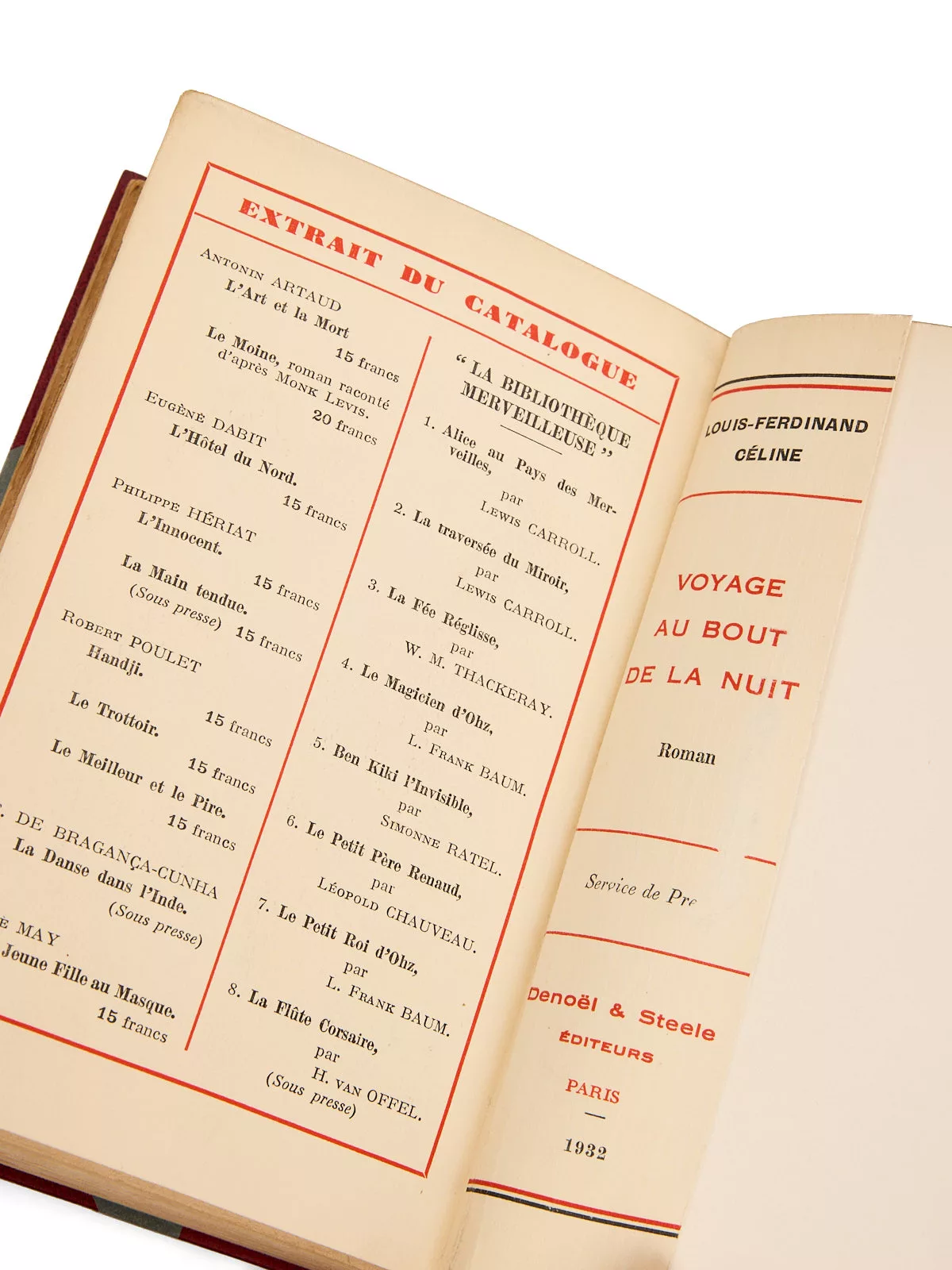
Special issues of Voyage au bout de la nuit are among the most sought-after in twentieth-century French literature: 20 deluxe copies on Arches laid paper are known, along with a less certain number of copies on alfa paper, around 150, and 200 press copies, each bearing a special notice printed on the back cover.
According to the archives of the Grande Imprimerie de Troyes, these 200 press copies were in fact the very first to be printed, on 12 October 1932. The alfa and Arches copies followed on 15 October, and the ordinary copies from 16 October through November.
Even before its commercial success, critics had already reacted to this “book of genius but criminal,” in Paul Valéry’s words. The affair of the Prix Goncourt cemented the legend of the Voyage. A few weeks earlier, in the week preceding the vote, Céline had unofficially secured the prize with six votes, thanks to the decisive support of the president, Rosny aîné. Yet on 7 December, the Goncourt was awarded on the first ballot to Guy Mazeline, author of Les Loups, by six votes (Roland Dorgelès, Léon Hennique, Pol Neveux, Raoul Ponchon, Rosny jeune and Gaston Chérau) against three for Céline (Alphonse Daudet, Lucien Descaves and Jean Ajalbert). The Rosny brothers and Dorgelès had changed their votes, probably under pressure from Gaston Gallimard.
Bernanos took it in stride: “M. Céline missed the Prix Goncourt. So much the better for him. We will never again see — thank God! — M. Céline crowned by M. Gaston Chérau, a provincial Maupassant.”
Still, it was a snub, and a bitter disappointment for Denoël and above all for Céline, only partly soothed by the Prix Renaudot. Far from weakening the book, the defeat only increased its fame: the loser of the Goncourt soon eclipsed the winner in literary memory. Within two months, some five thousand articles were devoted to it, 50,000 copies of the Voyage sold out, the publisher placed orders with three printing houses to meet demand, fourteen countries purchased translation rights, and booksellers’ clerks queued on the Rue Amélie. As Pierre Assouline notes, Les Loups sold 100,000 copies in three months, while Voyage au bout de la nuit sold 112,000 (Gaston Gallimard, p. 220).
A precious copy from the library of Fernand Vandérem: writer, critic, bibliophile and a major figure of the book world, he was also the director and a principal contributor of the Bulletin du bibliophile, author of the columns collected as “La Bibliophilie nouvelle.” His library, particularly rich in nineteenth-century first editions, was dispersed shortly after his death (Giraud-Badin, 1939 and 1940).
Provenance: Fernand Vandérem (signed presentation inscription; sale, Giraud-Badin, 1940, no. 789); Librairie Louis Conard (purchased at); private collection.
En français dans le texte, 366; Dauphin & Fouché, 32A1.