

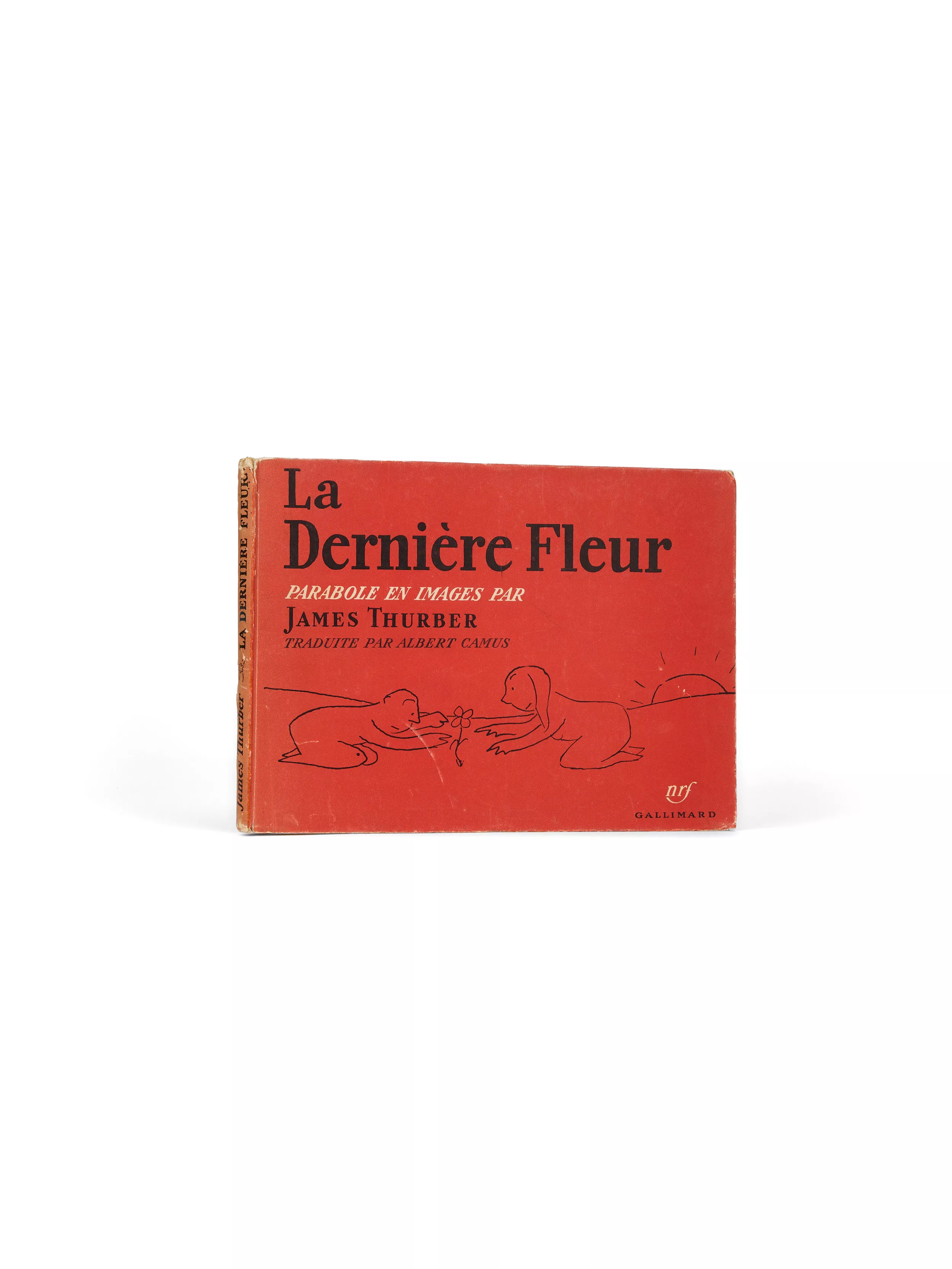
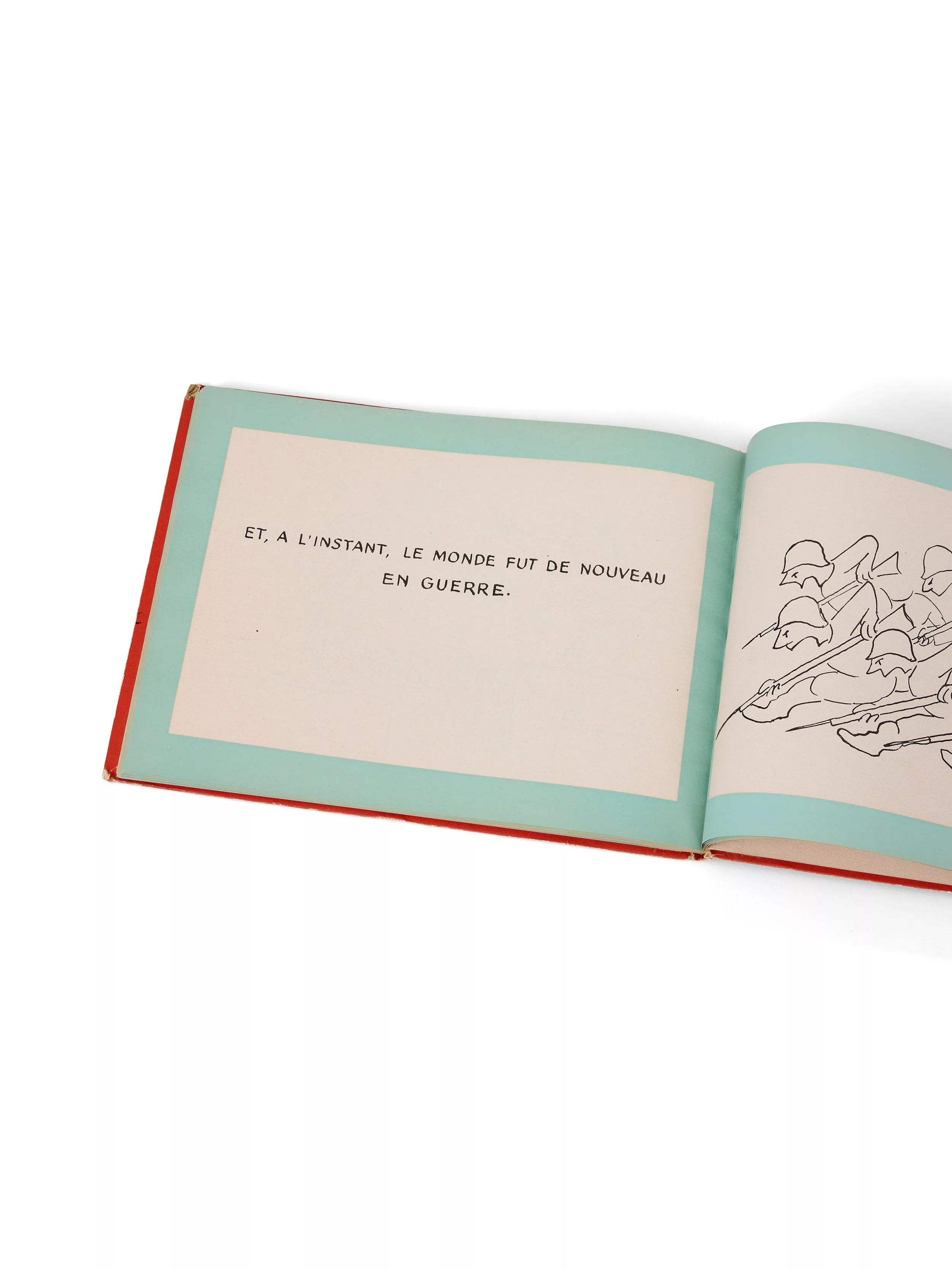
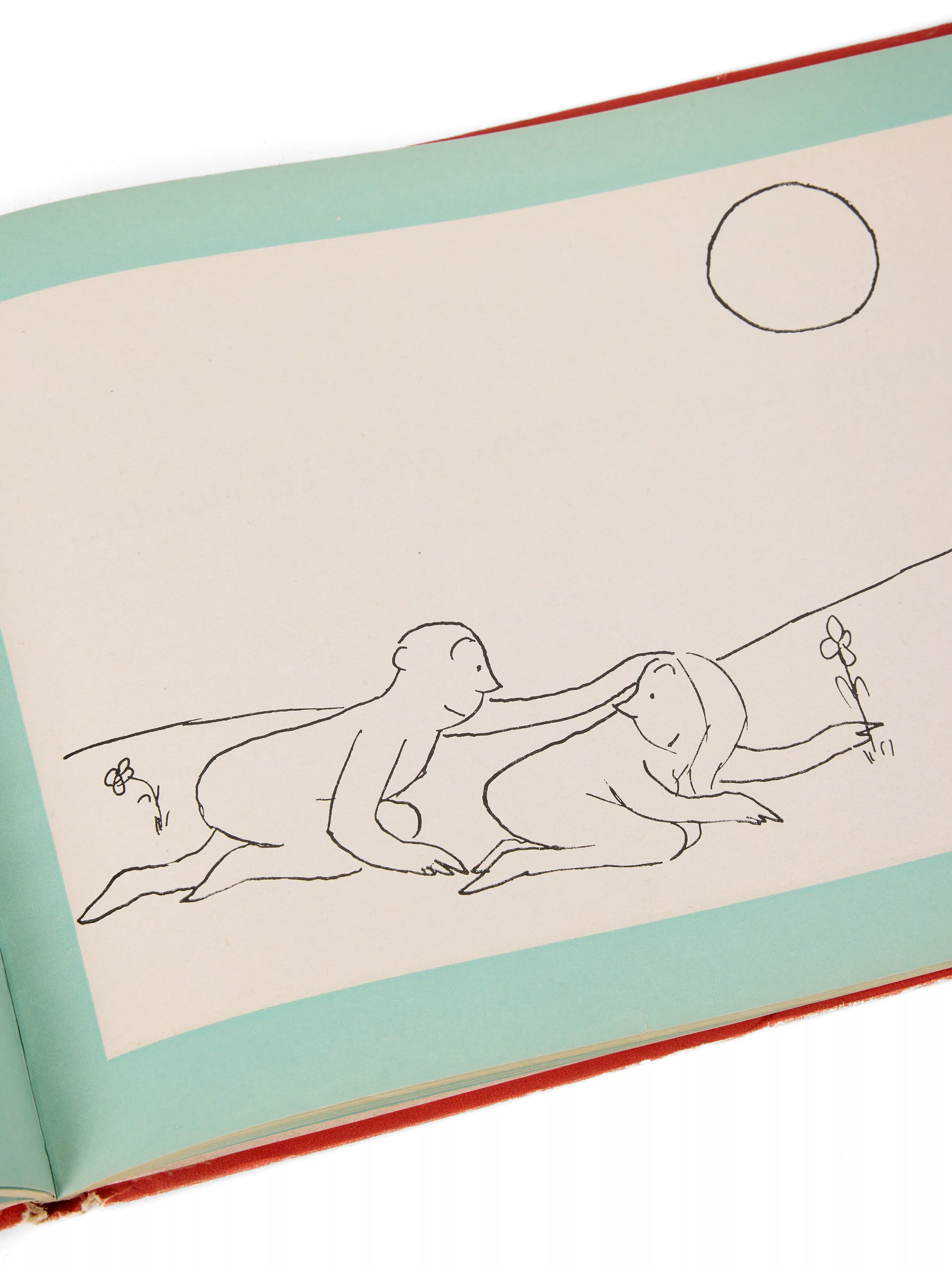
There is nothing surprising in the fact that Albert Camus translated The Last Flower by the American storyteller and cartoonist James Thurber. After the publication of L’Homme révolté (The Rebel) and the bitter polemic that followed with Jean-Paul Sartre, Camus was wounded, depressed and literarily sterile; transcribing was easier for him than writing. Moreover, the parable by the “Mark Twain of the twentieth century” illustrates human absurdity: builder and destroyer, Man inexorably ruins his own civilizing work through war, and Thurber’s delightful book offers a wonderful parable of this.
How could the author of Le Mythe de Sisyphe (The Myth of Sisyphus) have remained indifferent to this disabused, detached message? It echoes, moreover, his own article written at the time of the outbreak of the Second World War: “We know that at a certain extremity of despair, indifference arises, and with it the sense and taste for fatality. (…) So many efforts for peace, so many hopes placed in man, so many years of struggle have led to this collapse and this new carnage! (…) Perhaps this is indeed the furthest extreme of revolt: to lose one’s faith in the humanity of men. Perhaps after this war the trees will bloom again, since the world always ends up overcoming history. But on that day, I do not know how many men will be there to see it.” (Le Soir républicain, September 17, 1939).
A fine copy.