

Jeanne Robelin
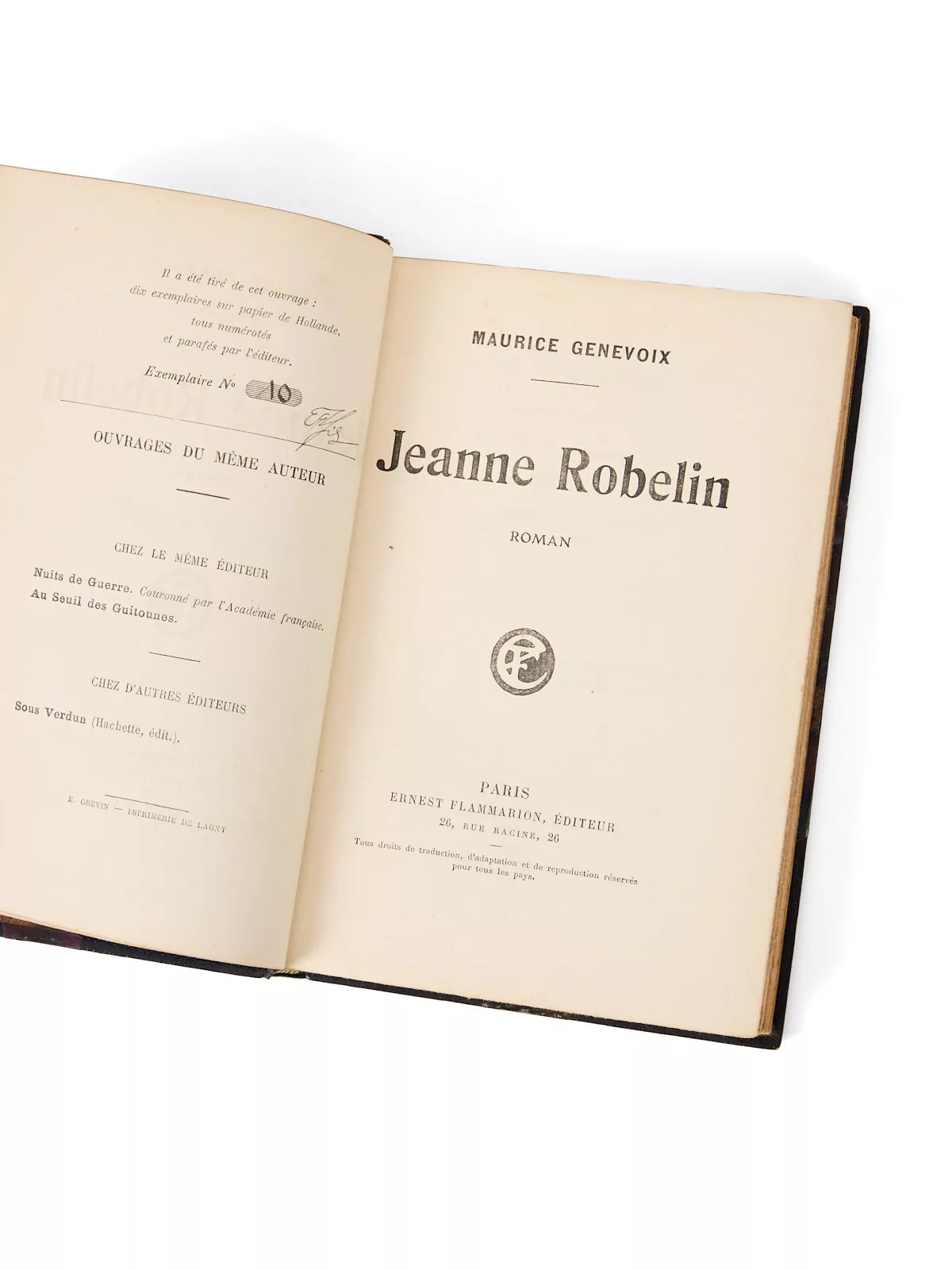
One of 10 copies on Hollande paper, numbered by the publisher (no. 10).
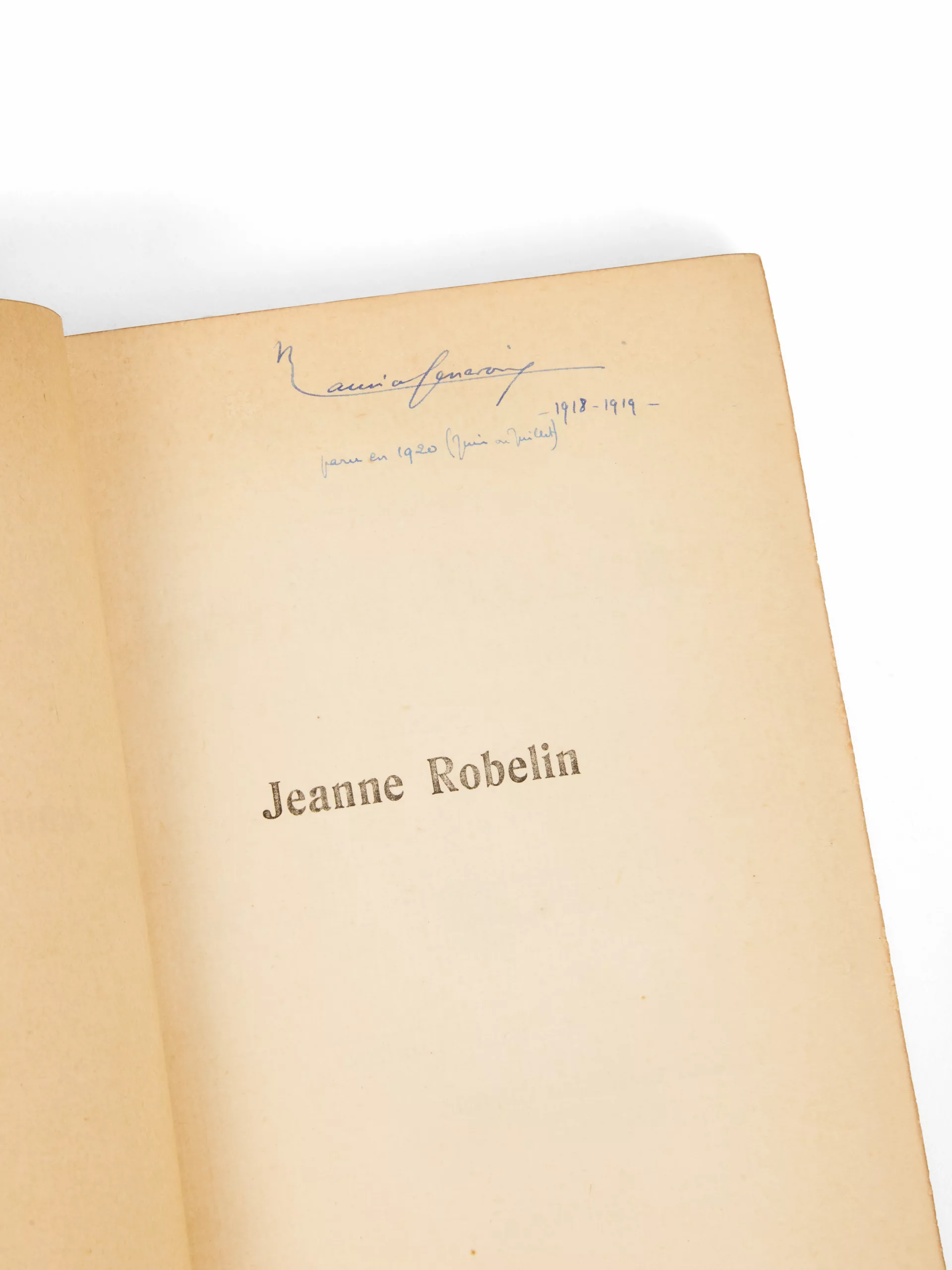
The author's own copy, bearing at the head a manuscript ownership inscription: “Maurice Genevoix, 1918-1919, paru en 1920 (juin ou juillet).”
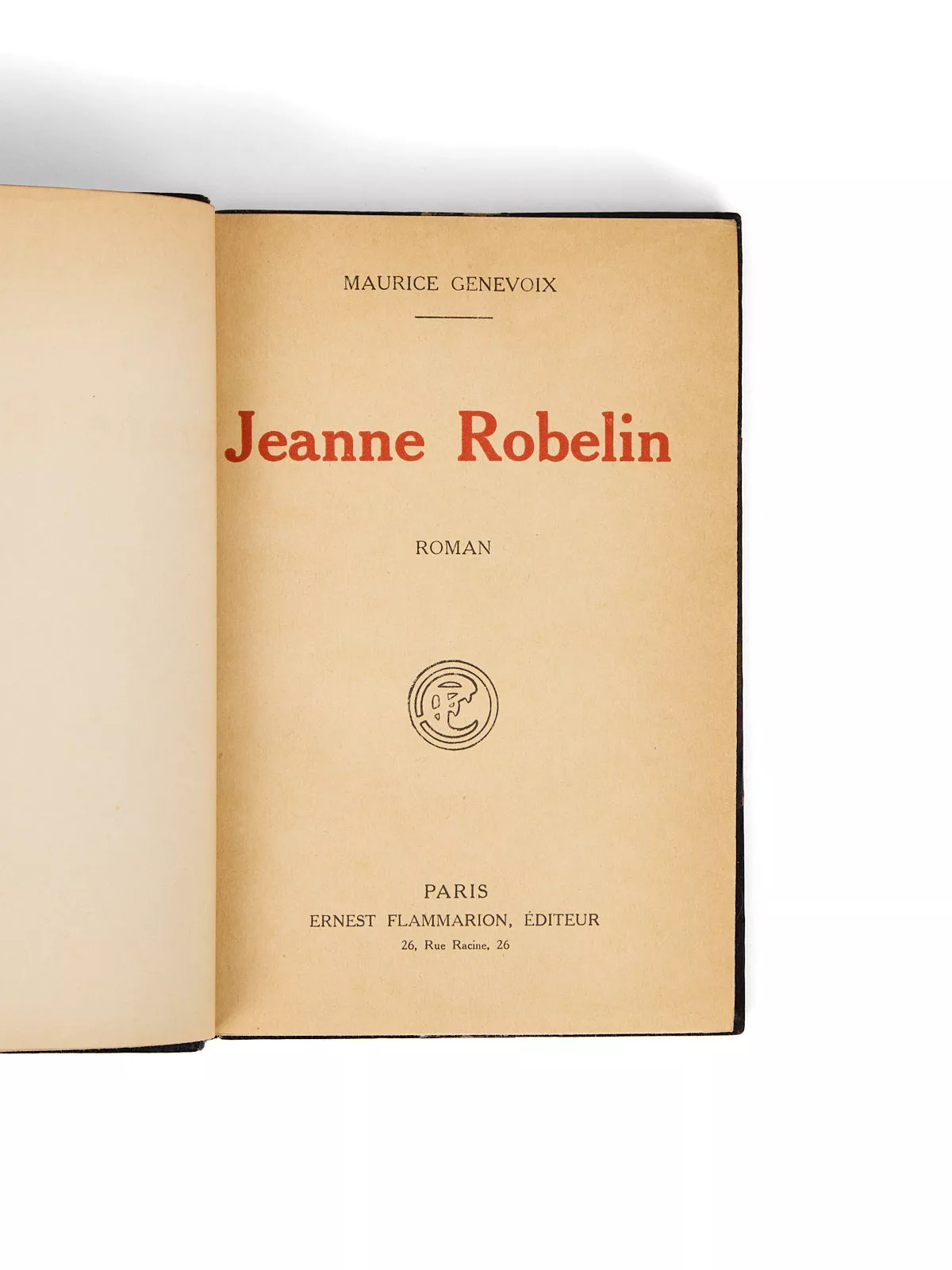
Jeanne Robelin was Maurice Genevoix’s first attempt at a novel: he portrays a young woman and, under the pretext of a love plot, depicts the life of civilians at the home front. He would return to this experience ten years later in H.O.E.
This first novel is not itself a direct account of what Genevoix had lived through at the front, which he had already related in Sous Verdun (1916), Nuits de guerre (1917) and Au Seuil des Guitounes (1918), and while he was preparing the fourth of his five war narratives, La Boue. Genevoix later confided in an interview: “One does not live through such an experience without leaving much of oneself behind. The mind is traumatized and one feels the need to tell, to share. It went on for a long time, and then one day I wrote Jeanne Robelin. It was no longer the war, since the action took place at the rear. Then came Rémi des Rauches, a novel from which the war was at last absent. I was delivered.”
Before this first “true” novel of deliverance, Genevoix would complete his pentalogy with La Boue in 1921 and Les Éparges in 1923.
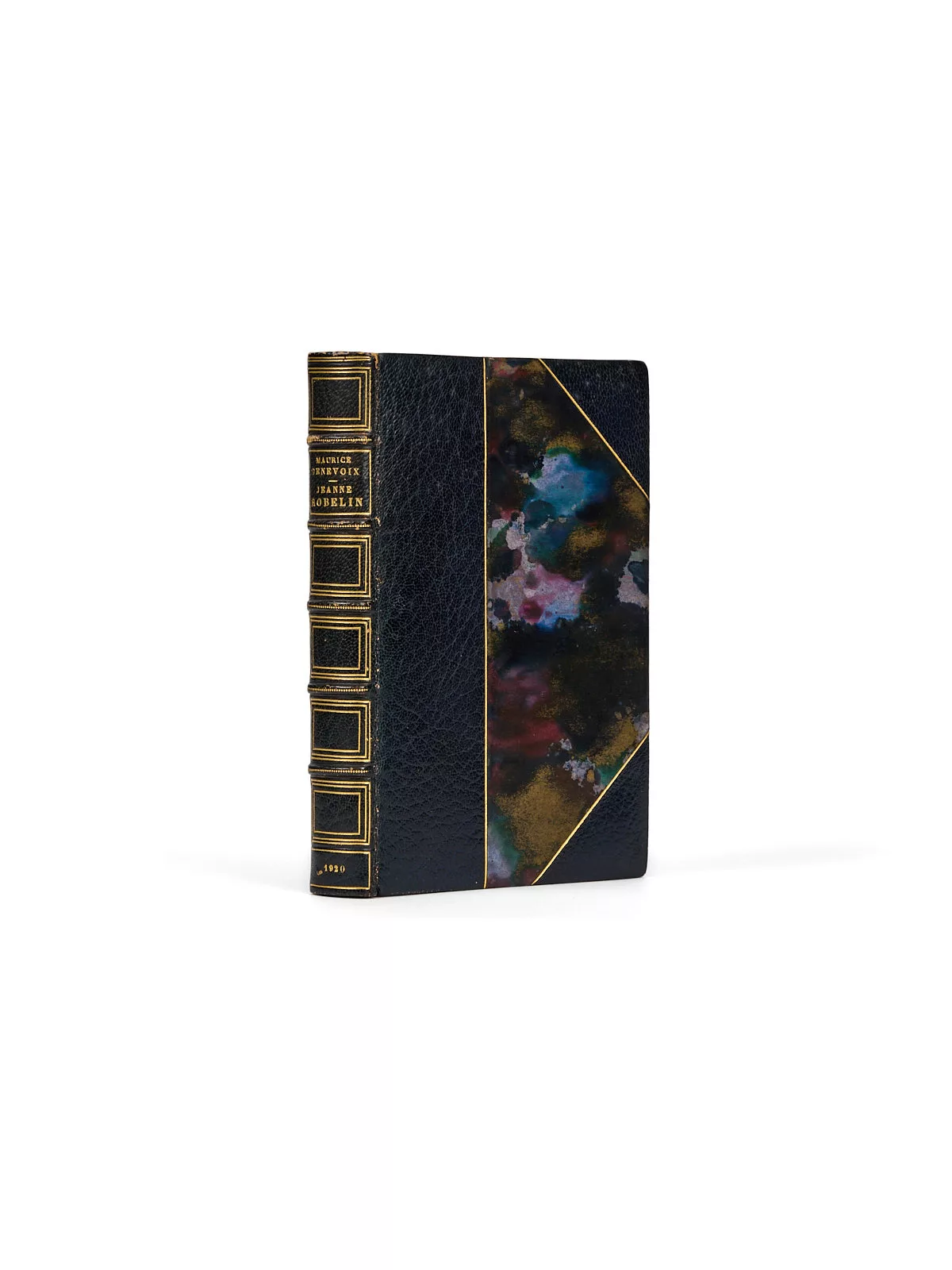
A precious copy, bound in half blue morocco with corners, like a large part of the copies — often on fine papers — preserved in his own library.
From the library of Maurice Genevoix, at “Les Vernelles,” with bookplate.