

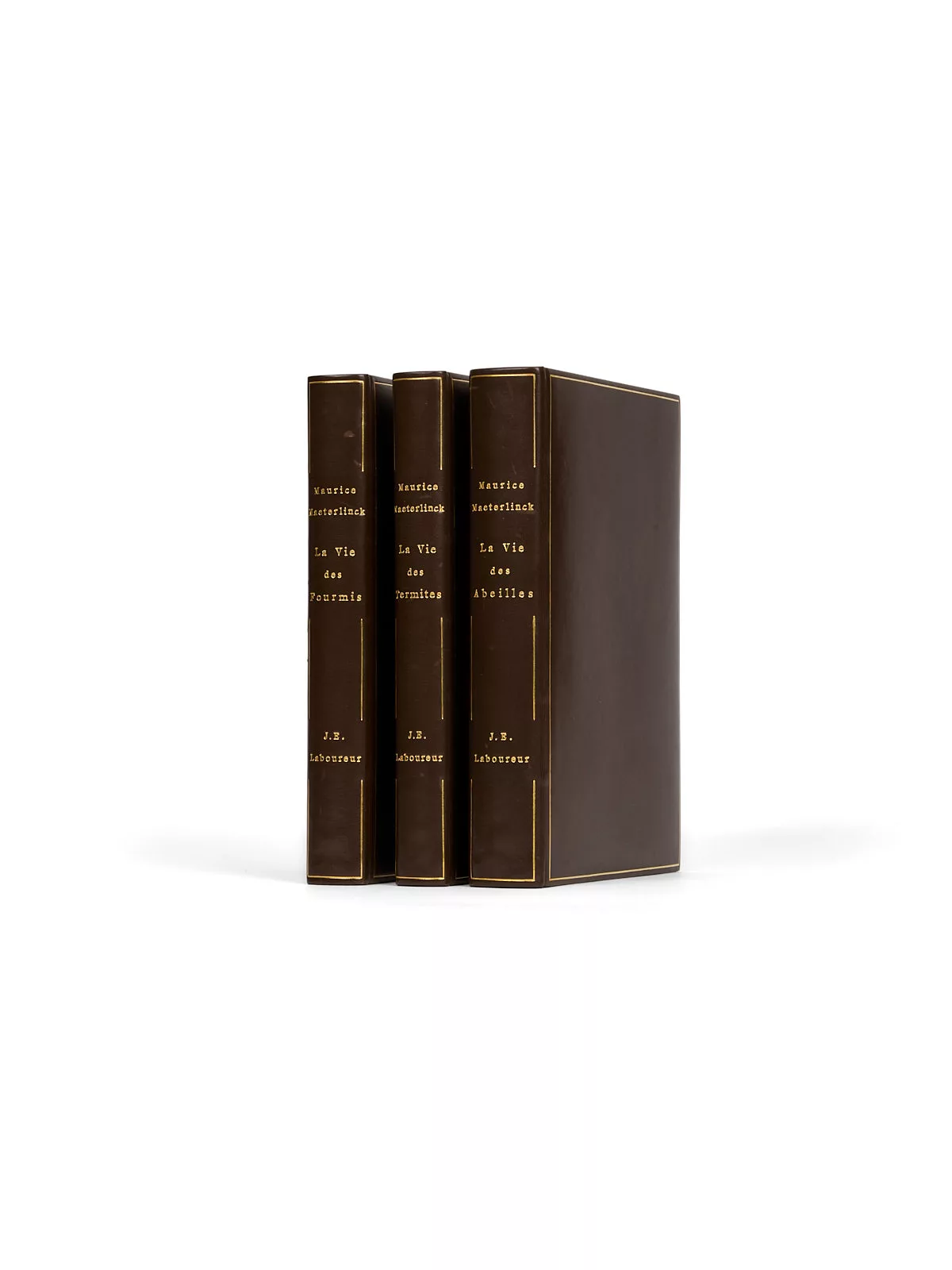
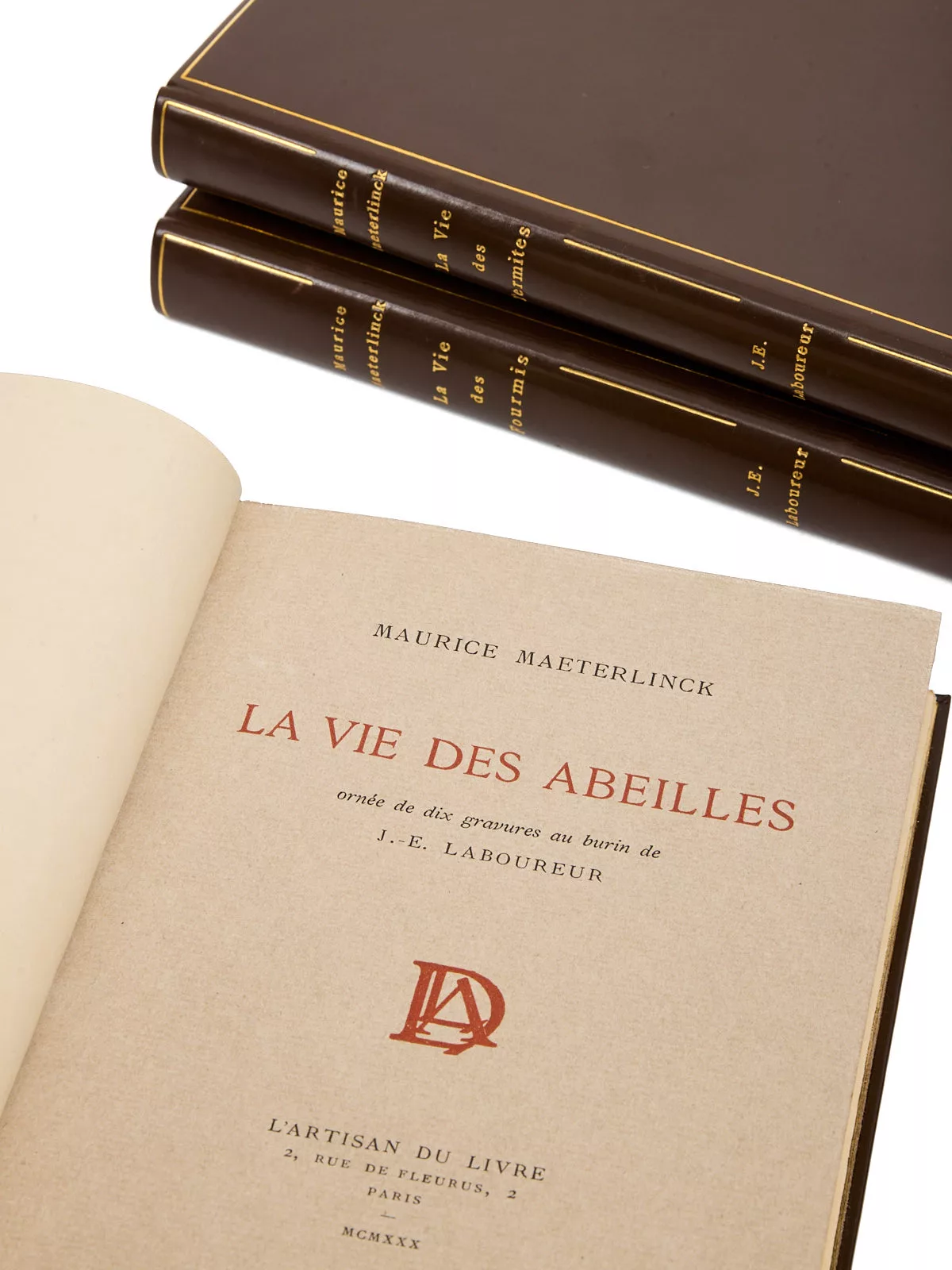
La Vie des abeilles
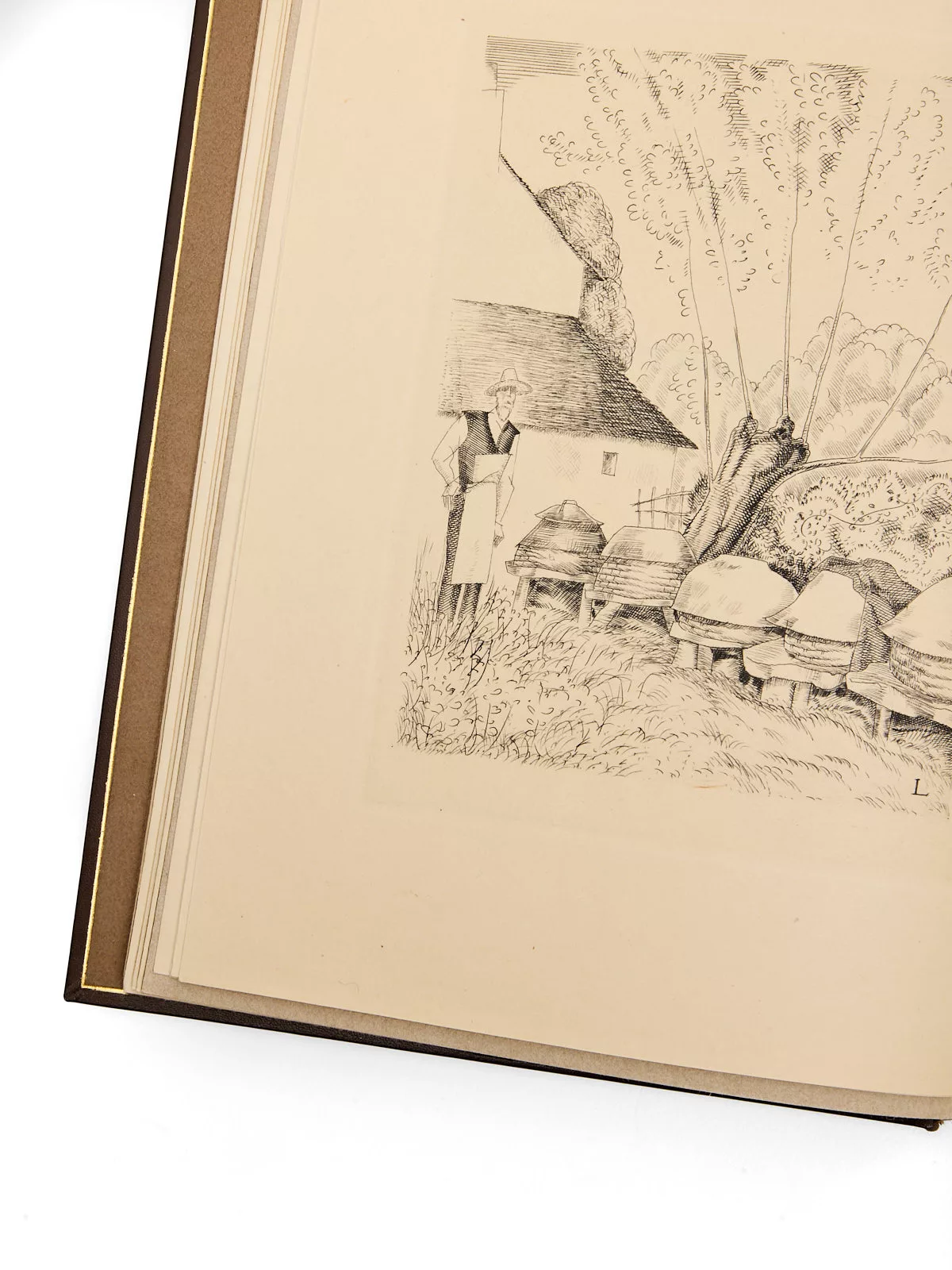
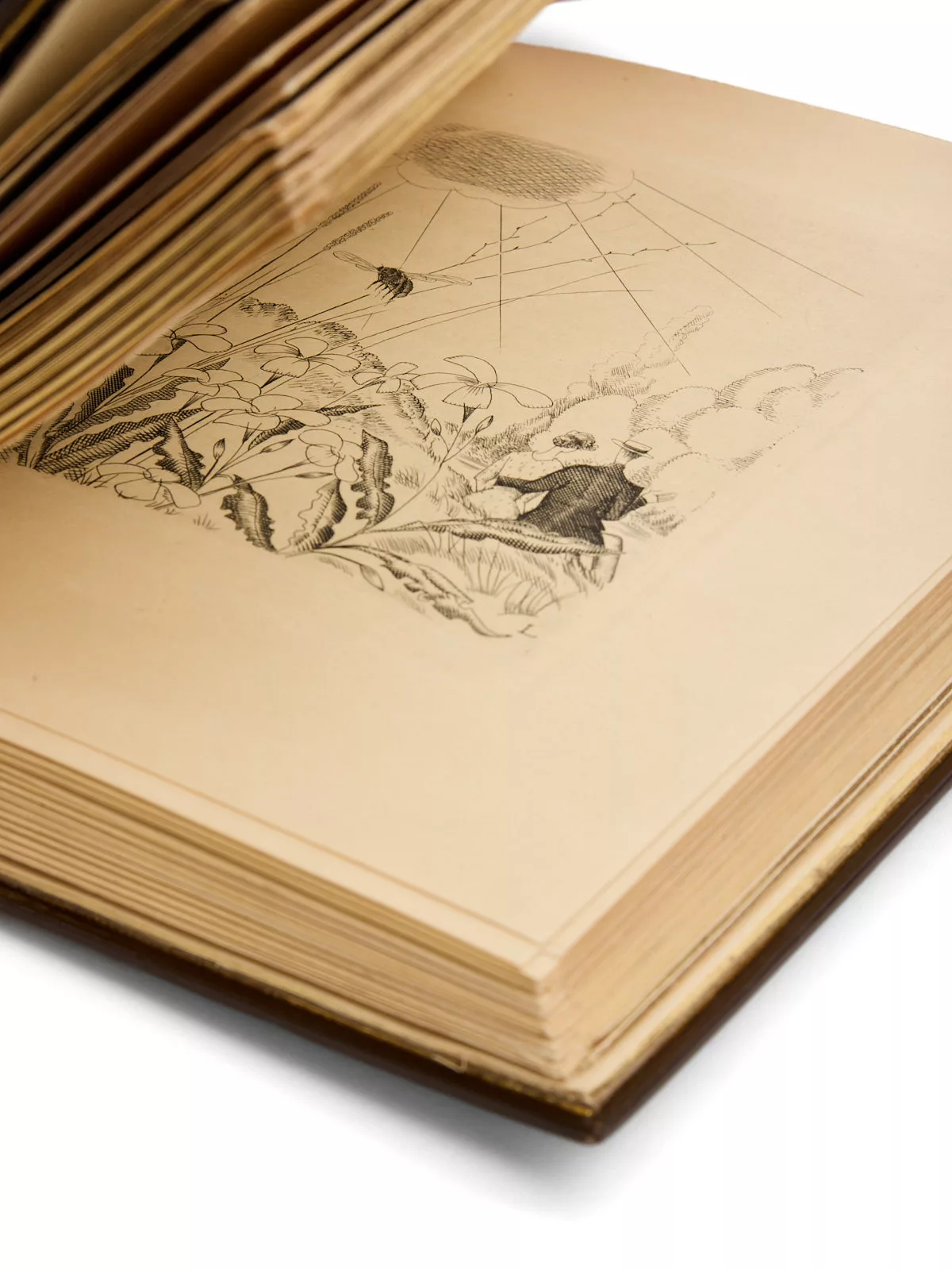
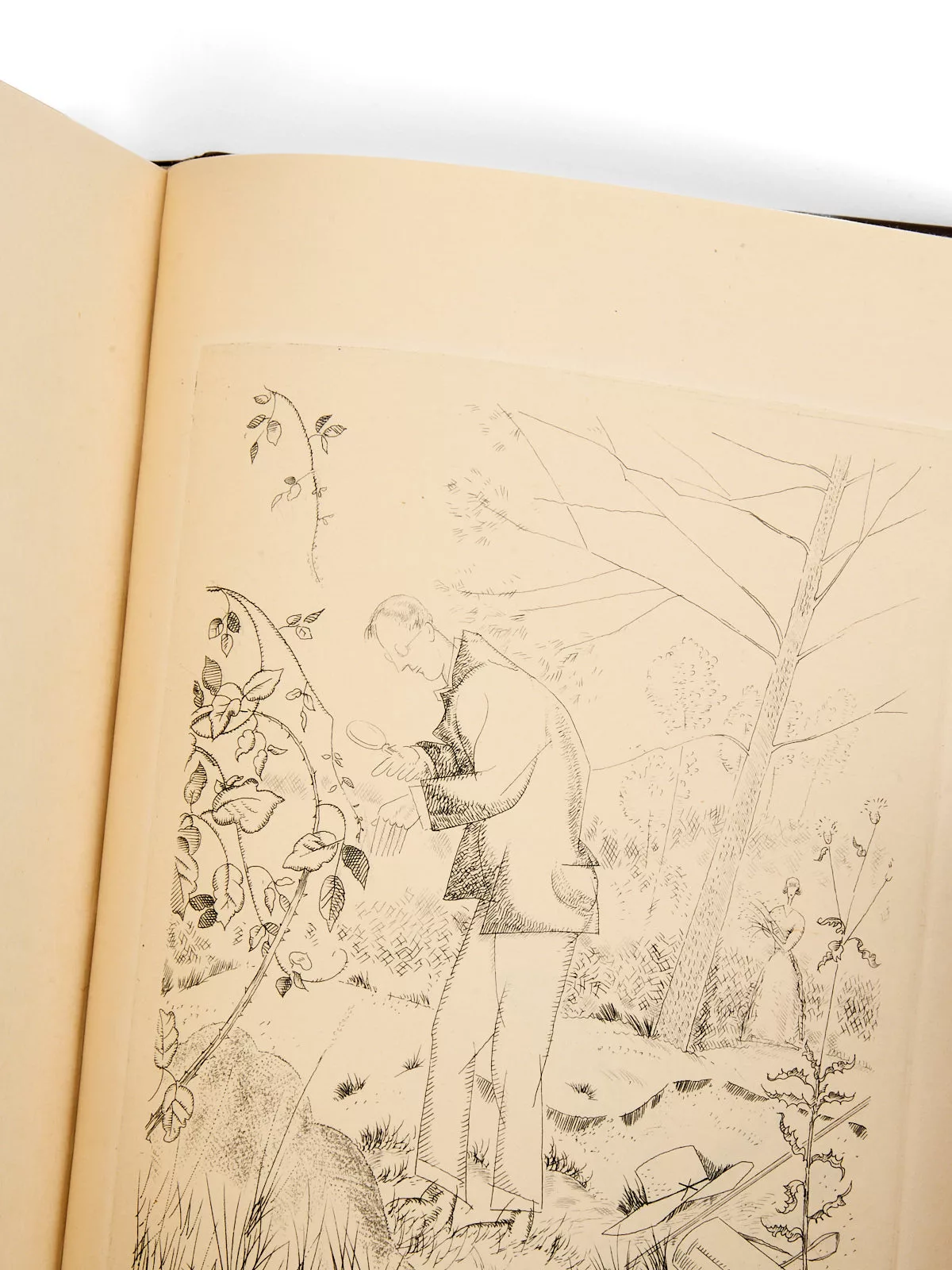
One of 50 copies on Japanese paper (no. 11), with the suite in first state.
Following the life of a swarm with an observer’s precision and a stylistic control that explain its immense critical fortune, Maeterlinck — Nobel laureate in 1911 — turns this “strange little republic” into a model of organization and a moral mirror. This founding text of his trilogy on social insects (followed by La Vie des termites, 1925, and La Vie des fourmis, 1930) has the scope of a poetic and philosophical essay as much as a naturalist one, and it is high time it was rediscovered.
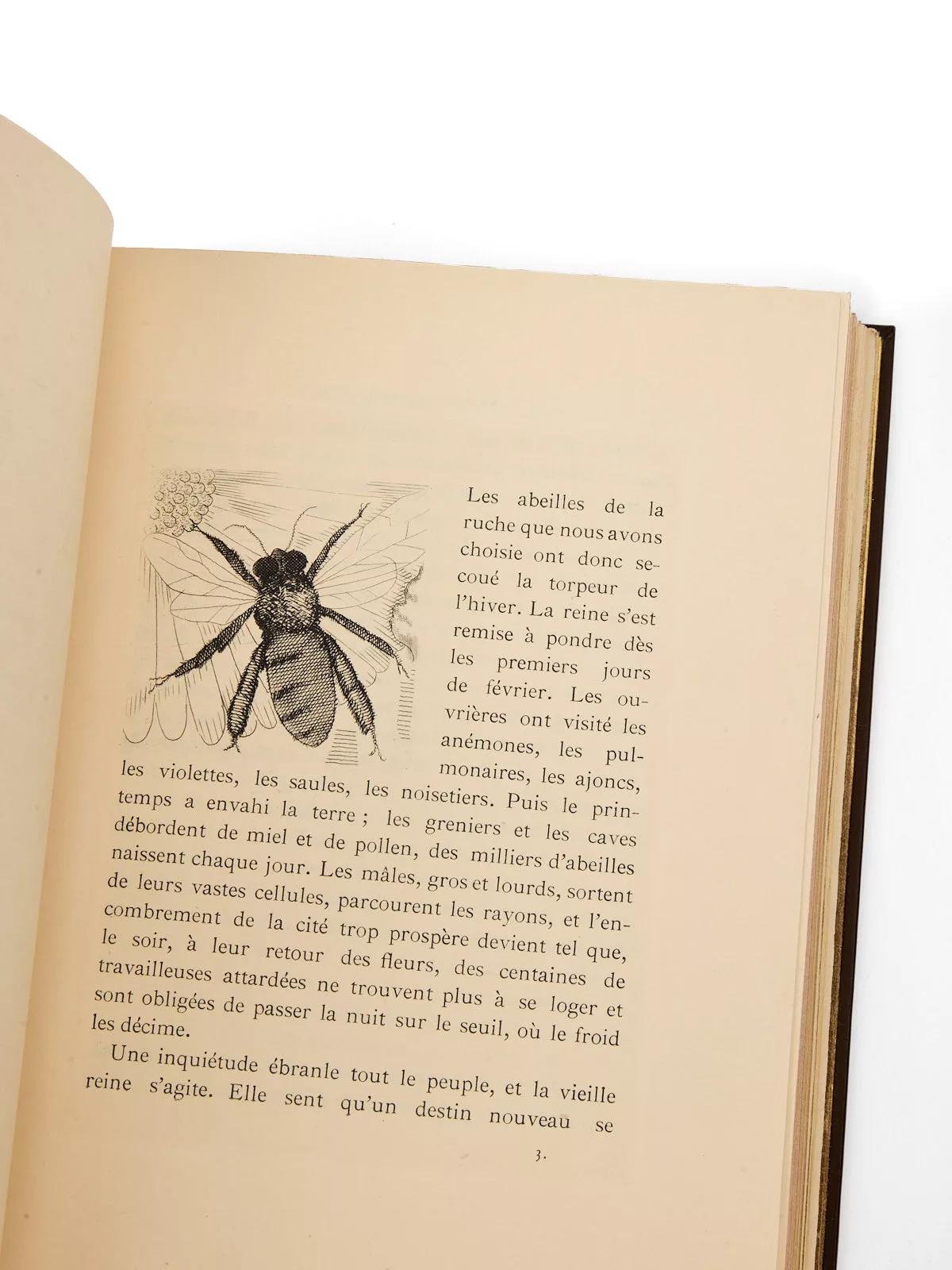
A magnificent copy of this literary rarity, in which the first volume reveals — with delight — the intimate life of the apis mellifica, commonly known as the “bee,” and of its swarm, from the moment it leaves the warm and comfortable hive to face a world full of dangers. Maeterlinck describes “a strange little republic, so logical and so grave, so positive, so meticulous, so thrifty, and yet the victim of a dream so vast and so precarious.”
Twenty-five years later, the life of termites strongly attracted his attention, as it forms a counterpart to the life of bees: “It is, in a sense, day and night, dawn and dusk, heaven and hell.” Maeterlinck notes that the “civilization” of termites is the “oldest known […] the most curious, the most complex, the most intelligent and, in a sense, the most logical, the best adapted to the difficulties of existence that has appeared on this globe before our own.” La Vie des fourmis followed, a subject he had until then neglected in his observation of animal life, believing ants “unappealing, ungrateful and too well known.” He then sought to do them justice, sixty years before Bernard Werber’s bestseller.
From the library of Elvire Choureau (bookplate): an exceptional bookseller-publisher, she founded, in 1922, together with Georges Duhamel (then director of the Mercure de France), the bookshop L’Artisan du livre, at 22 rue Guynemer, just steps from the Luxembourg Gardens. Until 1976 she made it a center of fine bibliophily and literary sociability — frequented notably by Paul Valéry and Colette — whose window displayed first editions, deluxe printings and bindings, under the guiding presence of her intellectual partner and friend Duhamel. Made a Chevalier of the Legion of Honor after twenty-five years in the trade, she also carried on a genuine activity as a publisher. In 1976, the address passed under the Giraud-Badin sign, and today houses the Alde firm, continuing the bibliophilic vocation of the place.
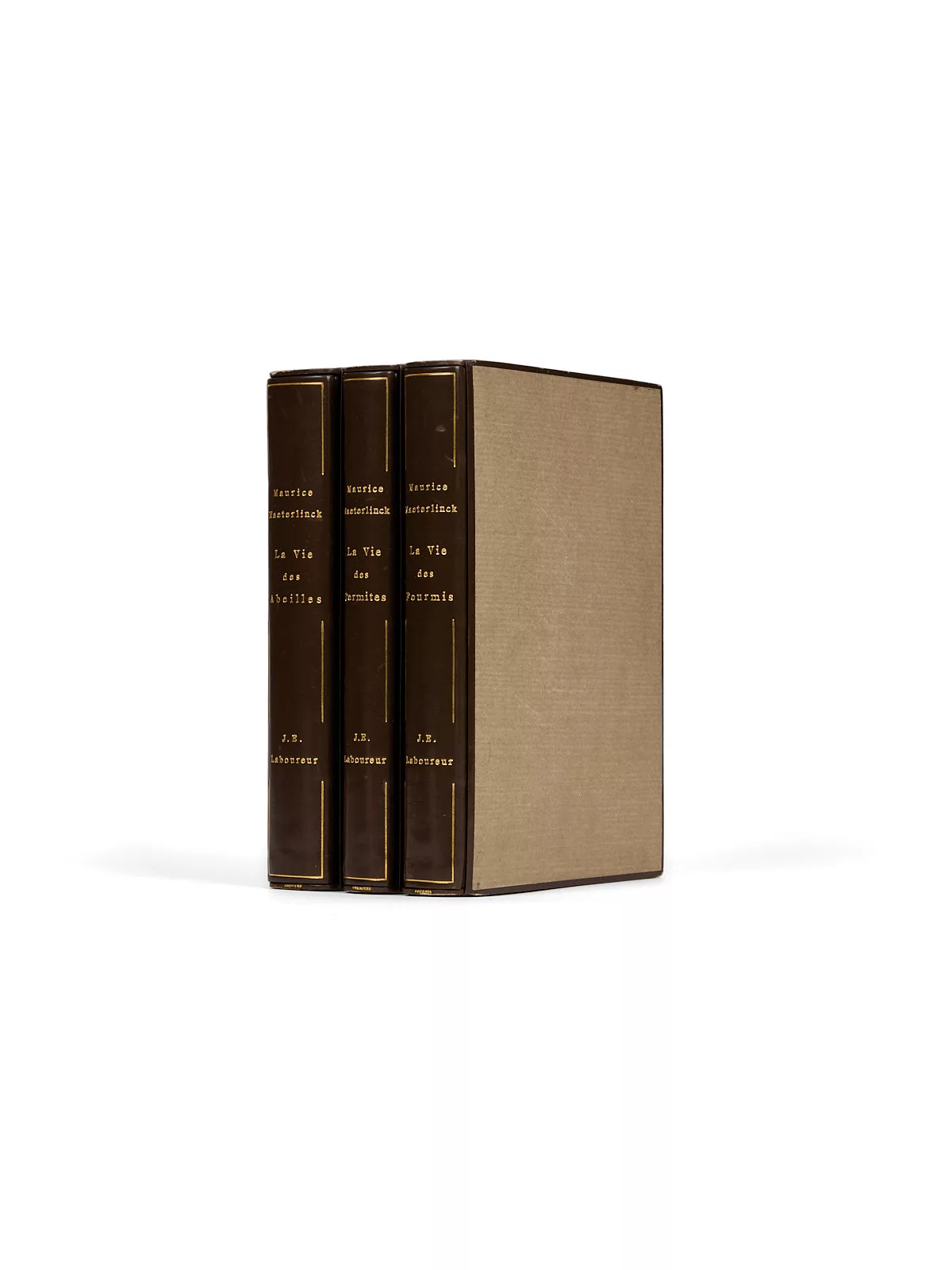
A splendid binding in full box calf by Martin, in a matching slipcase.
S. Laboureur, Catalogue complet de l’œuvre de Jean-Émile Laboureur, II, no. 425.