


Remarques
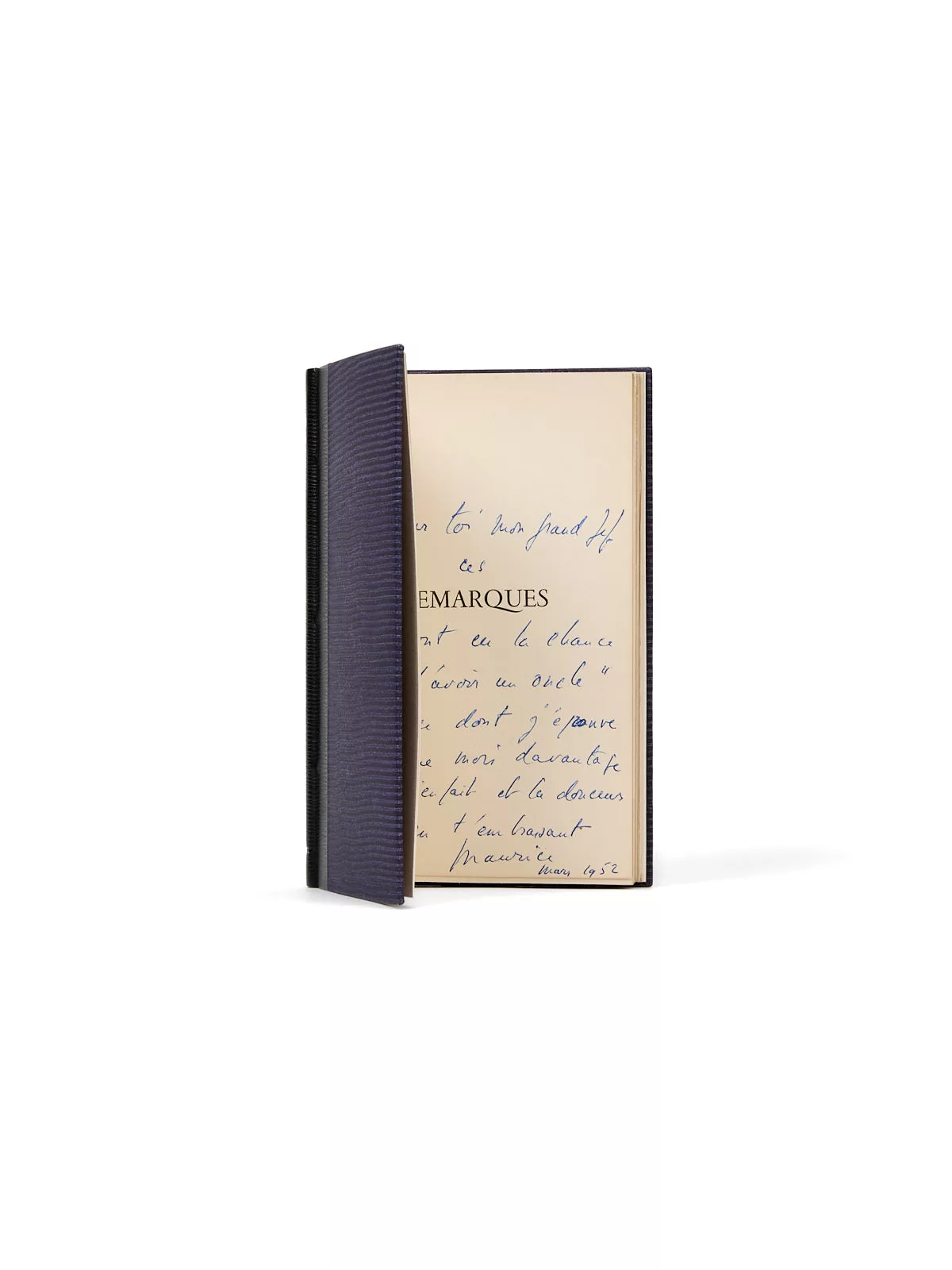
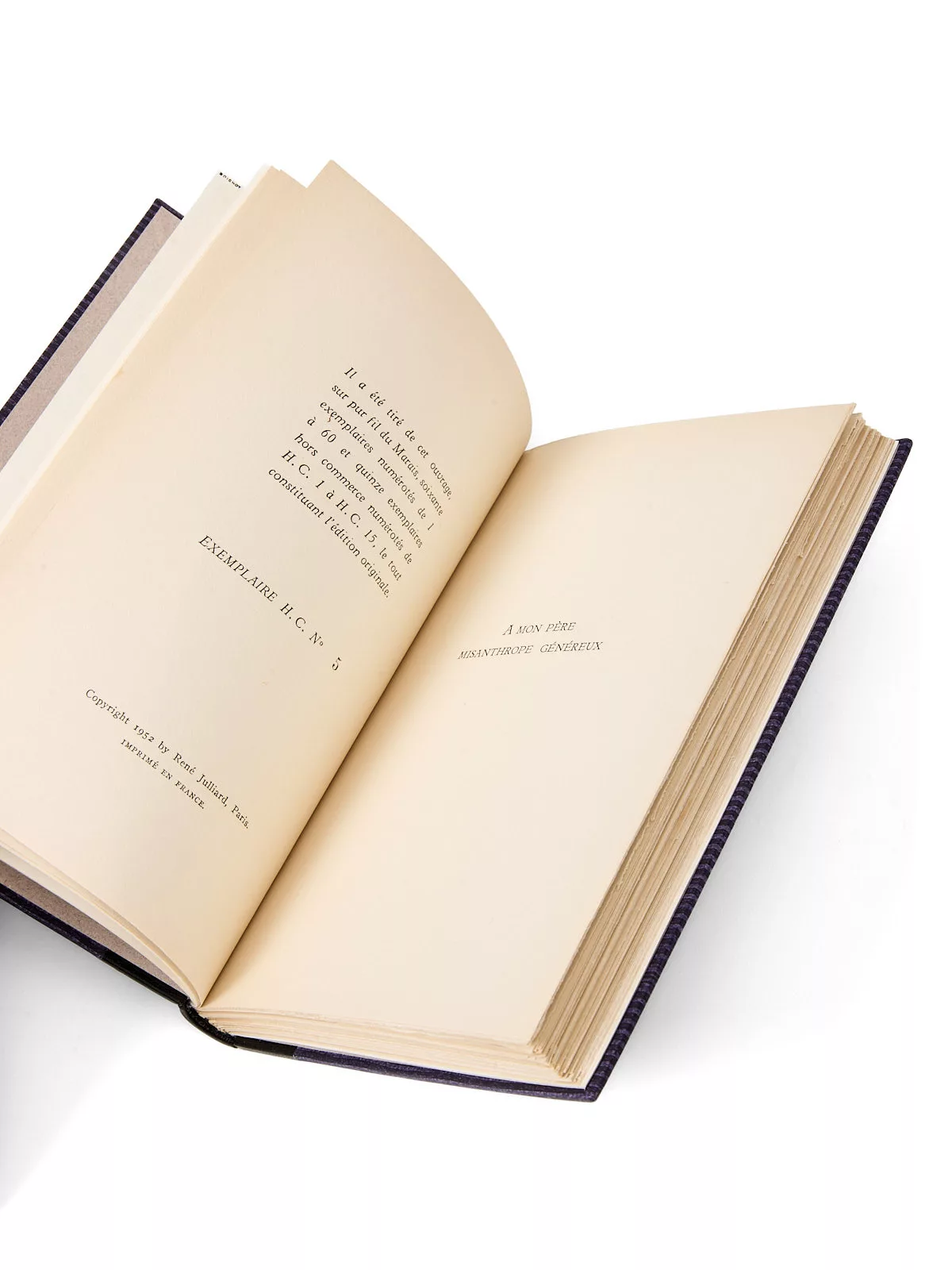
One of 75 copies on vélin du Marais from the deluxe issue, this copy hors commerce (no. 5).
Presentation copy inscribed by Druon to Joseph Kessel: “Pour toi mon grand Jef ces [Remarques] qui ont eu la chance “ d'avoir un oncle ”; chance dont j'éprouve chaque mois davantage le bienfait et la douceur, en t'embrassant, Maurice, mars 1952.”
Joseph Kessel was far more than a relative. He was the elder, the companion in exile, the brother-in-arms, the great literary witness alongside whom Druon lived through the war, London, and the adventure of the Chant des partisans. Together they joined the Resistance, crossed the Pyrenees and reached London in 1943 to enlist in the Forces Françaises Libres.
Published in 1952, Remarques appeared after the trilogy La Fin des hommes — Les Grandes Familles, winner of the Prix Goncourt in 1948, La Chute des corps, and Rendez-vous aux enfers — and before the great historical cycle of Les Rois maudits that would bring Druon popular fame. The book thus occupies a singular place between these two periods; Druon himself invites the reader to see these fragments as an extension of his earlier fiction: in his opening text, he explains that these remarks were written “in the margins of [his] novels” and should be regarded as a kind of appendix meant to illuminate their intentions.
A precious copy, inscribed to the man who was at once his first reader, his first proofreader and his first literary collaborator.