

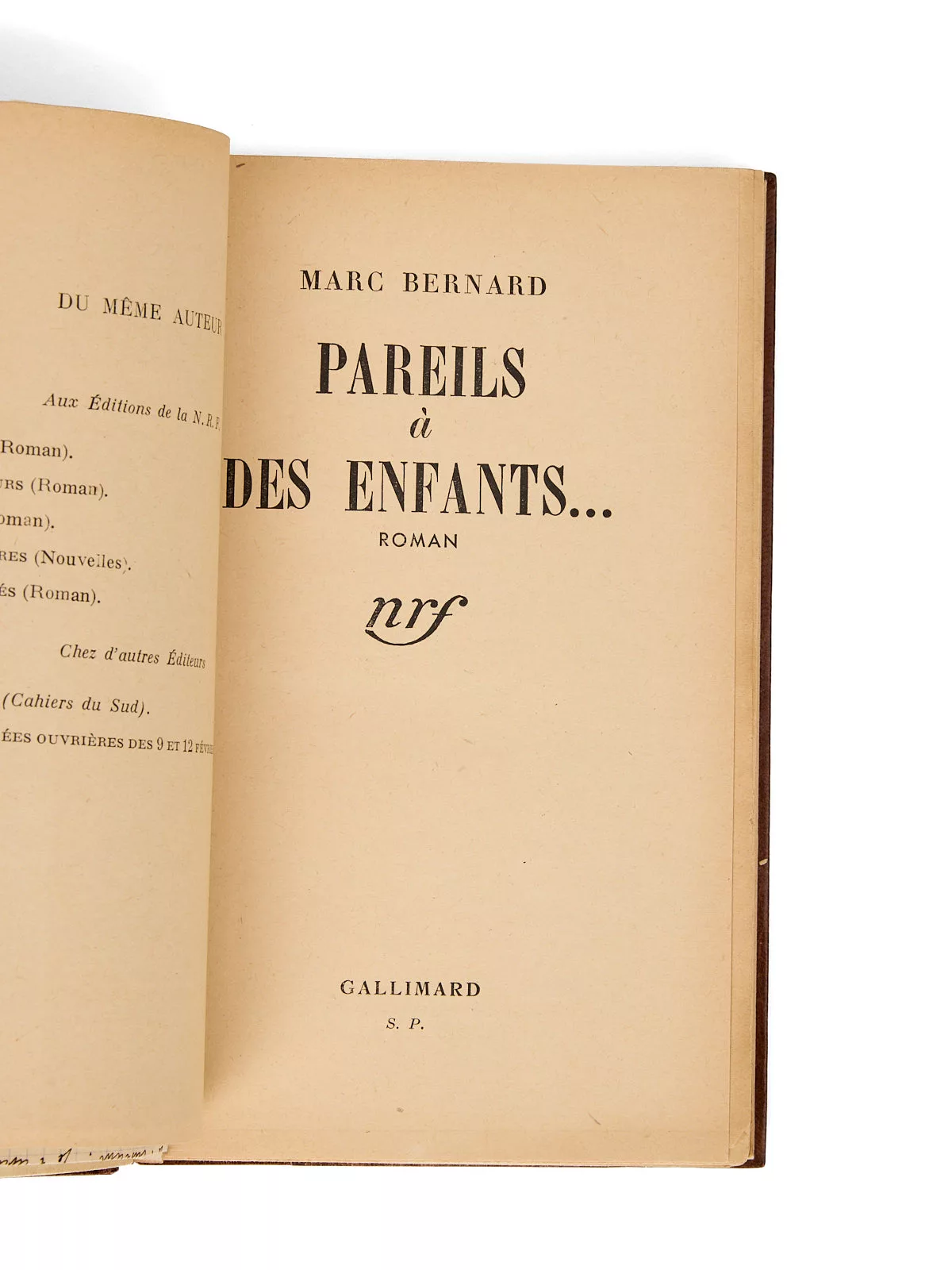
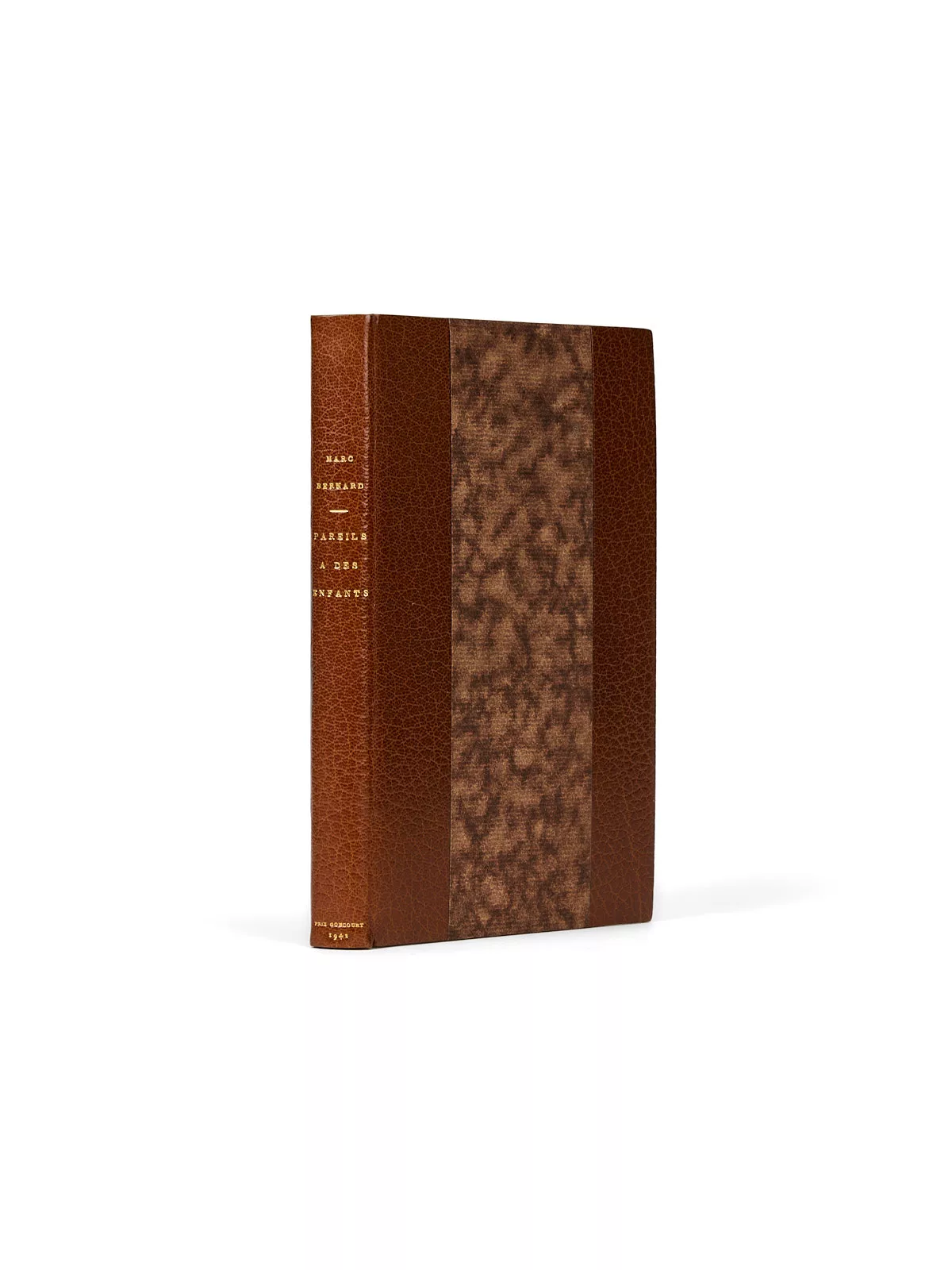
Pareils à des enfants…
One of the copies printed for the review service (no deluxe-paper copies).
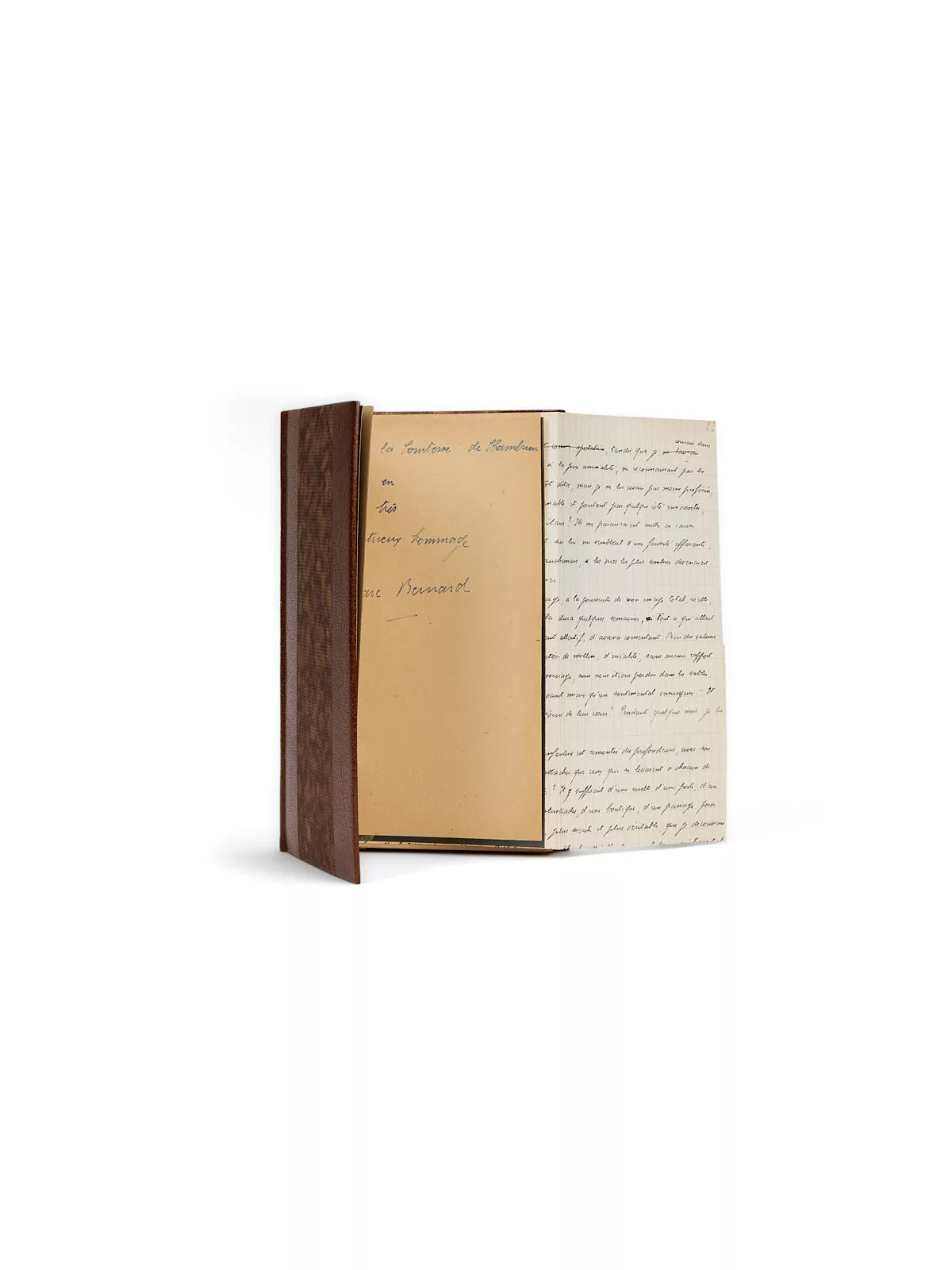
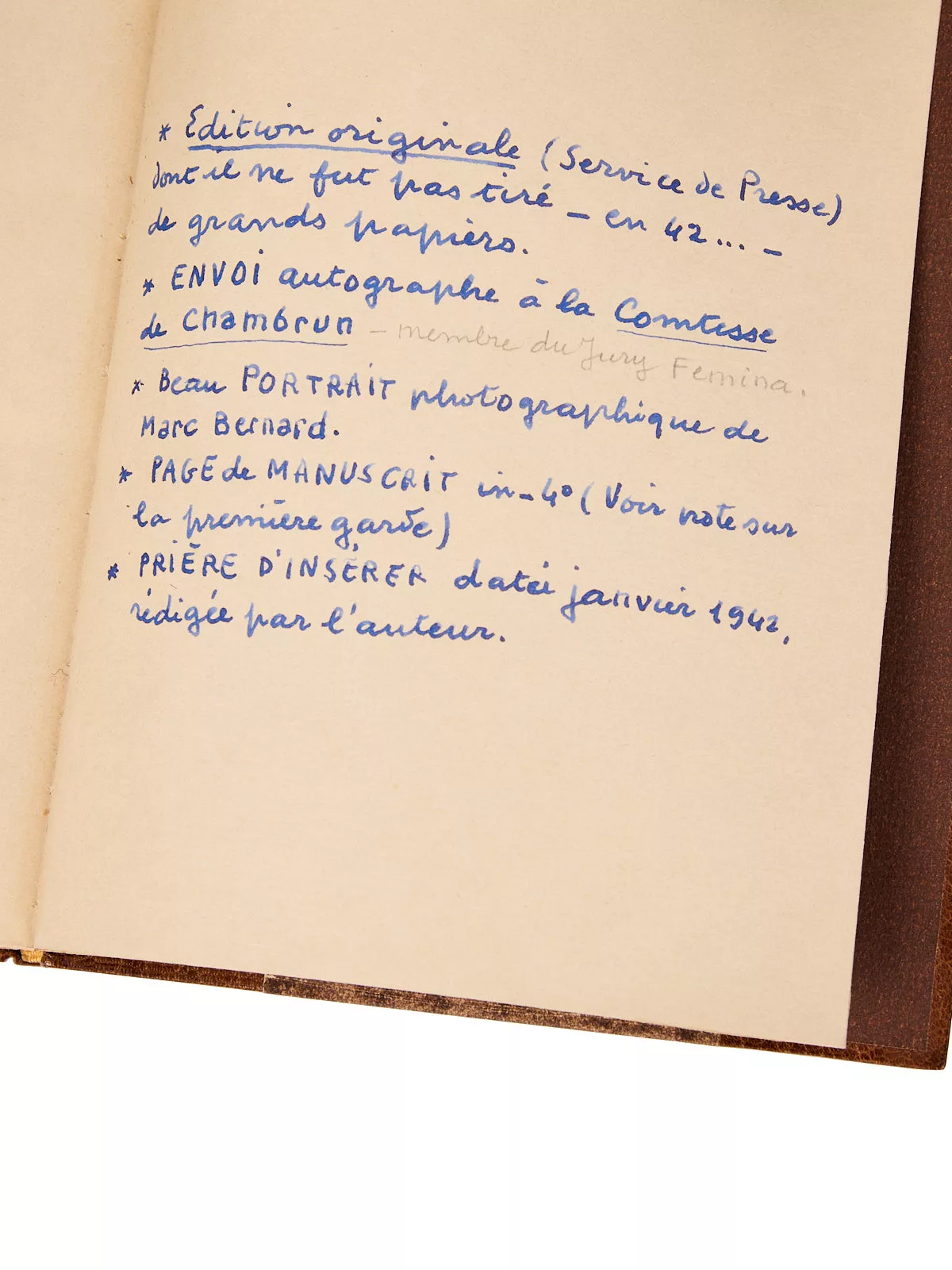
Presentation copy inscribed by Marc Bernard to Countess de Chambrun: “à Madame la Comtesse de Chambrun, en très respectueux hommage, Marc Bernard.”
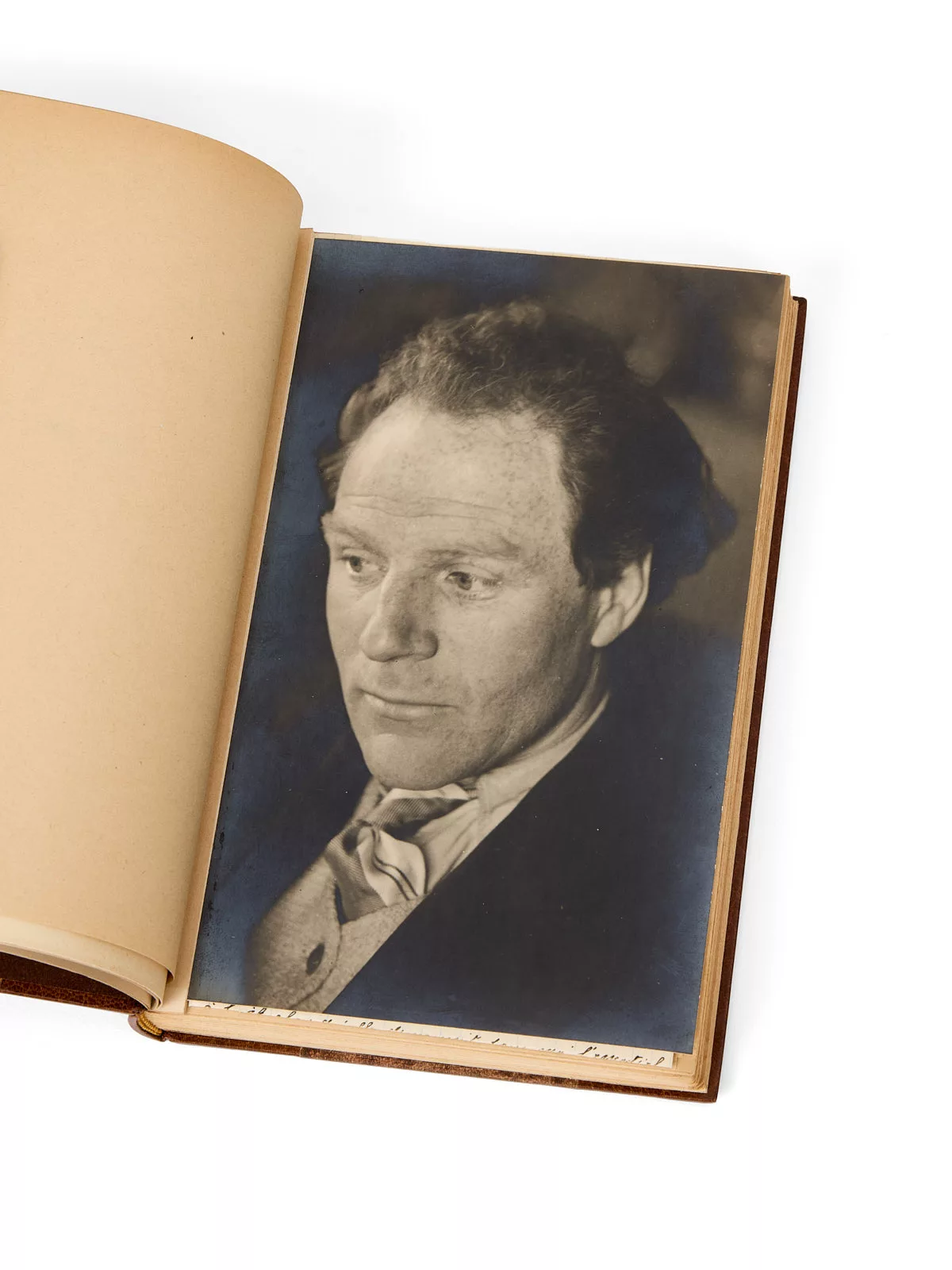
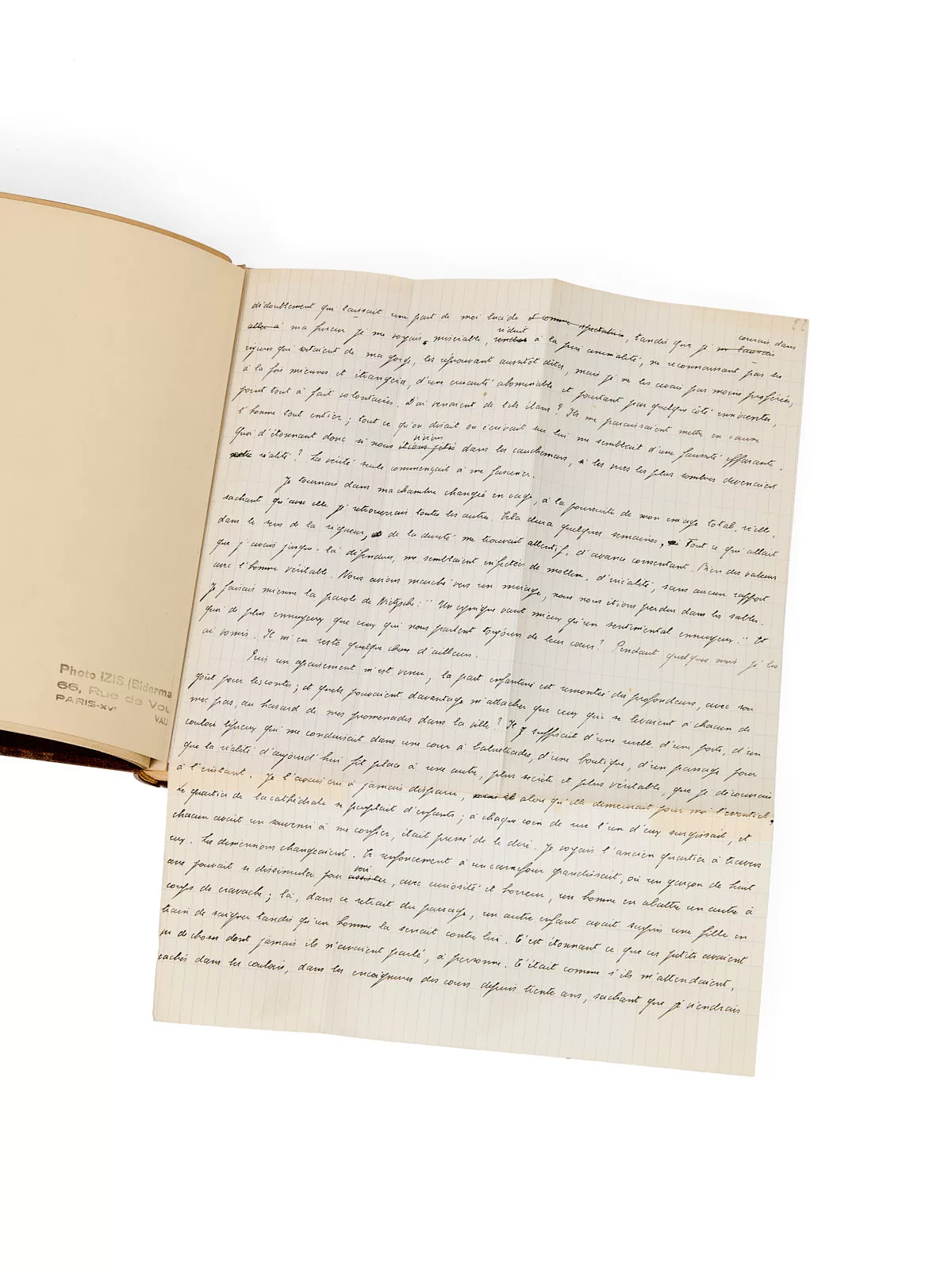
Bound in at front: an original photograph of the author by Izis (stamped on the verso), a manuscript fragment of the novel (2 pages on 1 leaf) and the publisher's insert.
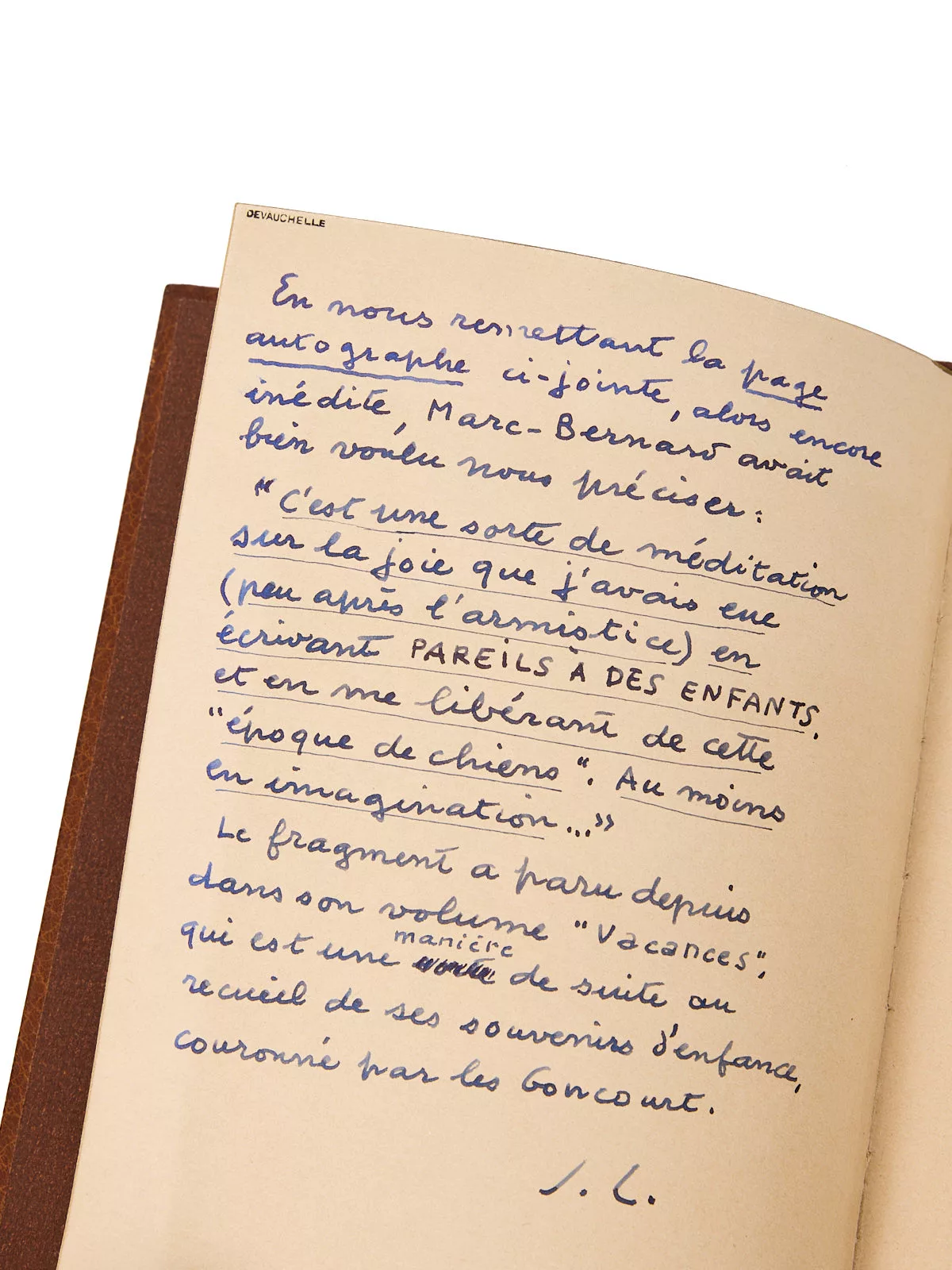
A long manuscript note concerning the copy on the first and last endleaves, signed “J. L.”, the initials of the bookseller Jean Loize, who must have handled part of the Chambrun library's holdings.
Prix Goncourt, 1942. On 20 December, in an occupied and starving Paris, the Académie Goncourt awarded its prize to Marc Bernard by 7 votes to 1 for Germaine Beaumont and 1 for Lucien Rebatet. Bernard learned the news over the radio from the provinces: for security reasons he did not travel to Paris, but the prize money allowed him to save his family from destitution. The first edition, printed in a small run, sold out within days.
Through the story of Léonard, known as Nanay, a child of the working-class districts of Nîmes in the early twentieth century, Marc Bernard offers an autobiographical coming-of-age narrative: his parents’ separation, poverty, an apprenticeship with a shoemaker, sensual discoveries and private tragedies. Amid this harsh but never despairing childhood emerges a hymn to the dignity of ordinary people, written in a simple, luminous style. An outstanding 38th Prix Goncourt, awarded in a context marked by censorship and war, and one that remains singular among Goncourt winners: it makes no direct allusion to the ongoing conflict, yet is deeply nourished by popular memory and the fellowship of the humble.
A unique copy, a genuine author’s dossier, enriched with rare items (a photograph by Izis, a manuscript fragment, the publisher’s insert, an autograph note), presented to Countess Clara Longworth de Chambrun. American by birth, a doctor of the Sorbonne and laureate of the Académie française, founder of the American Library in Paris — she served as its director from 1921 to 1924 — she was one of the leading cultural figures of the interwar period and the Occupation. Her husband, General Aldebert de Chambrun, directed the American Hospital of Neuilly, which served as cover for one of the principal escape networks for Allied airmen, while their son’s marriage to Josée Laval, daughter of Pierre Laval, helped keep the American Library in Paris open even after France’s declaration of war in September 1939. She resumed its direction until the autumn of 1944, establishing an administrative structure that preserved its independence after the United States entered the war.
An important testimony to one of the most forgotten yet most moving of the Prix Goncourt winners.
Provenance: Countess de Chambrun (presentation inscription); librairie Jean Loize (autograph note); the “Prix Goncourt” library of Gérard Pouguet (with bookplate).