

Le Neuvième Jour
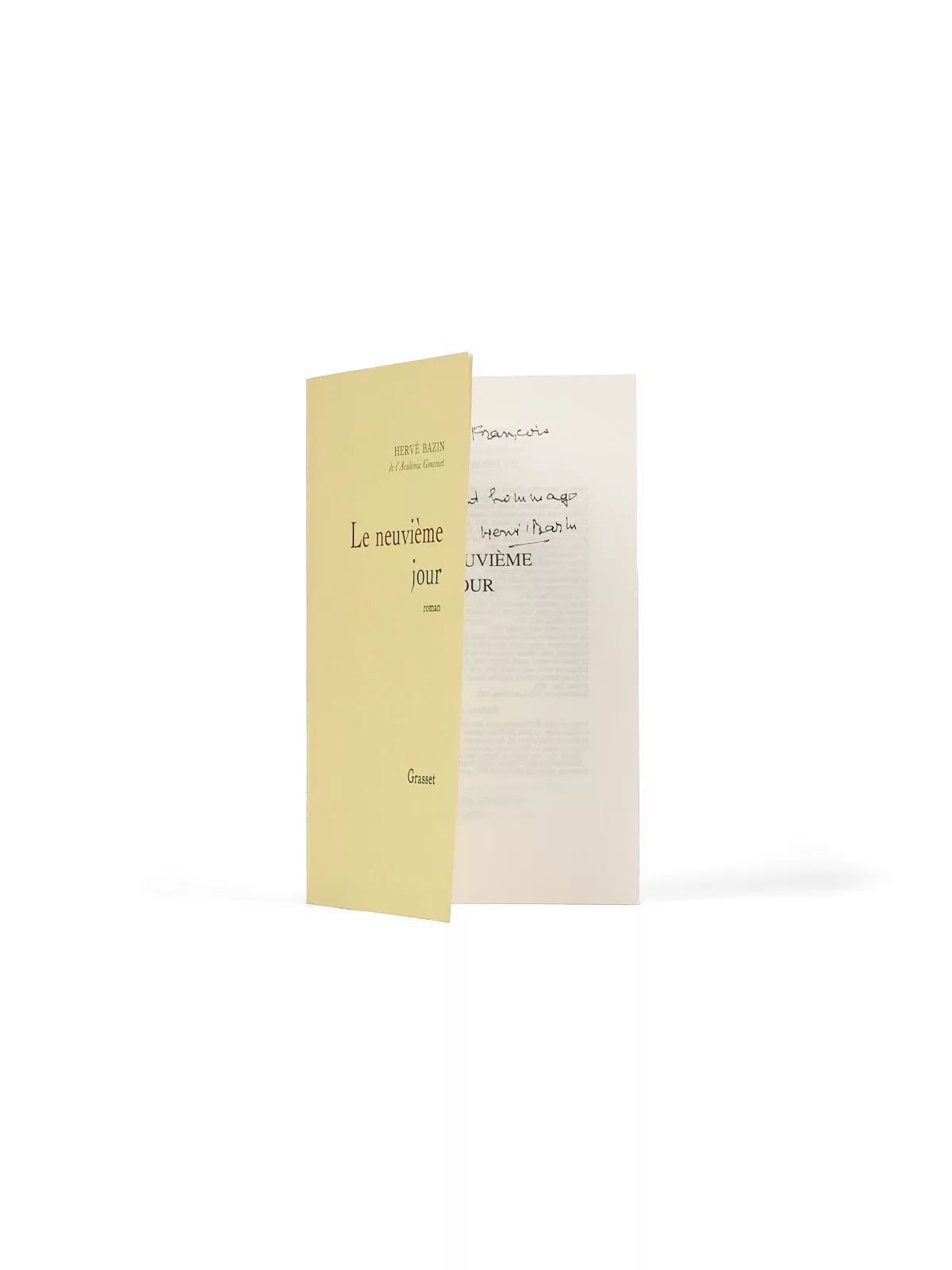
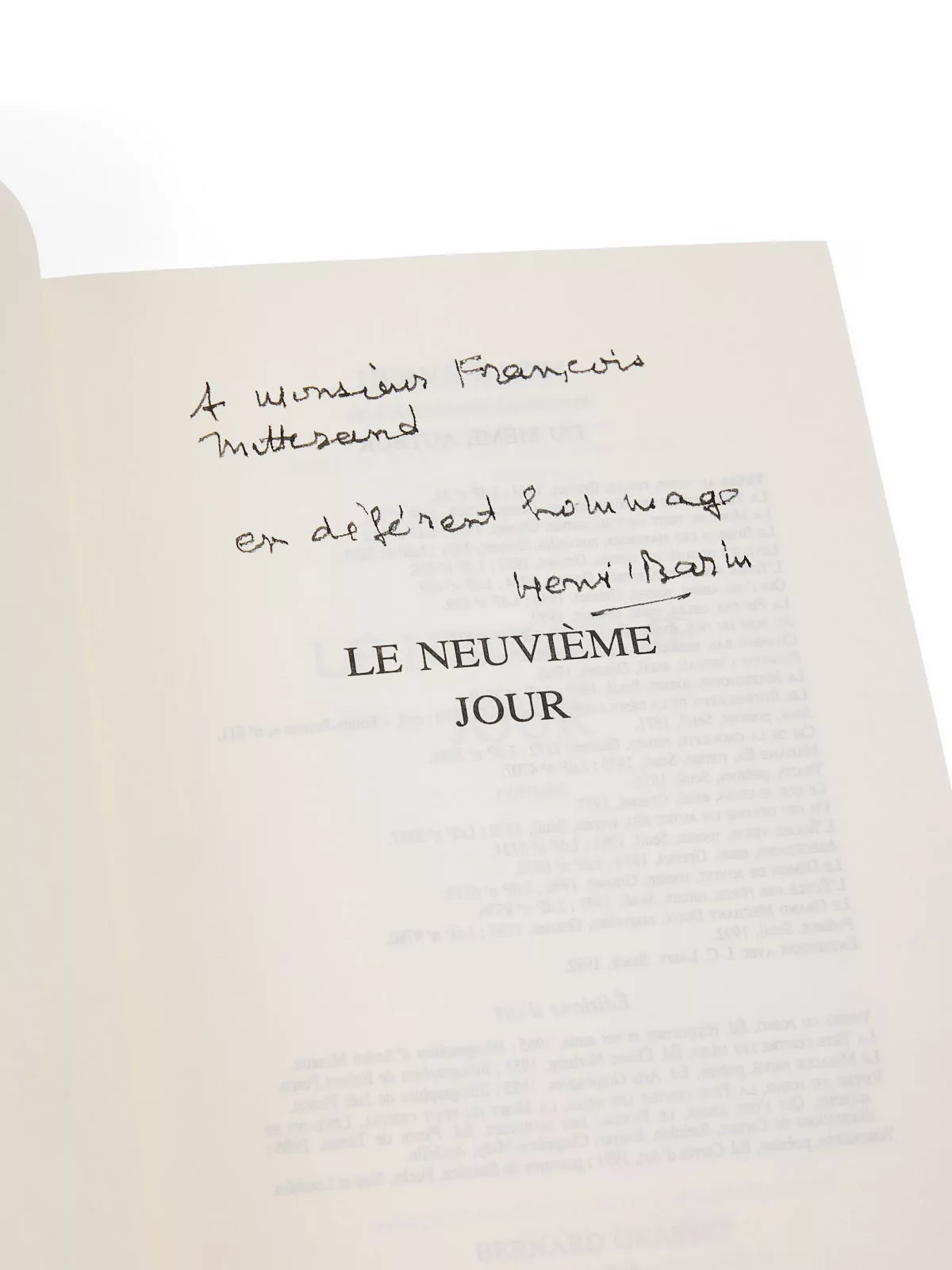
Presentation copy inscribed by Hervé Bazin to François Mitterrand: “À Monsieur François Mitterrand, en déférent hommage. Hervé Bazin.”
Publisher's wraparound band preserved.
From the library of François Mitterrand.
Published in 1994, Le Neuvième Jour is among Hervé Bazin’s last novels. The author of Vipère au poing, by then a long-established figure of French letters and president of the Académie Goncourt since 1973, here abandons the family territory that had made his name to tackle a subject then still largely the stuff of fiction: the outbreak of a global pandemic.
The plot opens with the appearance, in Bombay, of an influenza epidemic of unprecedented virulence: the “surgrippe,” a variant of an unstable virus capable of successive mutations. The local outbreak quickly becomes a planetary threat. Borders stop nothing, alerts spread, death tolls rise, governments hesitate, public opinion grows anxious, and scientists are pressed to respond faster than science allows.
The novel unfolds as a race against death, in which Bazin does not simply describe the spread of a scourge but observes the reactions of an entire society confronted with fear. Read in the light of the Covid-19 experience, the novel is genuinely striking. It would be excessive to call Bazin a prophet, but certain intuitions are remarkably precise: the rapid worldwide circulation of the virus, the race for a vaccine, anxiety over viral mutations, distrust of the authorities, the retreat to country houses, the reorganization of schooling, the fragility of small businesses, the paralysis of tourism, the closing of theaters — all closely mirror the general lockdown of 2020. Even certain material details, such as the appearance of the “nasette,” give the novel today an almost documentary strangeness.
Presented to François Mitterrand, then in the final years of his second seven-year term, this strikingly prescient pandemic novel becomes, through its provenance, a literary and political object of the first order.
From the library of François Mitterrand.