

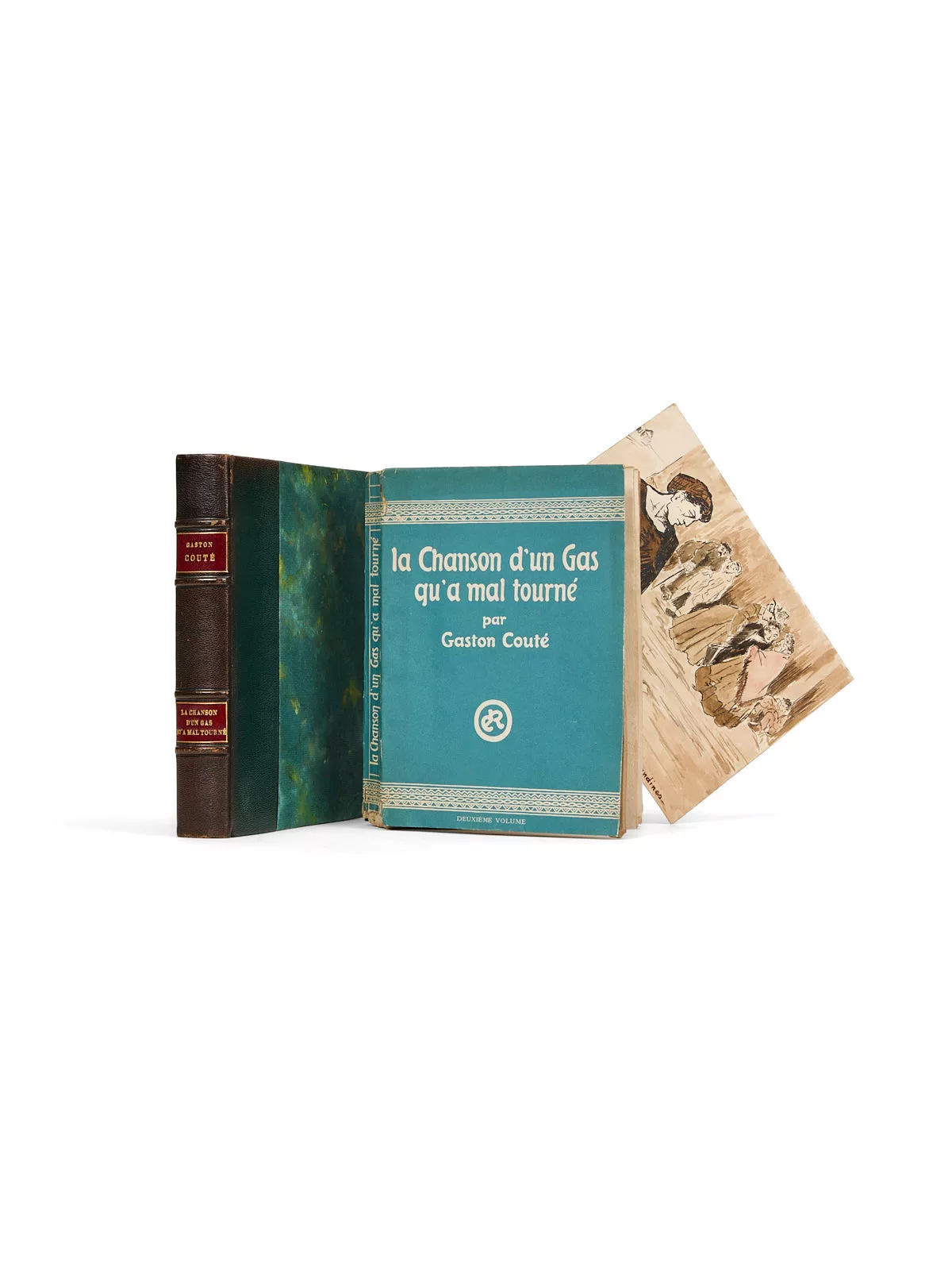
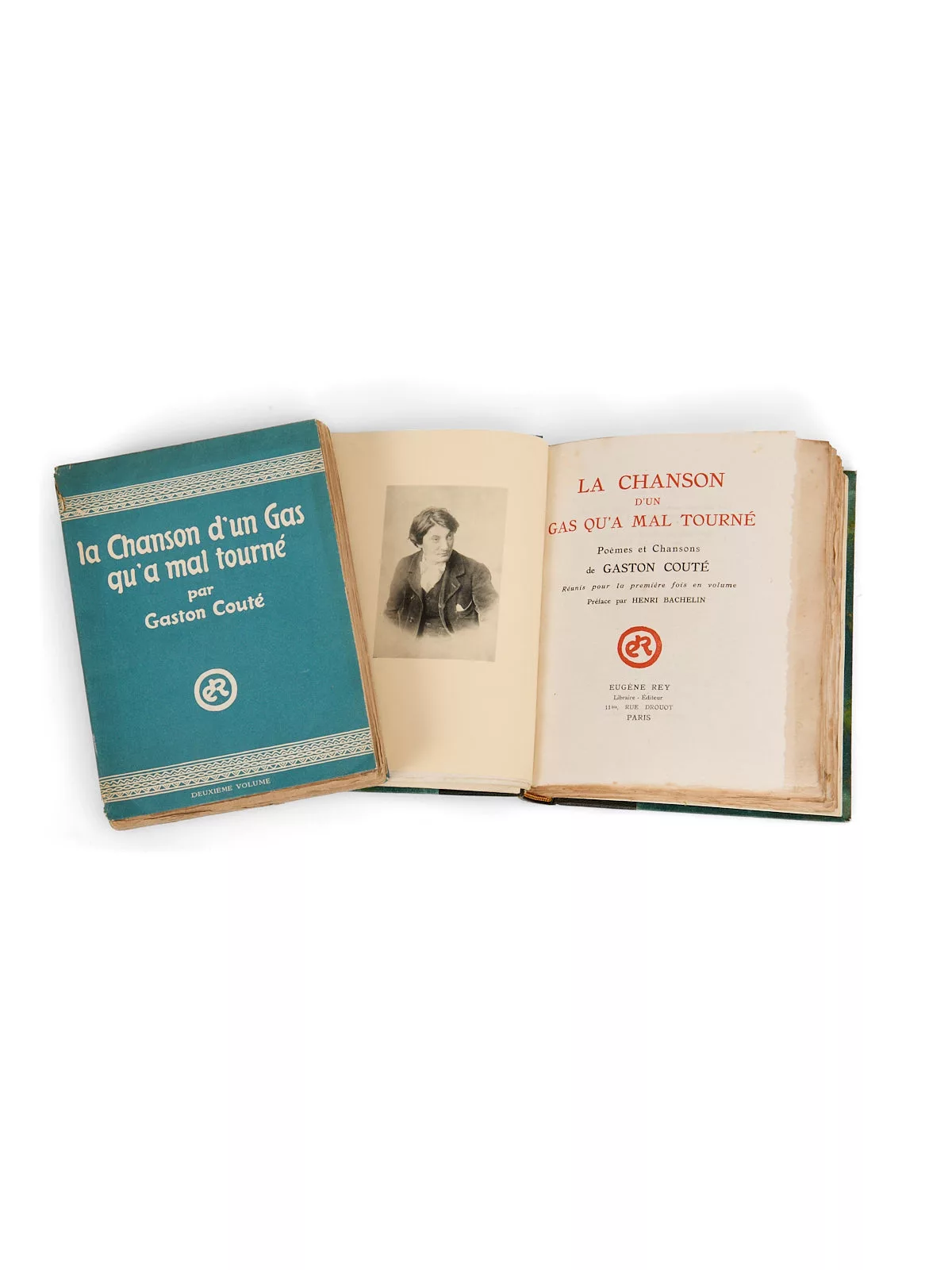
One of 150 copies on handmade Auvergne paper (nos. 2 and 5).
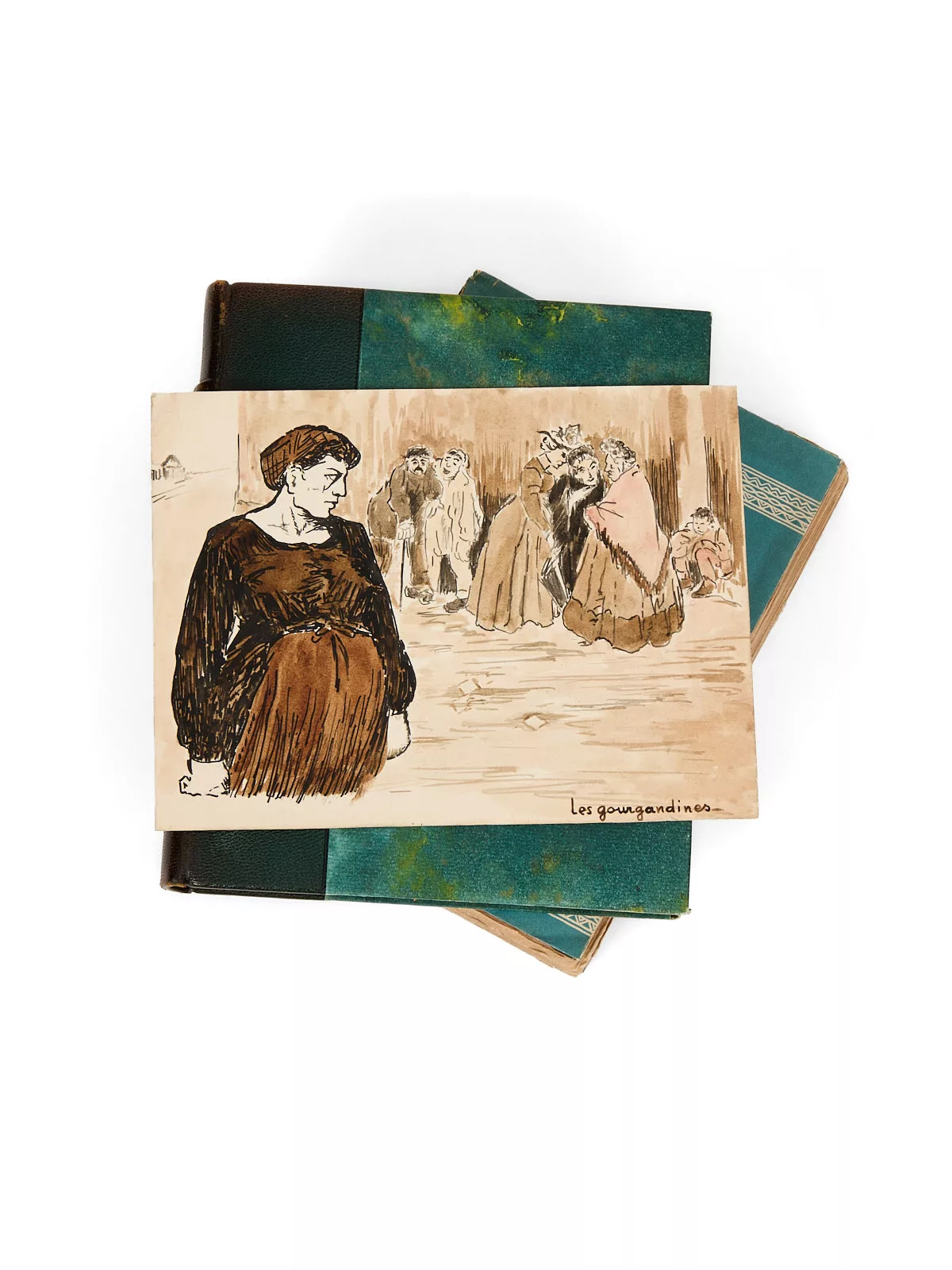
The copy is enriched with an original color watercolor (200 x 150 mm) by [Jacob-Hians] captioned “les gourgandines,” and a color drawing on tracing paper.
A libertarian poet and one of the foremost chansonniers of French popular song, Gaston Couté embodies one of the harshest and most authentic regional voices of the socially conscious Belle Époque. Born in Beaugency and raised in Meung-sur-Loire, in the Loiret, in a modest rural household, he early developed a poetic language nourished by Beauceron dialect and Loire-valley slang. Close to libertarian circles, Couté published committed texts every week denouncing social injustice and the exploitation of peasants, which he also performed in the cabarets of Montmartre. Jehan-Rictus praised him as “an adolescent of genius,” whose poetry was rough-hewn yet deeply felt. He died prematurely in 1911, at the age of thirty-one, having never published anything beyond his poems and songs that appeared in periodicals.
La Chanson d’un gas qu’a mal tourné brings together, for the first time, the essential body of this brief but brilliant body of work.
A fine copy, notably enriched with a large watercolor by Paul Jacob-Hians. A painter and engraver trained at the École Estienne, he frequented the circles of Montmartre and Montparnasse before becoming, in 1917, set designer and costume creator for the “Vieux Colombier” theater company.
Very rare in the deluxe issue.