

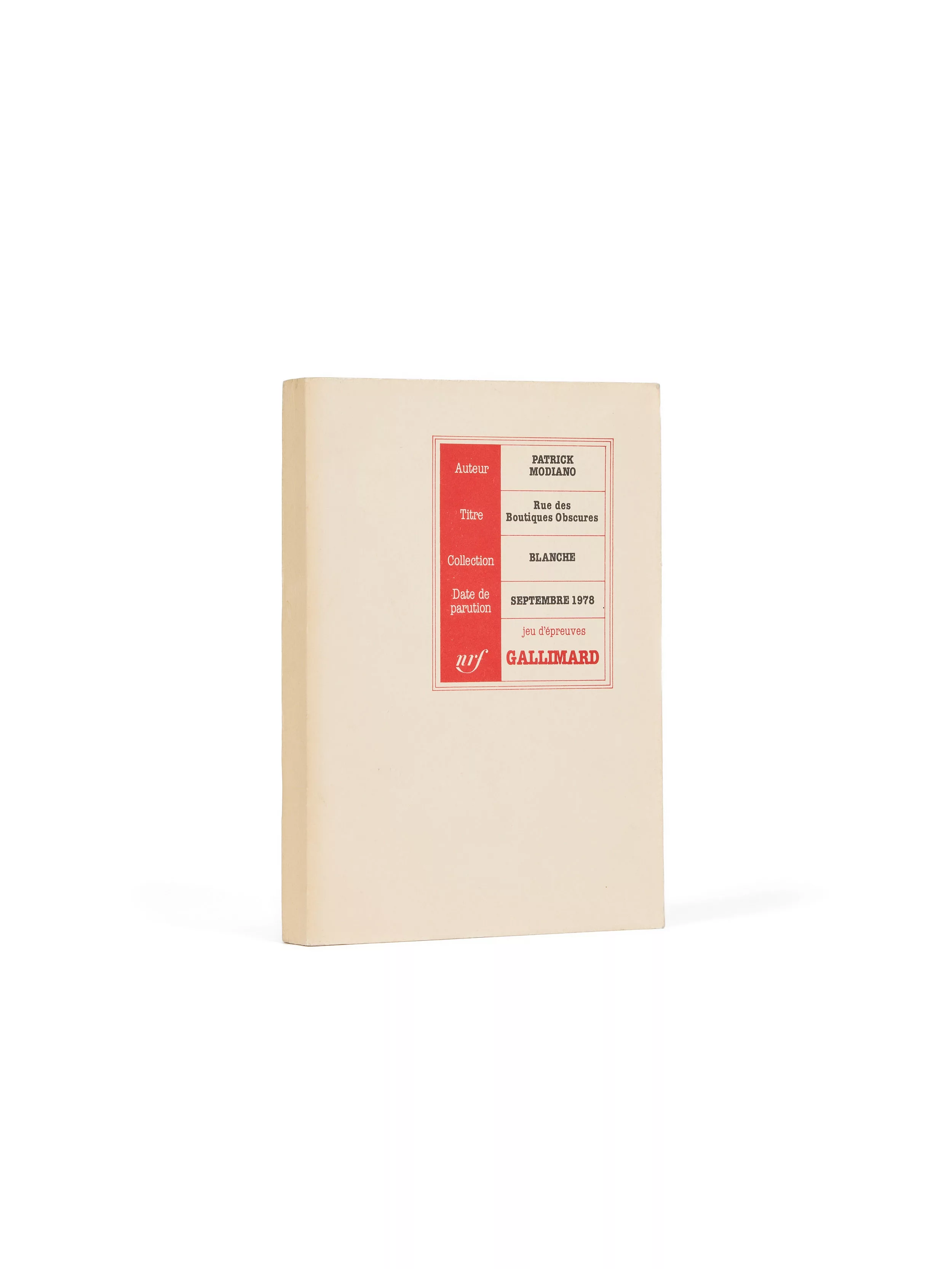
Rue des boutiques obscures
It took Modiano’s sixth novel — the writer Queneau had very early identified as “the most gifted of his generation” — for the Goncourt jury to decide to crown not merely a book but a body of work still in progress. A rare distinction: in 1978, the Ten honored Modiano in his entirety, already recognizing in his obstinate quest a work of memory on “that troubled and shameful period” of the Occupation that haunts all his writing.
Rue des boutiques obscures marks a turning point: a detective novel in which an amnesiac private investigator searches for his own identity, it unfolds as a parable on the void and the fragments of memory that constitute human existence. Bertrand Poirot-Delpech praised its achievement in Le Monde (8 September 1978), speaking of “a maximum stripping-down for a maximum meaning,” in which the detective’s seemingly neutral account takes on the force of a Kafkaesque meditation on the nothingness of our traces.
Thirty-five years later, the Nobel Prize in Literature would honor this same “art of memory with which he uncovered the most ungraspable human destinies and revealed the world of the Occupation.” In the meantime, Rue des boutiques obscures has established itself as one of Modiano’s most essential texts, if not his most emblematic.
A rare copy of the proofs, circulated before commercial publication.