

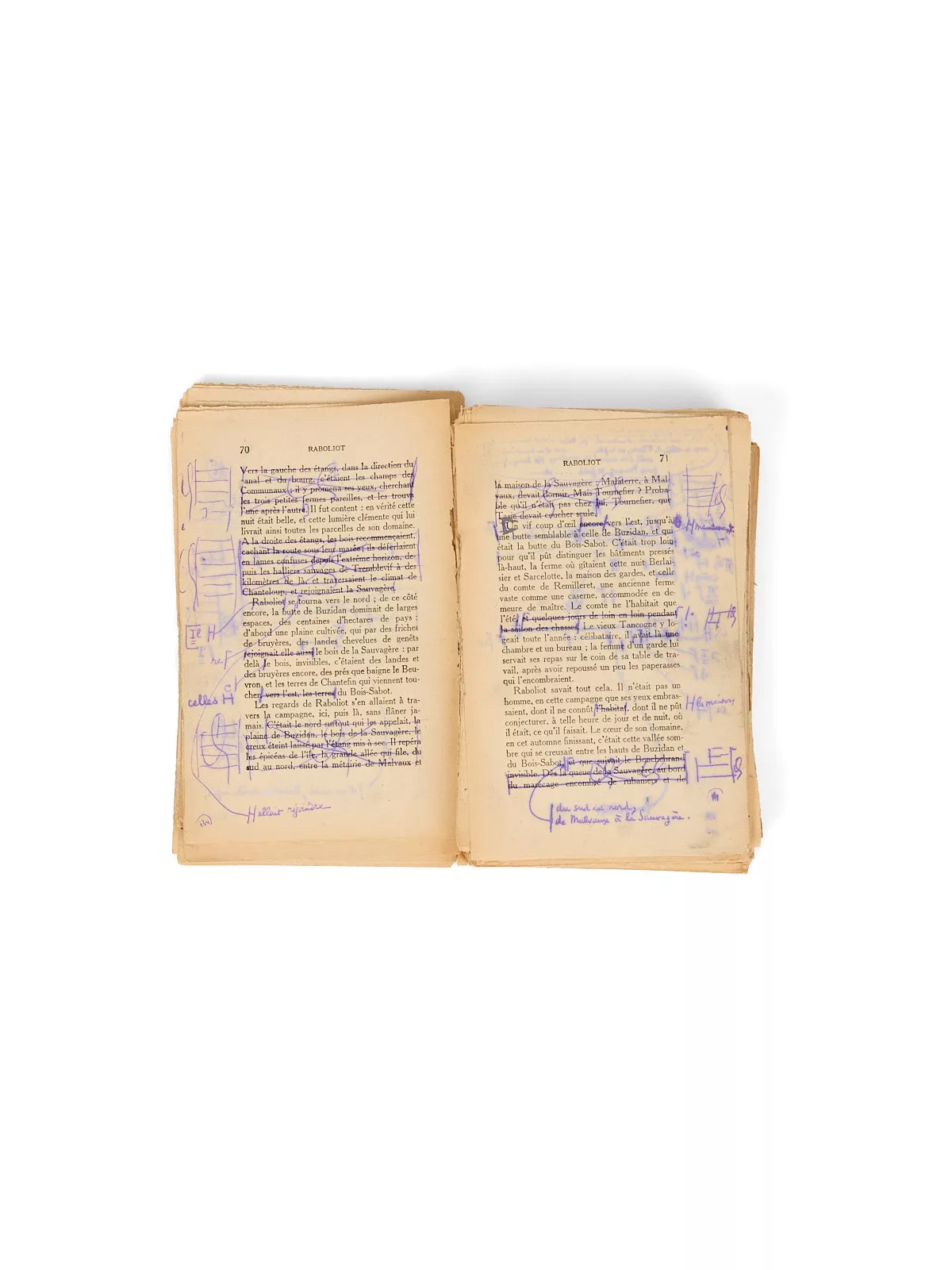
Raboliot
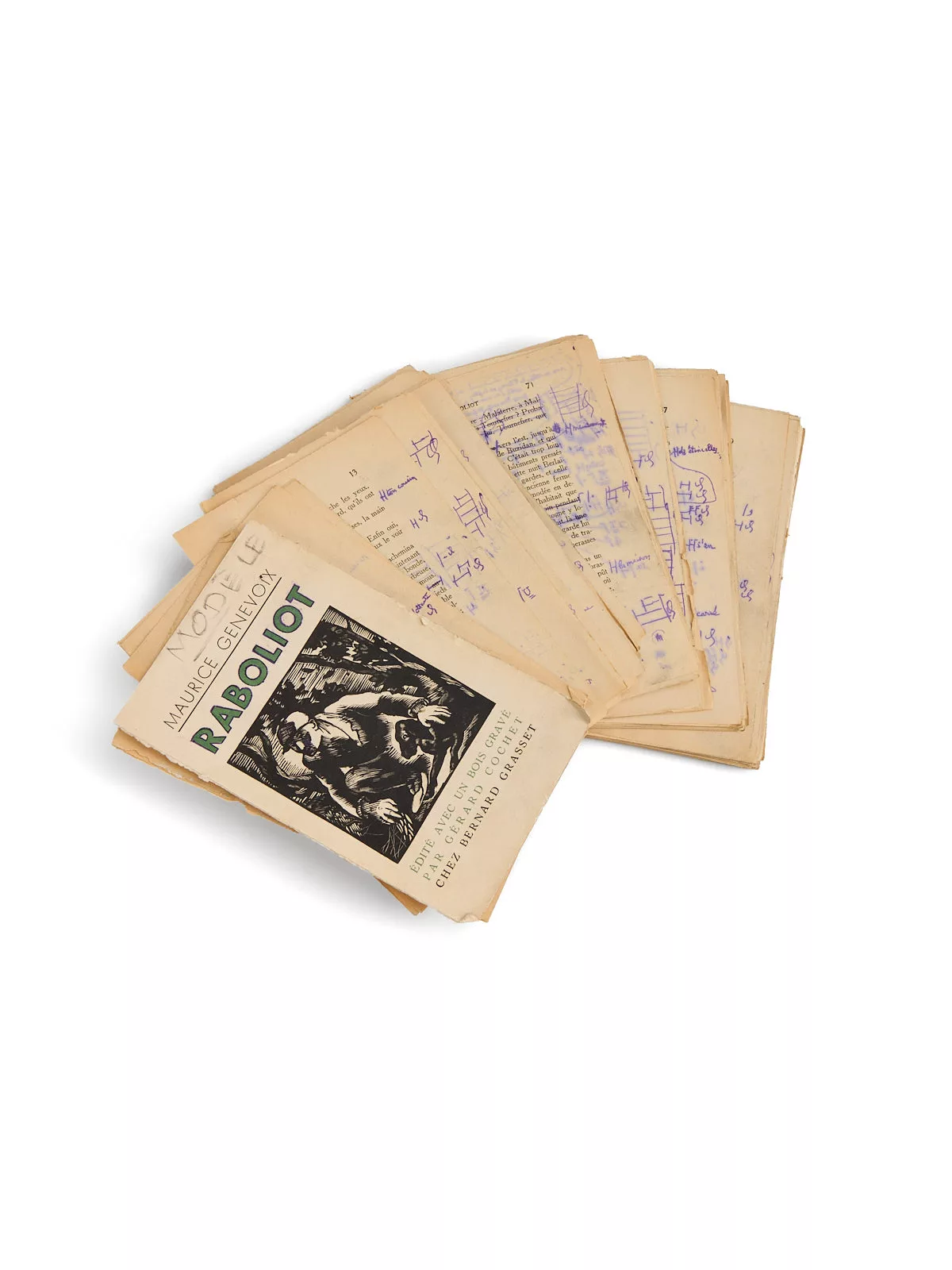
Numerous annotations, corrections and deletions on almost every page of the volume.
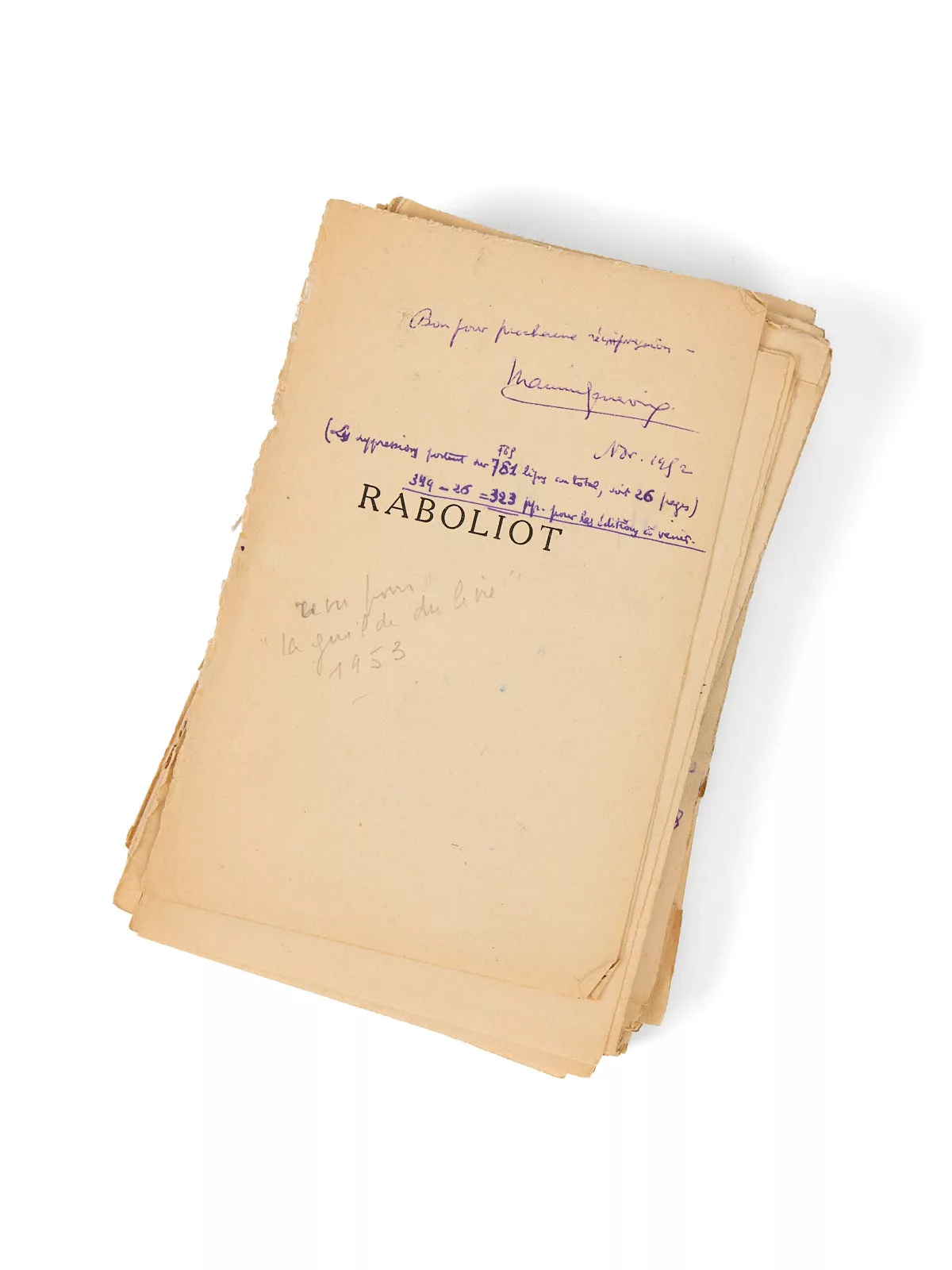
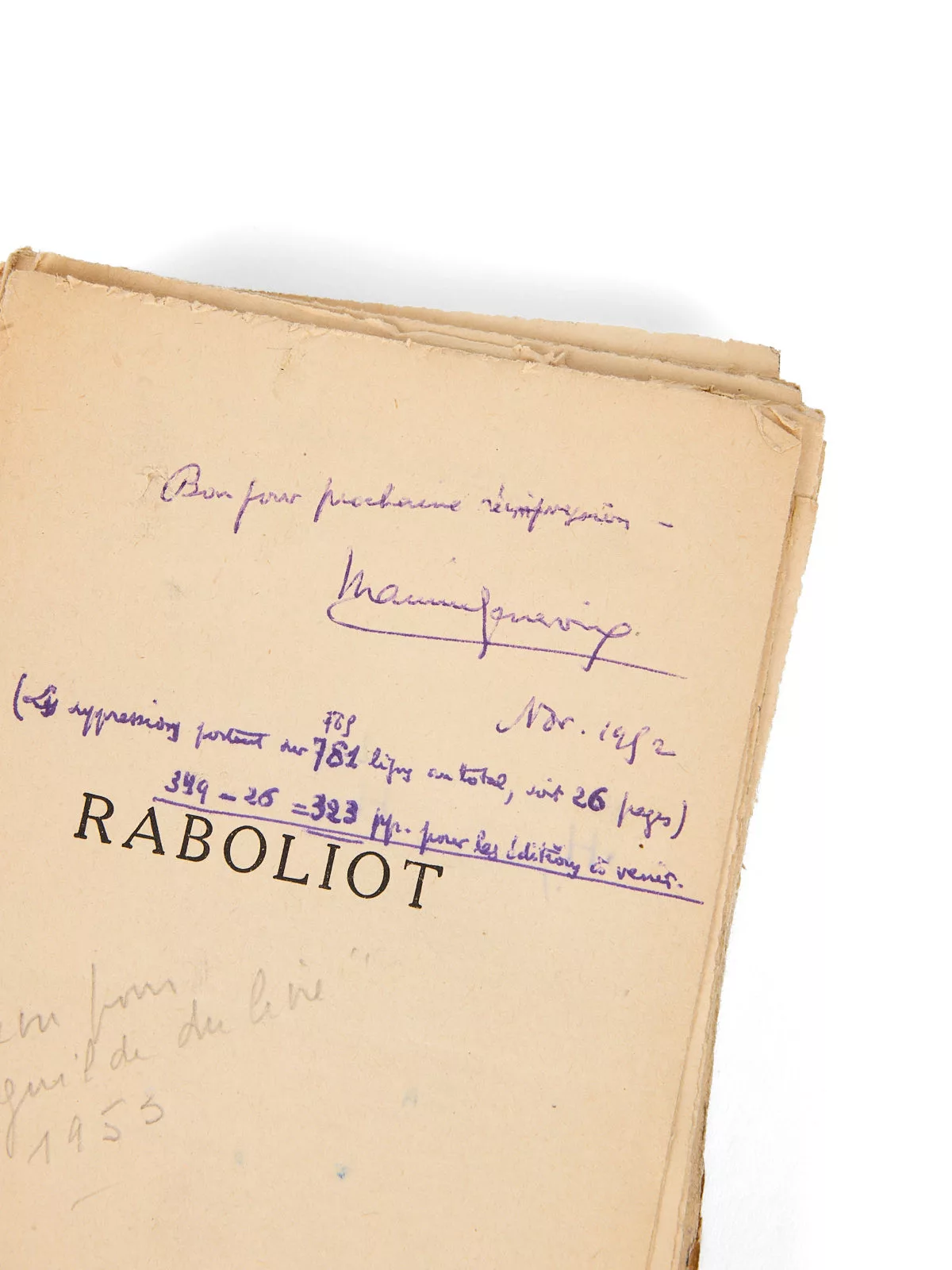
Elected to the Académie française in 1949, Maurice Genevoix entered the pantheon of French letters with the publication of Ceux de 14, which conferred on him unrivaled prestige. In this context, he decided to revise Raboliot for inclusion in the Livre de Poche collection. Starting from the 1949 Grasset edition, he made numerous corrections going well beyond simple typographical adjustments: he refined his style, clarified certain passages, and removed paragraphs he now judged superfluous or affected. In total, 781 lines — the equivalent of 26 pages — were cut.
By the end of 1952, Genevoix had completed this thorough revision, and the changes were incorporated into all editions published from 1953 onward, together with a foreword in which he confided that “[…] this is not the first time that the reprinting of one of my books has exposed me to a temptation […]. Here, then, is a Raboliot that I did not wish to be different, nor artificially made younger, but a little closer to the image that, as the years and life pass, I now have of him.” This definitive text was the one used in all subsequent Grasset editions, as well as in every derivative edition — Guilde du Livre, La Belle Édition, Livre de Poche — published from the 1950s onward.
That same month, November 1952, Genevoix gave his first radio talk devoted to Raboliot, broadcast on the national channel. He confided there that, while unable to say whether it was his best book, it remained the one to which he was most attached. He insisted on a fundamental point: Raboliot is not an invented novel but “the novel of a lived truth” — a tribute to the Sologne countryside, its inhabitants, its nature, and above all to that free man of the underbrush, elusive, who escapes the social order. He explained that he had wanted to lighten the text and simplify its phrasing, so that Raboliot’s voice could assert itself without artifice: “Rereading my sentences twenty-five years later was like meeting the young man I once was: I kept the momentum and removed the excess.”
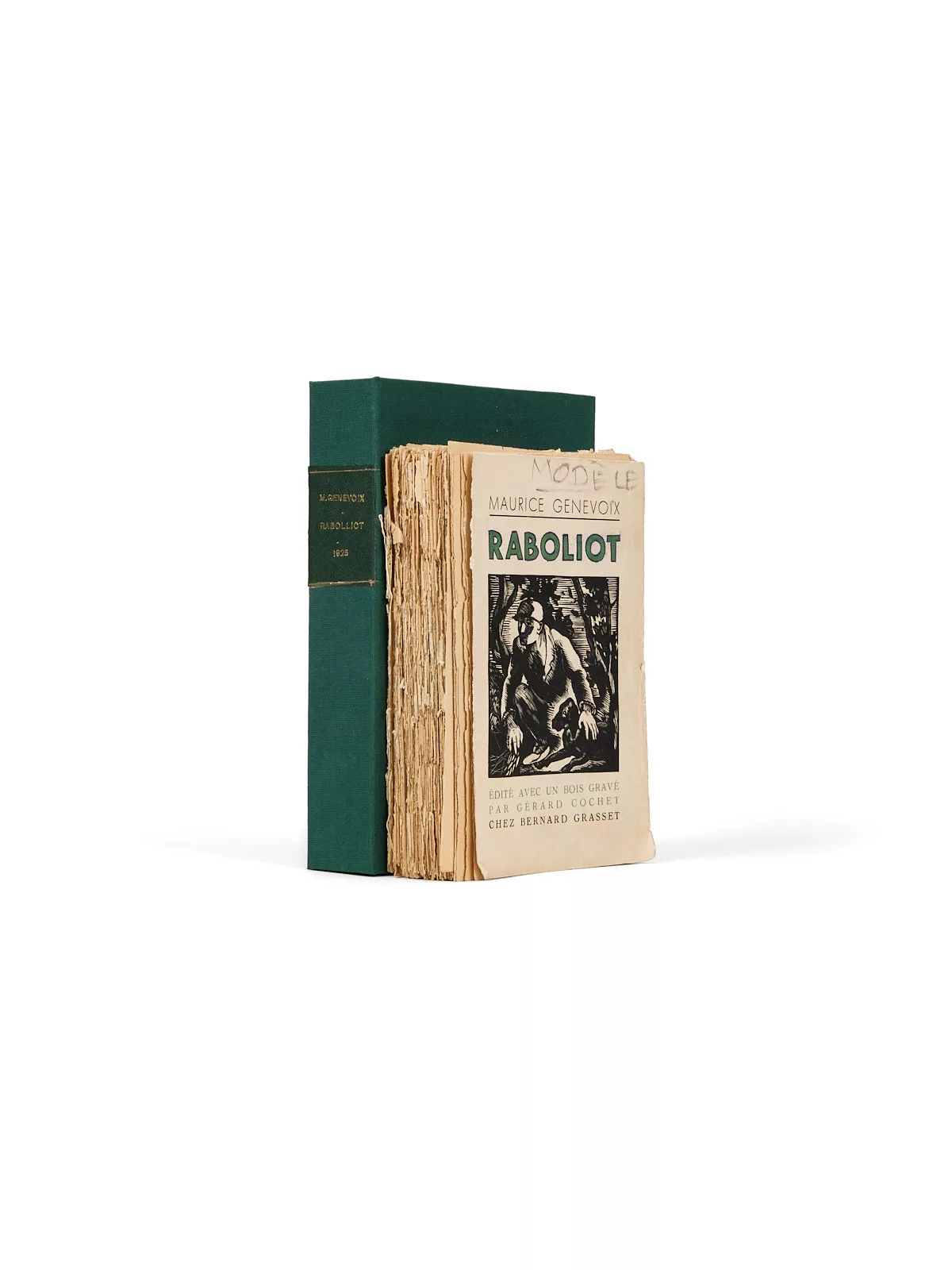
As was his habit with his working copies, Genevoix highlighted the title of his work by hand on the cover and inscribed it “MODÈLE” in pencil.
From the library of Maurice Genevoix, at “Les Vernelles” (bookplate).