

L’Aiglon
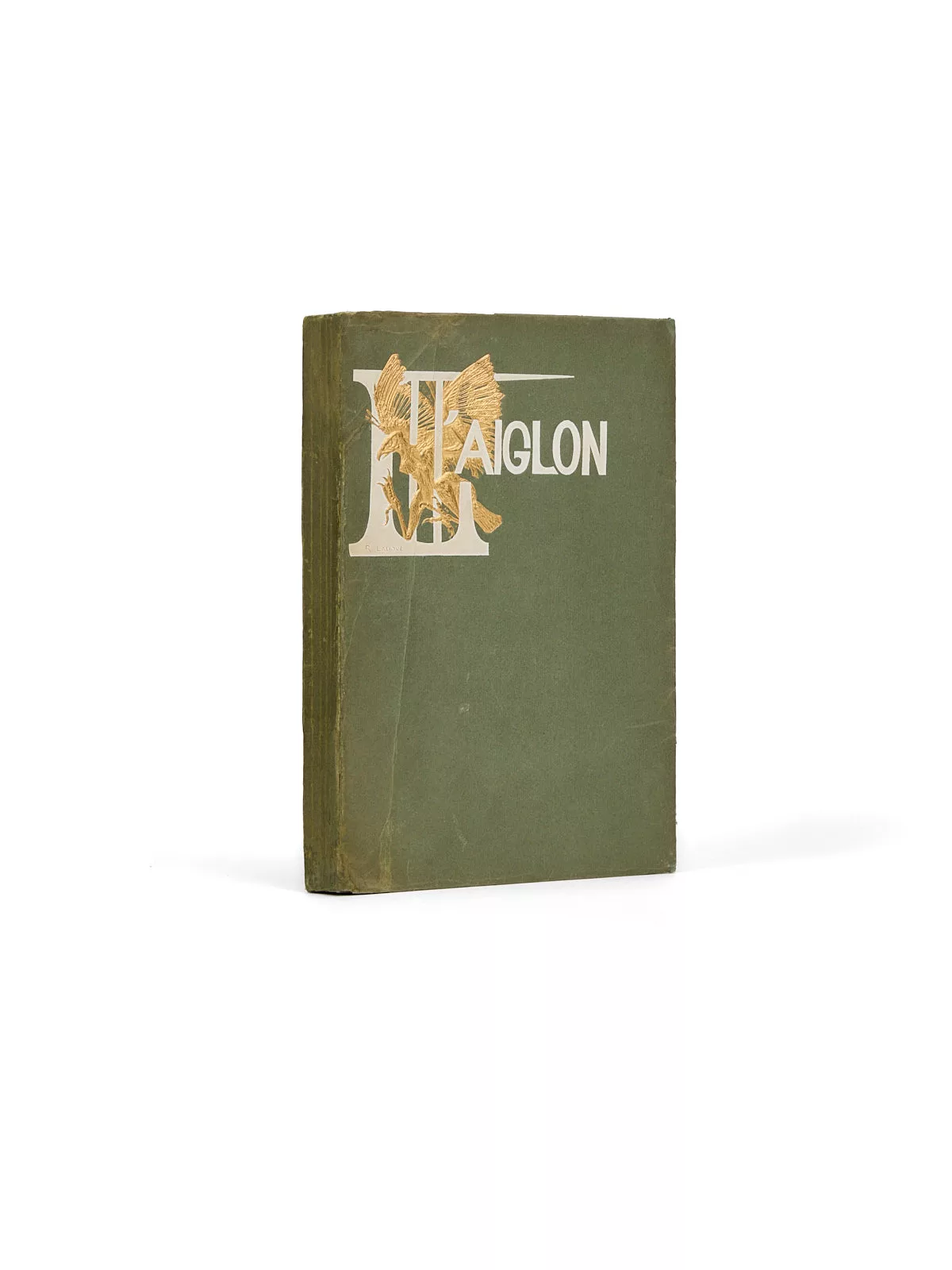
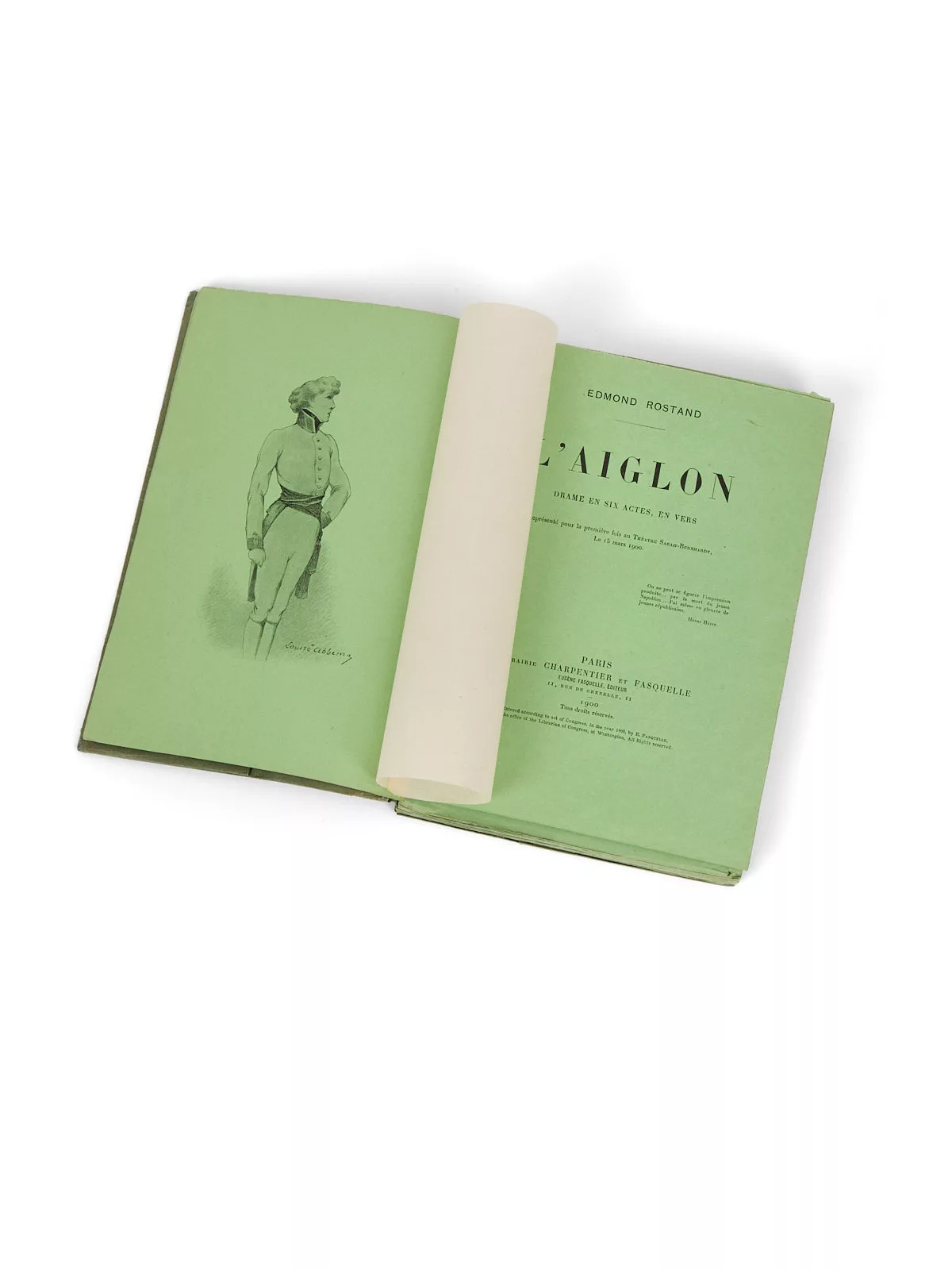
Copy printed on green Empire paper.
The Aiglon (Napoleon II) was born at the Tuileries on 20 March 1811, when one hundred and one cannon shots announced to Parisians the long-awaited birth of the Emperor’s son. Constitutionally granted the title of “prince impérial,” he also received that of “King of Rome”: his baptism was celebrated on 9 June at Notre-Dame Cathedral in Paris. Defeat at Waterloo forced Napoleon I to abdicate in his favor, but Fouché’s provisional government acted as though nothing had happened, and the chambers refused to proclaim the child, who from 1814 lived in exile at the Austrian court. He would remain in history the ruler who “reigned” for twenty days, from 22 June to 7 July 1815.
In Vienna he received a thorough religious, philosophical and military education, under the affectionate care of his grandfather, Emperor Francis II (defeated at Austerlitz and Wagram), who, to seal peace and the Treaty of Schönbrunn, had given Napoleon his eldest daughter, Marie-Louise of Austria, Napoleon’s second wife. After Napoleon’s abdication in 1815, Francis II gave him the title of Duke of Reichstadt. He was raised by his mother and his aunt, Archduchess Sophie, under the guardianship of Count Dietrichstein.
The prince impérial died on 22 July 1832, only twenty-one years old, at the Schönbrunn Palace. The diagnosis was of a sudden and violent tuberculosis, though the theory of poisoning has never been entirely dismissed. Without marriage or descendants, his death put an end, in any case, to the fascination and fear felt by the great courts of Europe at the prospect of a return to power of Napoleon I’s only legitimate descendant.
On 15 March 1900, the public first discovered Edmond Rostand’s play, with an actress costumed as a man in the title role: Sarah Bernhardt. The success was immense. The play produced several immortal and famous tirades, including that of Séraphin Flambeau, the legendary veteran of the Grande Armée who makes his way into Schönbrunn to see the Aiglon: “Nous, les petits, des obscurs, des sans-grades” (Act II, scene 9), a role later taken up by Lucien Guitry and then by Coquelin l’Aîné.
Only four other copies on this paper are known: the nominative copies for Octave Mirbeau (Bibliothèque du bâtonnier J.-C.D, Giquello, 2018, no. 156) and Jean Richepin (Tajan, October 2018, no. 161); the one for Mitzy Dalty, a Belle Époque actress and mistress of the publisher Fasquelle (Bibliothèque Natural, PBA, 2009, no. 567, with the actress’s bookplate); and the one presented to Louis Barthou (from the libraries of Pierre Guérin, then Comte Emmanuel d’André).
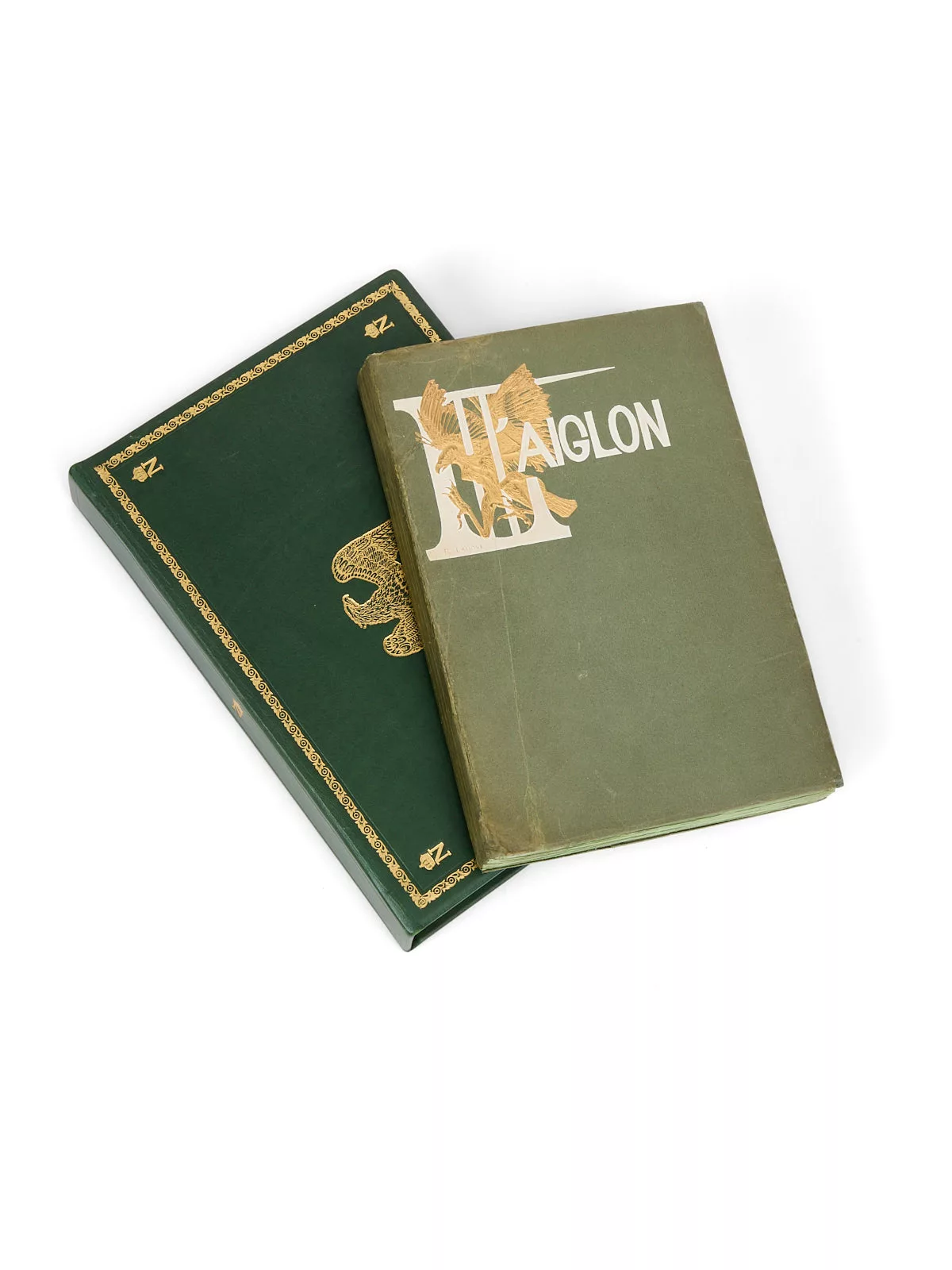
All of these are bound, and the present copy, probably the author’s own, is the only one preserved in wrappers.
Wrappers skillfully restored.