

Alfred de Vigny
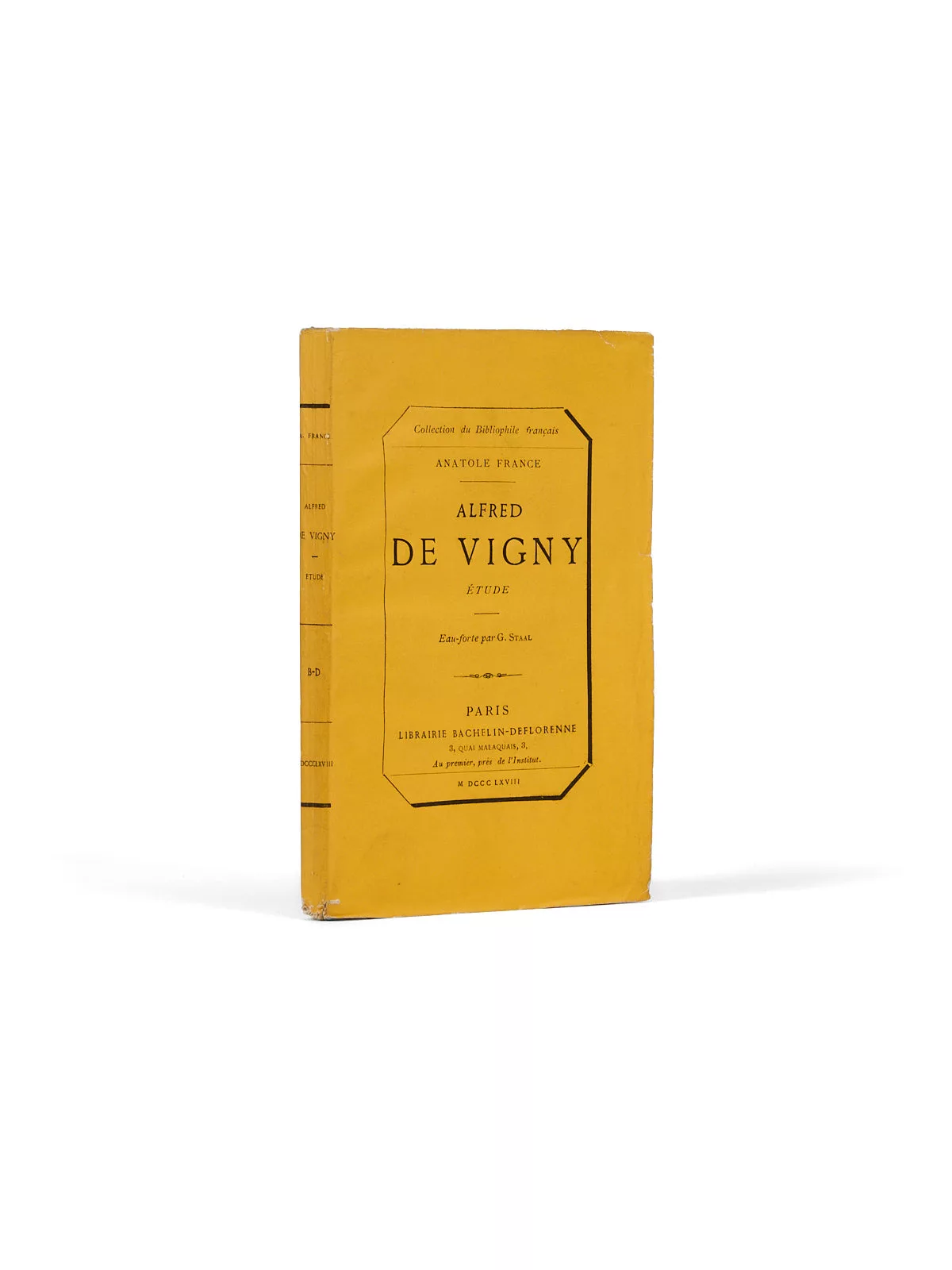
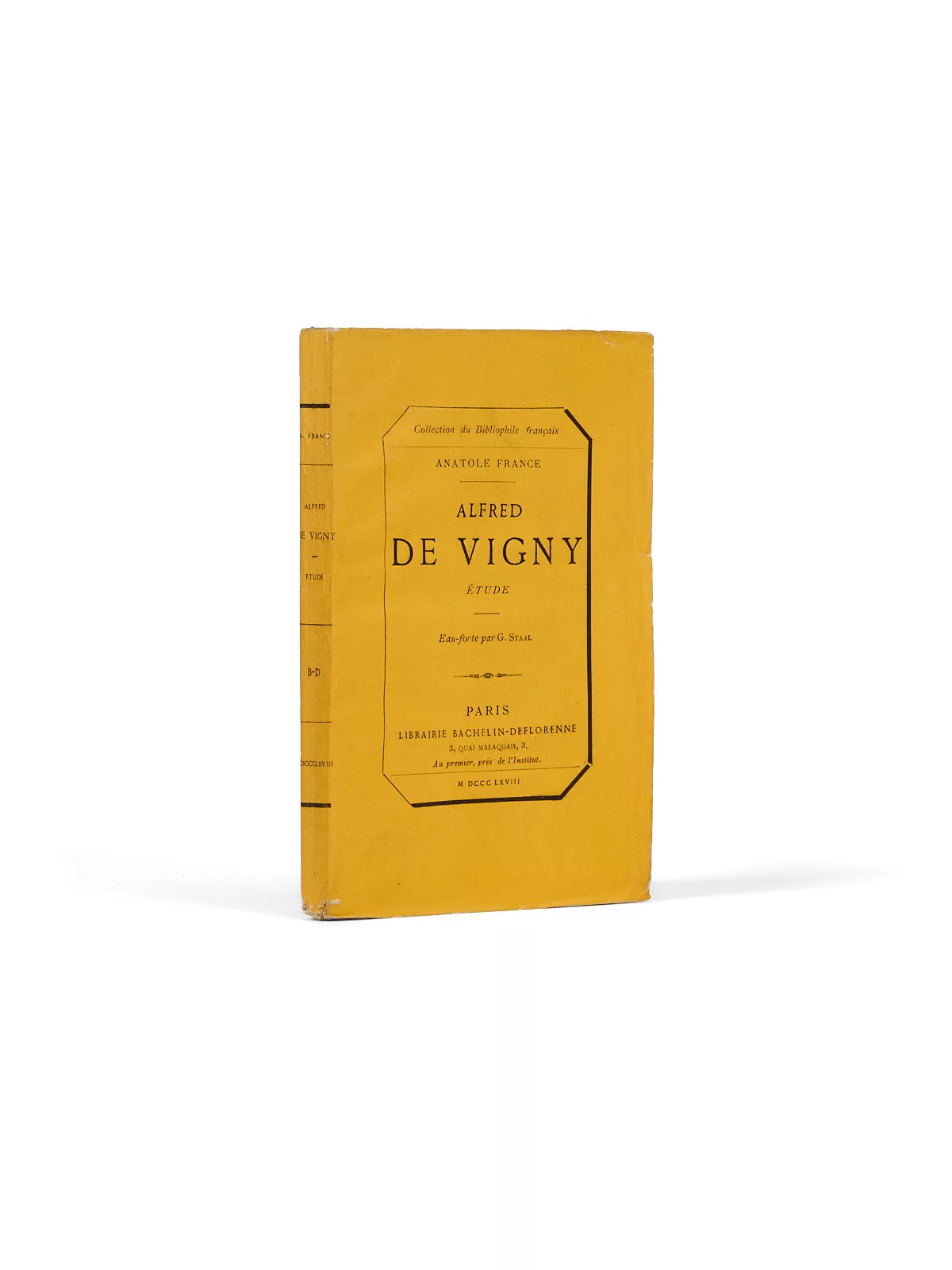
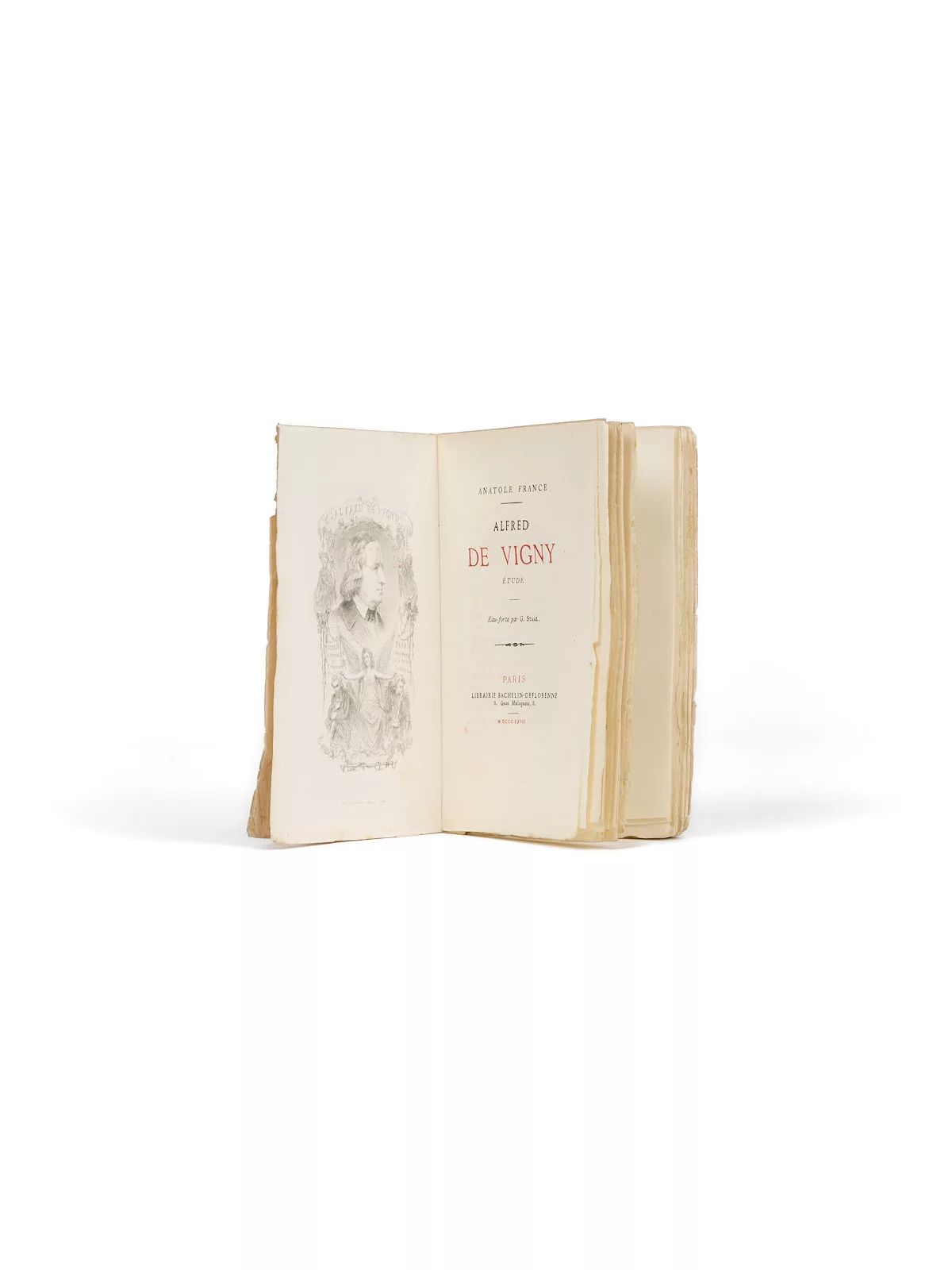
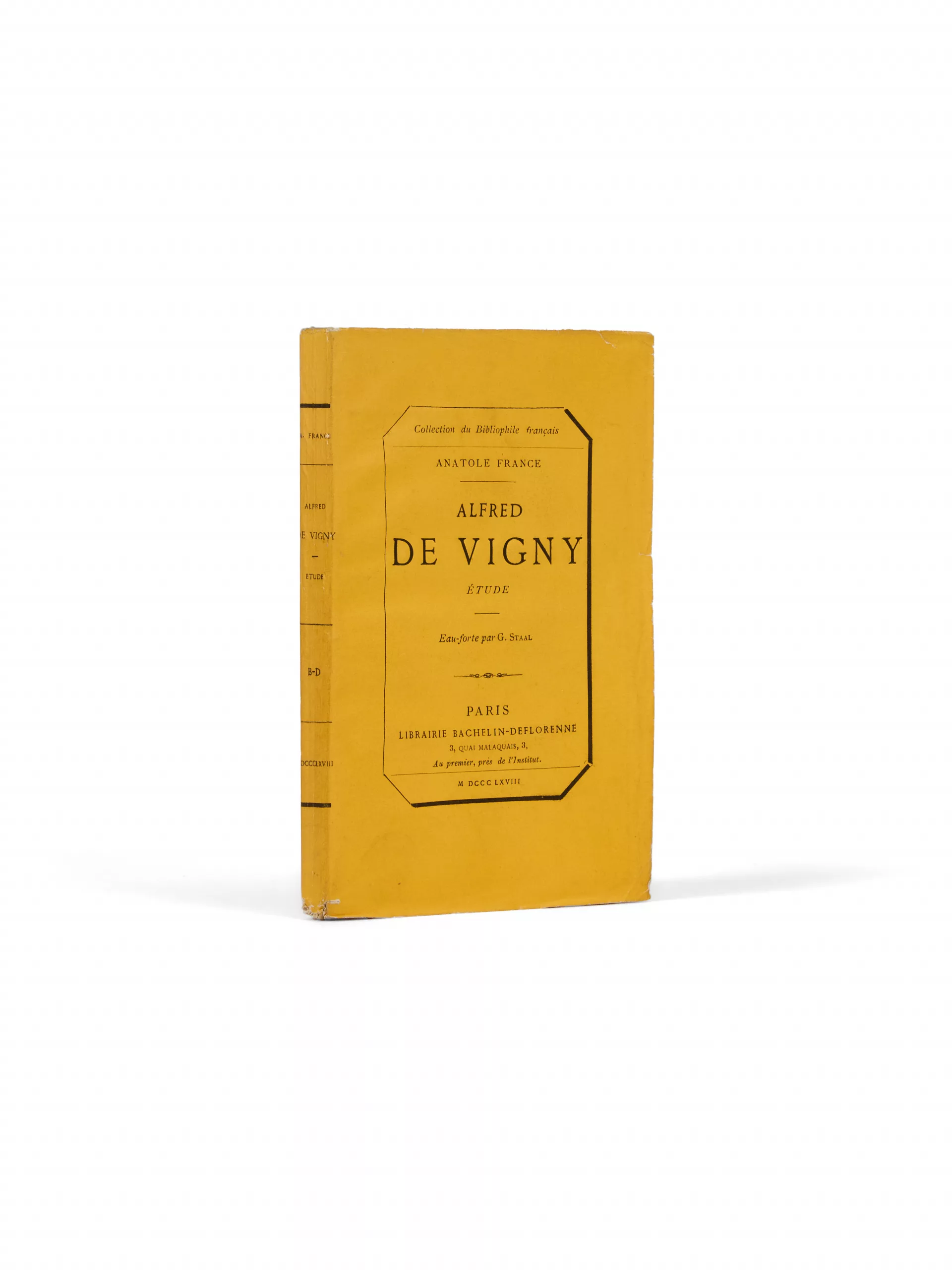
In 1868, while France was contributing to a number of newspapers and journals, his father sent his son’s first book, a short work on Alfred de Vigny, to a friend (28 August 1868, to his friend Bossange), together with a letter. The tone is at first severe: “not having followed my advice, he has no position. He writes… or rather, I should say, he scribbles. What I feared most since his childhood has, through some fatality, come to pass. He has always been absorbed by this idea, which has turned his head.” Yet the tone shifts by the end of the letter, revealing behind the irritation a simple paternal anxiety born of experience, and tenderness — no doubt some disappointment as well.
A few years earlier, the bookseller France had been entrusted, under the will of his late friend the celebrated bibliophile the comte de La Bédoyère, with the inventory of his revolutionary-era collection (sold for 90,000 francs to the Bibliothèque Nationale), and had probably called on his son’s pen to write the preface. His fluent style, his erudition nurtured in his father’s bookshop since childhood, and the connections he had naturally formed in the literary world had led his father to imagine that his son would take over the business and perhaps excel in it more than he himself had, his own less “academic” career having sometimes complicated his work.
But France had his sights set instead on the civil service, and would wait nearly ten more years for a post at the Bibliothèque du Sénat — no doubt better suited to his dreamy, easygoing temperament. For the moment, his first book had just appeared, following an earlier and now very rare publication, La Légende de sainte Radegonde, composed while he was still a student at the Collège Stanislas. His Alfred de Vigny, besides a few copies on vélin, was printed in a single copy on vellum skin (Louis Barthou collection), in which France later noted: “This little work dates from a time when I knew neither how to write nor how to work. It is the pitiful monument of my frivolous youth.”